Direct Answer / Key Takeaway: Compare hinged and sliding cooler doors using aisle space, refill access, usable openings and cleaning tasks. Require an actual layout trial before choosing.
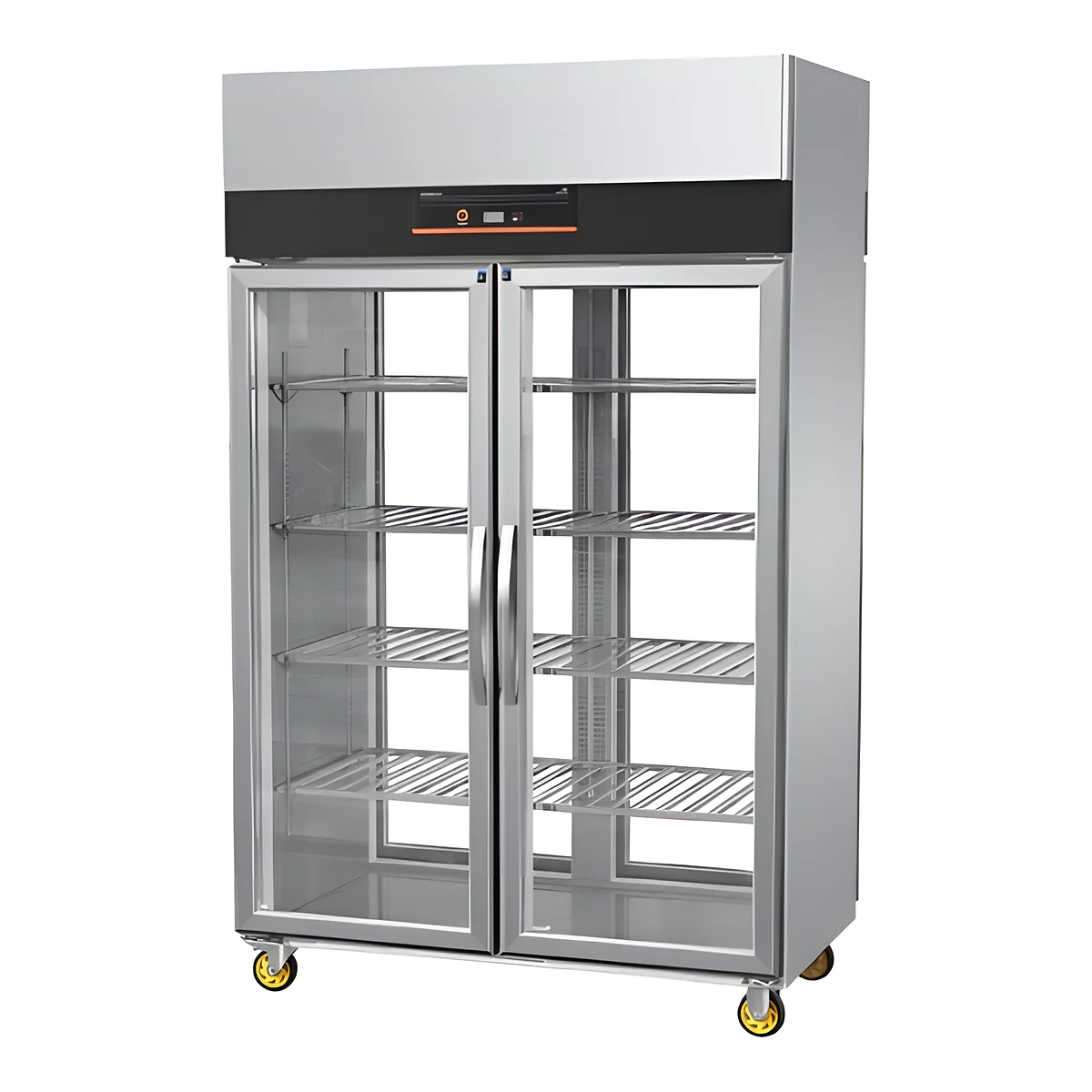
Choose a display cooler's door arrangement by watching someone select a product and someone else refill a shelf. These are different access tasks. A door that suits a narrow customer aisle may create a restricted refill opening; a wide hinged opening may obstruct another customer or an adjacent service counter.
Draw the occupied aisle
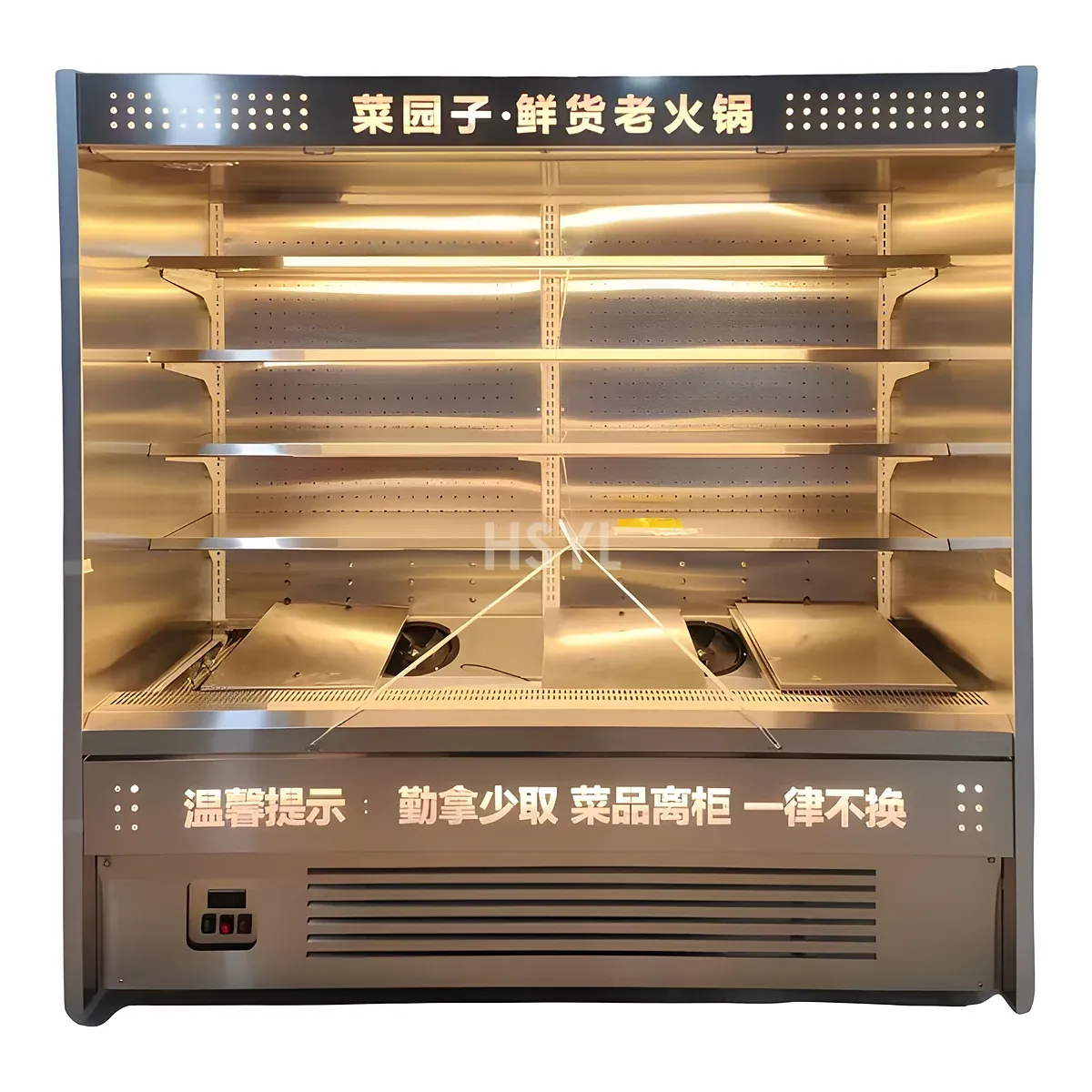
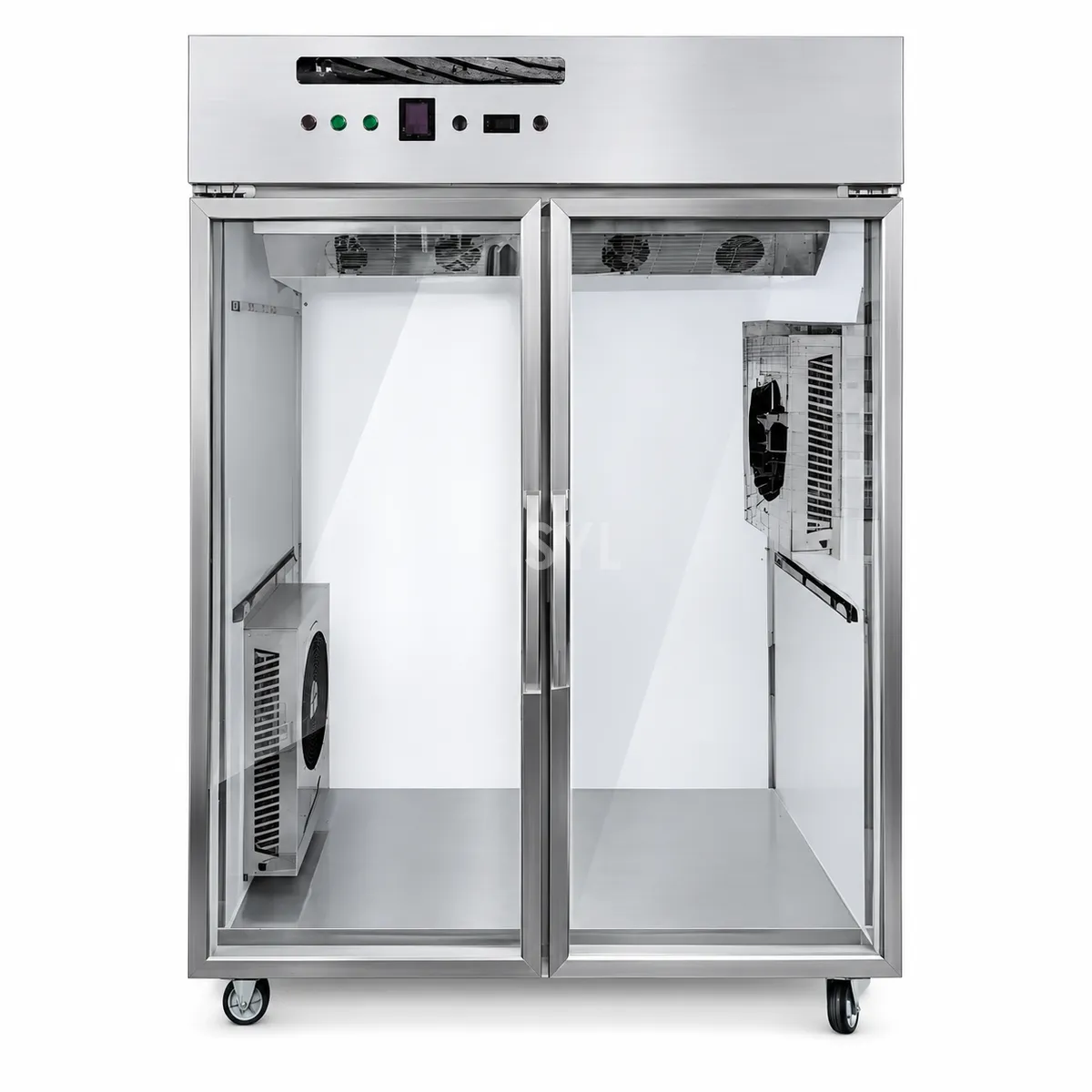
For a hinged door, mark its sweep and the space occupied by a person holding it open. Include shopping baskets, trays and mobility aids where relevant. Check the result with neighbouring doors open, not only with the display standing alone.
A sliding arrangement avoids a projecting door leaf, but the available access width depends on how the panels overlap. Obtain a drawing of the clear opening with each panel in its useful positions. Do not equate the full cabinet width with the opening through which a shelf can be replenished.
Compare refill movements on the same shelf plan
Take the intended pack arrangement to the trial. Ask the operator to reach the rear positions, withdraw a shelf where permitted and refill the fastest-moving items. Observe whether a panel has to be moved repeatedly and whether one part of the display becomes difficult to access while another is being stocked.
| Trial | Record |
|---|---|
| Customer removes one pack | Opening effort, aisle interference and ease of returning the door to its intended position |
| Staff restock a full shelf | Clear opening, reach to rear positions and panel movements |
| Routine cleaning | Access to seals, tracks and the locations identified in the manual |
| Service or replacement | Parts availability and the room needed to remove the relevant assembly |
Use the workflow and cross-traffic review to assess the occupied service area. A convenient door in an isolated showroom can behave differently beside a queue or a busy drink counter.
Ask what closes the door
Where a proposal includes self-closing action, ask the supplier to demonstrate it under the permitted installation conditions. Identify whether the mechanism is a hinge, closer, cord or another arrangement. The exact mechanism affects adjustment and replacement parts; do not prescribe a generic adjustment to every door type.
Check handles, stops, seals and panel overlap on the quoted unit. The supplier should explain which items staff may clean and which adjustments require service personnel. For sliding doors, include the tracks in the cleaning discussion rather than assuming they will remain free of packaging fragments.
Keep energy claims separate from access claims
Door use can influence an installation's performance, but this access trial does not prove that one arrangement always uses less electricity. Compare rated duties and, when needed, a controlled energy test using the same product load, room conditions and operating period. Opening style alone is not a reliable percentage-saving calculation.
Use the actual range of refrigerated display configurations to request comparable drawings. Select the arrangement that completes the customer, refill and cleaning tasks in the available aisle, then confirm that the chosen cabinet meets the required temperature duty.