Direct Answer / Key Takeaway: Estimate a noodle station‘s basket occupancy and finished-bowl pace separately, including portion definition, staggered tickets and shared soup or topping work.
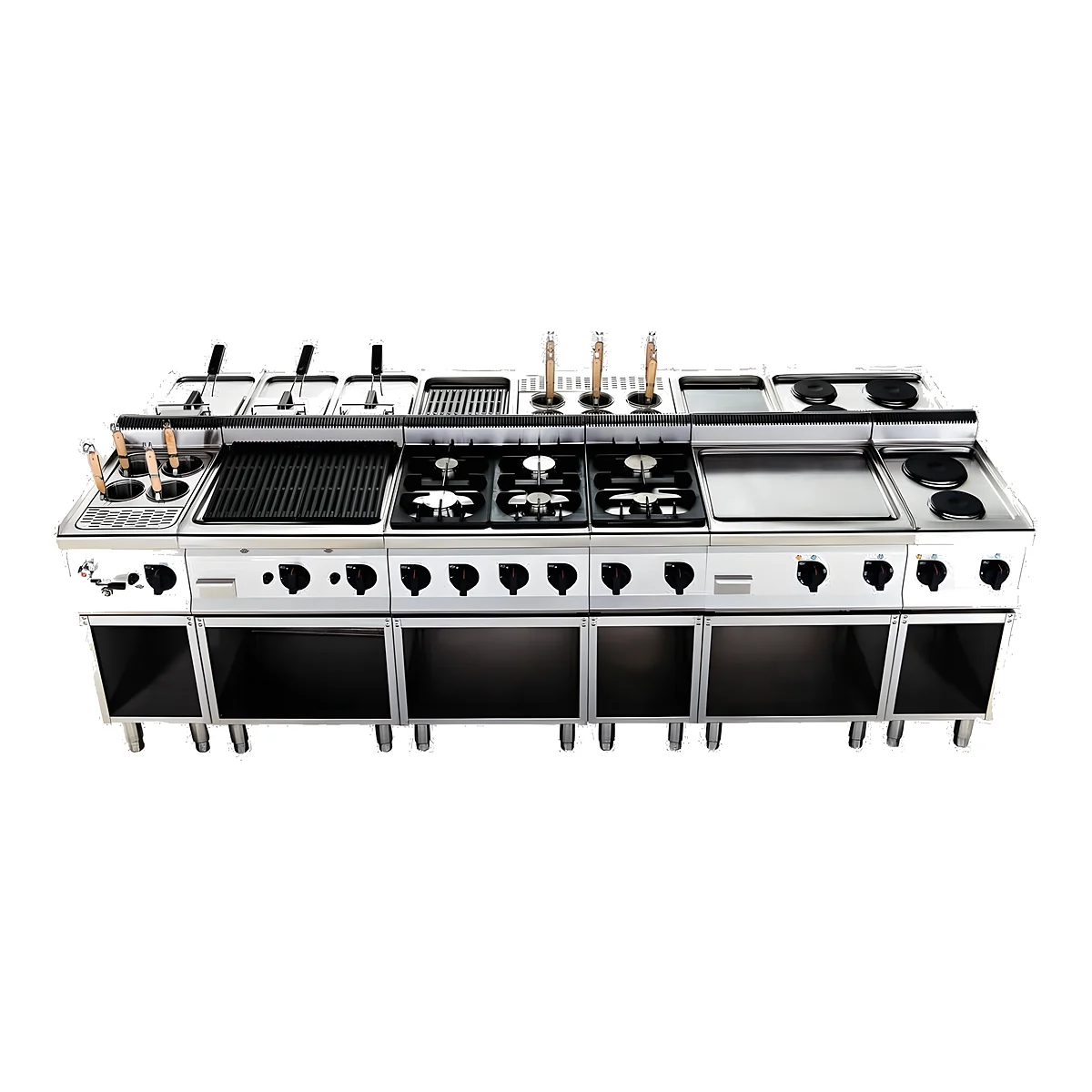
Count a noodle station's finished bowls after tracing two queues: baskets waiting for the next portion and cooked noodles waiting for soup, toppings and handoff. Extra baskets do not resolve a slower finishing position.
Define what occupies a basket
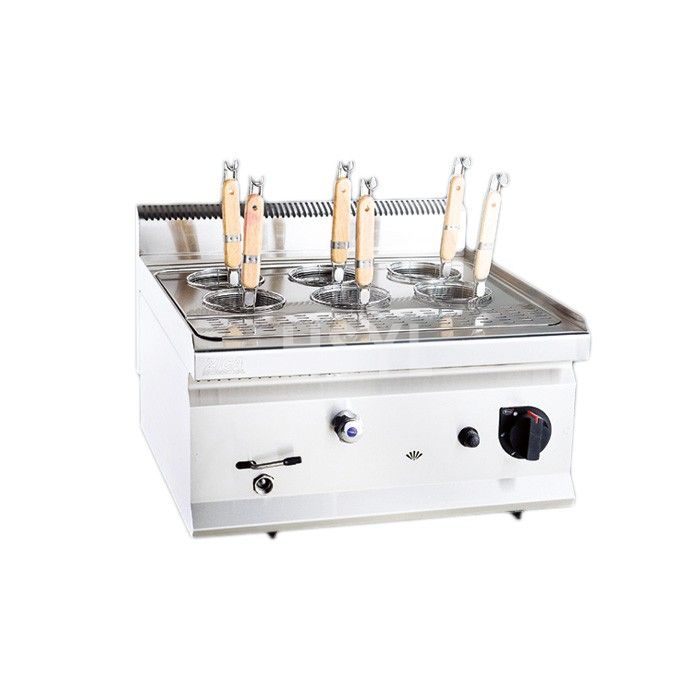
Identify the actual noodle portion, basket and approved process. Do not assume that each basket holds one saleable bowl or that different noodle types use the same occupancy. Include loading, the permitted cooking sequence, draining, unloading and the return of the basket to an available state.
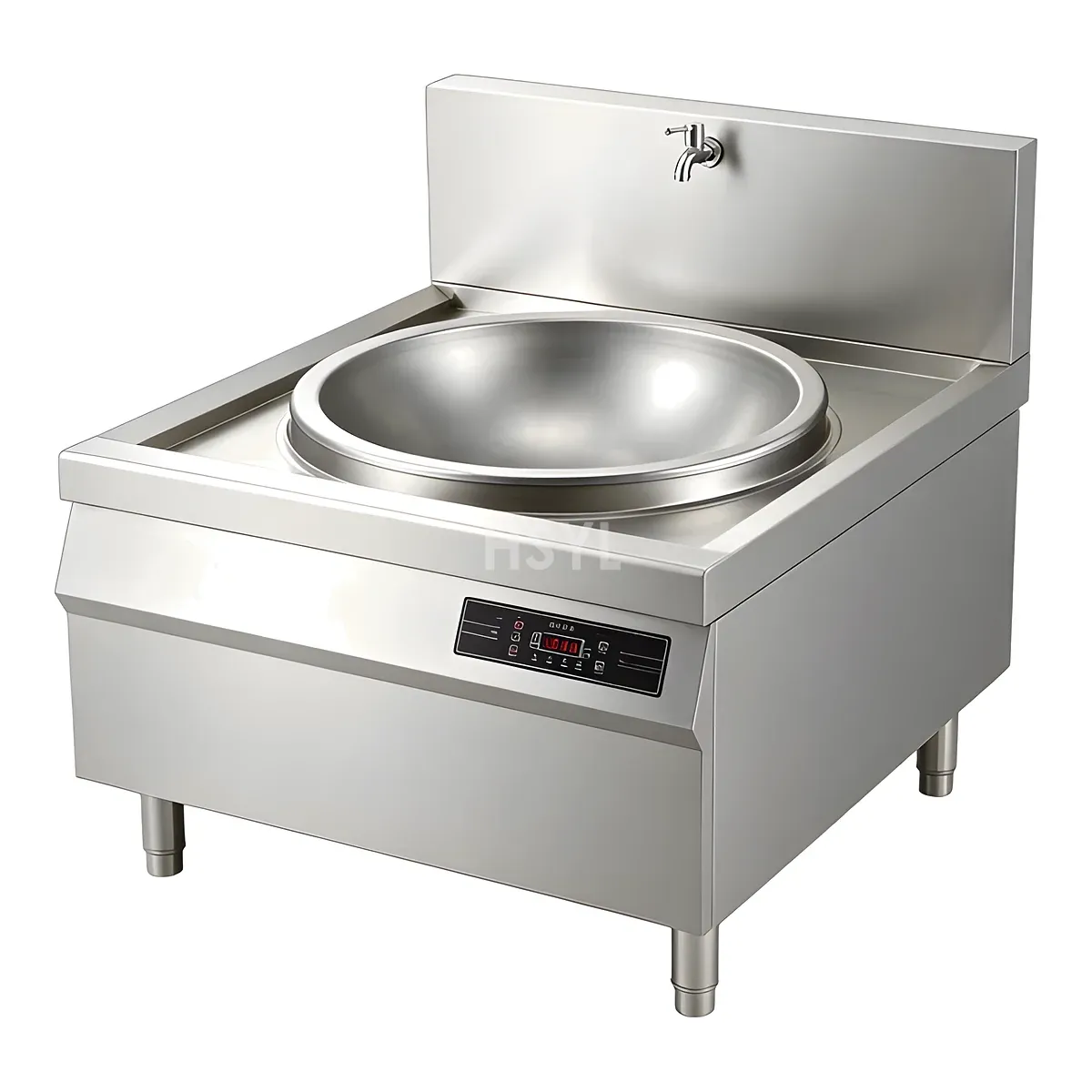
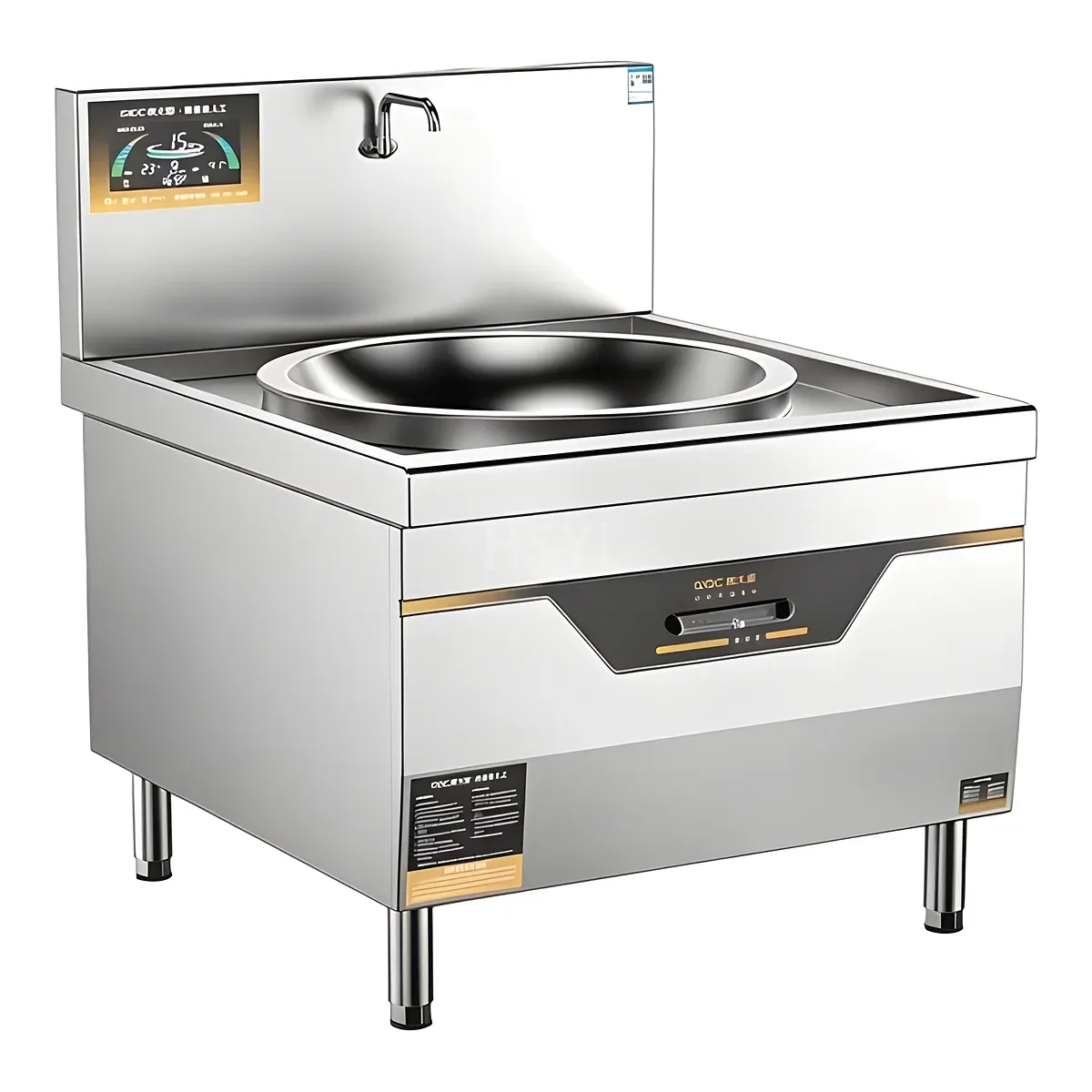
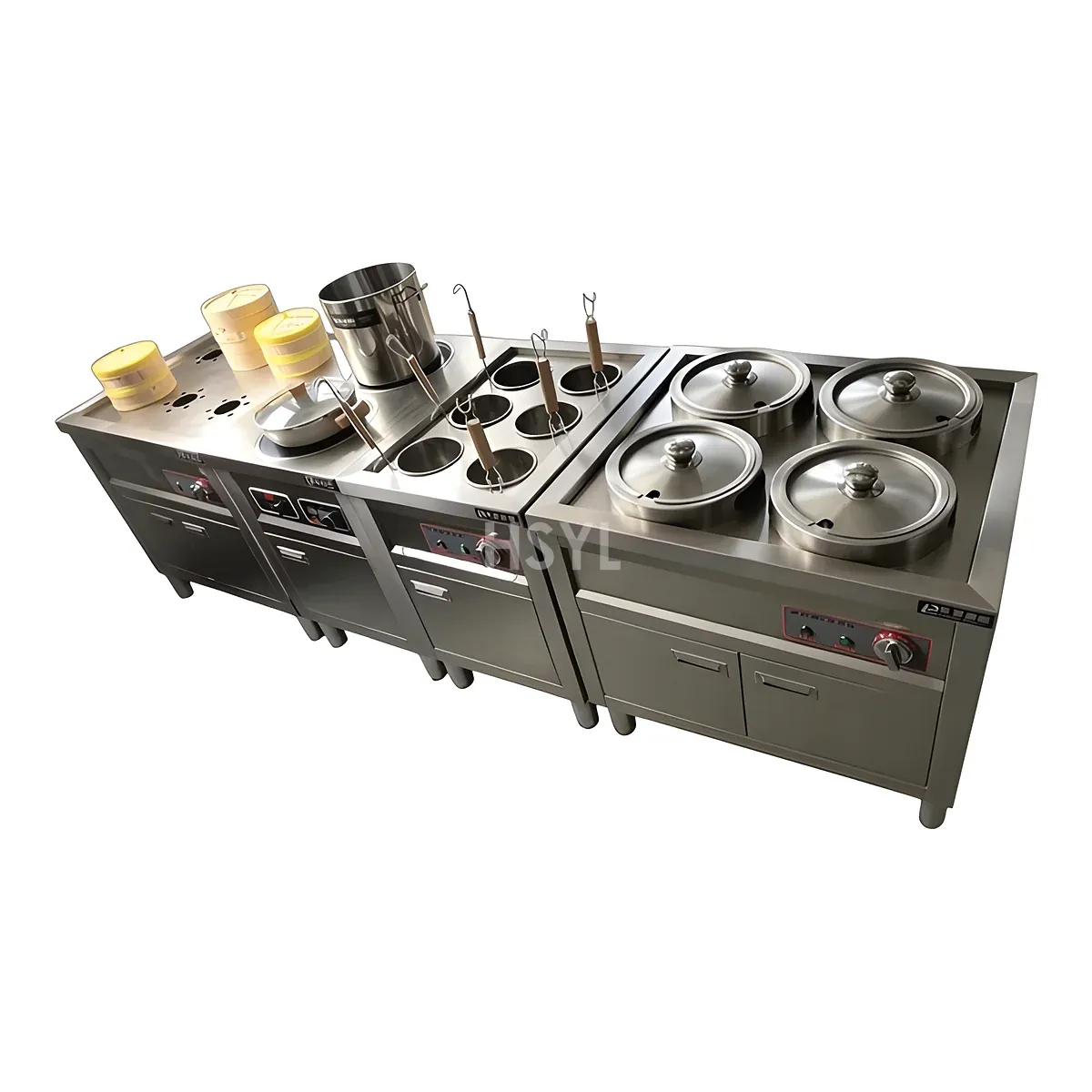
The catalog describes DCZM as a stockpot and six-basket noodle-boiler combination. It separately describes DRZH as a 5 kW induction stove with an electric noodle barrel. The combo station's modules therefore need to be identified individually; an induction section does not prove the noodle barrel uses the same heating system.
Calculate a transparent ideal basket rate
For illustration only, suppose six usable baskets each produce one accepted portion and remain occupied for four minutes including their complete handling cycle. If every basket can repeat that sequence continuously under the permitted conditions, the arithmetic is 6 × 60 ÷ 4 = 90 portions per hour.
Now suppose the complete bowl-finishing position takes one minute per bowl in the observed workflow. Its ideal rate is 60 bowls per hour. The basket calculation cannot turn that finishing position into a 90-bowl station. These are hypothetical workflow inputs, not noodle cooking instructions or an appliance rating.
Observe tickets arriving together
A theoretical hourly rate can hide a short queue. Follow a group of orders arriving together: which portion gets a basket first, which recipe is already in progress and where each drained portion goes. Check how the operator keeps ticket identity when several baskets finish close together.
Include the soup pot and topping positions in the trial. If one person must leave bowl finishing to replenish broth or stir-fry a topping, that interruption belongs in the observed sequence. Do not credit a second module with labor capacity unless the planned staff can operate it at the required time.
Count complete bowls
Run the agreed menu mix using the actual portion sizes and accepted food processes. Observe the last bowl in each order wave and the time baskets become available again. Record queues at the finishing position rather than counting only basket lifts.
Choose the configuration that supports those complete orders. A six-basket label is useful physical information, but portion definition, simultaneous water-bath performance and finishing work determine what the kitchen can serve. Retain those conditions when comparing a wider station or additional baskets.