Direct Answer / Key Takeaway: Compare carrier access using the actual pan sequence, landing surfaces and destination task. Include lids, doors, permitted stacking and cleaning in the purchase decision.
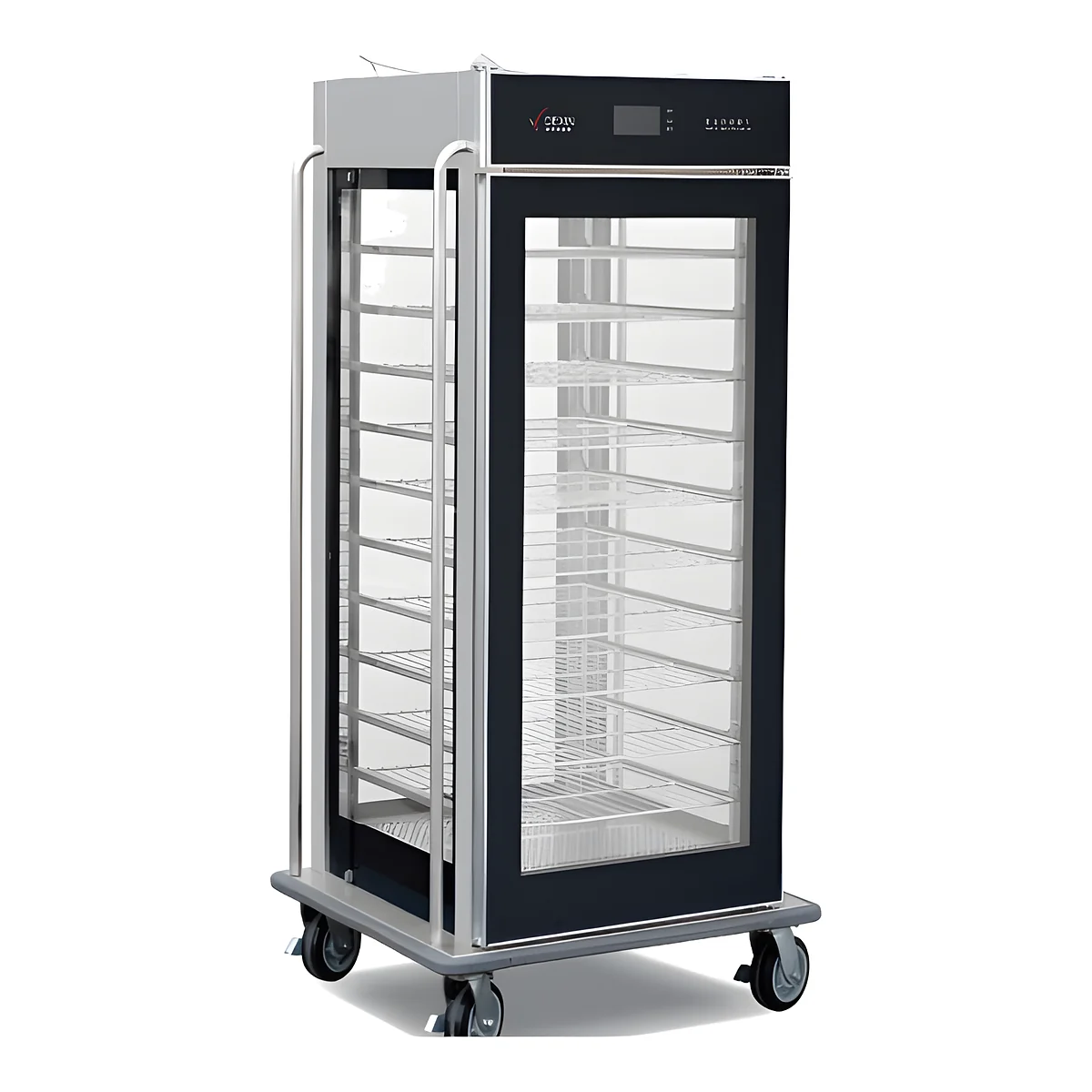
The useful comparison between top-loading and front-loading food carriers is the task at the destination. Staff may remove one pan for an immediate service, work through several pans in order or hand over a closed carrier. Test the arrangement that matches that sequence instead of choosing by appearance.
Write the access sequence before comparing boxes
List which pan is needed first and which remains until later. Identify whether the carrier is opened once or at several handovers. Keep the food-control process and any separation requirements with the responsible kitchen team.
Ask each supplier to show the intended pan arrangement and permitted access. Do not assume every front-loading design lets staff remove every pan independently, or that every top-loading design uses the same internal arrangement. Use the actual product and container set.
Place the lid or door in the room
On the proposed serving layout, show the space occupied by opening the carrier. Include where a removable lid is placed if that is the supplied design, and the movement of a door where applicable. A box fitting on a shelf does not establish that it can be opened there.
Show the receiving surface for the pan. Staff should not have to improvise a place for a hot or chilled container because the comparison considered only the carrier footprint. The serving workflow should include both the opening and the next handling task.
Check the proposed stacked arrangement
If stacking is part of the plan, obtain the manufacturer's permitted configuration and handling method. Demonstrate the required access within that approved arrangement. Do not infer permission to open, move or carry a loaded stack from the fact that empty boxes nest together.
Include the work needed to reach the next carrier or pan. A compact storage arrangement can create extra transfers during service. Keep that work visible rather than assigning an automatic space-saving benefit to either access style.
Compare complete operation and cleaning
Use the same meal task, pan set and destination conditions for both proposals. Observe the authorised movements and any repeated opening work. Record the actual load and operator arrangement; this article does not establish a universal safer or faster design.
Ask how lids, doors, seals where fitted and internal supports are cleaned under the supplied instructions. Include the space and work needed between routes. An access advantage during service should not hide an unresolved cleaning task.
Retain the reason for the choice
The purchase comparison should state which serving sequence and layout each design supports. Keep actual quoted costs and required accessories separate from unmeasured expectations about handling time or temperature retention.
A sound decision can favour different access styles for different routes. Record the accepted use so a carrier selected for a single full unload is not later assumed suitable for repeated selective access without another review.