Direct Answer / Key Takeaway: Translate a seafood order wave into verified plate positions and complete loads, including vessel height, loading sequence and the service time of the last plates.
For plated seafood, a tier count becomes useful capacity only after the actual dishes fit and the required order wave can finish together. Start with the fish plate, bowl or basket used for service. A cabinet's outside width cannot show how many complete plates its usable tiers will accommodate.
Make one complete plate the unit of planning
Include the plate rim, handles, food height and any approved cover in the fit check. A fish that fits diagonally on an empty shelf may obstruct another plate or be difficult to withdraw when cooked. Show the permitted plate positions and the handling space needed to load and remove them.
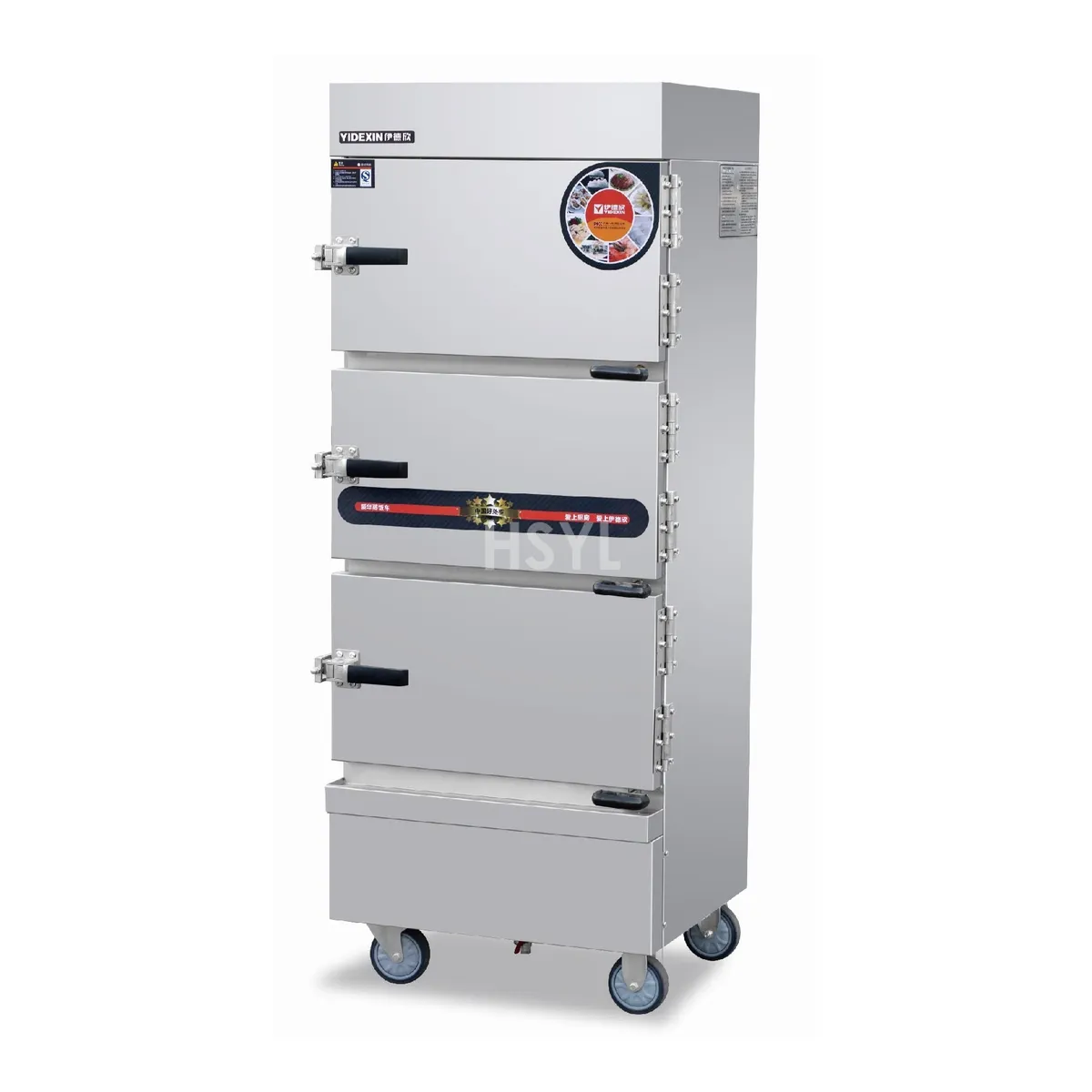
The catalog distinguishes an IOT-01 three-tier cabinet at 800 × 900 × 1530 mm from an IOT-02 four-tier cabinet at 800 × 900 × 1900 mm. Those are physical configuration entries. They do not specify how many of your fish plates fit per tier or qualify a seafood recipe. Use the steaming cabinet configuration with the current shelf drawing.
Expose the incomplete order wave
Consider a hypothetical fit assessment that permits six identical plates on each of three tiers. That is 18 plate positions per load. If a banquet calls for 24 such plates to be ready together, six plates remain outside the first load. Eighteen positions cannot be relabelled as 24 portions by quoting a daily production total.
The second load has its own loading and approved process sequence. Decide whether the service can accept separate waves, whether a different verified layout is possible, or whether additional cooking space is needed. Do not assume that plates from the first load can simply wait without affecting the food-control plan and quality.
Make mixed dishes visible
Whole fish, deep bowls and bamboo baskets may consume different usable positions and require different permitted processes. Build separate load sketches before combining them. Keep incompatible tasks apart; more tiers do not prove independent temperature, timing or steam systems.
For each planned wave, identify which dishes enter first, whether any opening during the process is permitted and how the last plates leave. The kitchen's responsible person must define the cooking and handling controls for each food. This capacity exercise does not provide a universal seafood time or temperature.
Assess the last plate, not just the full cabinet
At a representative menu run, follow loading, the approved cooking sequence, safe unloading and transfer to service. Count complete acceptable plates at the point the dining operation needs them. Note whether one operator or one landing area delays the final tier even after cooking is complete.
Review that result against the required service wave. A useful selection names the plate format, permitted load sketch and finish window. It does not translate nominal tiers into an unsupported hourly output.