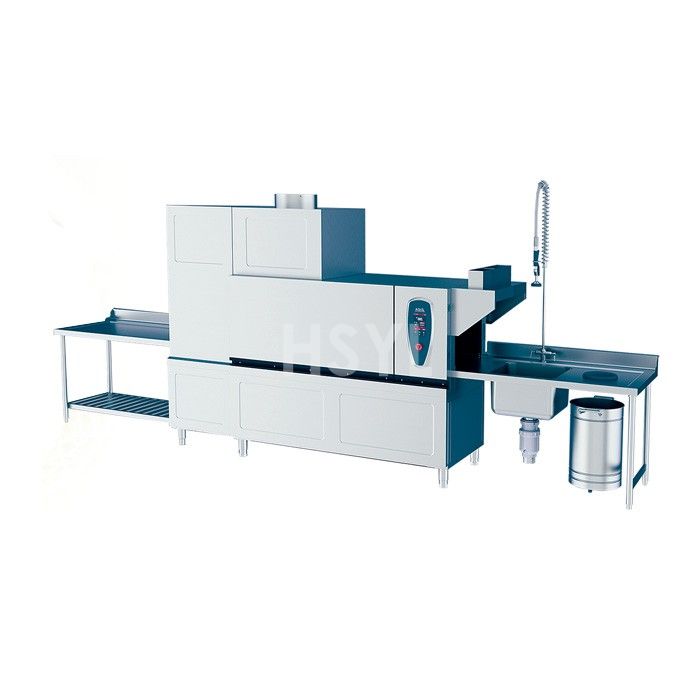
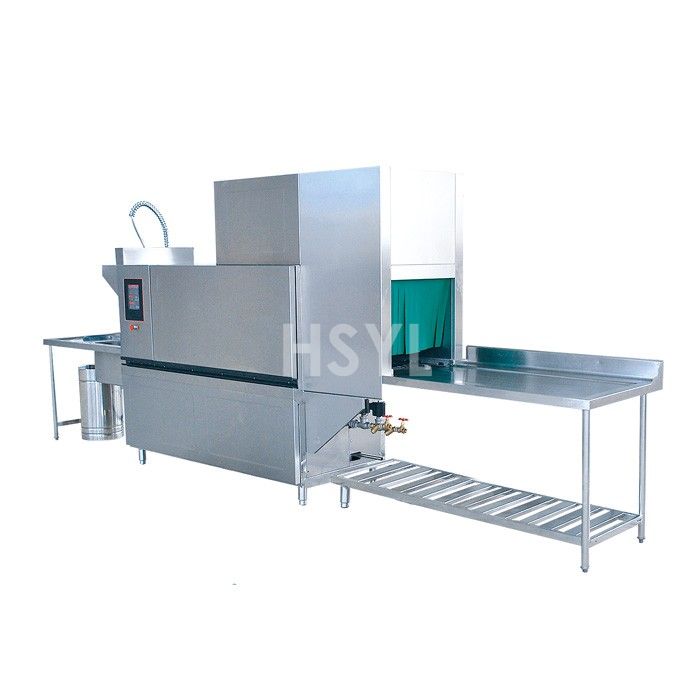
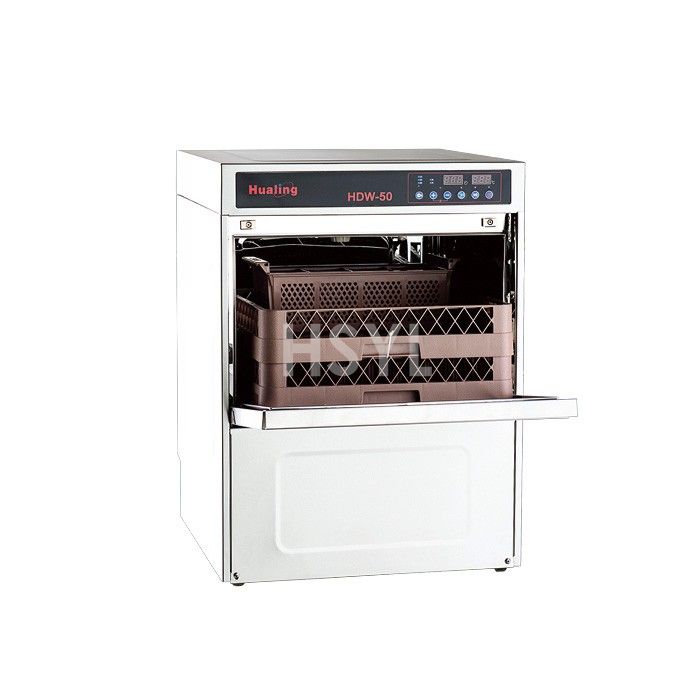
Direct Answer / Key Takeaway: Draw rack entry, clean discharge, operator positions and service access together before accepting a short rack conveyor machine for a tight room.
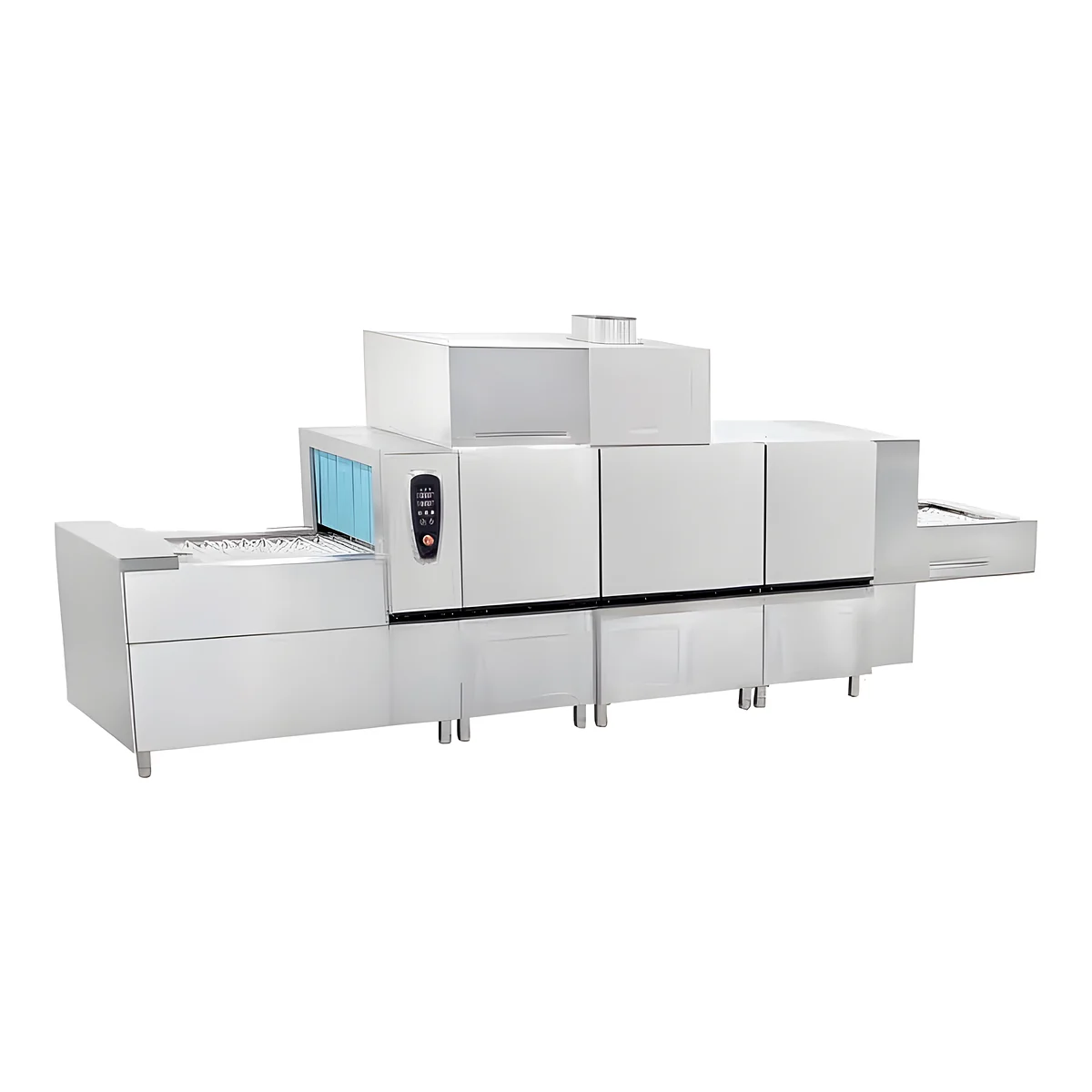
A short rack conveyor machine may fit between two walls while its working line does not. Start the layout with the actual rack journey and the complete installed configuration, including any offered drying or recovery section.
Confirm that the proposed model transports loaded racks. Do not substitute a flight conveyor that carries ware on its own belt or convert a dishes-per-hour figure into racks without an evidenced loading basis. Obtain the exact feed direction, rack requirements and installation drawing.
Draw the rack at each transfer
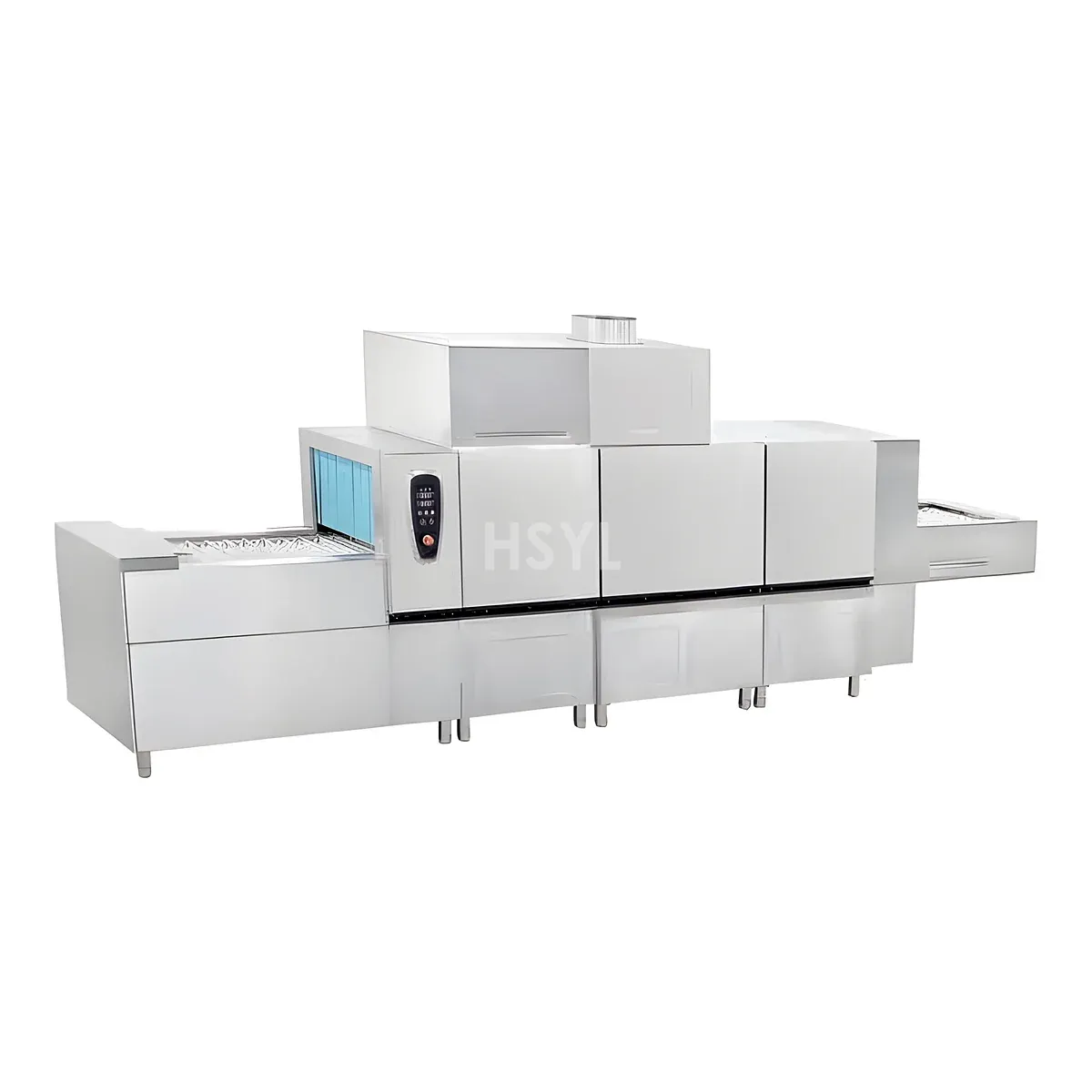
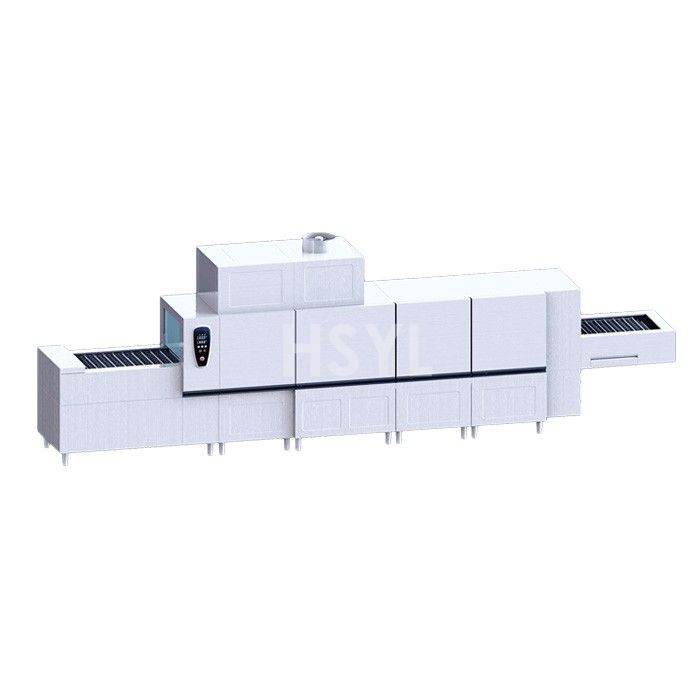
Show a correctly loaded rack at preparation, entry, machine exit and the clean-side handling position. Include its largest permitted ware and the actual transfer height/interface. Identify where the operator stands and turns while the neighbouring positions are occupied.
Resolve the entry and exit tables with the machine supplier. An available corner table or roller section is not automatically an approved transfer arrangement. Do not reduce an interface or omit a required support to make the footprint fit.
The rack-conveyor site-planning guide supports coordinating the real line. Keep clean discharge and returning dirty ware separated through the agreed dishroom design; do not treat an empty passage on the drawing as permanent rack storage.
Overlay the space used at other times
Show doors/covers in their required open position and the actual removal paths for serviceable components. Include water, drains, dosing and any ventilation connections without occupying the required operating or maintenance area. Have competent project reviewers resolve building access, floor support and applicable passage requirements.
Walk through receiving, loading, clean unloading, waste removal and cleaning using an approved layout assessment. A person standing at an empty exit table is not a demonstration of access during the real peak.
Evaluate the queue with the actual arrival pattern and staffing. If clean racks accumulate because unloading or storage is unavailable, a compact machine may spend time stopped despite fitting the room. Use the dishroom bottleneck review to locate that constraint.
Approve a configuration drawing that includes the supported rack path and all required access. If the line only fits by occupying the working passage or removing a necessary table/service space, revise the arrangement before ordering. The machine's body length alone is not a complete compact-dishroom solution.