The best place to buy commercial kitchen equipment is the channel that matches your budget, timeline, and how much after-sales support you can absorb yourself — there is no single best store or website. Authorized distributors charge list price but include brand warranties, certified installation and local service; factory-direct programs cut 15–25% off package orders but leave mechanical and electrical work to you; online marketplaces run 20–40% cheaper but vary in quality and support; and auctions or used equipment sell for 50–70% off with little or no warranty. Match the channel to the risk of the item: complex, revenue-critical machines go through supported channels, while commodities and simple machines can go through cheaper ones.
This guide compares the four main buying channels on price, warranty, installation and the kind of buyer each fits. It assumes you already know the equipment specification — capacity, certification and utility requirements — because the channel decision only makes sense once the equipment is defined. The cheapest channel is rarely the cheapest ownership, and the most expensive is rarely worth it for a $40 spatula.
Key takeaway: Buy complex equipment — combi ovens, blast chillers, high-capacity dishwashers — from authorized distributors or factory-direct channels with verified local service. Buy commodities, smallwares and simple machines from online marketplaces with third-party inspection. Never let channel savings override certification and after-sales reach on revenue-critical equipment.
The Four Main Buying Channels
Every purchase routes through one of four channels, and each trades price against risk in a different way. The table below summarizes them; the sections after it explain where each one breaks down.
Both catering equipment suppliers and restaurant equipment suppliers now sell through several of these channels, so the same distributor may quote list price on one line and a factory-direct rate on another. Before committing, confirm the after-sales terms with the supplier and review our support and service options so channel savings are not erased by slow parts or weak warranty backing.
| Channel | Price level | Warranty support | Installation | Best for |
|---|---|---|---|---|
| Authorized distributor | List price | Brand-backed | Included | Complex equipment, high uptime need |
| Factory-direct | 15%–25% off | Valid via local agent | Separate | Package deals, budget buyers |
| Online marketplace | 20%–40% off | Variable | Separate | Smallwares, disposables, simple machines |
| Auction / used | 50%–70% off | Usually none | Separate | Budget startup, seasonal venues |
Authorized Distributors and Dealers
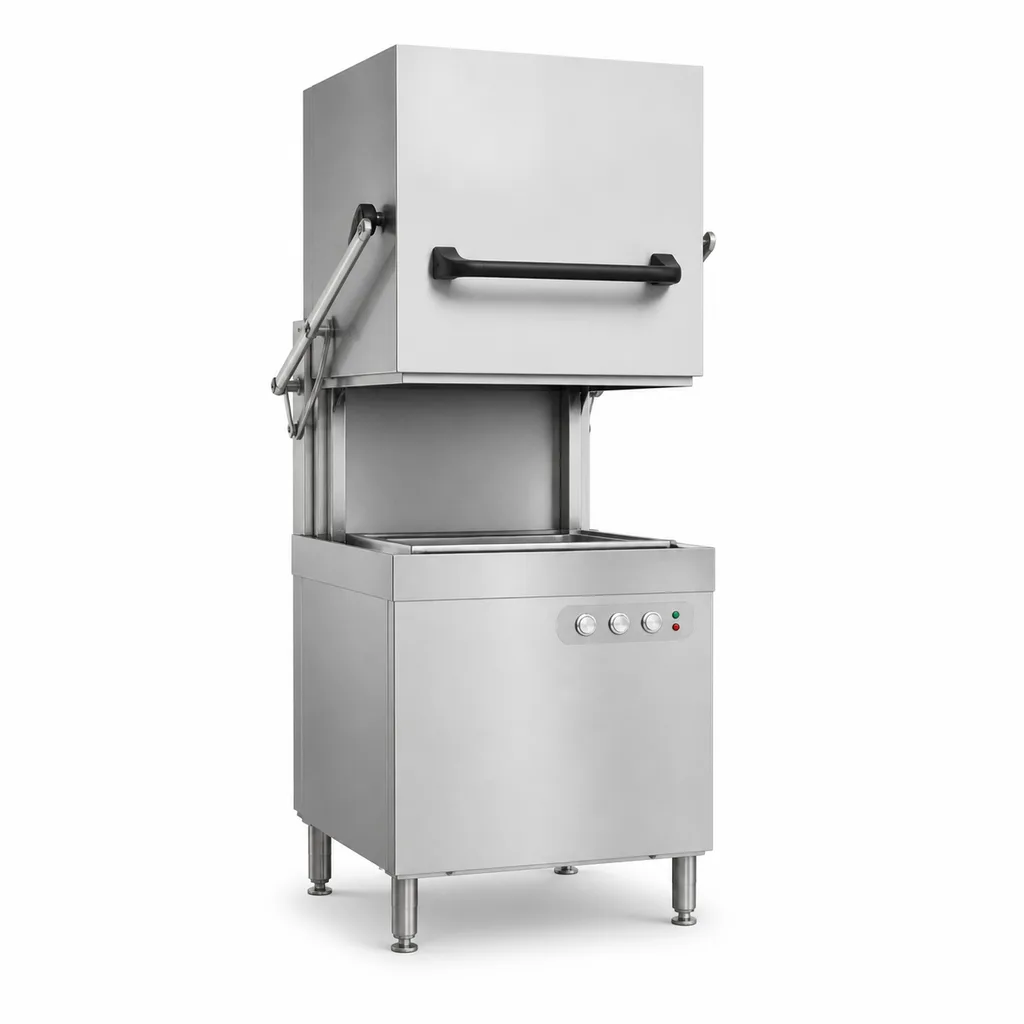
Authorized distributors stock genuine parts, provide brand-certified installation, and handle warranty claims directly. They are the safest choice for complex equipment like combi ovens, blast chillers and high-capacity dishwashers. The downside is price: authorized dealers usually sell at or near list. The hidden value is speed — same-day service, local spare parts and loaner units during maintenance windows. For operators who cannot afford downtime, that premium is justified.
Factory-Direct and OEM Channels
Some brands sell direct to operators or through factory-owned sales offices. The discount can reach 15% to 25% for package orders, but you may need to arrange mechanical installation separately. Factory-direct works best for buyers who already have a trusted mechanical contractor and want to save on equipment cost. Always verify that the factory ships with the correct certification for your market and that the warranty is valid through local service agents — a factory warranty with no local claim path is effectively no warranty.
Online Marketplaces and Import Channels
Online marketplaces offer competitive pricing but vary widely in quality and support. Buyers who import equipment must verify CE, NSF or UL certification for their market, confirm voltage and plug compatibility, and arrange customs clearance. The risk is highest with unbranded or white-label machines that lack documentation. If you buy online, request a factory audit report, sample inspection and third-party quality control before releasing payment. For orders above $10,000, use a letter of credit or escrow service.
Auctions and Used Equipment
Auctions and used-equipment dealers sell at 50%–70% off new list, which is attractive for budget startups and seasonal venues. The trade-off is that warranty is usually none and condition is unknown. Inspect the unit in person or via a third party, confirm it carries the certification your market requires, and budget for immediate belt, seal or element replacement. Used equipment makes sense for non-critical items and backups; it is a poor choice for the one machine your service line cannot run without.
Negotiation, Financing, and After-Sales
Negotiation is not just about price. Ask for spare-parts consignment, commissioning support, operator training and extended warranty options. Financing through the supplier or a preferred lender can preserve cash flow for new operators. After-sales support — response time, parts availability and service-portal access — determines whether the purchase stays profitable over five years. Evaluate your supplier annually on delivery performance, service responsiveness and parts availability.
Common Mistakes When Choosing a Supplier
- Chasing the lowest price on critical gear: a cheap combi oven with no local service costs more in downtime than a list-price unit
- Assuming installation is included: factory-direct and marketplace deals usually leave mechanical and electrical work to you
- Skipping certification checks on imports: an uncertified unit fails inspection and cannot be insured
- Buying used for the wrong item: 50%–70% off is only a saving if the machine is not revenue-critical
- Ignoring payment security: on orders above $10,000, use a letter of credit or escrow rather than upfront wire
Buyer Checklist Before You Commit
- Define the spec first: capacity, certification and utilities — the channel follows the equipment
- Rank by risk: supported channel for complex gear; cheaper channel for commodities
- Confirm certification: NSF, ETL/UL or CE valid for your market, with the certificate number
- Clarify installation: is mechanical and electrical included, or separate?
- Verify service: nearest agent, parts lead time, loaner availability
- Secure the payment: LC or escrow above $10,000; third-party inspection before release
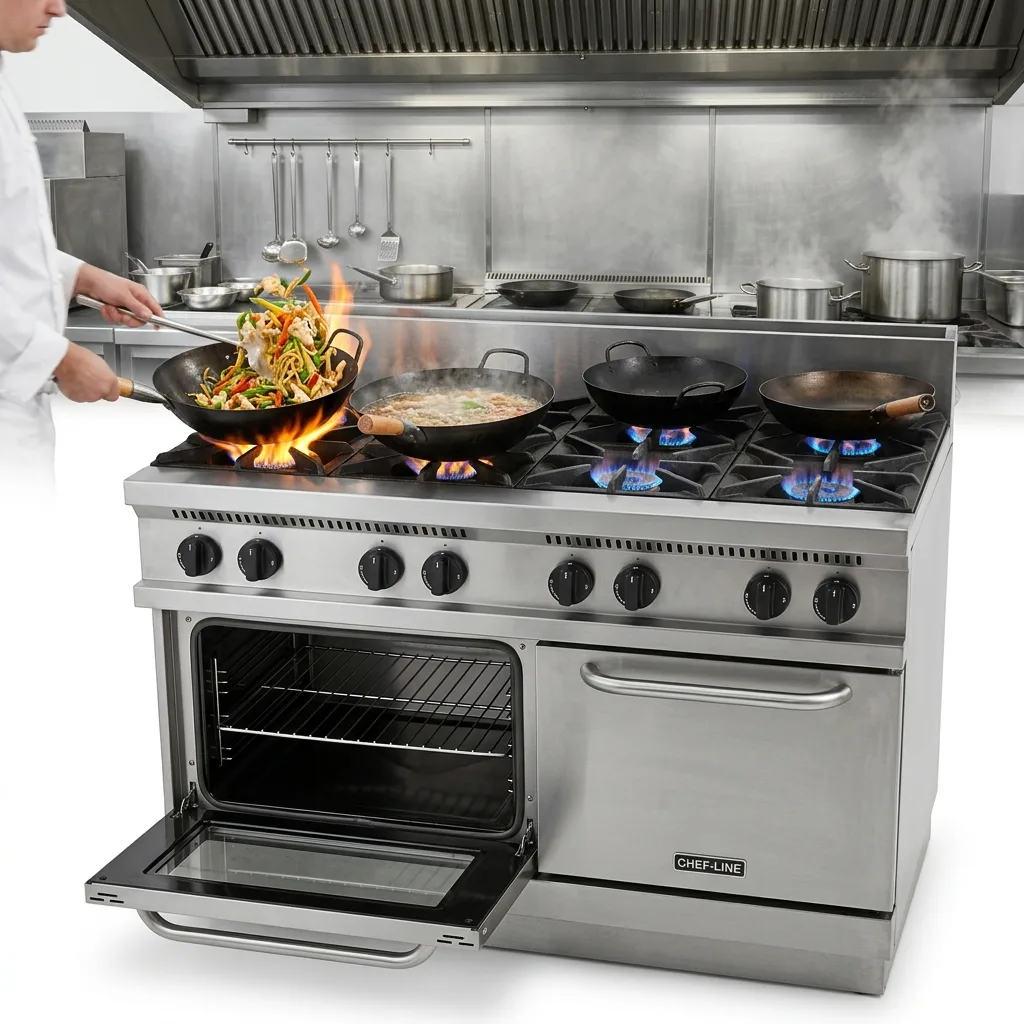
Cooking Equipment
Ranges, ovens, fryers and steamers from dealers and manufacturers.
View cooking equipment →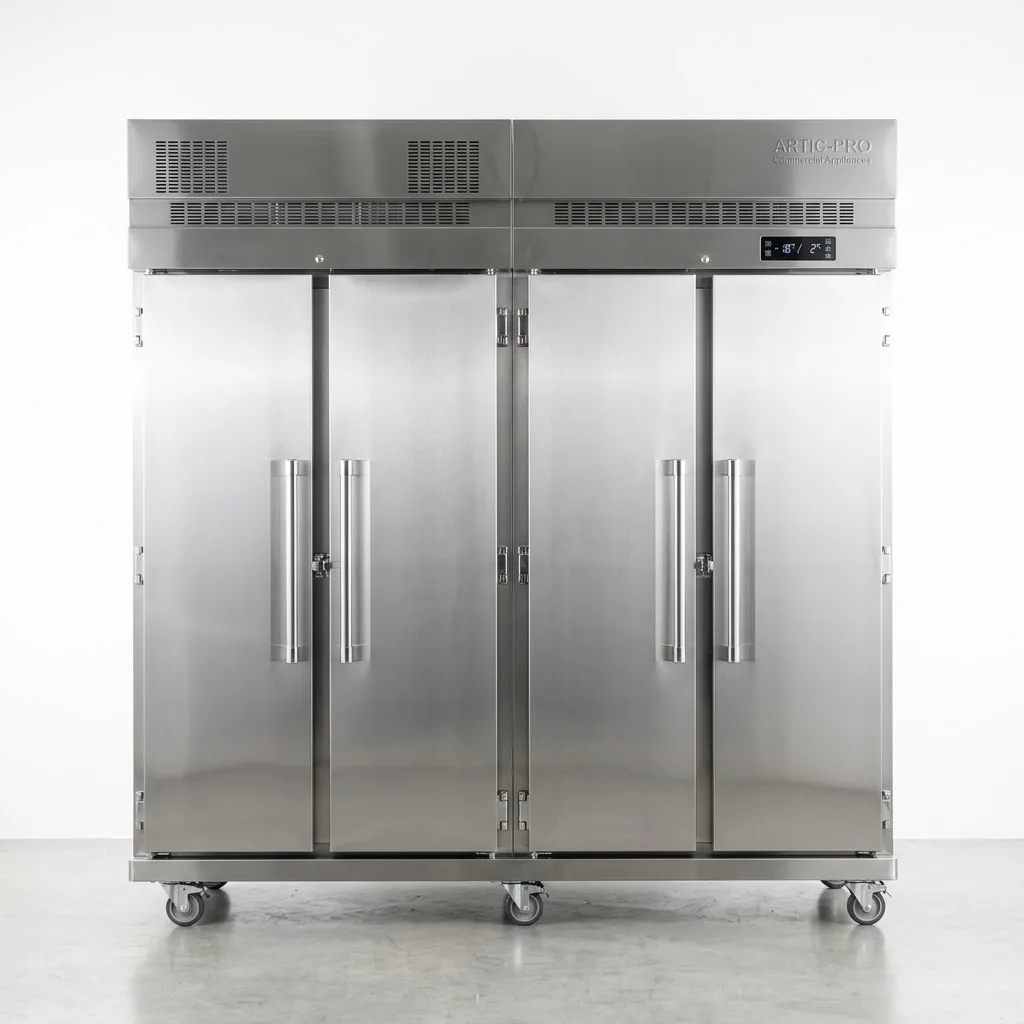
Refrigeration Equipment
Refrigerators, freezers and cold rooms from suppliers.
View refrigeration equipment →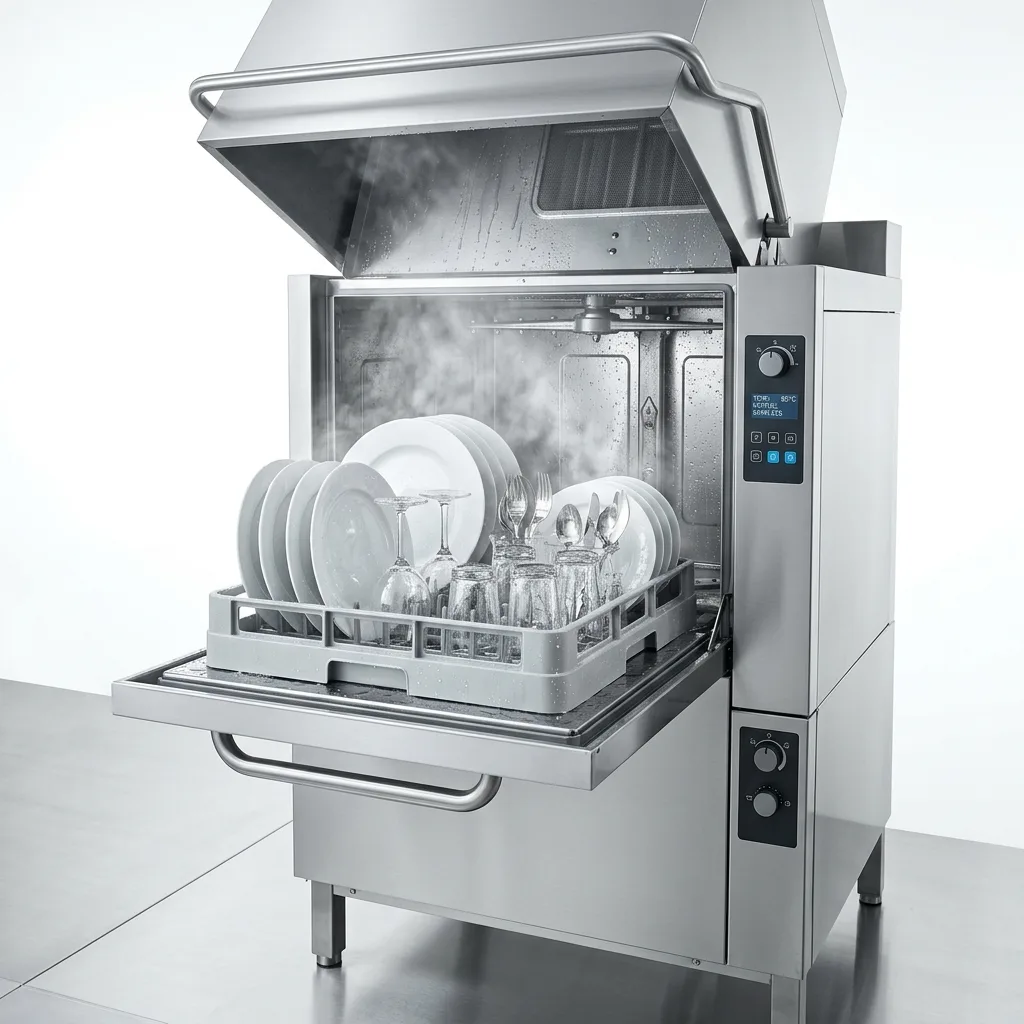
Dishwashing Equipment
Commercial dishwashers and hood-type units for kitchen fit-outs.
View dishwashing equipment →Browse the full cooking equipment range. For hygiene and compliance standards, see our compliance standards guide.
For projects with specific raw material requirements, target capacity needs, or custom factory drawing specifications, contact our team to discuss your working hours and operational requirements. We support full project planning from specification to installation.