A commercial gas oven costs roughly $3,000 for a compact single-deck unit, $4,000–$12,000 for a gas convection oven, and $15,000 or more for a multi-deck stone-hearth model—with bakery decks of five or more decks exceeding $25,000. Those are equipment-only figures. Installed cost runs higher once you add gas-pipe sizing, a ventilation canopy, fire suppression, and permits, and in a retrofit that package can approach double the sticker price. This guide separates the machine price from the line items that decide your total spend, and shows how to spec a gas oven so supplier quotes become comparable.
Gas oven pricing looks simple until you separate the appliance from the mechanical work around it. The variables that move the number are deck count and hearth type, oven family, insulation and control grade, gas-line and hood requirements, and new versus refurbished. Fix those and a $3,000 quote and a $25,000 quote stop being random—each answers a different kitchen.
Key takeaway: Budget $3,000–$15,000+ for the gas oven itself and expect installed cost to run higher with gas piping, hood, suppression and permits. Request a fixed-price mechanical package before signing, and benchmark energy cost per tray-hour against your electric baseline.
Why gas oven pricing is more than the sticker price
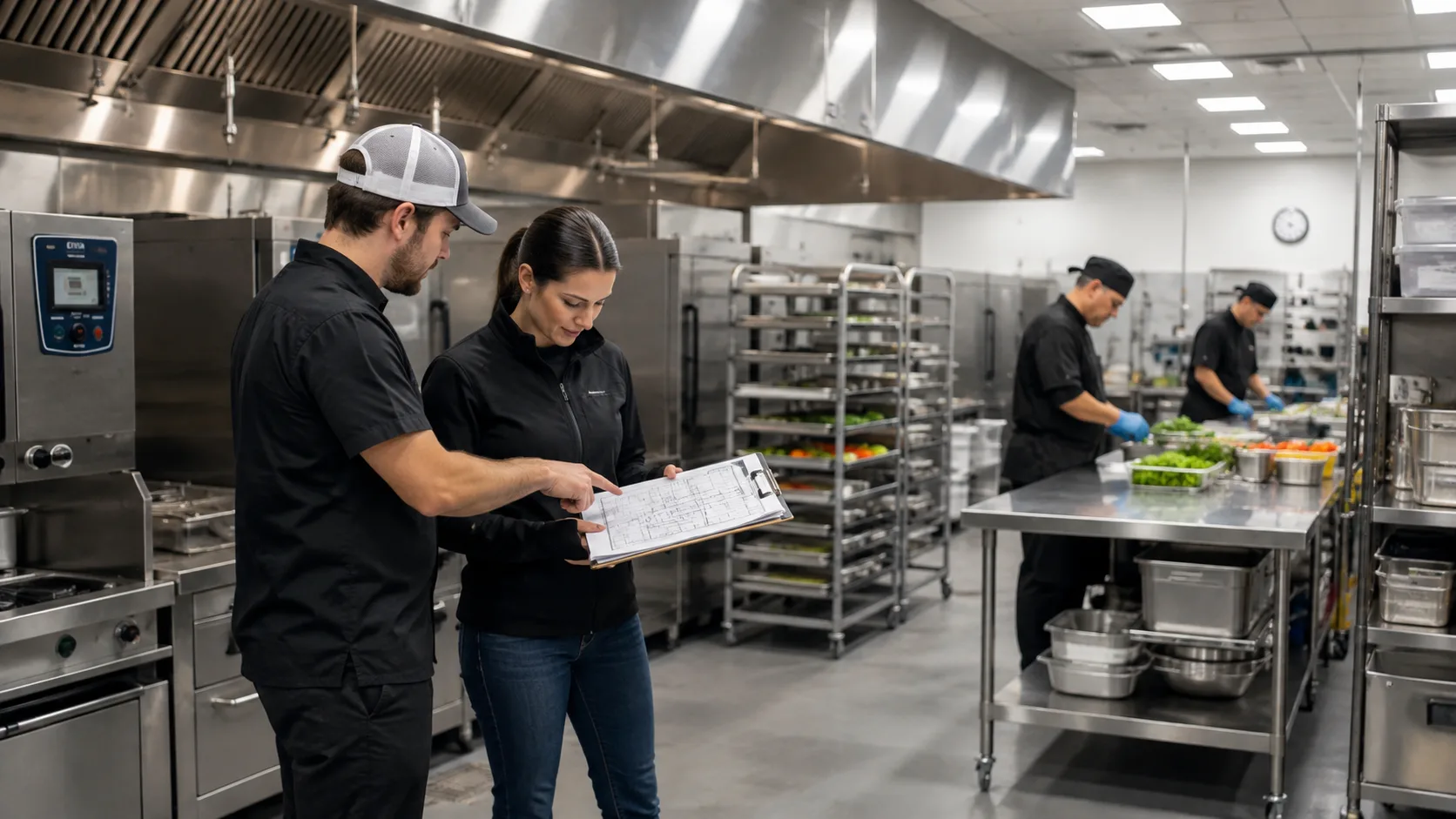
A commercial gas oven quote usually covers the machine, freight, and sometimes basic commissioning, but rarely gas-line upgrades, ventilation canopy, fire-suppression, and permits. In retrofits those hidden items can double installed cost. Request a fully installed price with BTU-rated hood design, gas-pipe sizing, and inspection fees, and treat oven price and installed price as separate budgets.
Equipment price ranges
Gas deck ovens start around $3,000 for compact single-deck units and scale to $15,000 or more for multi-deck stone hearth models. Gas convection ovens run $4,000 to $12,000 depending on size and burner configuration. High-capacity bakery deck ovens with five or more decks can exceed $25,000. The spread reflects insulation quality, hearth material, door sealing, and control sophistication.
Installation and utility costs
Gas piping must be sized for total BTUH draw, not just the oven. A single deck at 60,000 BTUH needs a 1.25-inch pipe over 30 m; beyond that the line should be upsized. Hood design must match thermal output with grease filters, a fan schedule, and a fire-suppression interlock. Electric utilities are simpler but cost more per hour of bake time.
Gas oven selection variables worth paying for
Within a given size, the gap between an economy and a premium gas oven comes down to build details. Heavier door seals hold bake temperature through a busy service and cut heat loss at the deck face. Thicker deck stone or composite hearth holds and returns heat between loads. Independent thermostatic control per deck lets you bake bread and roast at different setpoints in one cabinet. When two quotes are $2,000 apart, ask what changes in sealing, hearth mass, and per-deck control before assuming the cheaper unit is better.
Energy cost comparison: gas versus electric
In most markets gas costs 40% to 60% less per BTU than electricity. Over five years a gas deck oven can save $8,000 to $18,000 versus a comparable electric unit; a well-insulated electric convection oven with humidity recovery narrows that gap. Request per-cycle energy data and compare actual BTUs per tray-hour rather than rated input.
| Oven type | Rated input | Annual energy cost | 5-year total |
|---|---|---|---|
| Gas deck oven | 65,000 BTUH | $3,200 – $4,800 | $16,000 – $24,000 |
| Electric convection oven | 18 kW | $5,400 – $7,800 | $27,000 – $39,000 |
| Gas convection oven | 55,000 BTUH | $2,800 – $4,200 | $14,000 – $21,000 |
The table compares rated input to a real operating pattern. A bakery running 300 days a year sees the gas-versus-electric gap compound into five figures, so fuel choice should follow daily bake hours and local tariffs, not just purchase price.
Ventilation, codes, and safety
Gas ovens emit combustion products and radiant heat, so the exhaust canopy needs higher airflow than an equivalent electric oven. Many jurisdictions require a Type 1 hood with automatic fire suppression for high-BTU gas appliances. The gas line needs a manual shutoff within 6 m of the oven and an automatic solenoid interlocked with ventilation. Expect the mechanical contractor to charge three to five days for rough-in, testing, and inspection.
Negotiating the spec and price
When requesting quotes, specify tray size, bake temperature range, door configuration, and stone versus composite hearth. Ask for NFPA 96 compliance documentation and a copy of the hood design before accepting the price. If comparing vendors, request energy-use data in the same units—BTUs per tray-hour or kWh per cycle—and name the certification marks your market requires, with certificate numbers.
Used gas ovens and residual value
Refurbished gas deck ovens cut capital spend by 30% to 50%, but verify hearth condition, door seals, and burner alignment. Stone hearths crack under thermal shock; a hairline crack worsens each heating cycle and eventually needs replacement. Test-fire used ovens before purchase and check temperature uniformity with a datalogger across the baking surface. A five-year-old gas deck in good condition still commands 35% to 45% of original price in institutional resale. Keep the original hood and gas drawings, because a replacement that does not match the existing rough-in erases the saving.
Browse the full cooking equipment range. For utility planning support, see our installation and maintenance support.
Cooking Equipment
Gas ovens, ranges and deck ovens for bakeries and full-service kitchens.
View cooking equipment →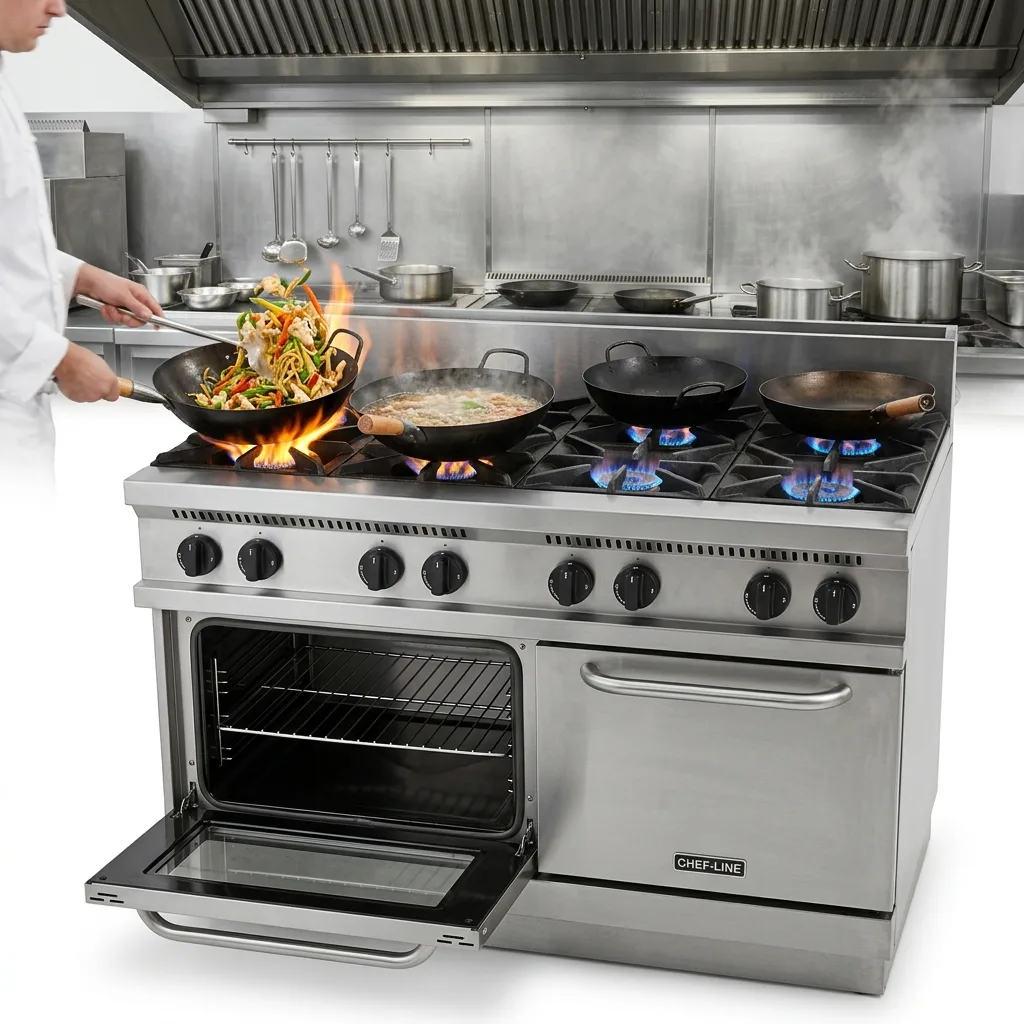
For projects with specific raw material requirements, target capacity needs, or custom factory drawing specifications, contact our team to discuss your working hours and operational requirements. We support full project planning from specification to installation.