Executive Engineering Summary: Authentic Italian Culinary Thermodynamics
Authentic Italian culinary execution—from high-hydration Neapolitan pizza and extruded fresh pasta to delicate cured salumi antipasti—demands specialized thermodynamic machinery capable of reaching extreme temperatures while respecting delicate food chemistry. A commercial Italian restaurant kitchen operates across two distinct thermodynamic extremes: blazing pizza hearths exceeding 450°C and precise cold dough retarder chambers held at +4°C. Designing an efficient Italian culinary kitchen requires strict spatial zoning to quarantine radiated thermal heat away from delicate dough fermentations and fresh cheese staging.
Pizzeria Engineering Rule: Dough preparation and pizza baking must be thermally quarantined. Keep the spiral dough mixer, ingredient retarder-prover cabinet, and granite-top prep counters completely isolated from the radiant thermal field of the 450°C pizza oven.
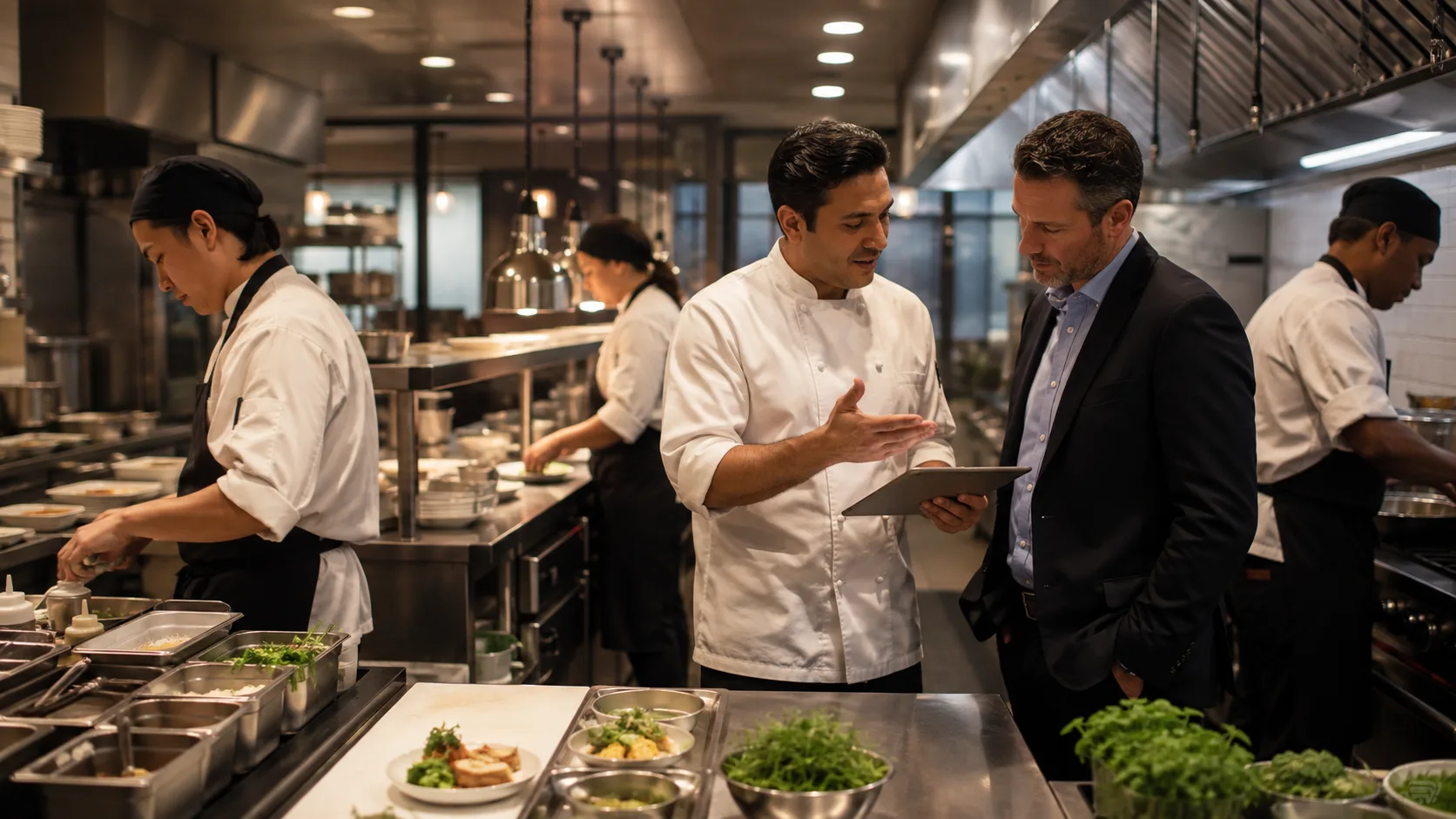
Figure 1: Italian trattoria production line featuring multi-basket pasta cooker, plancha, and granite-top refrigerated pizza prep counter.
The Pizzeria Battery: High-Temperature Ovens & Dough Staging
The pizza station represents both the visual centerpiece and primary profit center of an Italian restaurant. Commercial pizza baking equipment must balance thermal mass retention, rapid recovery between peel insertions, and uniform air convection:
- Neapolitan High-Heat Refractory Ovens (430°C to 485°C): Built with artisanal refractory clay hearth stones (such as genuine Biscotto di Sorrento) that transfer heat gently to prevent dough blistering and scorched crust bottoms during 60-to-90-second bake cycles. Available in wood-fired, natural gas, or high-amp electric rotary formats.
- Commercial Electric Deck Pizza Ovens (300°C to 400°C): Featuring independent top and bottom armored heating elements, 25mm thick cordierite stone baking decks, and digital heat throttling. Ideal for Roman-style pizza al taglio, focaccia, and classic thin-crust styles.
- Dual-Speed Spiral Dough Mixers: Designed specifically for high-hydration doughs (65% to 80% water ratio). Unlike planetary agitators that shear dough violently, the synchronized rotation of the spiral hook and the stainless steel bowl develops optimal gluten webbing without elevating dough friction temperature above 24°C.
- Refrigerated Granite Pizza Prep Counters: Featuring natural 30mm thick polished granite work surfaces. Granite remains naturally cool, preventing dough oil separation and dough sticking during hand stretching. Integrated top rails hold 1/3 or 1/6 Gastronorm pans of mozzarella, San Marzano tomato sauce, and fresh toppings under constant refrigeration (+2°C to +6°C).
Italian Specialty Kitchen Equipment Matrix
| Appliance Model / Type | Operating Temperature Range | Hearth Stone / Contact Material | Hourly Output Throughput | Culinary Engineering Function |
|---|---|---|---|---|
| HS-PZ90-NEO (Neapolitan Oven) | 430°C – 485°C (800°F–900°F) | Biscotto di Sorrento Refractory Clay | 80–120 pizzas (12") / hr | 60–90 sec flash bake with leopard cornicione |
| HS-DK2-ELEC (Deck Pizza Oven) | 300°C – 400°C (570°F–750°F) | Cordierite Ceramic Deck (25mm) | 32–48 pizzas (14") / hr | Independent top/bottom thermodynamic control |
| HS-PST6-AUT (Auto Pasta Cooker) | 98°C – 102°C (Rolling Boil) | AISI 316L Acid-Resistant Stainless | 180–240 portions / hr | Auto basket lifters & continuous starch skim weir |
| HS-MX40-SPR (Spiral Dough Mixer) | Dual Speed (100 / 200 RPM) | AISI 304 Stainless Steel Bowl | 40kg dough batch / 12 min | Low-friction gluten network preservation |
| HS-SLC350-GR (Gravity Meat Slicer) | Ambient / Chilled (-2°C to +4°C) | 350mm Hardened Chromium Blade | Micrometer cut 0 to 15mm | Tissue-thin prosciutto & speck slicing without shredding |
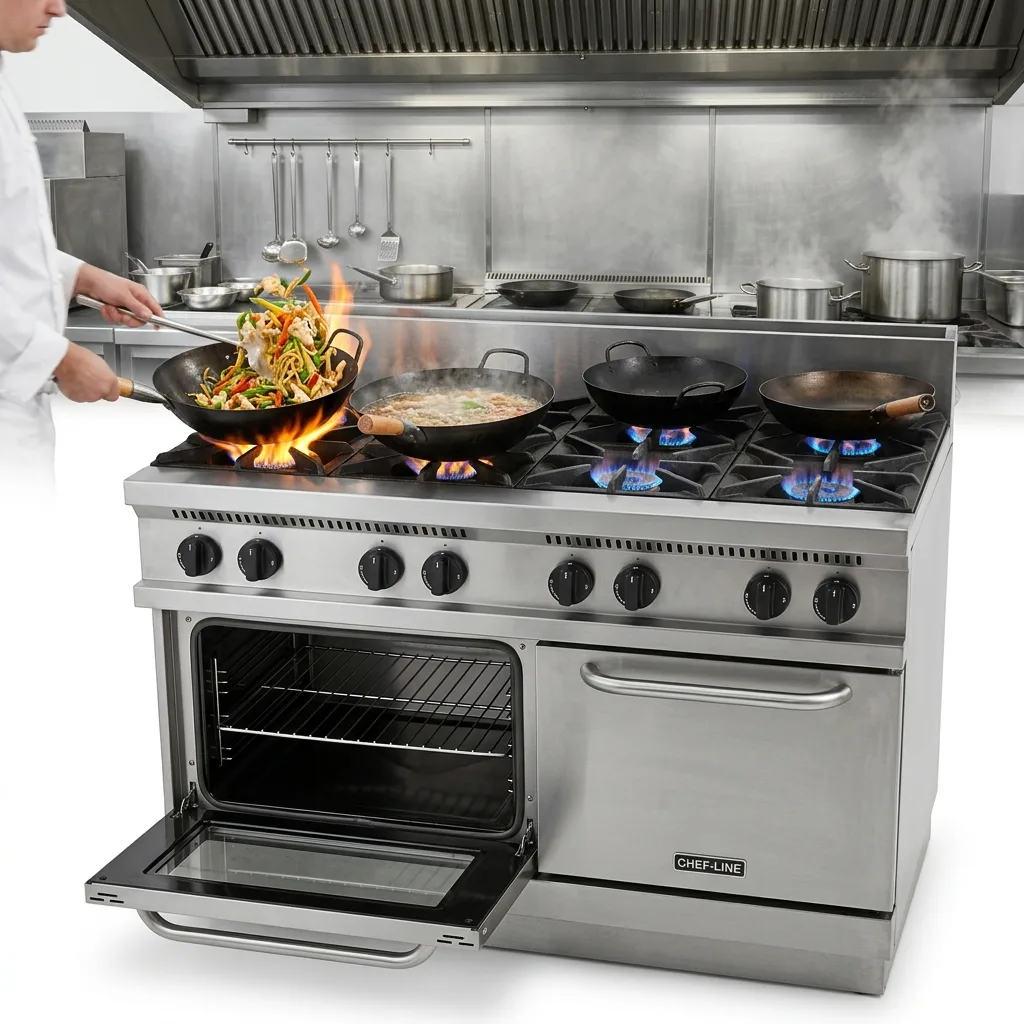
Figure 2: Dedicated pasta battery equipped with automatic timed basket lifts, starch skimmer, and adjacent gas sauté range.
Dedicated High-Speed Pasta Cooker Station Engineering
In high-volume Italian restaurants, boiling multiple portions of pasta in conventional stockpots creates dangerous boil-overs, thermal delays, and inconsistent noodle textures. A dedicated commercial pasta cooker station solves these issues through specialized engineering:
- Continuous Starch Skimming Zone: Continuous boiling releases high concentrations of surface starch. Professional pasta cookers feature a continuous surface water trickle that pushes frothy starch over a front weir drain, ensuring that boiling water remains crystal clear.
- Corrosion-Resistant AISI 316L Stainless Steel Tanks: Standard 304 stainless steel suffers chloride pitting corrosion when exposed to continuous boiling heavily-salted pasta water (20g–30g salt per liter). Premium pasta cookers utilize molybdenum-alloyed AISI 316L tanks to eliminate tank pinhole leaks.
- Motorized Automatic Basket Lifters: Each of the 4 to 6 individual pasta baskets is linked to a digital electronic countdown timer. When the pre-programmed al dente cook time expires (e.g. 3 minutes for fresh tagliolini; 9 minutes for dry rigatoni), the basket lifts out of the boiling water automatically within ±1 second, preventing overcooking.
- High-KW Thermal Recovery: Sinking four baskets of cold fresh pasta into the tank drops water temperature dramatically. Heavy-duty 18 kW to 24 kW electric elements or high-pressure gas jet burners deliver instant thermal recovery, returning the tank to a vigorous rolling boil in under 20 seconds.
Salumeria, Antipasti & Cold Slicing Operations
Italian charcuterie requires surgical equipment precision to deliver paper-thin slices of prosciutto di Parma, mortadella, and bresaola without tearing muscle fibers or melting intramuscular fats:
- Gear-Driven Commercial Gravity Slicers: Belt-driven slicers slip under heavy loads. Professional salumeria slicers feature direct gear-driven transmission, a 350mm special alloy chrome steel blade, an integrated two-stone sharpener, and precision micrometer gauge control (adjustable from 0.2mm to 15mm).
- Dual-Temperature Wine Preservation Units: Italian dining relies heavily on wine pairings. Undercounter and full-height wine display coolers feature dual temperature zones—holding crisp whites (Pinot Grigio, Vermentino) at 7°C to 9°C and bold reds (Chianti, Barolo) at 16°C to 18°C with vibration-dampened compressors.
Specialty Italian Kitchen Ventilation & Safety Standards
Wood-fired pizza ovens and high-heat gas deck ovens generate high volumes of airborne soot, fine ash, and combustion exhaust that cannot be commingled with standard kitchen ductwork:
- Dedicated Solid-Fuel Exhaust Flues: Under NFPA 96, wood-burning pizza ovens must vent through an independent double-wall stainless steel chimney (UL 103 HT rated for 1,000°C intermittent temperatures). Commingling wood exhaust with grease-laden fryer exhaust risks catastrophic flue fires.
- Electrostatic Precipitators & Water Scrubbers: High-density urban trattorias require inline water mist scrubbers or electrostatic air cleaners to trap 98%+ of particulate matter and wood smoke aromas before rooftop discharge, ensuring strict municipal clean-air compliance.
Italian Pizza Dough Science & Retarded Fermentation Kinetics
Authentic Italian pizza dough relies on cold fermentation kinetics that demand precise refrigeration humidity and thermal control:
| Fermentation Stage | Target Temp & RH% | Equipment Solution | Biochemical Process Controlled |
|---|---|---|---|
| Phase 1: Spiral Dough Mixing | 22°C – 24°C final dough temp | Low-friction dual-speed spiral mixer | Gluten protein matrix alignment (Gliadin & Glutenin) |
| Phase 2: Bulk Rest / Puntata | 20°C – 22°C ambient | Stainless steel dough tub with airtight lid | Yeast activation and initial gas cell nucleation |
| Phase 3: Cold Maturation (24–72h) | +3°C to +4°C / 75% RH | Controlled retarder-prover cabinet | Proteolysis breaks complex starches into sweet simple sugars |
| Phase 4: Pre-Bake Staging | +18°C to +20°C | Polyethylene stackable dough proofing boxes | Gas volume expansion without skin drying or crusting |
Daily Maintenance, Hearth Stone Care & Flour Dust Control
Maintaining high-temperature Italian pizza ovens and pasta equipment requires disciplined daily operational procedures:
- Biscotto Hearth Stone Care: Never apply cold water, cleaning detergents, or chemical solvents to a hot pizza deck stone; thermal shock will crack refractory clay. Stones must be swept with natural brass-bristle oven brushes and carbon residue removed via high-heat pyrolysis (holding oven at 450°C for 30 minutes to turn fallen toppings to white ash).
- Airborne Flour Dust (Baker's Asthma) Prevention: Loading spiral mixers releases fine airborne flour particles. Commercial trattorias install local source capture dust hoods over mixers or utilize spiral mixers equipped with transparent polycarbonate bowl safety covers and integrated flour dust aspirators.
- Descaling High-Temperature Pasta Cookers: Due to continuous rolling boils and salted water, stainless steel pasta tanks develop hard calcium and salt crusts. Daily drain flushes and weekly vinegar or organic citric acid boil-outs prevent pitting corrosion and heating element thermal hotspots.