Educational cafeteria kitchens face a unique operational challenge that differentiates them from standard restaurants: feeding 500 to 3,000+ students and staff members in extremely compressed 40 to 60-minute service windows. Sizing commercial cooking and warewashing equipment based on daily total volume results in catastrophic bottlenecks during lunchtime surges. A successfully engineered school kitchen balances heavy-duty batch cooking equipment, automated food preparation, high-speed multi-station servery lines, and rapid thermal recovery dishwashing capable of processing thousands of trays in under an hour.
Key Takeaway for School District Planners: School cafeteria equipment must be specified around peak service throughput per minute. Investing in high-recovery jacketed steam kettles, multi-deck combi steamers, and continuous self-service drop-in drop-through serving wells ensures uniform meal temperature, student safety, and minimal food waste while meeting strict USDA/National School Lunch Program nutritional standards.
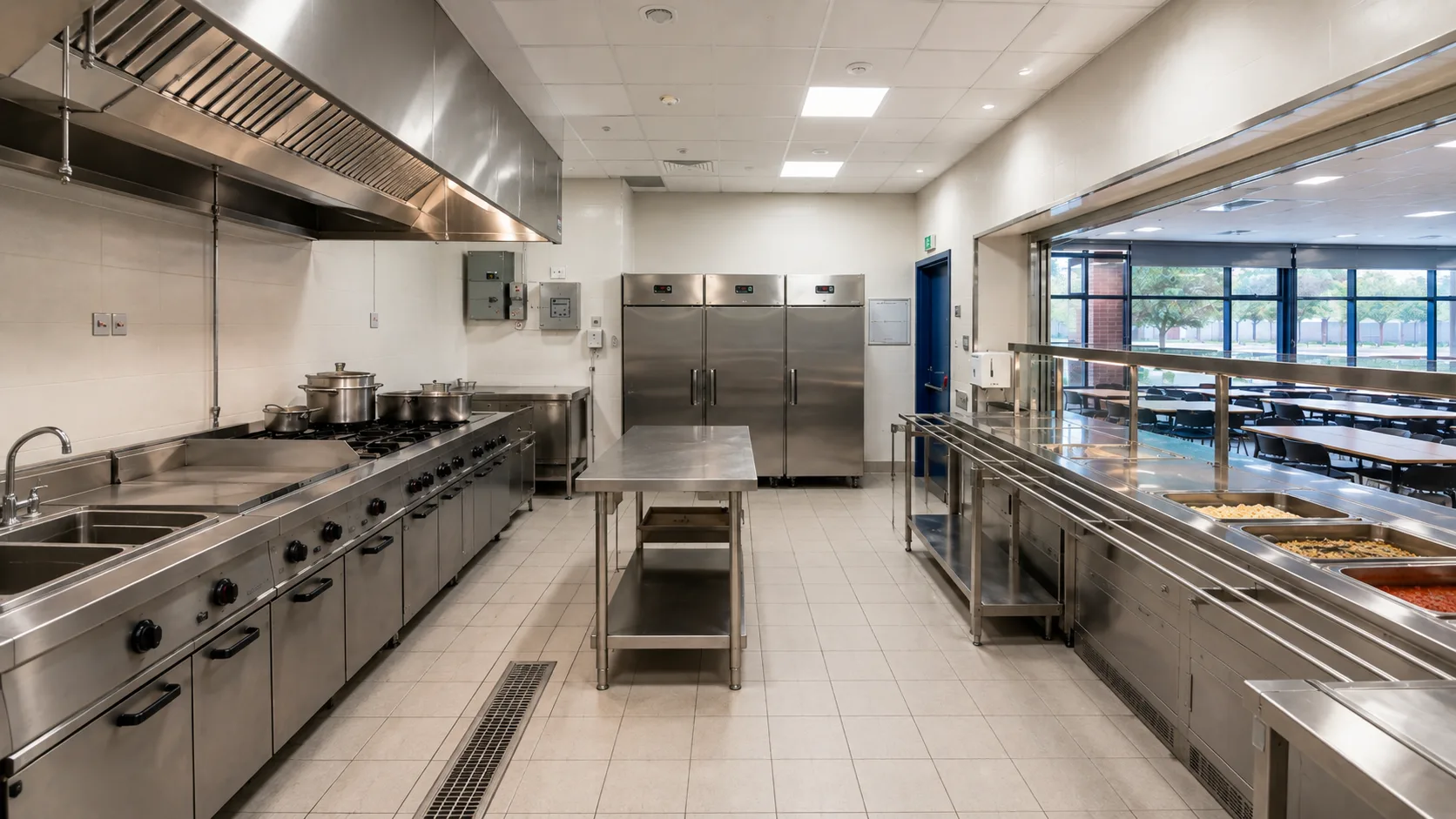
1. Surviving the 45-Minute Surge: Speed-of-Service Engineering
In high schools, colleges, and university dining halls, lines must move at a minimum rate of 12 to 18 students per cashier minute to ensure every student receives a hot meal and has sufficient time to eat. Equipment choices directly dictate this speed:
- Self-Service Drop-In Servery Lines: Heated wells with independent digital PID thermostats and overhead quartz heat lamps holding GN 1/1 pans at constant 65°C without crusting or drying.
- Pass-Through Heated & Chilled Holding Cabinets: Positioned directly between the back cookline and the front servery counters, allowing kitchen staff to replenish empty trays from the rear without disrupting student service lines.
- Ergonomic Low-Profile Tray Slides: Dual-tier stainless steel tubular tray runners with integrated napkin, silverware, and beverage dispensers designed to prevent bottlenecks.
2. High-Volume Batch Cooking Architecture
School menus focus on batch-prepared foods: pasta, steamed vegetables, stews, roasted chicken, and baked pizza sheets. The heavy lifting is performed by high-capacity bulk cooking units:
| Equipment Category | Primary Kitchen Role | Capacity / Spec Recommendation | Key Efficiency Advantage |
|---|---|---|---|
| Tilting Jacketed Steam Kettles | Soups, curries, bulk rice, pasta, chili | 150L to 300L direct steam or electric | Even 360° hemispherical jacket heating prevents bottom scorch; hydraulic tilt cuts unloading labor by 75%. |
| Multi-Deck Combi Steamers | Vegetables, sheet pan bakes, roasted meats | 20-Pan GN 2/1 Roll-in Trolley Cabinets | Combined steam and convection preserves vitamin retention, enhances color, and cuts cooking shrinkage by 15%. |
| Tilting Braising Pans (Skillets) | Browning ground meat, stir-fries, shallow frying | 100L to 160L rectangular stainless pan | Versatile all-in-one footprint replacing multiple range burners; easy pour spout for rapid transfer into GN pans. |
| Pass-Through Heated Cabinets | Holding pre-cooked sheet pans prior to service | Full-height dual-compartment insulated | Precision humidity control prevents meal dehydration during extended holding periods across staggered lunch periods. |
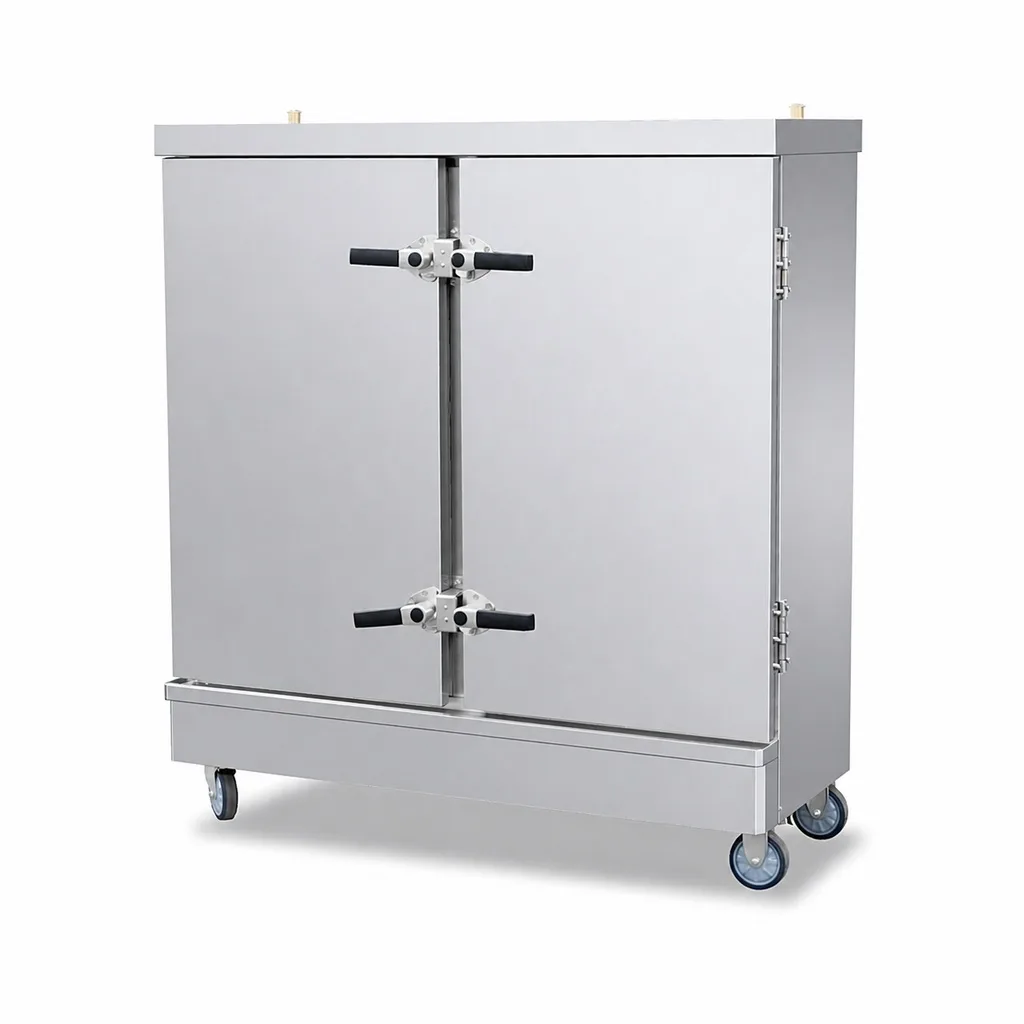
3. Dishwashing Throughput: Processing Thousands of Trays in 60 Minutes
At the conclusion of each lunch period, school kitchens receive an overwhelming surge of compartment trays, cutlery, and cups. Specifying an undersized dishwasher creates kitchen-wide chaos and safety hazards:
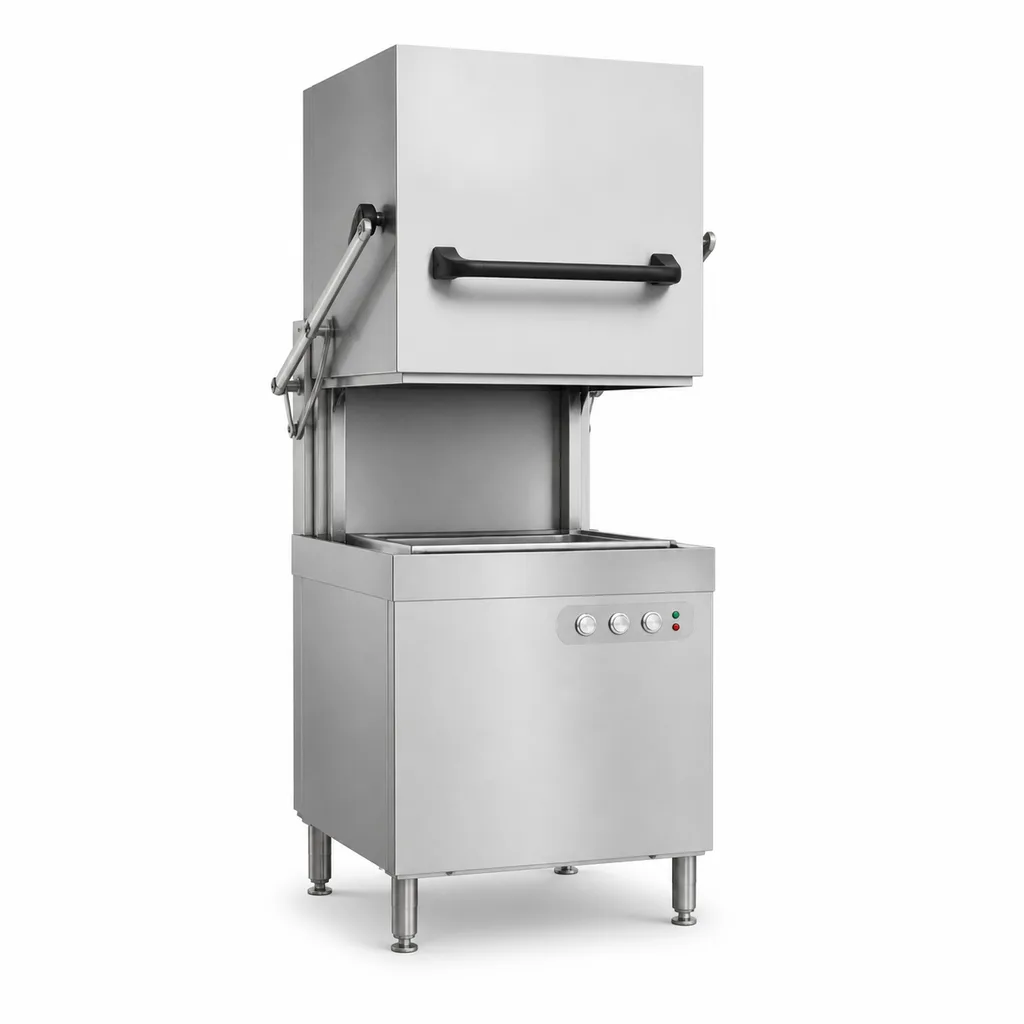
- For 300–600 Students: High-temperature hood-type dishwasher with automated hood lift, heavy-duty scrap table with pre-rinse spray, and roller infeed/outfeed tabling (approx. 60–80 racks/hr).
- For 600–1,500 Students: Compact rack conveyor dishwasher with dual wash tanks and auxiliary rinse booster, delivering 150 to 220 racks per hour with heat recovery condenser to eliminate external exhaust hoods.
- For 1,500+ Students: Flight-type conveyor dishwasher where compartment trays are placed directly onto the motorized finger belt without loading racks, processing 2,500 to 4,500 trays/hr with automated scrap collection.
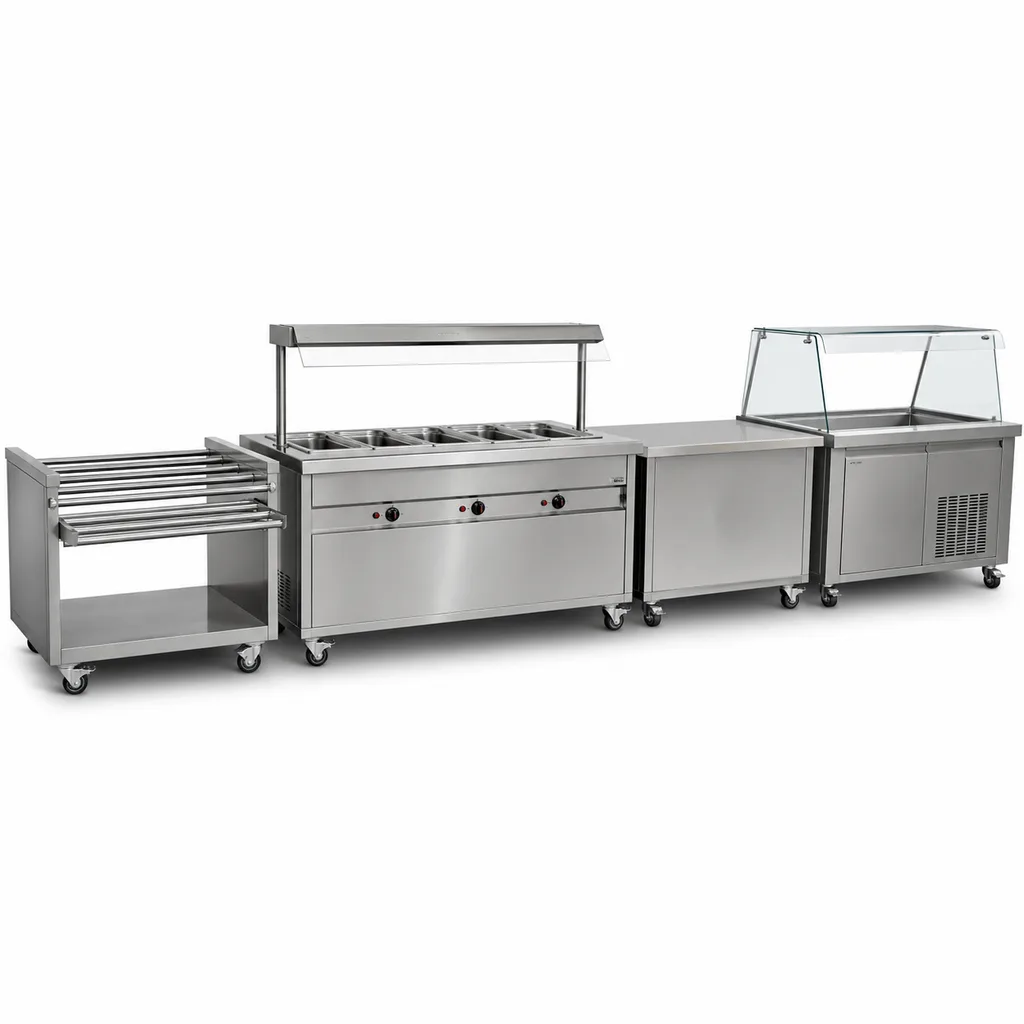
4. Safety, Ergonomics & Summer Modernization Timelines
School culinary workers frequently handle heavy weights. Facilities should mandate the following safety engineering:
- Anti-Scald Exterior Protection: Double-walled insulated kettles and combi oven triple-glazed doors maintaining touch-safe external temperatures below 45°C.
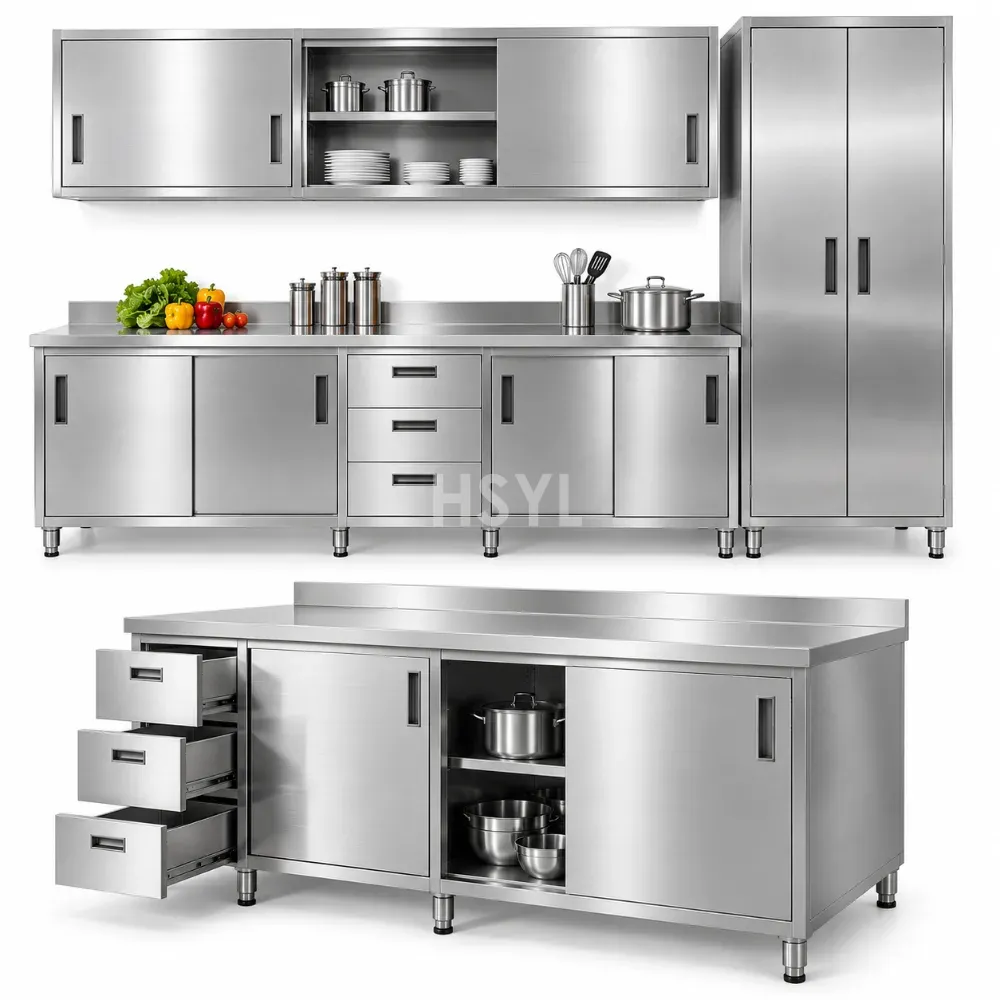
- Seamless 14-Gauge Stainless Fabrication: Coved corner splashbacks (10mm radius) eliminate bacterial traps, ensuring health inspection compliance with minimal chemical cleaning.
- Project Delivery Timelines: School district procurement cycles typically require equipment manufacturing and FAT testing during spring, with full mechanical delivery, installation, and commissioning completed during the 6 to 8-week summer recess.