Direct Answer / Key Takeaway: Comprehensive engineering manual for Heavy-Duty Chrome Griddle evaluating gas vs electric operating costs and recovery. Inspect engineering calculations,.
Mission-critical commercial food service relies upon uncompromising equipment architecture. For facility directors and project engineers evaluating Standard Duty Heavy-Duty Chrome Griddle, this technical review delivers in-depth analysis across gas vs electric operating cost & recovery comparison, addressing dimensional tolerances, utility infrastructure, and regulatory quality assurance standards.
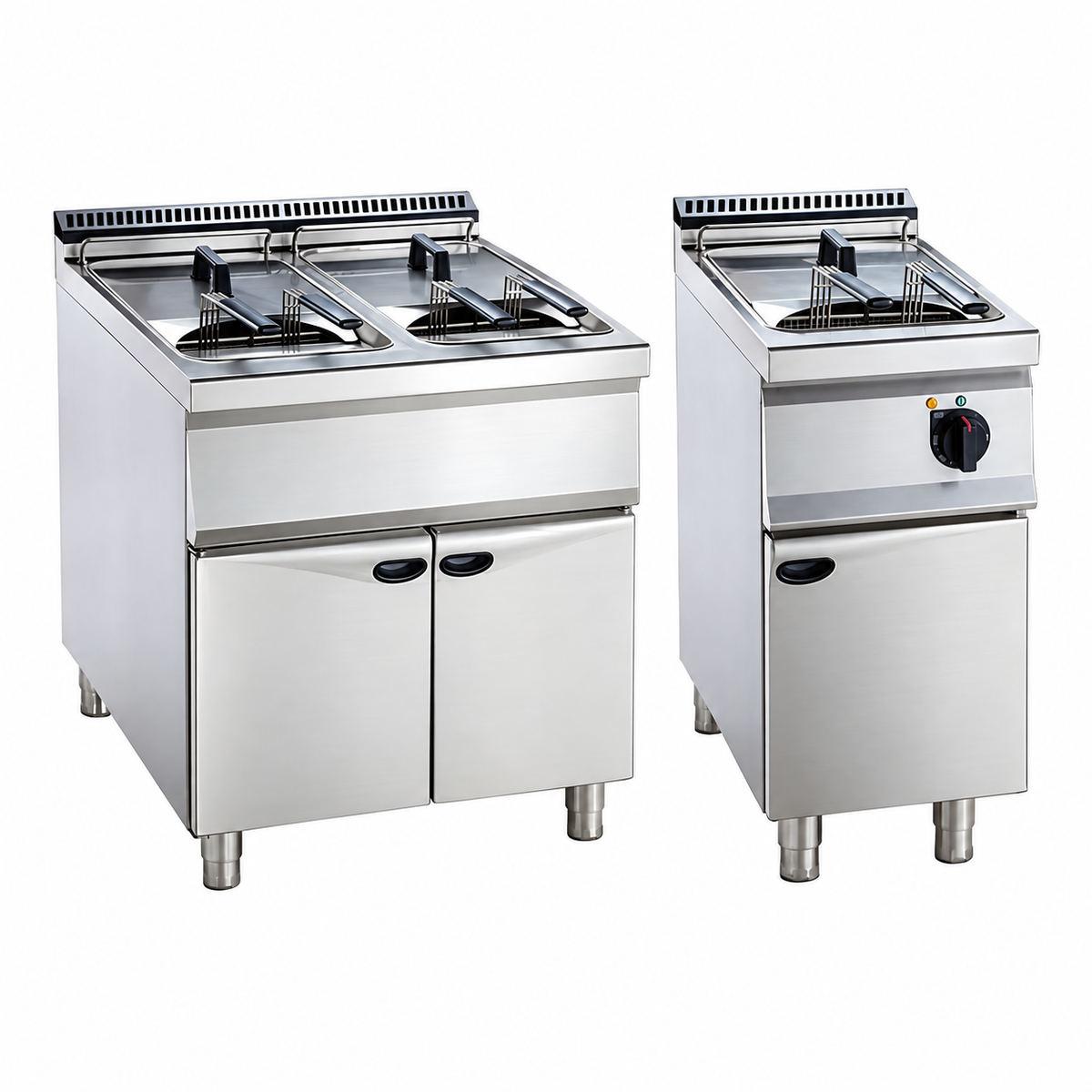
1. Facility Context, Ergonomics & Station Optimization: Gas vs Electric Operating Cost & Recovery Comparison
Gas vs. Electric Energy Economics, Efficiency & Utility TCO Analysis:
Procurement evaluations between gas and electric commercial kitchen machinery require rigorous modeling of local utility rate tariffs against thermal conversion efficiency. Atmospheric natural gas burners deliver typical thermal transfer efficiencies of 40% to 50%, with the remaining sensible heat lost to exhaust flues and ambient air, whereas heavy-duty electric elements achieve 85% to 90% and commercial induction exceeds 90% efficiency. Consulting engineers calculate the operational breakeven threshold: Operating Cost/Hour = (Rated kW * Electricity Tariff $/kWh) versus ((Rated BTU/hr / 100,000) * Gas Tariff $/therm). While electric appliances deliver faster temperature recovery and reduce air conditioning loads, they demand expensive 3-phase high-amperage facility service upgrades. Conversely, gas appliances require investment in NFPA 96-compliant Type I commercial exhaust canopies, continuous dedicated make-up air (MUA) fan systems, and automated fire suppression interlocks, which significantly elevate upfront MEP capital expenditure (CAPEX).
When sizing equipment for peak production hours, facility planners must reference verified commercial deep fryer thermal recovery duty sizing to ensure capacity reserves remain aligned with scheduled shift turnover targets.
2. Comprehensive Technical Specifications & Material Benchmarks
Engineering evaluation requires contrasting component fabrication, power consumption, and mechanical duty ratings. The comparative table below outlines operational parameters for Standard Duty Heavy-Duty Chrome Griddle:
| Engineering Parameter | Standard Commercial Spec | Heavy-Duty Institutional Spec | Engineering Variance Threshold |
|---|---|---|---|
| Material Construction | AISI 304 (1.2 mm), 380V-415V 3N~ (18-24 kW) or Gas (80,000 BTU/h), 20-28L vat capacity | AISI 304 deep-drawn cold zone (1.5 mm), 380V-415V (28-36 kW) or Gas (120,000 BTU/h), auto basket lift, oil filtration | Thermostatic oil temperature stability +-1.5 deg C across continuous frying batches |
| Primary Engineering Feature | Sediment Cold Zone: 25% oil volume isolated beneath heating elements to prevent crumbs carbonization | Reinforced industrial assembly with seamless continuous laser welds | Zero structural deflection under maximum rated loading |
| Operational Subsystem | Filtration System: Integrated continuous two-stage oil pump with 5-micron micro-fiber filter media | High-efficiency heavy-duty components with dynamic feedback telemetry | Energy efficiency index within top 10% commercial benchmark |
| Sanitary & Safety Rating | Thermal Control: High-precision capillary thermostat with independent mechanical high-limit safety cut-off | IPX5 washdown protection with NSF/ANSI cleanability rating | Hermetic perimeter sealing preventing microbial colonization |
3. Fundamental Engineering Mechanics & Subsystem Architecture
Thermal Immersion Conduction & Cold-Zone Oil Preservation: Commercial deep fryers utilize submerged stainless heat exchanger tubes or high-watt-density electric ribbon elements positioned above a deep, sloped sediment cold zone. Heat is rapidly conducted to the cooking oil, generating turbulent thermal buoyancy currents. Because carbonized crumbs and food sediment naturally settle beneath the heating elements where oil temperatures remain below 100 deg C, suspended particle scorching is eliminated. This cold-zone thermal stratification significantly retards free fatty acid (FFA) accumulation, inhibits carcinogenic acrylamide formation, and extends frying oil life.
In institutional catering environments, equipment longevity is heavily governed by surface passivation and corrosion resistance. Units fabricated from high-grade austenitic stainless steel must maintain an uncompromised chromium oxide passivated boundary layer. Regular chemical cleaning with non-abrasive detergents prevents pitting attack from chlorinated sanitizers and atmospheric chlorides.
Understanding these thermodynamic and mechanical principles allows consulting engineers to optimize cycle times, reduce utility peak draw, and eliminate premature component fatigue.
4. Empirical Sizing Dynamics & Quantitative Capacity Modeling: Frying Thermal Recovery Power Ratio
Sizing production machinery requires rigorous quantitative modeling to match kitchen peak load demands. The governing mathematical formulation below establishes throughput targets:
Thermal Recovery Ratio (kW/L) = Total Heating Input Rating (kW) / Usable Oil Vat Capacity (Liters); Target >= 0.85 kW/L
For a 28L commercial deep fryer: Total input power = 25 kW; Recovery ratio = 25 / 28 = 0.89 kW/L. When dropping 3.0 kg of -18 deg C frozen potato fries, oil temperature drops no more than 14 deg C and recovers to 180 deg C within 72 seconds.
Practical sizing engineering requires accounting for the hidden ware factor. Beyond customer dining covers, back-of-house food preparation items (hotel pans, sheet trays, mixing bowls, and prep utensils) contribute an additional 15% to 20% to total kitchen processing loads. Furthermore, thermal transfer times for bulk foods follow the transient conduction square-law relationship (t is proportional to x^2), meaning doubling product depth from 50 mm to 100 mm in pans roughly quadruples core pull-down or heating times. Sizing calculations must incorporate these empirical variables to ensure uninterrupted kitchen workflow.
Employing this sizing method protects the kitchen from meal bottlenecks, prevents premature thermal and mechanical failure, and guarantees compliance with HACCP time-temperature critical control points (CCP).
5. Mechanical, Electrical & Plumbing (MEP) Rough-In Criteria
Successful field commissioning demands strict adherence to facility utility rough-in boundaries. Contractors and installation engineers must verify the following interface criteria for Standard Duty Heavy-Duty Chrome Griddle:
- Power & Electrical Connection: 3-phase 380V-415V supply with heat-resistant silicone cabling near fryer chassis perimeter.
- Water Supply & Treatment: No water plumbing connection; installation under Type I grease extraction hood is mandatory per NFPA 96.
- Wastewater & Drainage Air Gap: Discharges must connect to temperature-resistant indirect waste lines with an unobstructed physical air gap, conforming to FDA Food Code Chapter 4 backflow mandates.
- Ventilation, Clearances & Environment: UL 300 fire suppression nozzle coverage directly aimed at oil vat surfaces; min 450 mm clearance between fryer vats and adjacent open-flame burners.
Critical Field Installation Redlines & Contractor Pitfalls: During jobsite rough-ins, engineering teams must enforce the following compliance boundaries to prevent premature equipment failure and voided warranties:
- Fire Suppression Nozzle Aiming: Position UL 300 extinguishing nozzles directly aligned over fryer vats; moving appliances off-center after installation violates fire code NFPA 96.
- Open Flame Distance: Maintain a minimum 400 mm (16 inches) clearance or install an 8-inch stainless baffle between deep fryers and adjacent open flame burners.
- Cold Zone Sediment Polymerization: Never drain oil while hot without filtering; sediment accumulation in the cold zone will polymerize and cause catastrophic fire tube burnout.
6. Factory Acceptance Testing (FAT) & Regulatory Compliance
Quality verification at the factory gate prevents costly field rework and operational commissioning delays. Before dispatch, Standard Duty Heavy-Duty Chrome Griddle undergoes structured testing per factory acceptance testing and compliance verification:
- Thermostatic Calibration & Temperature Swing: Tested at 180 deg C with calibrated pyrometer; overshoot strictly <= 3.0 deg C.
- Mechanical High-Limit Safety Cutout: Tested in controlled oil bath verifying positive trip between 218 deg C and 224 deg C.
- Cold Zone Thermal Stratification Audit: Oil temperature beneath heating tubes measured at least 50 deg C lower than cooking zone.
- Oil Vat Hydrostatic & Weld Leak Test: Frypot pressurized and held with light oil for 60 minutes verifying zero weld weeping.
To satisfy commercial health department and third-party food safety audits, modern commercial appliances incorporate automated HACCP data logging. The onboard microcomputer logs real-time time-temperature decay profiles, cycle durations, and sanitizing rinse parameters with cryptographic timestamps. Facilities personnel can export encrypted audit logs via USB or Modbus/Ethernet IoT interfaces, providing verifiable compliance dossiers to satisfy municipal health inspectors during unannounced regulatory audits.
7. Operational Troubleshooting, Error Codes & Field Remedies
Rapid fault isolation restores meal production lines and protects equipment longevity. The diagnostic table below outlines field troubleshooting procedures for Standard Duty Heavy-Duty Chrome Griddle:
| Fault Code | Root Cause Diagnostic | Corrective Maintenance Procedure |
|---|---|---|
| E01 | High-Limit Safety Cutoff Tripped | Oil temperature exceeded 220 deg C / 428 deg F safety limit; requires manual reset after cooling. |
| E03 | Thermopile Millivolt Output Low | Pilot burner thermopile voltage below 350 mV; clean pilot orifice and inspect flame contact. |
| E05 | Oil Drain Valve Interlock Switch Open | Drain valve microswitch not fully closed; heating circuit locked out to prevent dry fire ignition. |
8. Scheduled Maintenance Regimen & Longevity Engineering
Extending operating lifespan and safeguarding food hygiene requires disciplined preventive maintenance. Adhere to the following scheduled servicing regimen:
| Maintenance Interval | Inspection Scope & Component Target | Acceptable Operating Standard |
|---|---|---|
| Daily Shift End | Filter oil through internal pump media, brush cold zone sediment to drain | Oil clean of charred crumb sediment, drain valve seating cleanly without dripping |
| Weekly Boil-Out | Execute detergent boil-out cycle, rinse with neutralizing vinegar solution | Heating elements and tank walls restored to bare stainless steel with zero carbon sheen |
| Quarterly Inspection | Inspect pilot burner flame pattern, test drain valve interlock safety microswitch | Sharp blue pilot flame, immediate heat lockout when drain valve handle moved 5 degrees |
| Annual Overhaul | Replace capillary thermostat seal gaskets, clean internal oil filtration pump | Pump delivers rated 25 L/min flow rate, electrical terminal screws re-torqued to 2.5 N.m |
All mechanical maintenance interventions must utilize NSF H1 certified food-grade synthetic lubricants on drive bearings and moving pivot hinges. Electrical connections, magnetic contactors, and grounding continuity must be re-torqued and tested annually using calibrated digital multimeters to prevent thermal resistance hot spots.
Recommended First-Year Commissioning & Preventative Spares Kit: For international projects and remote institutional complexes, maintaining an on-site critical spares inventory avoids catastrophic service interruptions:
| Part Description | Recommended Quantity | Engineering Maintenance Function |
|---|---|---|
| Millivolt Thermopile Generator | 2 Pieces | Generates pilot flame voltage to maintain gas safety shutoff valve operation. |
| Hi-Limit Safety Cutoff Thermostat | 1 Piece | Positive trip safety switch interrupting burner firing if oil exceeds 232 deg C. |
| Oil Filtration Pump Mechanical Seal | 1 Set | Withstands 180 deg C hot frying oil during automated continuous vat filtration. |
| Piezo Electronic Igniter & Electrode | 2 Sets | Ensures immediate burner ignition without unburned raw gas accumulation in fire tubes. |
9. International Freight Crating & Ocean Transit Engineering
Global ocean freight exposes heavy commercial appliances to harsh maritime conditions, dynamic vessel motion, and rough port handling. To guarantee pristine arrival of Standard Duty Heavy-Duty Chrome Griddle, export logistics incorporate:
- Frypot Internal Protective Coating: Light food-grade mineral oil film applied to interior surfaces preventing transit oxidation.
- Drain Valve Locking Pin: Drain valve handle pinned and wire-sealed to prevent opening during transportation.
- Heavy-Duty Cardboard Edge Protectors: Flanged vat rims cushioned with 15 mm multi-ply angle boards.
- ISPM-15 Timber Crate: Heat-treated timber crate with vapor-proof barrier film and moisture desiccant bags.
For comprehensive wiring schematics, spare parts exploded diagrams, and maintenance schedules, consult the official technical documentation and installation manuals provided by HSYL engineering.