A commercial dishwasher delimer (or acid descaler) is an essential chemical maintenance agent formulated to dissolve and remove alkaline limescale deposits, calcium carbonate encrustations, and mineral crystallization that accumulate inside commercial warewashing machines. High operating temperatures—reaching 65°C to 70°C in wash tanks and 82°C to 90°C in final rinse boosters—accelerate mineral precipitation out of hard water supplies. If left untreated, scale buildup acts as a thermal insulator on electric heating elements, clogs spray nozzles, seizes rinse booster impellers, and creates microscopic porous crevices where pathogenic bacteria thrive.
Key Takeaway for Maintenance Engineers: Regular deliming with food-grade phosphoric or sulfamic acid restores heating element thermal efficiency, cuts electrical power consumption by up to 18%, protects rinse arm rotational velocity, and extends commercial dishwasher service life well beyond 10 years.
1. Chemical Selection: Phosphoric Acid vs. Sulfamic vs. Citric Acid
Selecting the correct commercial delimer chemistry requires balancing scale dissolution speed against metallurgical compatibility with AISI 304 stainless steel, EPDM rubber door gaskets, and copper heating element sheaths:
| Delimer Acid Formulation | Primary Chemical Agent | Descaling Speed & Power | Metallurgical & Gasket Safety | Recommended Operating Frequency |
|---|---|---|---|---|
| Professional Phosphoric Acid (Recommended) | 25%–35% Phosphoric Acid (H₃PO₄) | Rapid dissolution of calcium carbonate & magnesium scale | Safe on AISI 304 stainless steel; passivates metal surface against rust; safe on EPDM seals. | Monthly or bi-weekly routine maintenance regimes. |
| Heavy-Duty Sulfamic Acid | Inhibited Sulfamic Acid (H₃NSO₃) | Extreme scale-cutting power for heavy neglected boilers | Requires careful dilution; highly effective but requires immediate neutralization and flushing. | Quarterly or semi-annual deep restorative descaling. |
| Light-Duty Citric Acid (Eco Grade) | Organic Citric Acid (C₆H₈O₇) | Slow dissolution rate; requires elevated water temperatures (>60°C) | Completely non-corrosive and safe on hands, but ineffective on thick crystalline calcification. | Weekly preventive flushes in soft-water areas (<50 ppm). |
| Hydrochloric Acid (Muriatic) — STRICTLY PROHIBITED | Hydrochloric Acid (HCl) | Extremely aggressive | CATASTROPHIC DANGER: Chloride ions cause severe intergranular stress corrosion cracking on stainless steel and destroy rubber seals. Never use! | NEVER PERMITTED IN COMMERCIAL WAREWASHERS |
2. Step-by-Step SOP: Safe Commercial Dishwasher Deliming Protocol
To ensure staff safety and prevent equipment damage, kitchen stewards and maintenance technicians must follow this rigorous 7-step Standard Operating Procedure:
- Turn Off Chemical Dosing Pumps: Disconnect or turn off the automated detergent and rinse aid dispenser pumps. Detergent is highly alkaline (pH 11–13); mixing acid with detergent neutralizes the descaler and can generate hazardous fumes.
- Drain and Flush Wash Tank: Power down the machine, pull the drain standpipe or engage the automatic drain cycle. Hose down the tank interior and thoroughly clean scrap baskets, removing food debris.
- Refill Tank with Clean Fresh Water: Reinstall the standpipe, close the hood/door, and allow the machine to fill with fresh hot water (approx. 50°C–60°C).
- Add Prescribed Delimer Dosage: Pour the manufacturer-recommended dosage of commercial liquid delimer directly into the wash tank (typically 150 ml to 300 ml per 10 liters of tank capacity).
- Execute Continuous Circulation Cycle: Close doors and run the wash pump continuously for 15 to 25 minutes (using the manual descaling cycle mode). Observe through inspection windows as scale dissolves into solution.
- Drain, Flush and Neutralize: Drain the acidic wash water completely. Refill with fresh water and run a complete 2-minute rinse cycle to purge chemical residues from wash arms and pipes.
- Reconnect Chemical Dispensers: Switch chemical dosing pumps back on. Run one complete normal cycle with commercial detergent to neutralize any residual acidity before washing dishware.
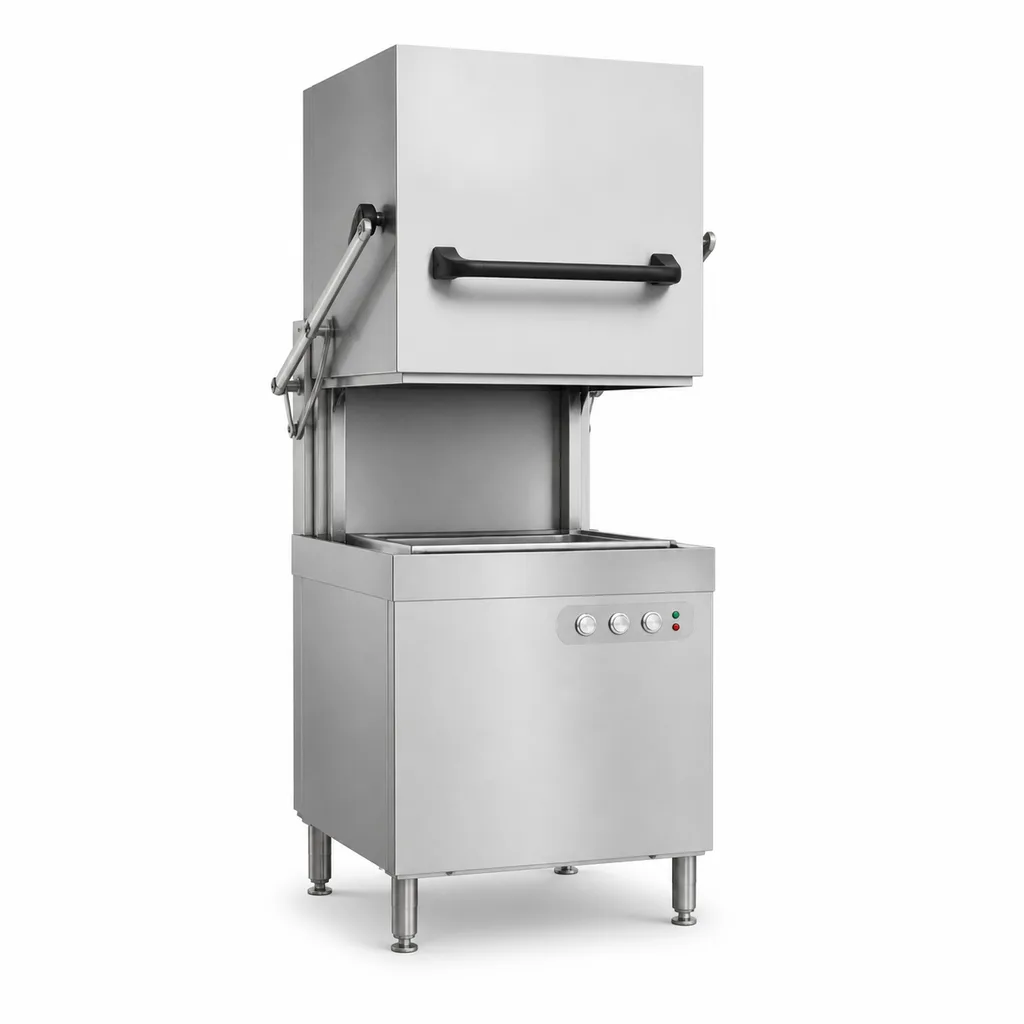
3. Preventive Water Treatment vs. Reactive Deliming
While regular deliming removes existing scale, pairing your warewasher with upstream water treatment dramatically reduces chemical consumption and downtime:
- Water Hardness Sizing: If incoming water hardness exceeds 7 grains per gallon (120 ppm CaCO₃), an upstream automatic ion-exchange water softener is mandatory. Softened water eliminates 85% of scale accumulation.
- Energy Penalty of Scale Buildup: A mere 1.5 mm (1/16-inch) layer of limescale encrusting a heating element increases electrical energy consumption by 15%, while 3 mm (1/8-inch) spikes energy costs by 28% and causes localized hotspot burnout.
- NSF Hygiene Verification: Scaled wash arms suffer reduced nozzle pressure, leading to water droplet atomization failure and inability to reach the 71°C plate surface sanitizing threshold required by NSF/ANSI Standard 3.