Cloudy glassware, scale, foam or inconsistent cleaning is not enough information to prescribe a water softener—or to blame the dishwasher. A commercial warewashing result is produced by the incoming water, soil, loading, wash mechanics, temperatures, chemical programme, rinse condition and machine maintenance. Diagnose the system before selecting treatment.
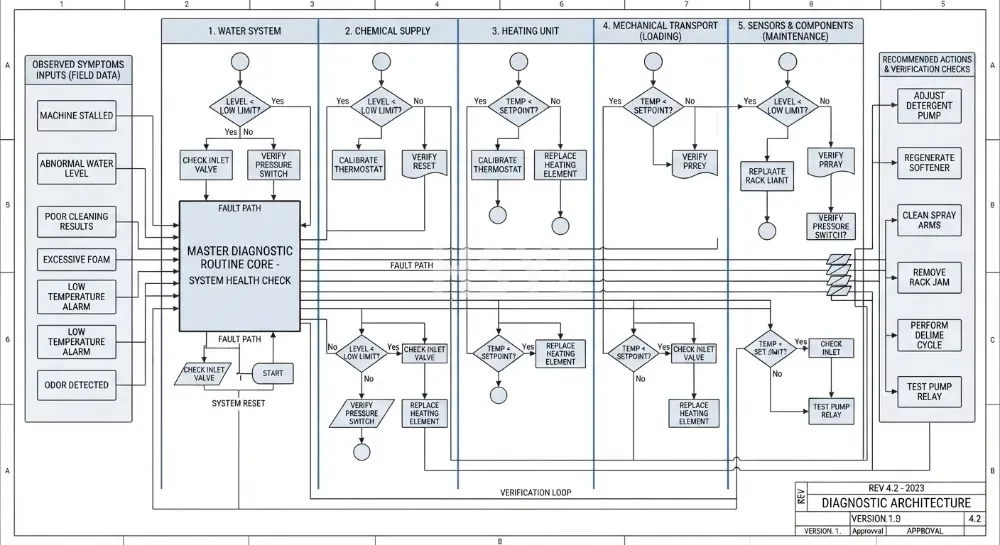
First separate the symptom from the cause
- White deposit or spotting
- Record whether it wipes off, dissolves under an approved diagnostic method, appears only after drying, or is permanent surface damage. These outcomes point to different investigations.
- Scale on heaters, jets or chamber surfaces
- Check verified water analysis, operating temperature, treatment status, cleaning frequency and supplier instructions. Do not infer the entire water profile from visible scale alone.
- Food soil remains
- Inspect scraping, rack loading, blocked wash action, solution condition, cycle selection, detergent delivery and the tested soil. Water quality may contribute, but it is not the only path.
- Foam, odour or chemical residue concern
- Stop guesswork. Check product identity, dosing, concentration measurement, rinse operation, contamination and label instructions with the chemical supplier and food-safety lead.
Trace water and chemistry through the complete system
Create a water-and-chemistry data sheet
Obtain a current water report or representative sample for the actual supply and operating period. Give the specialist the parameters requested by the exact machine and chemical programme; these may include hardness, alkalinity, pH, dissolved minerals, chlorides, conductivity or contaminants relevant to local conditions. Record sample point, date, method and laboratory or instrument.
Do not publish one universal “ideal hardness.” Requirements differ by machine, chemical system, material, treatment method and jurisdiction. The correct control range must be reconciled among the machine instructions, treatment supplier, chemical label and applicable rule.
The FDA Food Code 2022 is a U.S. model, not a worldwide installation rule. Its warewashing provisions illustrate why chemical sanitization cannot be reduced to concentration alone: relevant use conditions can include temperature, pH and, for certain chemistry, water hardness. Follow the registered product label and the locally adopted requirements.
Map the supply, treatment and machine
Mark the source, storage where present, backflow protection, treatment stages, bypass, pressure regulation, heater or booster, machine connection, final rinse and drain. Add sampling points, meters, alarms, consumables and maintenance ownership. Confirm water pressure and flow requirements from the exact model rather than assuming that an available pipe diameter proves supply.
| Control point | Evidence to collect | Typical decision |
|---|---|---|
| Incoming supply | Dated analysis and variability | Whether treatment is needed and what problem it must solve |
| Treatment outlet | Before/after data, capacity basis and bypass state | Correct treatment size, monitoring and regeneration/service plan |
| Chemical delivery | Product label, calibration and measured use condition | Setting, verification method and corrective action |
| Machine | Exact model, programme, temperatures/pressures as applicable and maintenance state | Whether conditions match documented instructions |
| Wares | Material, soil, rack pattern and accepted finish | Whether the result is repeatable and fit for service |
Test one controlled load before changing several variables
Choose representative wares and soil. Standardize pre-scraping, delay before washing, rack arrangement, cycle and drying observation. Record machine identity, treatment state, chemical products and measurements, relevant temperatures or pressures, operator actions and result. Change one justified variable at a time, then repeat.
This prevents a common failure: treatment, detergent dose and operating temperature are changed together, the symptom temporarily disappears, and nobody knows which intervention worked or what new risk was introduced. Any sanitation decision belongs to the food-safety and regulatory plan, not to a cosmetic spot test.
Make treatment maintainable
A treatment device with no monitoring, consumable supply, regeneration route, bypass control or assigned owner will drift out of service. Specify rated duty under the actual water data, peak flow, pressure loss, drainage and power where applicable, alarms or checks, consumables, sanitation/maintenance procedure and safe access.
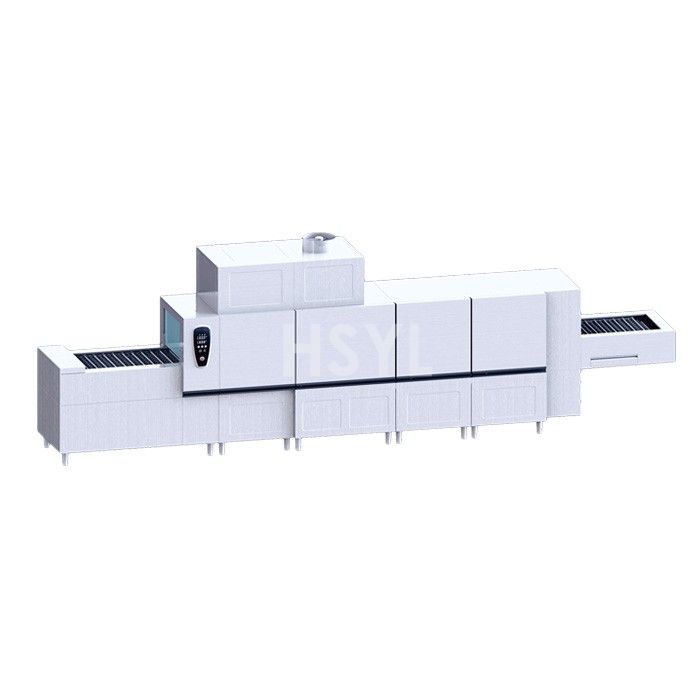
Review the commercial dishwasher capacity guide if racks, sorting or peak demand are unresolved. Then compare exact machines in the commercial dishwashing equipment category and submit water data with the HSYL project inquiry. Water treatment should be selected as part of the documented warewashing system, not sold as a universal accessory.