A dishwasher sanitizes in one specific step, and HACCP compliance hangs on that step hitting its number. The widely applied benchmark is a final rinse of 82 °C or above — the heat, held against the ware, is what achieves the required bacterial reduction. A machine that washes beautifully but rinses at 70 °C has cleaned the plates and failed to sanitize them, and the failure is invisible. This guide sets out the temperature targets, how to verify them, and what to check when they drift, so the dishroom's HACCP record holds up to an auditor. The temperatures below are the industry-standard ranges used in hygiene guidance, not values read from a specific HSYL specification sheet — confirm the machine's own figures on its quotation sheet.
The Three Temperatures That Matter
Commercial dishwashing runs two stages, and the surface of the ware is a third check that follows from them:
| Stage | Target | Purpose |
|---|---|---|
| Wash | 55–65 °C | Detergent lifts grease and food soil |
| Final rinse | 82–90 °C | Thermal sanitizing — the step that kills pathogens |
| Ware surface | ≥ 71 °C | The temperature actually reached on the plate, which is what matters |
Read the last row carefully: the machine's gauge reports its own boiler temperature, not the temperature on the ware. The sanitizing standard is about heat reaching the surface of the plate, so the rinse needs to be hot enough that the ware still measures roughly 71 °C or more after the water has done its work. A rinse that scrapes 82 °C at the manifold but leaves a cold, dense load below target is the classic reason a "working" machine fails a spot-check. Do not push the rinse far above 90 °C chasing safety margin — water flashes to steam, contact time drops, and energy is wasted for no gain.
On a low-temperature chemical machine the control point changes: the rinse runs around 49 to 60 °C and the sanitizer concentration becomes the number to verify instead of the temperature. The HACCP logic is identical — one control point, checked and recorded — only the variable differs.
Verify at the Rack, Not at the Gauge
Temperature is only a control point if someone actually checks it. Two reliable methods beat watching a dial. Thermal test strips placed on the rack change color at the target temperature, showing whether the ware itself reached the rinse heat — the cheapest, hardest-to-fake check. A dishwasher probe shaped like a plate surface reads the temperature on the ware directly and is the more precise option for a busy dishroom. Whichever you use, run it at least twice per shift and write the result into the HACCP record; the dial reading alone is supporting evidence, not the control point.
The record is what an auditor reads. Log the wash and rinse temperatures at the start of service and again mid-shift, note any chemical sanitizer concentration if the machine is the low-temp type, and keep the strip or probe reading alongside it. This is the same evidence discipline the cleaning verification guide applies to the rest of the kitchen — the temperature version of turning a visual inspection into a recorded proof.
Why Rinse Temperature Drifts, and What It Costs
When the rinse stops reaching temperature, the causes are usually mechanical, not mysterious. In order of likelihood: scale build-up on the heating elements insulating them from the water, a failing rinse-boiler element or thermostat, or incoming water arriving too cold for the booster to lift in the available time. Hard water is the worst of the three because it is gradual — the machine cools off week by week until the rinse silently drops below target, and every rack that passes in the meantime is washed but not sanitized. The dishwasher water quality guide covers hardness treatment and the descaling routine that keeps the elements clean and the rinse hot.
How the HDW Range Holds the Rinse Temperature
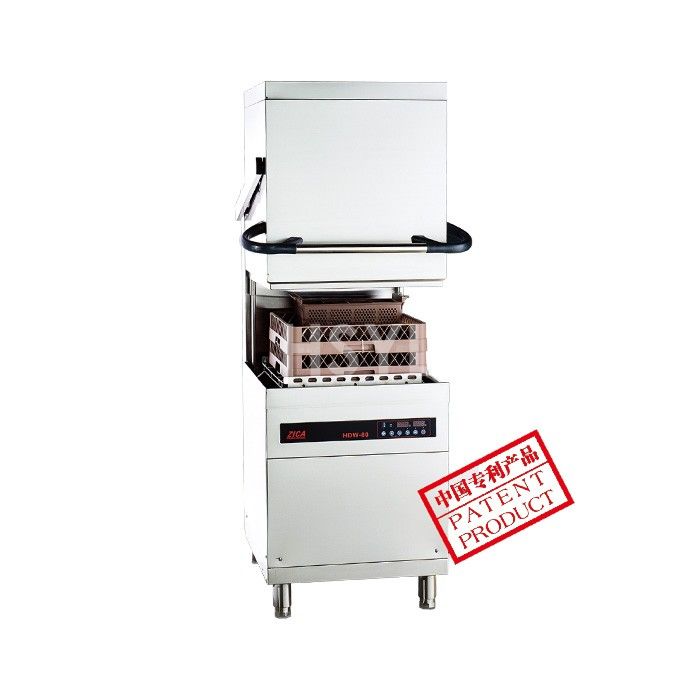
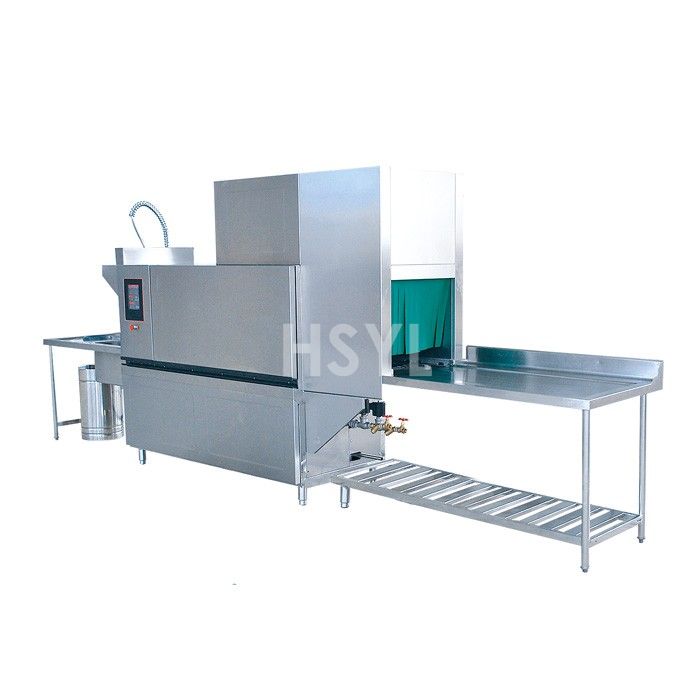
Holding an 82 °C rinse is an energy problem, and the HSYL line solves it two ways. The HDW260-EL-R electric-heated carries a 45 kW load and heats its own rinse water with internal elements — self-contained, no external plant needed. The HDW260-SL-R steam-heated draws only 10 kW electrically and takes 70 kg/h of site steam to reach the same rinse temperature — the right route where a boiler already serves the kitchen. Both hold the sanitizing temperature; the choice is which energy source the site can deliver. The full range, from the HDW-80 hood-type to the rack conveyor models, applies the same rinse-temperature logic across its throughput bands.
Related Equipment & Systems
Temperature is one of two sanitizing control points. For the full heat-versus-chemical decision that precedes it, see the high-temp vs low-temp dishwasher guide, and for the broader hygiene program the HACCP resources hub collects the temperature, allergen and verification pieces in one place.