How to Descale a Commercial Dishwasher: A Maintenance Guide
Step-by-step commercial dishwasher descaling guide: test water hardness, pick the right acid descaler, run the deliming cycle safely, and set a schedule.
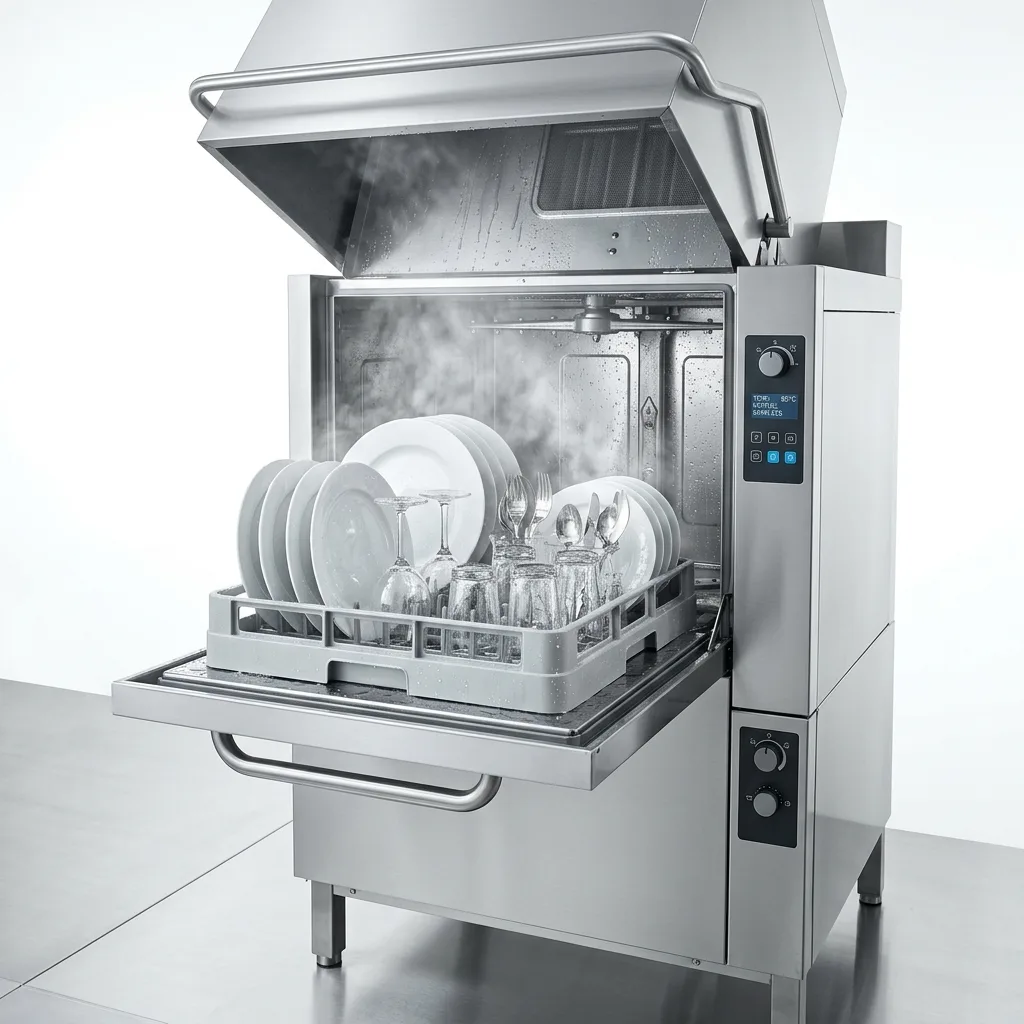
Scale builds up inside a commercial dishwasher the same way it does in a kettle — only faster, because the machine heats 60–82°C water hundreds of times a day. Left alone, limescale coats heating elements, clogs wash-arm nozzles, and forces the boiler to work harder for the same final-rinse temperature. A rack conveyor dishwasher running on 12 gpg (grains per gallon) water without a softener can accumulate a visible crust on its heating element in as little as four to six weeks.
Descaling (also called deliming) is a planned maintenance task, not an emergency repair. Done on schedule, it takes 30–45 minutes of labor and a few dollars of chemicals; skipped for a year, it typically ends in a burned-out heating element — a repair that commonly runs $300–$900 including parts and labor. This guide covers how to judge your water, choose the right commercial dishwasher descaler, and run the full procedure step by step.
Key takeaway: Descale frequency is decided by incoming water hardness, not by the calendar. Test the water first, set the interval from the hardness reading, and log every cycle — a dishwasher descaled "when someone remembers" fails at three to five times the rate of one on a measured schedule.
Step 1: Test Water Hardness and Confirm You Actually Need to Descale
Before buying any descaler, measure what is coming out of the tap. Use a titration test kit (about $10–$25) rather than test strips — strips are fine for a quick check but read in wide bands, and the difference between 5 gpg and 10 gpg changes your descaling interval by a factor of two.
Hardness is expressed either in grains per gallon (gpg) or parts per million (ppm as CaCO3); 1 gpg equals 17.1 ppm. Most dishwasher manufacturers specify feed water at or below 3–6 gpg (roughly 50–100 ppm) for reliable operation. Above that, a softener pays for itself and descaling becomes the backup, not the primary defense.
Confirm scale visually as well: pull one wash arm and look through the nozzles against a light, and open the booster heater or tank cover to inspect the element. White or tan crust on the element, or spray jets that dribble instead of fanning, means the machine is overdue regardless of what the schedule says.
Step 2: Choose the Right Descaler
Commercial dishwasher descalers are acid-based products formulated to dissolve calcium carbonate and magnesium deposits without attacking stainless steel at the specified dilution. The three acids you will encounter most often differ in strength, cost, and safety profile:
| Acid type | Typical dilution | Best for | Cautions |
|---|---|---|---|
| Citric acid | 10–20 g/L in warm water | Light scale, frequent preventive cycles | Slow on heavy buildup; food-safe residue profile |
| Sulfamic acid | 5–10% solution (per label) | Moderate to heavy scale; the most common delimer base | Effective below 60°C; still requires gloves and eye protection |
| Phosphoric acid | Per manufacturer, often 10–25% concentrate dosed into the tank | Heavy, long-neglected scale on elements and tanks | Strongest of the three; verify compatibility with the machine manual first |
Whatever you choose, read the machine's manual before the chemical's label. Some manufacturers void the heating-element warranty if a non-approved acid is used, and concentration limits matter: an over-strong mix can pit stainless steel welds and attack copper or brass fittings in older booster heaters. Cross-reference your model in the manuals and documentation section before the first cycle.
Two safety rules are absolute. Never mix acid descaler with chlorine-based sanitizer — the reaction releases chlorine gas; flush all sanitizer from the machine and dosing lines first. And treat PPE as mandatory: chemical-resistant gloves, goggles, and local ventilation, since heated acid solution aerosolizes inside the wash chamber.
Step 3: Prepare the Machine
Descale at the end of a service period, never mid-shift. Each preparation step below prevents a specific failure:
- Drain the wash tank completely and remove scrap trays, curtains, and wash arms.
- Clean out food debris by hand — acid consumed dissolving soil is acid not working on scale.
- Refill the tank with fresh water and heat to 55–65°C. Do not descale at sanitizing temperature (82°C+); the reaction accelerates but so does corrosion, and some descalers degrade above 70°C.
- Isolate or switch off the detergent and rinse-aid dosing pumps so they cannot inject chemical into the acid bath.
- Post a sign on the machine: descaling in progress, do not run racks.
Step 4: Run the Descaling Cycle
Dose the descaler into the wash tank at the label dilution — for a typical hood-type machine with a 40–60 liter tank, that works out to roughly 1–2 liters of a standard sulfamic-acid delimer. Run the pump (wash cycle without racks) for 20–30 minutes, keeping the temperature in the 55–65°C band.
Watch the water: active descaling clouds the tank as deposits dissolve. If fizzing stops but scale remains, the acid is spent — drain, refill, and repeat with fresh solution rather than extending the cycle. For elements with thick crust, a second cycle at normal concentration beats one cycle at double concentration, every time.
Step 5: Flush, Inspect, and Log
Drain the descaling solution, then run two to three full rinse cycles with fresh water to purge acid from the pump, lines, and rinse arms. Reinstall wash arms, trays, and curtains. Inspect the element and tank with a flashlight — remaining patches show against clean steel and can be spot-treated with a descaler-soaked cloth.
Finish by reactivating the dosing pumps, running one empty sanitizing cycle to verify final-rinse temperature (target 82°C at the plate surface for high-temp machines), and logging the date, product, dilution, and water hardness reading. That log entry is what turns the next step — scheduling — from guesswork into a measurable interval.
Set the Descaling Interval from Your Water, Not the Calendar
Frequency follows hardness and volume. A machine on softened water (under 3 gpg) may only need descaling every three to six months, while the same model on 15 gpg well water can need it every two to four weeks. Use the table below as a starting point, then tighten or relax the interval based on what the element looks like at each inspection.
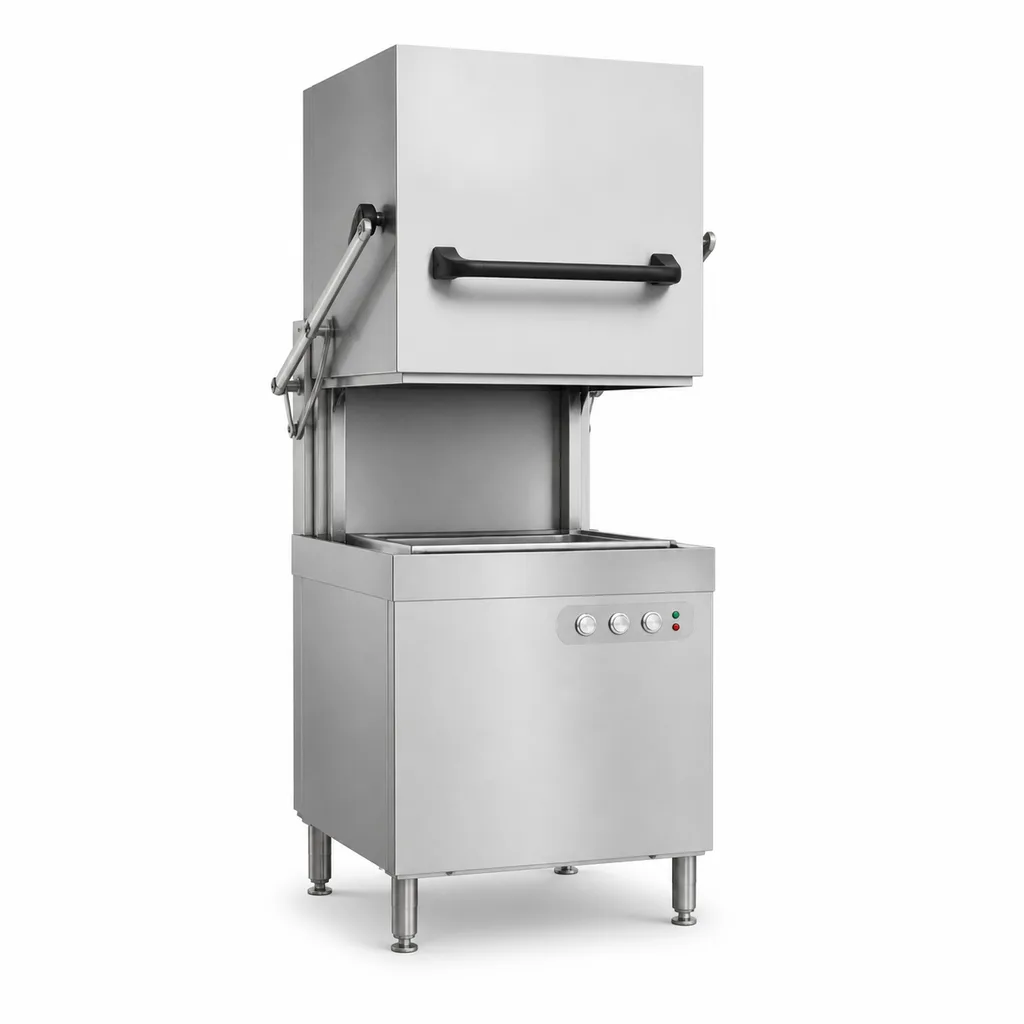
Volume matters too: a conveyor machine running 200+ racks per day accumulates scale roughly twice as fast as a hood-type unit at 40 racks per day on identical water. If your operation is still specifying equipment, the wash-tank design and recovery rates across the commercial dishwashing equipment range affect how quickly scale concentrates — high-temperature machines with large booster heaters are the most sensitive.
| Hardness (gpg) | Hardness (ppm) | Classification | Starting interval |
|---|---|---|---|
| 0–3 | 0–50 | Soft / softened | Every 3–6 months |
| 3.5–7 | 60–120 | Moderately hard | Every 4–8 weeks |
| 7–10.5 | 120–180 | Hard | Every 2–4 weeks; add a softener |
| Over 10.5 | Over 180 | Very hard | Weekly until a softener is installed |
Common Descaling Mistakes That Damage Machines
- Descaling at full sanitizing temperature. Heat above 70°C accelerates acid attack on welds and seals. Stay in the 55–65°C band.
- Doubling the concentration to save time. Over-strong acid pits stainless steel and attacks copper fittings in booster heaters. Two normal cycles are cheaper than one corroded element.
- Mixing or sequencing chemicals wrong. Acid followed by chlorine sanitizer without a full flush releases chlorine gas. Always flush sanitizer lines first and rinse thoroughly after.
- Skipping the flush cycles. Residual acid carries into the next day's racks, streaking glassware and leaving a metallic taste on flatware.
- Descaling instead of fixing the water. If you are descaling weekly, the machine is telling you it needs a softener. At 10+ gpg, a softener installation (typically $800–$2,500 depending on flow rate and capacity) costs less than a year of element replacements and downtime.
- No log, no interval. Without dated records, descaling happens when scale is already visible — which means it is already late.
Descaling is the cheapest scheduled task in the dish room: half an hour of labor against a $300–$900 element repair and a machine down during service. Test the water, pick the right acid at the right dilution, run the cycle at 55–65°C, and let the hardness reading — not the calendar — set your interval. For model-specific dilution limits, check your unit's documentation before the first cycle.
Frequently Asked Questions
How often should I descale a commercial dishwasher?
It depends on incoming water hardness, not the calendar. On softened water (0–3 gpg), every 3–6 months is enough; on moderately hard water (3.5–7 gpg), every 4–8 weeks; on hard water (7–10.5 gpg), every 2–4 weeks; and above 10.5 gpg, descale weekly until a water softener is installed. High-volume conveyor machines (200+ racks/day) need the tighter end of each range.
What is the difference between a descaler and a delimer for a commercial dishwasher?
They are the same thing — both are acid-based products that dissolve limescale. The most common bases are citric acid (10–20 g/L, best for light preventive cycles), sulfamic acid (5–10% solution, the standard delimer for moderate to heavy scale), and phosphoric acid (for heavy, long-neglected buildup, with machine-manual compatibility check required).
What temperature should the water be during descaling?
Keep the tank at 55–65°C during the descaling cycle. Do not descale at sanitizing temperature (82°C+): the acid reaction accelerates but so does corrosion of welds and seals, and some descalers degrade above 70°C.
Can I mix descaler with chlorine sanitizer to save time?
Never. Mixing acid descaler with chlorine-based sanitizer releases toxic chlorine gas. Flush all sanitizer from the machine and dosing lines before descaling, switch off the detergent and rinse-aid dosing pumps, and run two to three full fresh-water rinse cycles afterward before returning to service.
When does a water softener make more sense than frequent descaling?
When you are descaling weekly. At 10+ gpg hardness, a softener installation (typically $800–$2,500 depending on flow rate and capacity) costs less than a year of heating-element replacements — a single element failure commonly runs $300–$900 including parts and labor, plus downtime during service.
Plan the Equipment Around Your Kitchen.
Share your menu, peak service demand, available space and site utilities. Tell us which equipment you are considering so we can review the requirements with you.