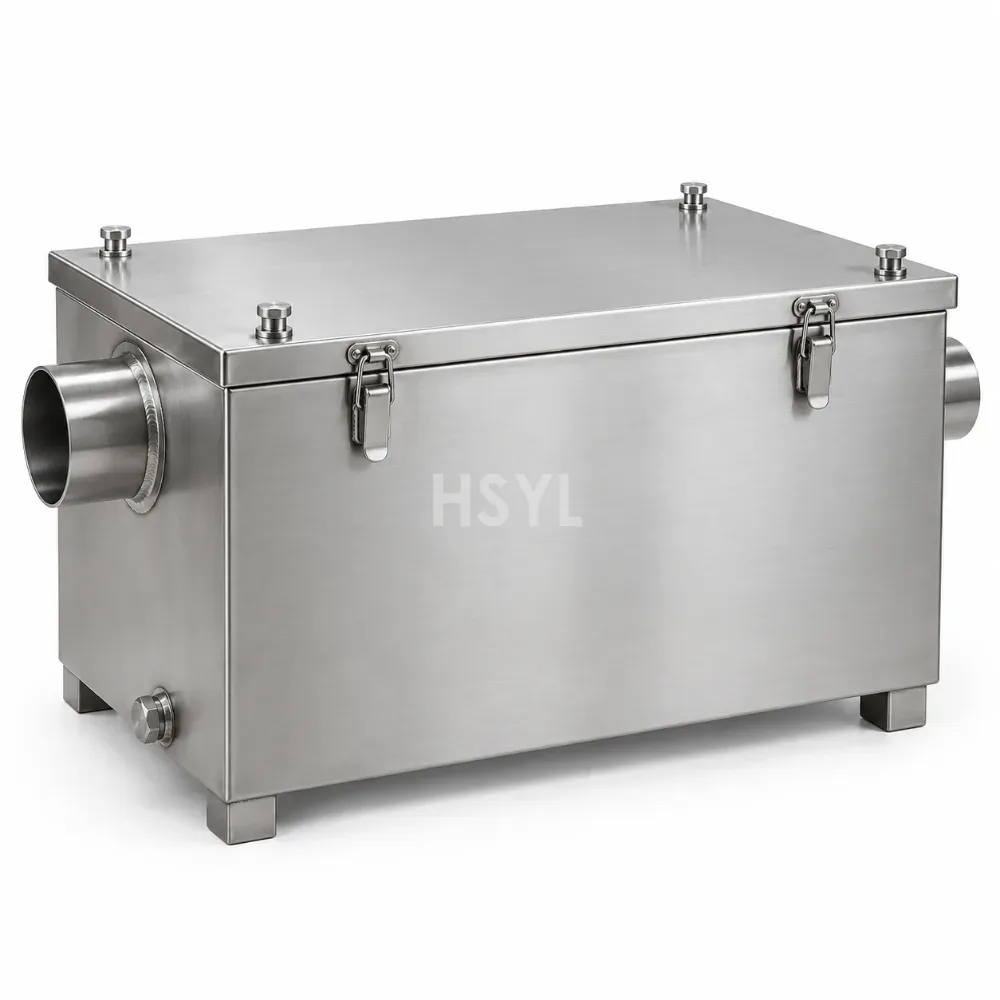
 Commercial Grease Traps
Grease traps should be selected from the actual wastewater flow, grease load, connected fixtures, retention/maintenance method and local plumbing requirements — not from a generic kitchen size.
HSYL's current stainless-steel category states that work tables, sinks, shelving, trolleys, exhaust hoods and custom units can be fabricated to the floor plan, with AISI 304 for general food-contact service and AISI 316 available for higher-corrosion zones. This page narrows that fabrication capability to one procurement intent.
Request a Project-Specific Quotation
Custom Configuration Scope
This is a made-to-drawing / project-fabrication category rather than a fixed-SKU claim. Publish real fabrication photos, approved drawings or project examples when available; do not invent model numbers.
How to Specify the Right Configuration
| Decision | What to Confirm |
|---|---|
| Connected fixtures | List sinks, pre-rinse stations or equipment discharging to the trap. |
| Flow rate | Use project plumbing calculations and local code to determine design flow. |
| Grease load | Consider menu/process and cleaning practices. |
| Installation | Above-floor, below-counter or project-specific location with service access. |
| Cleaning access | Cover removal, sludge/grease removal and operator safety. |
| Local code | Final capacity and discharge arrangement must be approved by the competent plumbing design. |
Typical Applications
- Restaurants and hotel kitchens
- Central kitchens and commissaries
- Factory and school canteens
- Hospital and institutional kitchens
- Custom back-of-house fabrication projects
Engineering & Procurement Notes
- The parent HSYL stainless-steel page publishes AISI 304 as the general food-contact baseline and AISI 316 as an option for higher-corrosion exposure.
- The parent page also differentiates sheet thickness/reinforcement by duty; final thickness should be tied to load and approved drawing rather than stated as one universal standard.
- This subcategory page should target commercial fabrication intent; individual project/model pages should carry exact dimensions and drawings.
Information Required for an Accurate RFQ
- Application, menu or process and peak operating duty.
- Required capacity, dimensions or custom fabrication drawing.
- Available utilities and drainage/ventilation information where relevant.
- Installation space, access route and floor plan if available.
- Destination market and required compliance/documentation scope.
- Required quantity, accessories, spare parts and target project schedule.
Related HSYL Resources
Request a Technical Proposal
Send HSYL the operating requirement before selecting a model or fabrication detail from price alone. The engineering review connects the equipment to capacity, site utilities, layout, workflow and destination conditions.