Custom Commercial Kitchen Equipment
Engineering guide for custom commercial kitchen equipment and heavy-duty stainless steel fabrication. Learn how bespoke prep tables, suites, and layouts solve spatial constraints.
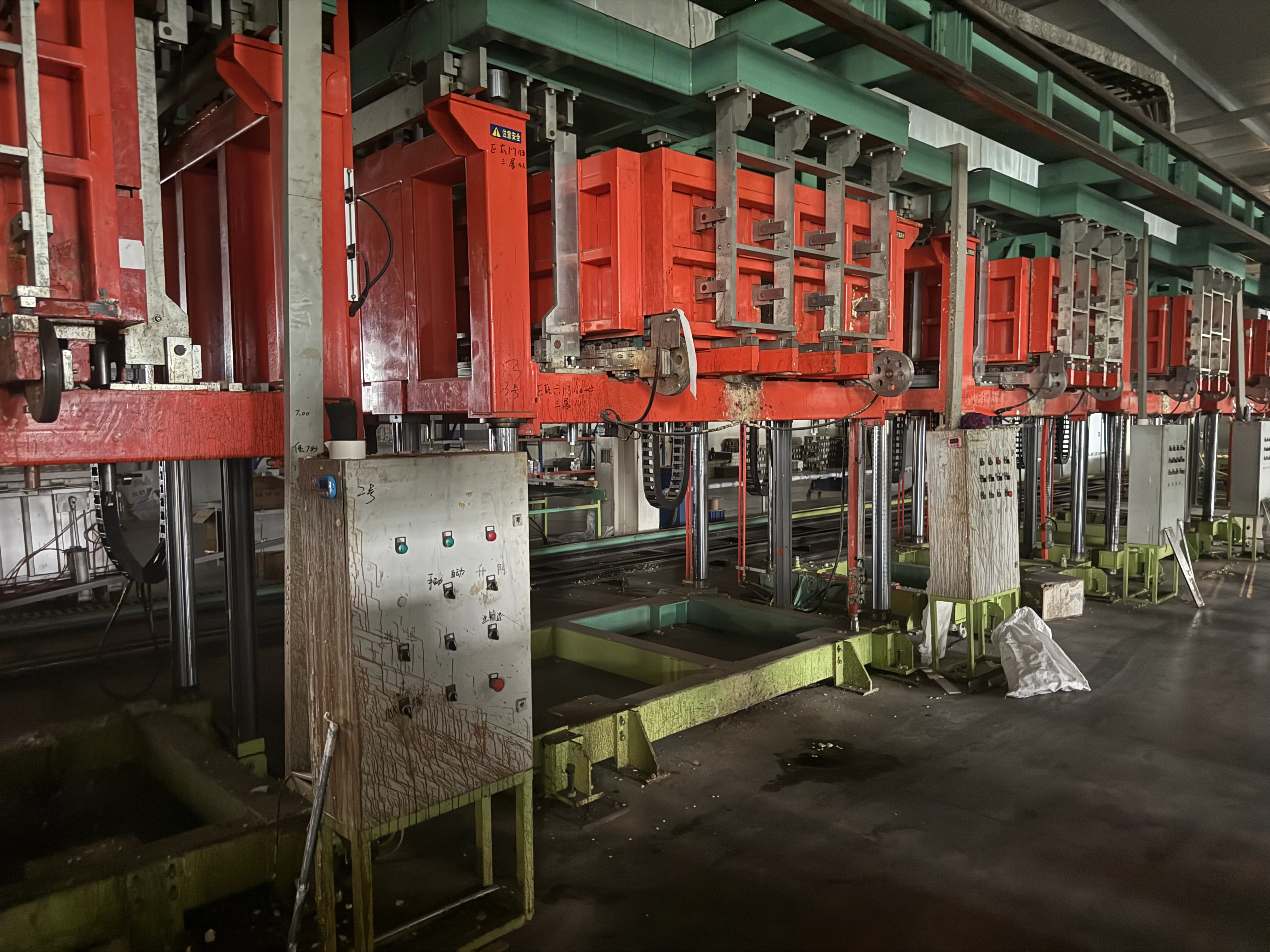
When high-density culinary venues outgrow the constraints of modular catalogue equipment, custom commercial kitchen equipment provides the structural resilience, spatial ergonomics, and workflow optimization required for high-volume service. Custom stainless steel fabrication eliminates unsanitary dirt traps between modular appliances, integrates multi-utility lines into unified thermal cooking suites, and maximizes production per square meter. This technical guide explores stainless steel metallurgy, welding craftsmanship standards, heavy-gauge fabrication tolerances, brake press bending mechanics, and custom extraction hood engineering.
1. Metallurgy & Stainless Steel Grade Selection for Commercial Foodservice
Selecting the proper austenitic stainless steel alloy is fundamental to corrosion resistance, structural longevity, and NSF hygiene certification. Kitchen environments expose metals to harsh organic acids, high-temperature fats, and aggressive chloride sanitizers:
| Steel Alloy / Grade | Composition (Cr-Ni-Mo) | Tensile Strength & Hardness | Corrosion Resistance Profile | Recommended Kitchen Applications |
|---|---|---|---|---|
| AISI 304 (18/8 - 18/10) | 18% Chromium, 8% - 10.5% Nickel | Tensile: 515 MPa; Hardness: HRB 88 | Excellent resistance to organic food acids, atmospheric oxidation, and water exposure | Industry benchmark for cooktops, worktables, sinks, exhaust hoods, and refrigeration housings |
| AISI 316 (Marine Grade) | 16% Chromium, 10% Nickel, 2% - 3% Molybdenum | Tensile: 580 MPa; Hardness: HRB 95 | Superior resistance to chloride pitting, coastal saline environments, and hot brine solutions | Pasta cooker tanks, marine offshore galley kitchens, industrial pickling vats, high-temp brine kettles |
| AISI 430 (Ferritic) | 16% - 18% Chromium, 0% Nickel | Tensile: 450 MPa; Hardness: HRB 85 | Moderate resistance; magnetic; prone to pitting in warm acidic or moist environments | Budget equipment back panels, external rear cladding, dry storage shelving (Not for direct food contact) |
2. Stainless Steel Gauge Thickness & Fabrication Engineering Standards
In custom foodservice fabrication, sheet metal gauge thickness dictates structural rigidity, impact resistance, and sound dampening. Thinner gauges dent under heavy commercial stockpots, resulting in surface pooling, weld fatigue, and operational failure:
| Metal Gauge | Nominal Thickness (mm / inches) | Structural Load Capacity | Recommended Structural Component |
|---|---|---|---|
| 12 Gauge | 2.78 mm (0.109") | Ultra Heavy-Duty (> 500 kg static load) | Seamless one-piece cooking suite master tops, heavy butcher block bases, industrial tipping kettle frames |
| 14 Gauge | 1.98 mm (0.078") | Heavy-Duty Commercial (> 250 kg load) | Dishtable sorting tops, heavy preparation tables, sink bowls, hot-line chef plating counters |
| 16 Gauge | 1.52 mm (0.060") | Medium Commercial (> 120 kg load) | Equipment undershelves, cabinet side panels, modular drawer assemblies, commercial sink drainboards |
| 18 Gauge | 1.21 mm (0.048") | Light Auxiliary (> 60 kg load) | Over-shelf risers, wall cladding panels, exhaust hood grease drip trays, cabinet sliding doors |
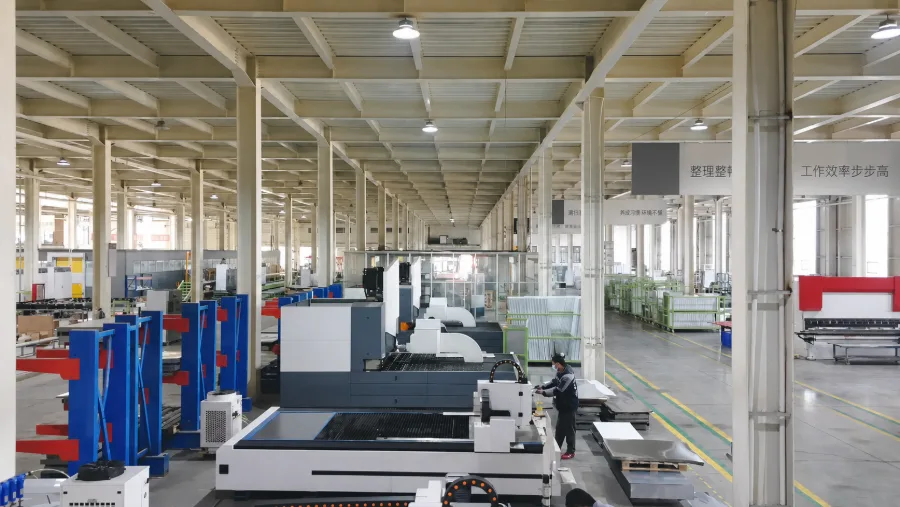
Figure 1: CNC laser cutting and automated press brake bending of 12-gauge 304-grade stainless steel cooking suites.
3. Seamless Hygienic Welding & NSF/ANSI Standard 2 Design Criteria
The defining characteristic of bespoke culinary fabrication is seamless hygienic integration according to NSF/ANSI Standard 2. Unlike bolt-together catalogue units with dirt-collecting 5 mm gaps, custom equipment utilizes continuous tungsten inert gas (TIG) welding:
- Continuous TIG Welding with Argon Shielding: All horizontal and vertical seam joints must be continuously fusion-welded with pure argon backing gas to prevent backside sugaring (oxidation). Tack welds or spot welds are strictly prohibited in food zones.
- Coved Internal Radii (R ≥ 9.5 mm / 3/8"): All internal vertical and horizontal corners of custom sink basins, bain-maries, and ice wells must feature hydraulic pressed or spun coved corners. Sharp 90-degree square corners harbor anaerobic bacterial biofilms (Listeria, Salmonella) that resist sanitization.
- Sub-Surface Sound Deadening & Reinforcement: The underside of heavy worktops must be reinforced with formed 14-gauge stainless steel hat-channels, fully bonded with non-toxic, vibration-dampening mastic to eliminate tin-canning and reduce ambient acoustic reverberation.
- Flush Integrated Plumbing & Electrical Chases: Custom central island suites incorporate sealed internal utility raceways (chaseways), concealing water, gas, electricity, and network data lines within a stainless utility spine.
4. CNC Press Brake Bending Mechanics & Forming Tolerances
Precision fabrication relies on CNC hydraulic press brakes to achieve consistent dimensional accuracy across complex kitchen geometry:
Where R = internal bend radius, K = neutral axis factor (≈ 0.44 for austenitic stainless), T = sheet thickness, θ = bend angle.
Engineering Standard: Marine edge profiles (no-drip bullnoses) must maintain a continuous 12 mm raised lip bent at 45° then hemmed back, preventing liquid spills onto kitchen floors while maintaining zero razor-sharp edges.
5. Engineering Bespoke Central Island Cooking Suites
In Michelin-starred fine dining, luxury hotels, and high-volume banquet operations, the custom central island suite represents the pinnacle of commercial kitchen engineering. A bespoke island combines cooking appliances beneath a single unbroken, 3 mm thick stainless steel deck:
- Hybrid Energy Integration: Combining open gas burners for high-heat wok cooking with flush-mounted drop-in induction hobs (5 kW - 8 kW per zone), chrome-plated mirror griddles, and dual electric water-bath pasta cookers.
- Overhead Multi-Tier Service Gantries: Fully welded overhead stainless steel gantry structures housing integrated LED task lighting (≥ 500 lux), quartz infrared heat lamps, and hanging pot racks.
- Undercounter Refrigeration & Warm Holding: Drawered refrigerated base counters (holding 1/1 GN pans at 2°C) paired with thermostatically controlled warm holding drawers directly beneath the cooking surface for instant ingredient accessibility.
6. Custom Ventilation Canopies & Grease Extraction Aerodynamics
Bespoke commercial equipment requires precisely engineered exhaust canopies. Standard box hoods frequently fail to capture dynamic thermal plumes during peak pan-searing and wok operations:
- Capture Velocity Engineering: Exhaust airflow must maintain a capture velocity between 0.25 m/s and 0.45 m/s across the entire lower overhang perimeter, in strict compliance with NFPA 96 and VDI 2052 guidelines.
- Overhang Tolerances: The custom canopy footprint must overhang all thermal equipment by a minimum of 150 mm (6 inches) on all exposed sides, increasing to 300 mm (12 inches) over high-heat equipment like charbroilers and open deep fryers.
- Integrated UV-C Ozone Filtration: Custom canopies can incorporate ultraviolet (UV-C) cassette lamps (185 nm wavelength) behind primary baffle filters. UV-C photolysis breaks down vaporized grease molecules into inert water vapor and carbon dioxide powder, dramatically reducing fire hazard accumulation in ductwork.
5. Pass-Through Service Gantries & Chef Plating Ergonomics
In high-end restaurants and banquet facilities, the expedition pass-through counter represents the operational boundary between the hot kitchen brigade and front-of-house service staff. Custom fabrication optimizes this critical junction:
- Dual-Tier Temperature-Controlled Gantries: High-grade AISI 304 stainless steel tubing frames house independent ceramic infrared heating elements mounted above the upper shelf, maintaining plated meals at 65°C without scorching delicate garnishes. The lower shelf features integrated LED task lighting (≥ 750 lux, 4000K natural color temperature) to ensure accurate culinary presentation.
- Marine Drip Lips & Heated Worktops: The pass countertop features built-in electrical heating elements concealed beneath 2.0 mm (14-gauge) stainless plate with digital PID thermostats, keeping plate bases hot during high-volume banquet assembly. Continuous marine edges prevent sauce drips from running down cabinet fronts.
- Integrated POS & Order Display Brackets: Fully concealed internal conduit routing allows Kitchen Display System (KDS) monitors, thermal order printers, and foot-pedal intercoms to be mounted cleanly on stainless columns without visible loose cables.
6. NSF/ANSI Standard 2 Hygiene Cleanability & Testing Protocols
Sanitary engineering requires eliminating microbial harborages throughout every square centimeter of custom fabrication. Certified manufacturers validate designs against strict cleanability protocols:
| Fabrication Zone | NSF Standard 2 Cleanability Requirement | Testing & Verification Protocol | Common Non-Compliance Failure |
|---|---|---|---|
| Direct Food Contact Surfaces | Surface roughness Ra ≤ 0.8 μm (No. 4 sanitary polish); zero crevices, cracks, or open seams | Surface profilometer audit; dye penetrant crack inspection | Rough, unpolished TIG weld beads harboring microscopic food residues |
| Internal Sink & Well Corners | Continuous coved radius R ≥ 9.5 mm (3/8") on all 3-axis corner junctions | Radius ball gauge verification | Folded 90-degree square corners with tack-welded filler plates |
| Leg Assemblies & Feet | Tubular 304 legs with completely enclosed hex or bullet feet; minimum 150 mm (6") floor clearance | Ground clearance dimensional audit; moisture-tight internal seal check | Open hollow tube bottoms collecting wash-down water and harboring insects |
| Backsplashes & Wall Junctions | Integrated 150 mm to 300 mm vertical risers turned back 50 mm at a 45-degree angle | Visual angle check and food-grade silicone sealant application | Flat back edges allowing food debris to drop behind inaccessible equipment gaps |
7. Capture Velocity Engineering & Canopy Aerodynamic Calculations
In high-density commercial kitchens, thermal updrafts and lipid emissions vary significantly by appliance type. Custom extraction hoods must be calculated according to ASHRAE 154 and VDI 2052 thermodynamic standards:
Where V_capture = minimum 0.35 m/s for medium-duty ranges, 0.45 m/s for heavy-duty open charbroilers and high-heat wok batteries.
Engineering Rule: Island canopies require 30% higher volumetric flow rates than wall-mounted canopies because they lack rear boundary wall containment, making them vulnerable to cross-draft disruption from kitchen doors and supply diffusers.
Integrated Supply Make-Up Air Plenums: Custom hoods incorporate front-face perforated make-up air plenums (PSP or short-circuit capture jets) delivering conditioned air at low discharge velocities (< 0.25 m/s). This establishes an air curtain that directs grease fumes straight into the primary cyclone baffle filters without chilling the chef below.
Featured Commercial Equipment Models
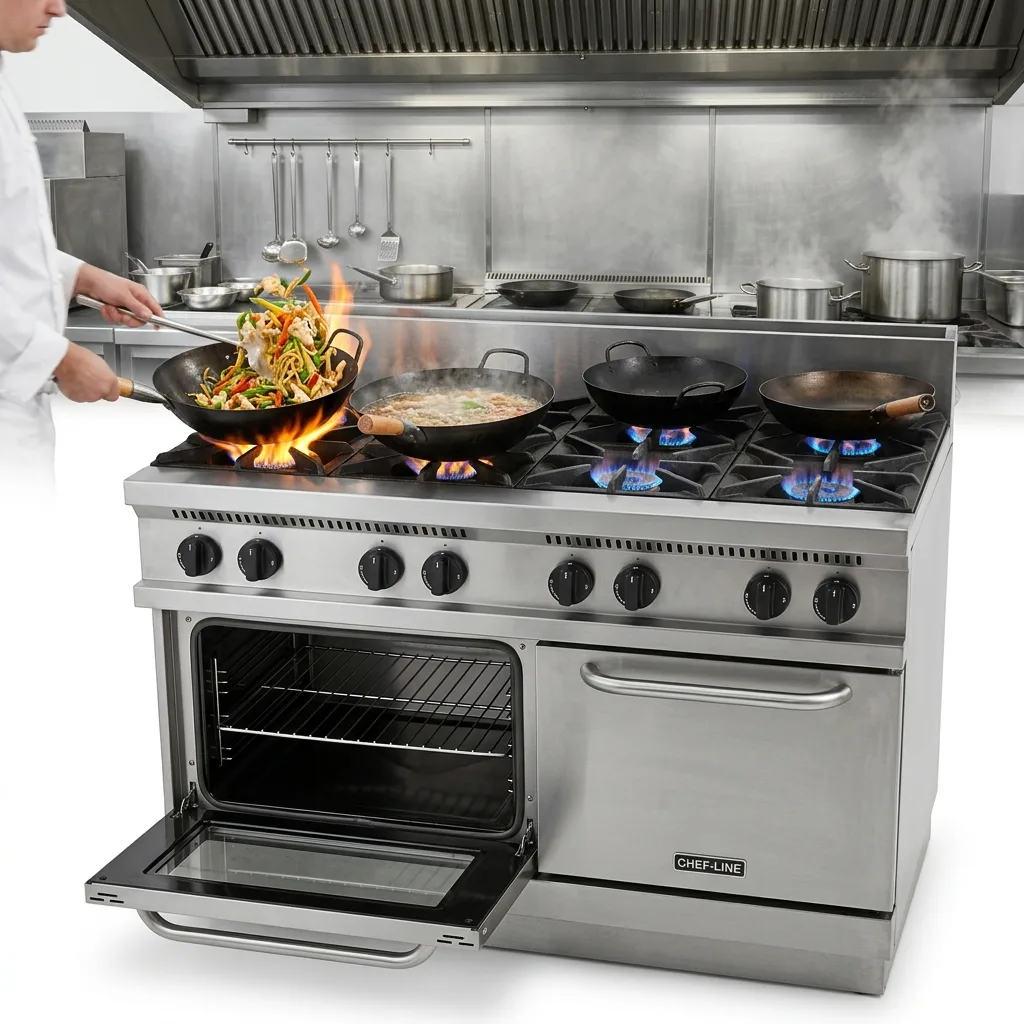
Custom Boiling Pan Units
Bespoke stainless steel large-capacity boiling kettles with motorized tilting and indirect steam jacket heating.
View Boiling Kettles →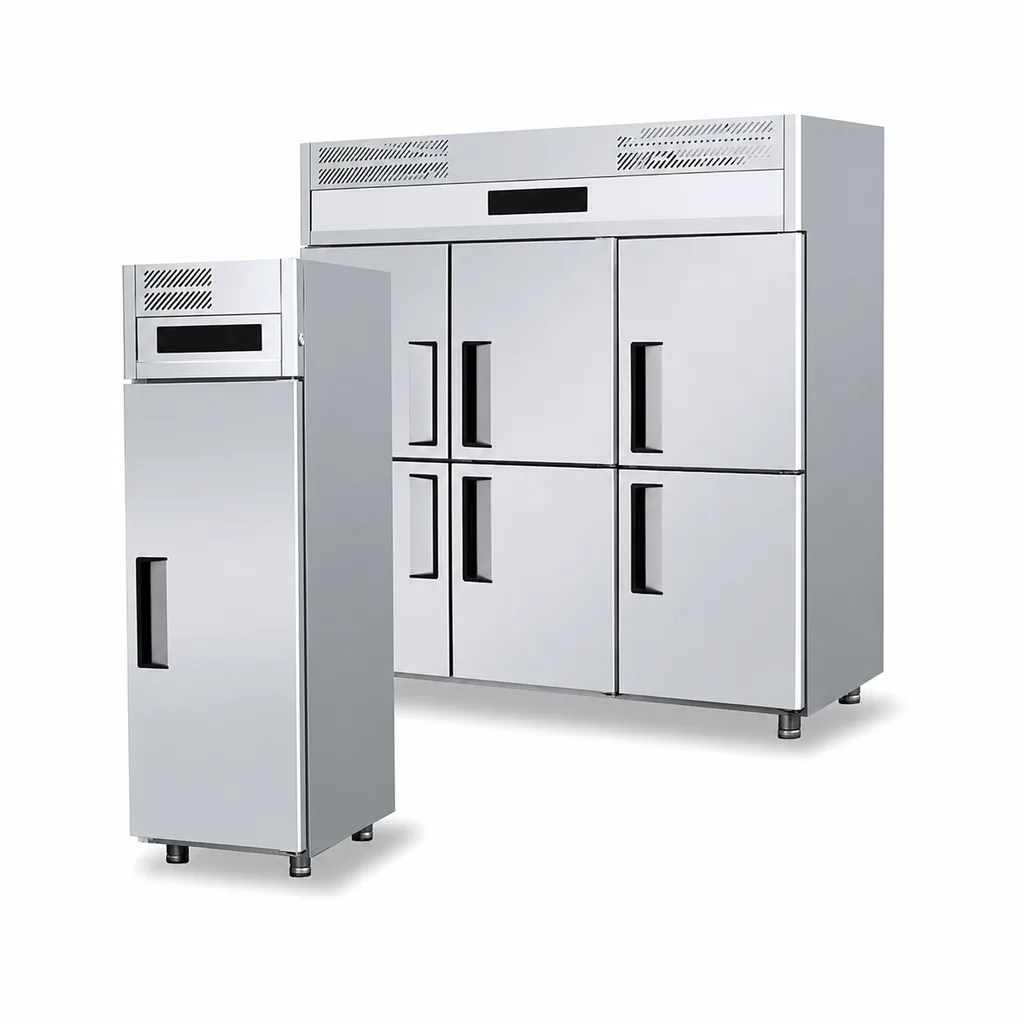
Custom Refrigerated Counters
Tailored stainless steel chef base counters with heavy-duty drawers and integrated cooling cassettes.
View Chef Bases →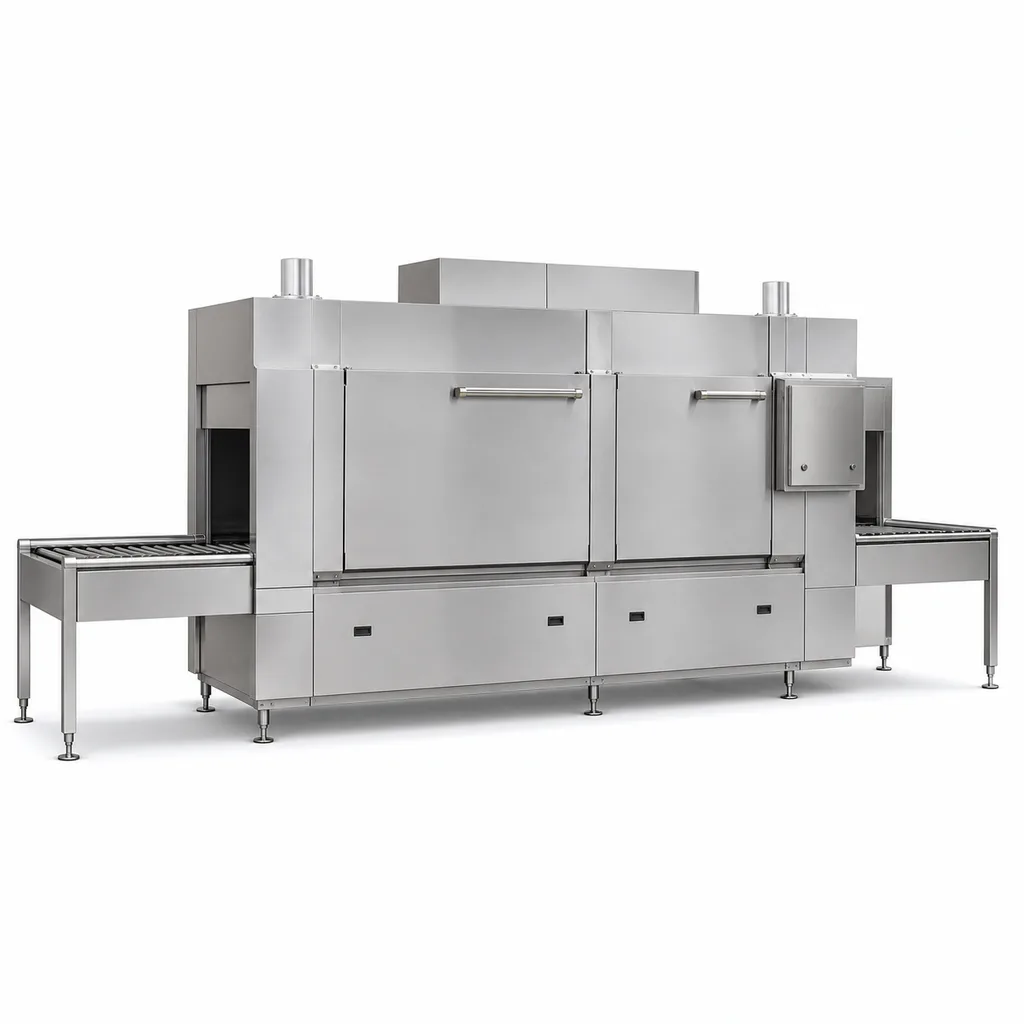
Custom Tunnel Wash Systems
Continuous conveyor dishwashing installations customized with corner feed turnstiles and steam condensers.
View Tunnel Washers →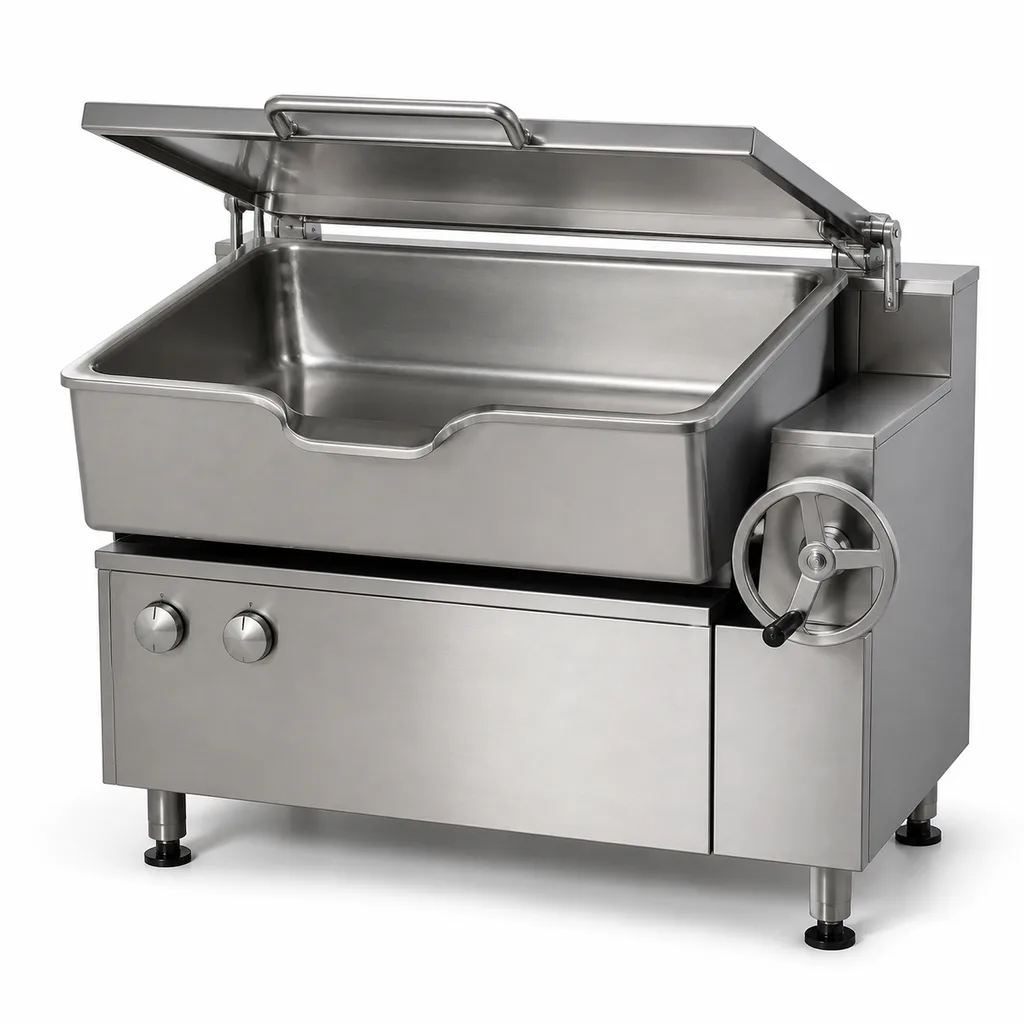
Bespoke Braising Cookers
High-volume motorized braising pans fabricated with 12-gauge 316-grade stainless cooking vessels.
View Braising Units →Turnkey Engineering Solutions & Applications
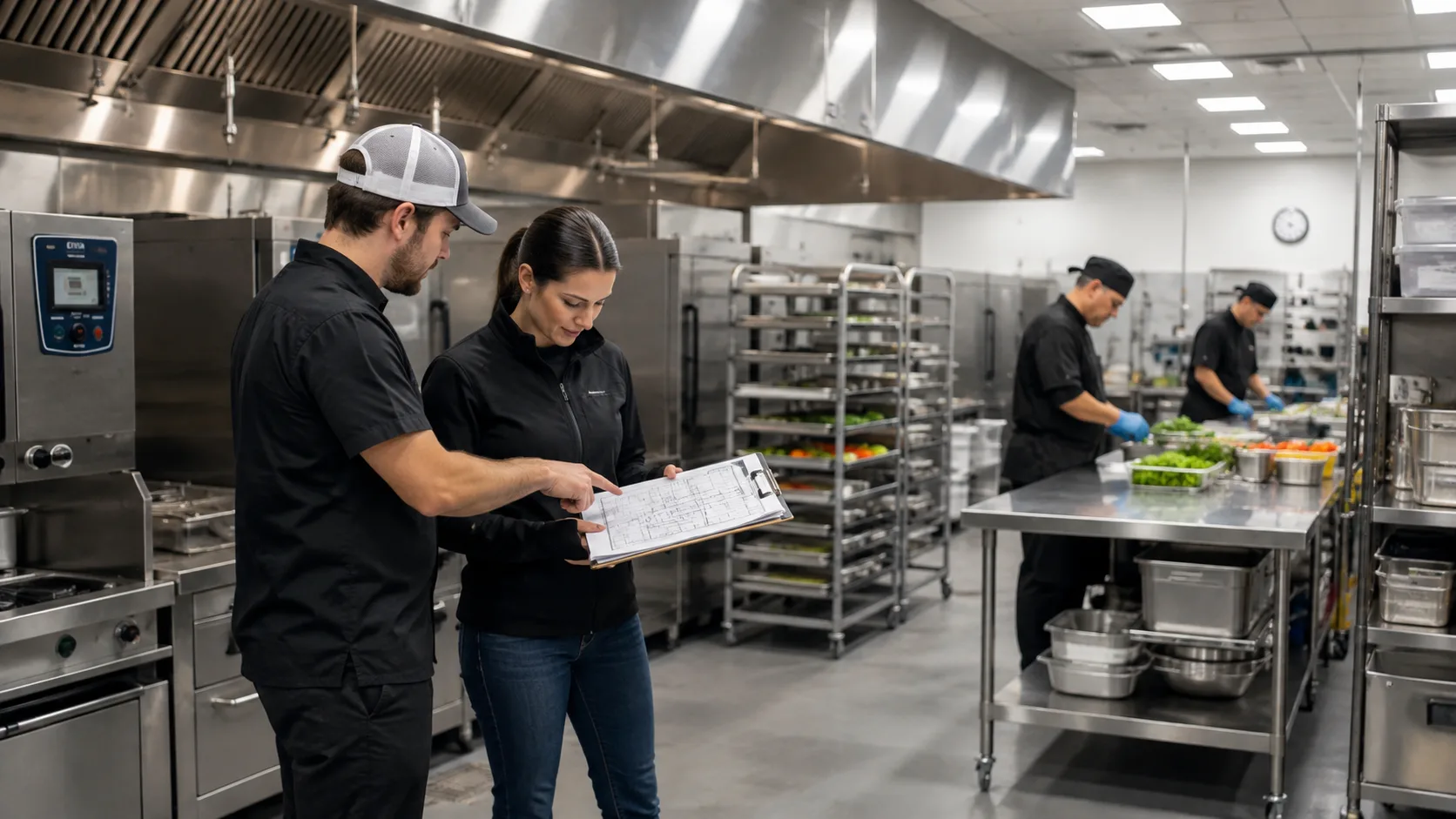
Food Processing Central Plants
High-capacity automated processing facilities built with bespoke continuous thermal lines and conveyors.
Explore Central Kitchen →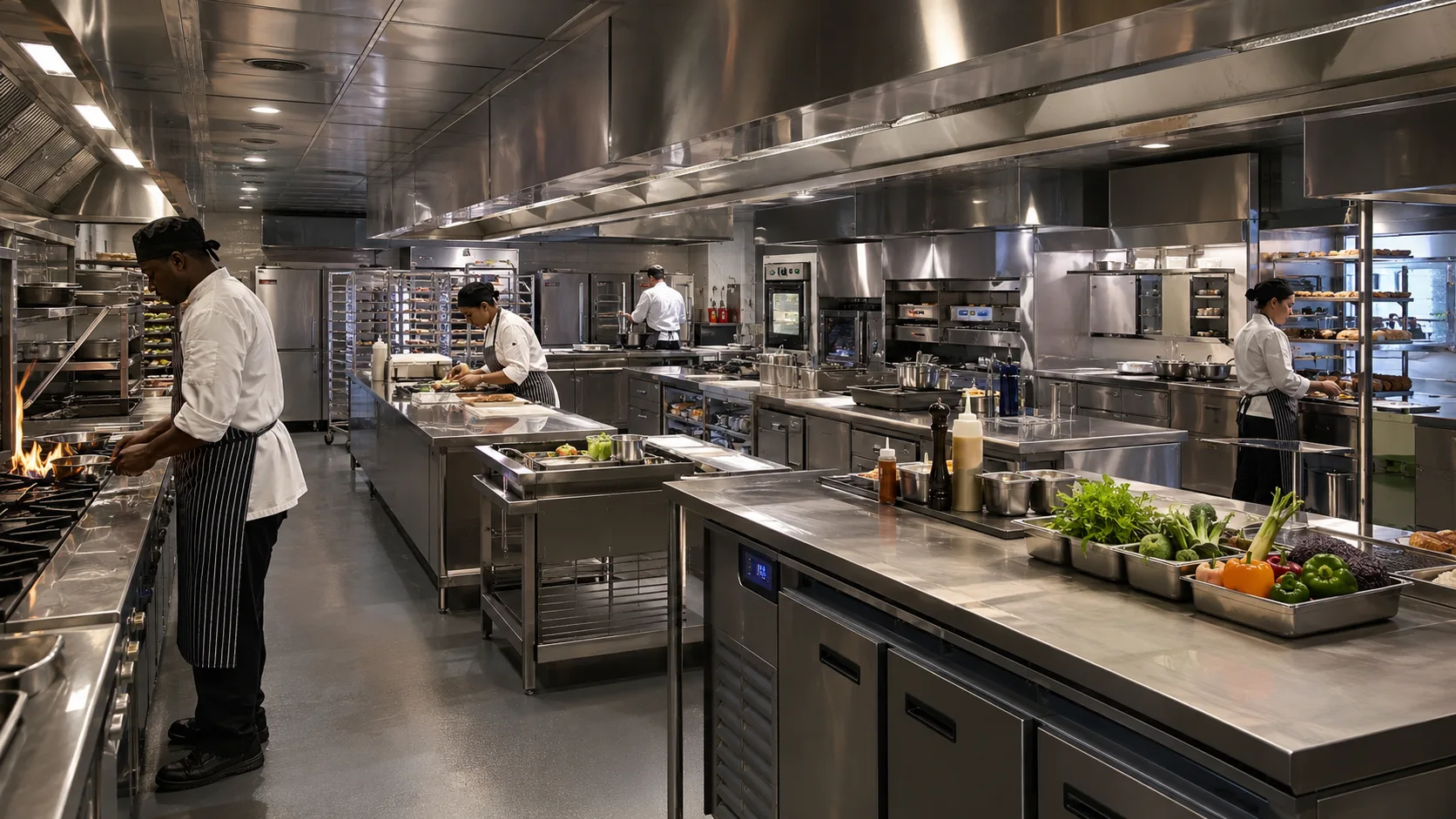
5-Star Hotel Banquet Lines
Custom island suites and multi-station production kitchens engineered for high-end luxury hospitality.
Explore Hotel Solutions →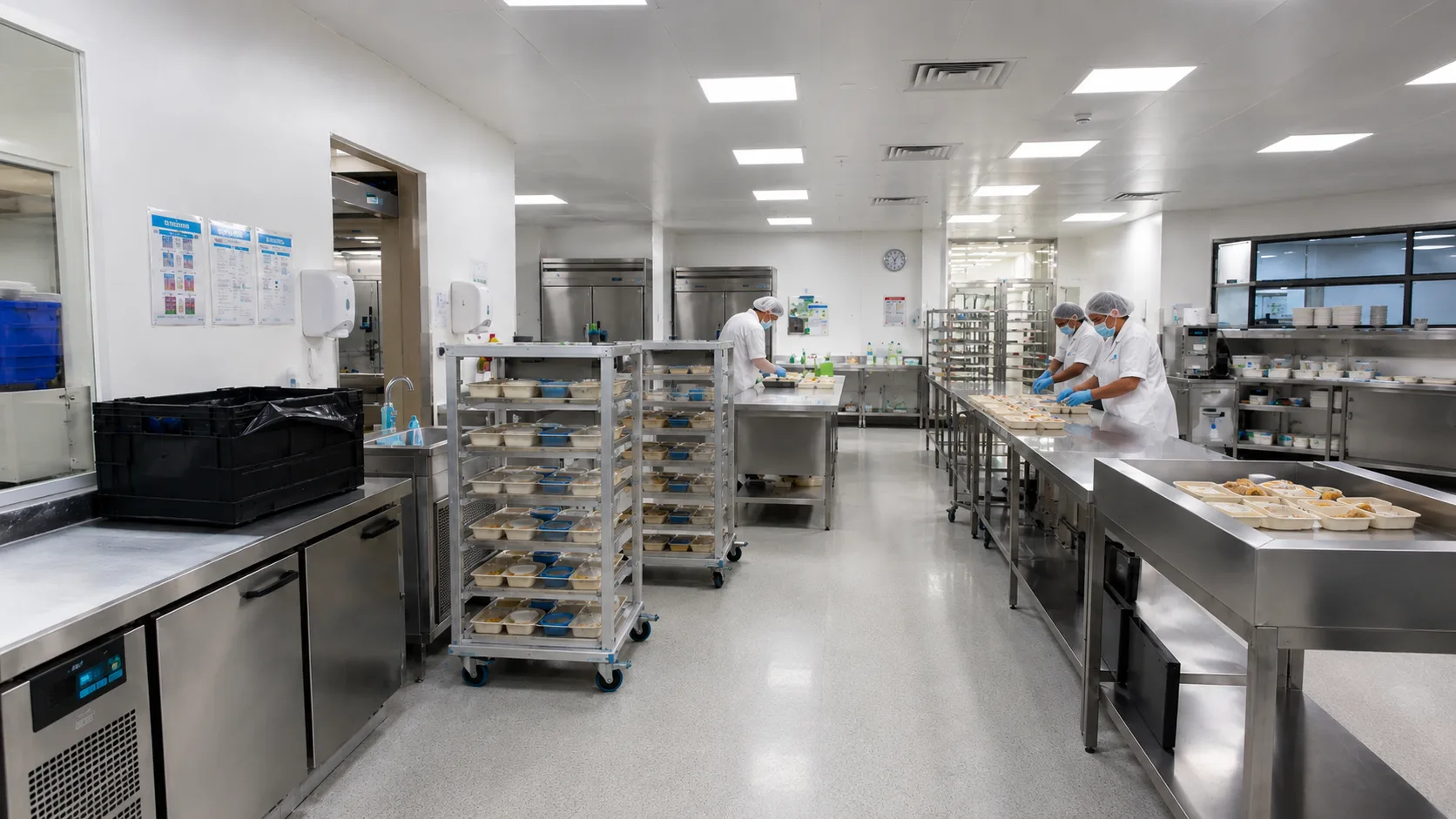
Institutional Healthcare Kitchens
Sanitation-focused custom fabrication designed for strict hospital HACCP compliance and patient tray lines.
Explore Hospital Solutions →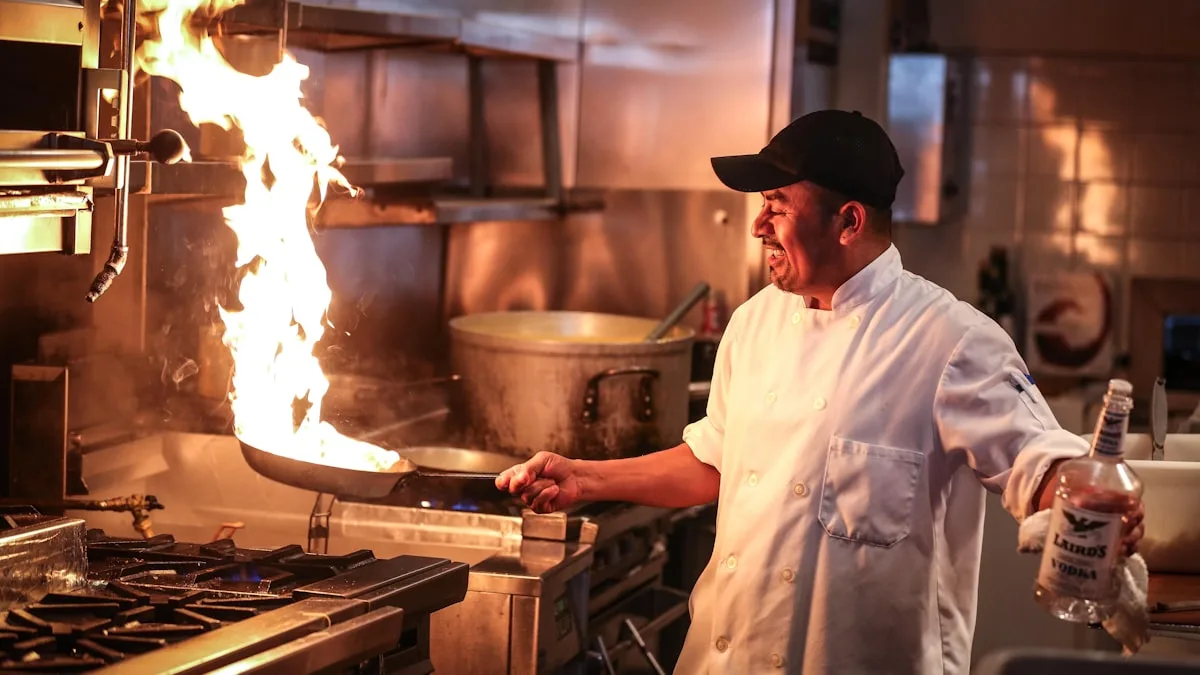
Michelin-Caliber Open Kitchens
Visually stunning custom cooking islands designed for front-of-house open kitchen display cooking.
Explore Restaurant Solutions →Frequently Asked Questions
What are the benefits of custom commercial kitchen fabrication over standard tables?
Custom fabrication utilizes 1.2mm to 1.5mm AISI 304 stainless steel, fully welded seams, and tailored dimensions that eliminate dirt-trapping wall gaps, fit irregular floorplans, and maximize production efficiency.
How long does custom commercial kitchen equipment take to manufacture?
Standard custom stainless steel fabrication (tables, sinks, exhaust hoods) typically requires 15 to 25 working days from approved shop drawings, while complex cooking suites require 30 to 45 days.
What stainless steel grade is best for high-end commercial kitchens?
AISI 304 with an 18/8 or 18/10 chromium-nickel composition is the universal standard for commercial food contact. For heavy marine, brine, or acidic processing, AISI 316 containing molybdenum is specified.
Can custom commercial kitchen equipment be designed from architectural Revit / CAD drawings?
Yes. HSYL engineers directly convert client architectural CAD plans and Revit BIM models into precise CNC laser-cutting and press-brake fabrication schedules.
Plan the Equipment Around Your Kitchen.
Share your menu, peak service demand, available space and site utilities. Tell us which equipment you are considering so we can review the requirements with you.