Direct Answer / Key Takeaway: Measure commercial kitchen standby energy separately from preparation, loaded production and cleaning. Compare accepted output using a clear metering boundary.
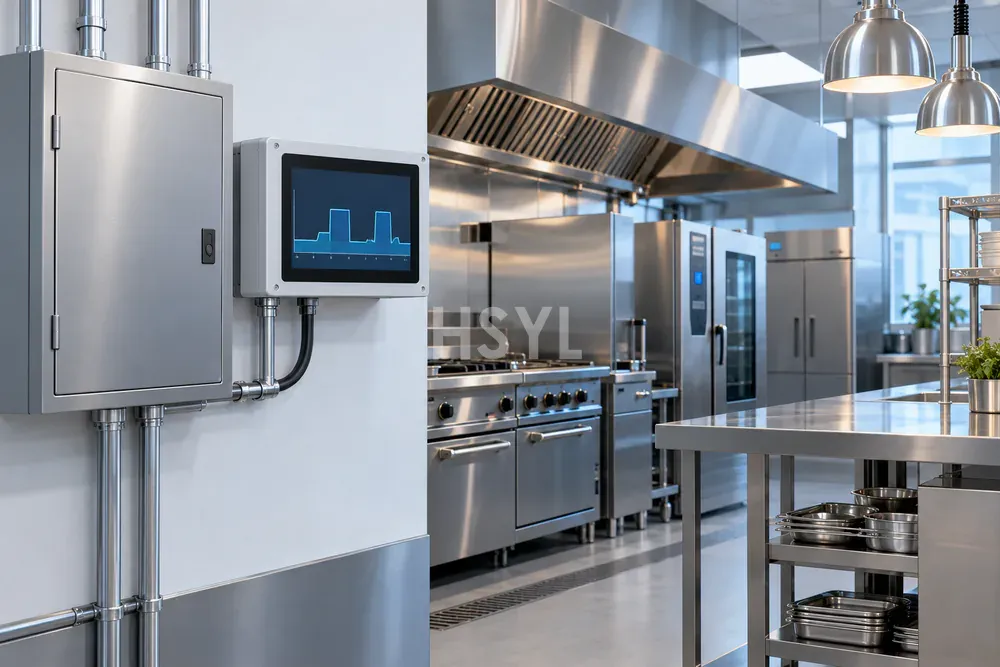
Commercial kitchen standby energy consumption should be measured within a defined operating boundary. A nameplate rating describes supplied equipment information, while recorded energy depends on the actual sequence of preparation, idle periods, loaded work and cleaning. Mixing those quantities produces a weak comparison.
Have competent personnel select and install suitable measurement equipment through the approved site procedure. The kitchen's task is to define the duty, retain the operating record and compare the same accepted output.
Decide what the measurement includes
Identify the exact appliance or equipment group, relevant utilities and the point of measurement. State whether auxiliaries, shared systems or another operation fall inside the boundary. If a meter covers several machines, do not silently attribute the total to one appliance.
Keep model, utility version and operating conditions identifiable. If electrical energy, gas or steam are compared, retain the respective units and any authorized conversion basis. A comparison needs a transparent definition rather than a single unexplained energy number.
Label the observed operating states
Record when the equipment is preparing for service, available without the defined production load, producing identified accepted output, changing tasks or following its approved cleaning process. Use descriptions matching the actual machine rather than assuming every appliance has the same idle mode.
Put the timeline beside the meter record. A short high-load interval and a long available-but-unused interval can contribute differently to the day's energy. The record should let a reviewer see which state produced each measurement.
| State record | Information to retain |
|---|---|
| Preparation | Required startup or readiness work and its boundary |
| Available without production | Permitted state and duration |
| Loaded work | Product, presented load and accepted output |
| Changeover | Task transition and equipment occupation |
| Cleaning | Approved sequence and included utilities |
Use energy units correctly
For a constant average electrical power over a defined interval, energy in kilowatt-hours equals kilowatts multiplied by hours. If power varies, use the appropriate recorded energy or integration method rather than treating a peak value as the whole interval's average.
An illustrative arithmetic example assigns an average 2 kilowatts to three hours of a defined standby condition, giving 6 kilowatt-hours. It assigns an average 8 kilowatts to ninety minutes of loaded work, giving 12 kilowatt-hours. The two defined intervals total 18 kilowatt-hours. These are assumed inputs, not an HSYL measurement or a complete daily result.
Normalize to a stated accepted output
Identify the product or service output used for comparison. Preserve the recipe, quality and required food-safety process, load and operating sequence. A lower energy total with a smaller or unaccepted output does not demonstrate a useful improvement.
If cost is calculated, state the actual tariff, period and charging boundary. Use measured or clearly declared inputs and distinguish an illustration from a quotation or savings forecast. Avoid assigning a payback period without the complete purchase, installation and operating basis.
Compare changes through a controlled trial
Test a defined, permitted change under compatible duty conditions and retain the earlier record. A revised service schedule or configuration may affect readiness, accepted output and staffing as well as energy, so review those conditions together.
ENERGY STAR provides certified-model and category resources. A benchmark or label belonging to another configuration is not proof of an offered unit's certification or the kitchen's site savings.
Provide the exact duty and meter record with the cooking equipment enquiry. This makes energy a documented part of the production decision and keeps standby, loaded work and accepted output within a common, auditable comparison.