Direct Answer / Key Takeaway: Technical B2B engineering guide on Exhaust Duct Fire Damper System error code troubleshooting and sensor diagnostics. Inspect engineering calculations,.
In institutional catering facilities and industrial food production complexes, specifying Standard Duty Exhaust Duct Fire Damper System serves as a foundational operational milestone. This comprehensive engineering dossier examines physical parameters across error code diagnostic flowchart & sensor testing protocol, establishing validated throughput sizing, interface rough-in standards, and factory commissioning metrics.
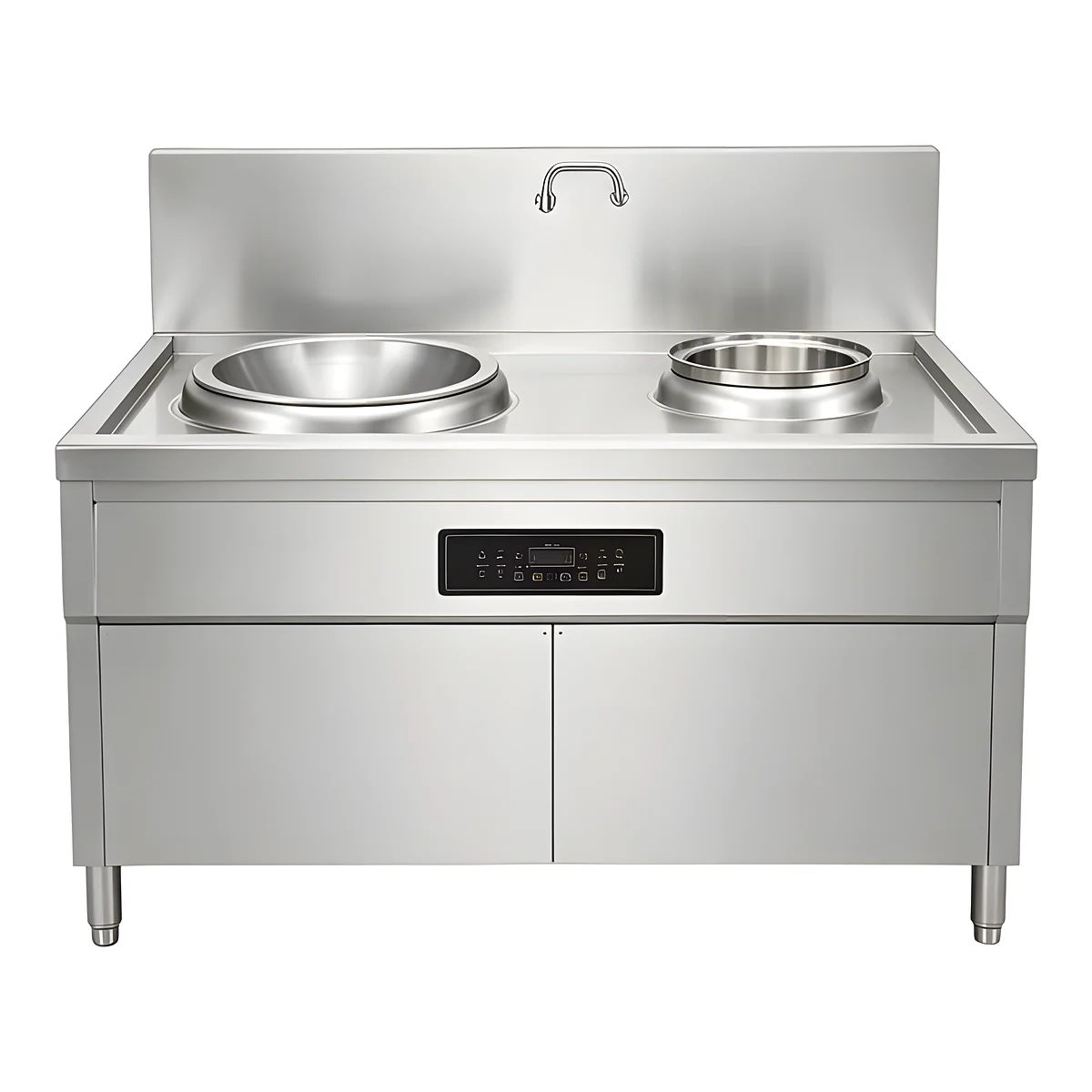
1. Operational Strategy & Production Workflow Integration: Error Code Diagnostic Flowchart & Sensor Testing Protocol
Diagnostic Algorithmic Logic, Sensor Drift & Controller Debugging:
Rapid field troubleshooting of microprocessor-controlled commercial kitchen machinery relies on systematic algorithmic failure isolation. When an error code triggers (e.g., E01 ignition lockout, E04 boiler over-temperature, E12 water level probe timeout, or E25 communication bus failure), technicians must follow rigorous diagnostic flowcharts before replacing costly printed circuit boards (PCBs). The first checkpoint isolates input sensor resistance: multi-point core temperature probes utilize calibrated RTD Pt100 or Pt1000 platinum elements (yielding 100 ohms or 1000 ohms at 0 deg C, with a linear +3.85 ohm/deg C rise). Technicians disconnect the sensor harness and verify resistance against OEM temperature-resistance lookup tables using a calibrated digital multimeter; readings indicating open loops (infinite ohms) signal wire breaks, while short circuits (0 ohms) signal moisture penetration into the stainless probe sheathing. Similarly, pressure differential transducers, optical door interlock sensors, and Hall-effect fan motor tachometers must be verified through onboard diagnostic test modes to confirm signal continuity before swapping motor drives.
When sizing equipment for peak production hours, facility planners must reference verified commercial kitchen extraction hoods and grease filters to ensure capacity reserves remain aligned with scheduled shift turnover targets.
2. Technical Engineering Matrix & Physical Parameters
The following technical matrix defines benchmark physical specifications, operational consumption values, and material thresholds for Standard Duty Exhaust Duct Fire Damper System units across standard commercial and heavy-duty institutional tiers:
| Engineering Parameter | Standard Commercial Spec | Heavy-Duty Institutional Spec | Engineering Variance Threshold |
|---|---|---|---|
| Material Construction | AISI 304 (1.0 mm), UL 1046 stainless baffle filters, integrated LED vapor-proof lighting, 80-100 FPM | AISI 304 (1.2-1.5 mm), continuous liquid-tight arc welds, integrated water-wash grease extraction, UV-C ozone | Exhaust airflow capture efficiency verified via theatrical smoke testing per ASTM F1704 |
| Primary Engineering Feature | Grease Extraction: Dual-bank removable stainless steel baffle filters with lower grease drain collection trough | Reinforced industrial assembly with seamless continuous laser welds | Zero structural deflection under maximum rated loading |
| Operational Subsystem | Fire Suppression Interface: Factory pre-piped fire damper housing compatible with Ansul R-102 wet chemical nozzles | High-efficiency heavy-duty components with dynamic feedback telemetry | Energy efficiency index within top 10% commercial benchmark |
| Sanitary & Safety Rating | Make-Up Air Plenum: Integrated front-face perforated compensating air plenum introducing 80% conditioned tempered air | IPX5 washdown protection with NSF/ANSI cleanability rating | Hermetic perimeter sealing preventing microbial colonization |
3. Core Physical Operating Principles & Machine Architecture
Aerodynamic Capture Plume Containment & Grease Centrifugal Extraction: Commercial kitchen ventilation hoods capture thermal convective plumes generated by cooking appliances, which rise at velocities between 0.5 and 1.2 m/s. Extraction canopies are engineered with front overhangs and aerodynamic lip baffles to induce vortex containment. High-efficiency mechanical stainless steel baffle filters force greasy air through tortuous, high-velocity directional changes; centrifugal inertia separates liquid grease droplets from the air stream, draining grease into removable collection troughs before air enters the ductwork, meeting strict NFPA 96 fire safety mandates.
In institutional catering environments, equipment longevity is heavily governed by surface passivation and corrosion resistance. Units fabricated from high-grade austenitic stainless steel must maintain an uncompromised chromium oxide passivated boundary layer. Regular chemical cleaning with non-abrasive detergents prevents pitting attack from chlorinated sanitizers and atmospheric chlorides.
Understanding these thermodynamic and mechanical principles allows consulting engineers to optimize cycle times, reduce utility peak draw, and eliminate premature component fatigue.
4. Mathematical Throughput Formulation & Batch Calculations: Capture Exhaust Velocity Airflow Formula
Accurate equipment sizing requires empirical calculation rather than subjective estimates. Design engineers utilize the following mathematical formulation to establish continuous throughput requirements:
Exhaust Airflow (CFM) = Hood Perimeter Exposed Length (ft) * Capture Face Velocity (85 FPM per NFPA 96 / ASHRAE 154)
For a 12 ft wall-mounted canopy hood over heavy-duty cooking appliances: Exposed length = 12 + 4 + 4 = 20 linear feet; Required continuous exhaust airflow = 20 ft * 300 CFM/ft = 6,000 CFM (10,200 m3/h) at 1.2 in. w.g. external static pressure.
Practical sizing engineering requires accounting for the hidden ware factor. Beyond customer dining covers, back-of-house food preparation items (hotel pans, sheet trays, mixing bowls, and prep utensils) contribute an additional 15% to 20% to total kitchen processing loads. Furthermore, thermal transfer times for bulk foods follow the transient conduction square-law relationship (t is proportional to x^2), meaning doubling product depth from 50 mm to 100 mm in pans roughly quadruples core pull-down or heating times. Sizing calculations must incorporate these empirical variables to ensure uninterrupted kitchen workflow.
Employing this sizing method protects the kitchen from meal bottlenecks, prevents premature thermal and mechanical failure, and guarantees compliance with HACCP time-temperature critical control points (CCP).
5. MEP Engineering, Rough-Ins & Installation Standards
Proper site preparation and mechanical rough-ins are critical to ensure trouble-free installation of Standard Duty Exhaust Duct Fire Damper System. Engineering teams and MEP contractors must observe the following technical parameters:
- Power & Electrical Connection: 380V-415V supply to exhaust/supply blowers with variable frequency drives (VFD) linked to kitchen BMS.
- Water Supply & Treatment: No water for dry hoods; water-wash models require DN20 hot water feed at 60 deg C and DN50 floor waste drain.
- Wastewater & Drainage Air Gap: Discharges must connect to temperature-resistant indirect waste lines with an unobstructed physical air gap, conforming to FDA Food Code Chapter 4 backflow mandates.
- Ventilation, Clearances & Environment: Continuous liquid-tight welded 16-gauge carbon steel or 18-gauge stainless ductwork conforming to NFPA 96; rooftop upblast exhaust fan discharge 1.0m above roof.
Critical Field Installation Redlines & Contractor Pitfalls: During jobsite rough-ins, engineering teams must enforce the following compliance boundaries to prevent premature equipment failure and voided warranties:
- Duct Continuous Welding: Exhaust ductwork must be 16-gauge carbon steel or 18-gauge stainless steel with 100% continuous external liquid-tight welded seams per NFPA 96.
- Make-Up Air Aerodynamic Balancing: Make-up air supply must be aerodynamically balanced to 85-90% of exhaust volume; under-supplying air creates severe negative building pressure and drafts.
- Baffle Filter Tilt Angle: Stainless baffle filters must be installed at an angle greater than 45 degrees from horizontal to ensure centrifugal grease drains freely into troughs.
6. Quality Assurance, FAT Commissioning & Standards Protocol
Prior to shipment from the manufacturing facility and upon delivery to the job site, Standard Duty Exhaust Duct Fire Damper System must undergo rigorous quality assurance auditing. Facility managers should follow factory acceptance testing and compliance verification to verify all factory acceptance testing (FAT) documentation:
- Canopy Air-Tight Liquid Weld Proofing: Seams tested with dye-penetrant inspection verifying zero grease leakage gaps.
- UL 1046 Baffle Filter Flame Barrier Test: Flame penetration resistance certified to prevent fire spread into ductwork.
- Capture Face Velocity Mapping: 24-point hot-wire anemometer grid verifying uniform 85-100 FPM across hood aperture.
- Integrated Vapor-Proof LED Soak Test: Lighting enclosures subjected to IP65 high-pressure steam and water spray.
To satisfy commercial health department and third-party food safety audits, modern commercial appliances incorporate automated HACCP data logging. The onboard microcomputer logs real-time time-temperature decay profiles, cycle durations, and sanitizing rinse parameters with cryptographic timestamps. Facilities personnel can export encrypted audit logs via USB or Modbus/Ethernet IoT interfaces, providing verifiable compliance dossiers to satisfy municipal health inspectors during unannounced regulatory audits.
7. Diagnostic Matrix & Failure Mode Remedies
Unplanned equipment downtime interrupts service and compromises kitchen safety. Engineering teams should consult the following diagnostic matrix for common operational error codes and remedies:
| Fault Code | Root Cause Diagnostic | Corrective Maintenance Procedure |
|---|---|---|
| V01 | Baffle Filter Differential Pressure Clog | Grease loading exceeds allowable 0.35 in. w.g. delta-P; soak and cycle filters through commercial dishwasher. |
| V02 | Exhaust Fan Drive Belt Tension Slip | Belt elongation causes 15% drop in fan RPM and CFM; adjust motor slide base and re-tension belt. |
| V03 | Make-Up Air Pressure Differential Imbalance | Negative kitchen building pressure exceeds 15 Pa; calibrate supply fan VFD modulation curve. |
8. Preventive Maintenance Lifecycle & Inspection Intervals
To protect capital investment and maintain steady kitchen productivity, preventative maintenance must be performed according to an engineered schedule:
| Maintenance Interval | Inspection Scope & Component Target | Acceptable Operating Standard |
|---|---|---|
| Daily Shift End | Drain lower grease collection cups, wipe hood exterior polished surfaces | Grease cups emptied, hood canopy perimeter wiped clean of oil drip residue |
| Weekly Filter Wash | Remove all stainless baffle filters and wash in commercial conveyor dishwasher | Filter baffles clear of hardened grease, free-flowing drain channels in hood track |
| Monthly Inspection | Inspect exhaust collar transition joint, check fire suppression nozzle caps | Rubber nozzle blow-off caps in place and clean, zero oil seepage at duct collar joint |
| Semi-Annual Service | Inspect fan motor belt deflection, measure static pressure across filter bank | Belt deflection 10-15 mm under thumb pressure, duct pressure reading within normal curve |
All mechanical maintenance interventions must utilize NSF H1 certified food-grade synthetic lubricants on drive bearings and moving pivot hinges. Electrical connections, magnetic contactors, and grounding continuity must be re-torqued and tested annually using calibrated digital multimeters to prevent thermal resistance hot spots.
Recommended First-Year Commissioning & Preventative Spares Kit: For international projects and remote institutional complexes, maintaining an on-site critical spares inventory avoids catastrophic service interruptions:
| Part Description | Recommended Quantity | Engineering Maintenance Function |
|---|---|---|
| Stainless Steel Baffle Grease Filters | 4 Pieces | Heavy-gauge interlocking baffle filters providing centrifugal grease extraction. |
| V-Belt Drive Set for Exhaust Blower | 2 Sets | Heat-resistant industrial drive belts maintaining calibrated rooftop CFM exhaust. |
| Grease Collector Trough Drain Plug | 2 Pieces | Threaded liquid-tight drain cap facilitating weekly grease evacuation. |
| Hood Halogen High-Temp Lamp Assembly | 4 Sets | Heat-resistant tempered glass fixture and lamp rated for continuous 250 deg C canopy operation. |
9. Export Packaging, Marine Transit & Logistics Protection
For international buyers and hospitality EPC contractors, safe transit of Standard Duty Exhaust Duct Fire Damper System across long-distance ocean voyages requires specialized industrial packing. Commercial equipment is vulnerable to saltwater moisture condensation, mechanical shock, and handling vibration. Factory dispatch standards encompass:
- Internal Timber Canopy Bracing: Diagonal timber cross-members bolted inside hood cavity preventing flex in container.
- Filter Cell Independent Packaging: Baffle filters individually wrapped in heavy corrugated sleeves and boxed separately.
- Duct Connection Protective Covers: Flanged exhaust spigots sealed with heavy plywood blanking plates.
- ISPM-15 Timber Crate Enclosure: Full crating engineered for flat stacking or vertical marine container stowage.
For comprehensive wiring schematics, spare parts exploded diagrams, and maintenance schedules, consult the official technical documentation and installation manuals provided by HSYL engineering.