A commercial vegetable steamer is useful only if the last tray served is as acceptable as the first. The way to test that is to agree on a finished-vegetable standard, then challenge a proposed cabinet with the vegetables and loading pattern the kitchen actually uses. This is a trial protocol for a buyer, not a claim that a particular steamer achieves a published vegetable output.
Set the pass condition before the equipment trial
Select a dense vegetable and a tender vegetable that the kitchen serves regularly. For each, agree on cut size, starting condition, the acceptable centre and edge texture, appearance at service, and whether it will be held after cooking. Use the same preparation for every machine being compared. If the kitchen already has an approved food-safety procedure, keep that procedure in the trial; a visual check alone cannot replace it.
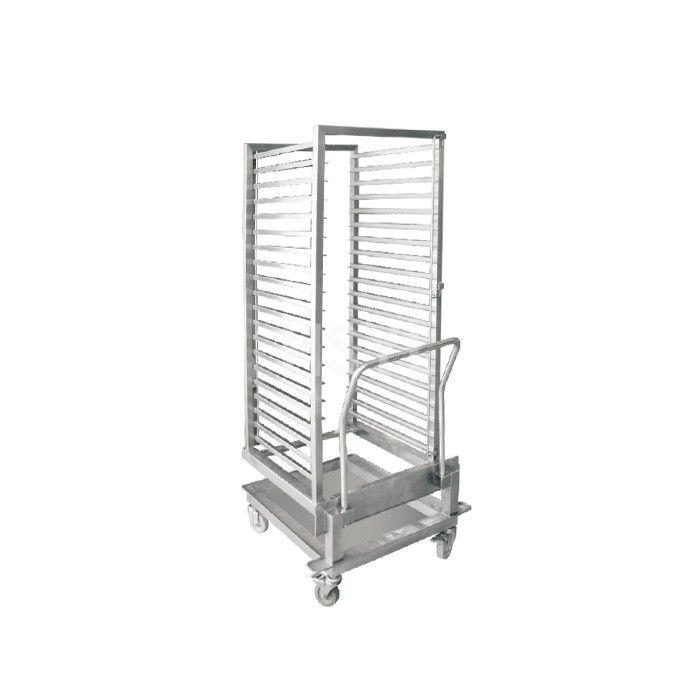
Mark which tray positions will be occupied and load each tray to the depth intended for production. Record the food weight and pan or tray format, then note the finish on every occupied position. A sample from the easiest-to-reach tray cannot establish that the cabinet gives a consistent full-load result.
Run, interpret and repeat the loaded test
- Dense product: check whether the centre reaches the agreed finish while pieces at the edges remain acceptable. Record the actual load and all handling before the tray can leave the station.
- Tender product: inspect colour and texture across the occupied tray positions. If a position repeatedly fails, record it rather than averaging it into a cabinet-wide capacity number.
- Service sequence: unload a finished batch, transfer it to the actual next station, and start the next batch. Include door opening, tray handling and any waiting before service.
- Repeat the failing condition: if a deep tray fails, rerun it at a shallower depth. Count how many extra trays and cycles the accepted depth requires during the real service window.
The result should be expressed as accepted portions or trays within the available time, with the load conditions attached. If the shallower load produces acceptable vegetables but the extra cycles miss the serving deadline, the cabinet or workflow is undersized for this task. If colour or texture fails only after holding, examine the holding step before blaming the steamer. Neither outcome justifies claiming a universal kilograms-per-hour figure.
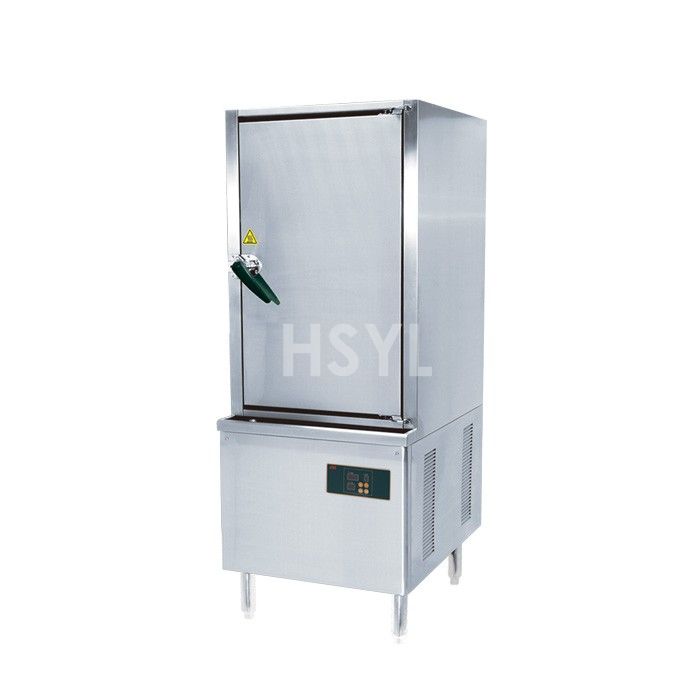
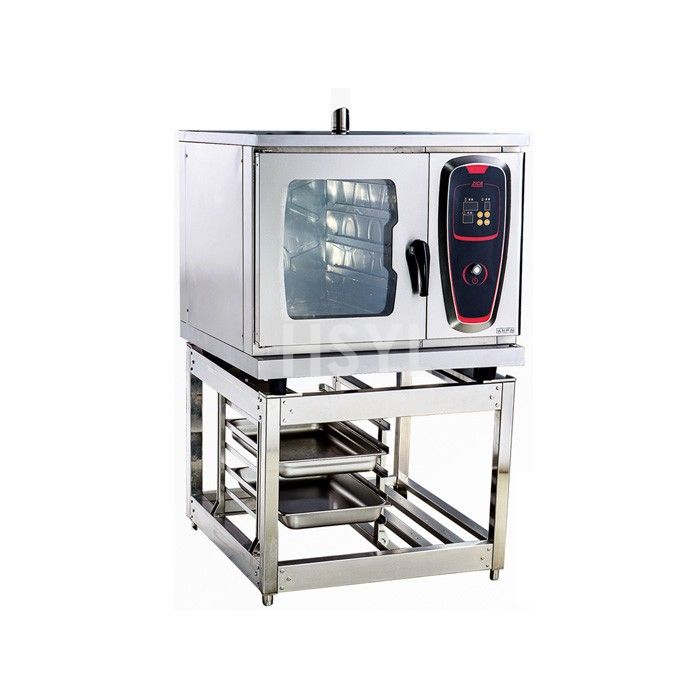
The photographed HSC steamer range is one candidate to check against the actual pan or tray format. HSYL's steamer cabinet selection guide covers other container interfaces. Obtain the selected model's rack drawing, water and drain requirements, cleaning instructions and utility schedule before booking a trial. Send the vegetable list, accepted finish, tray depth and service deadline so the proposed trial can test the real task.