Direct Answer / Key Takeaway: Equalize bone saw offers by the named construction, workpiece trial, included accessories and service support. Do not treat motor power as the whole specification.
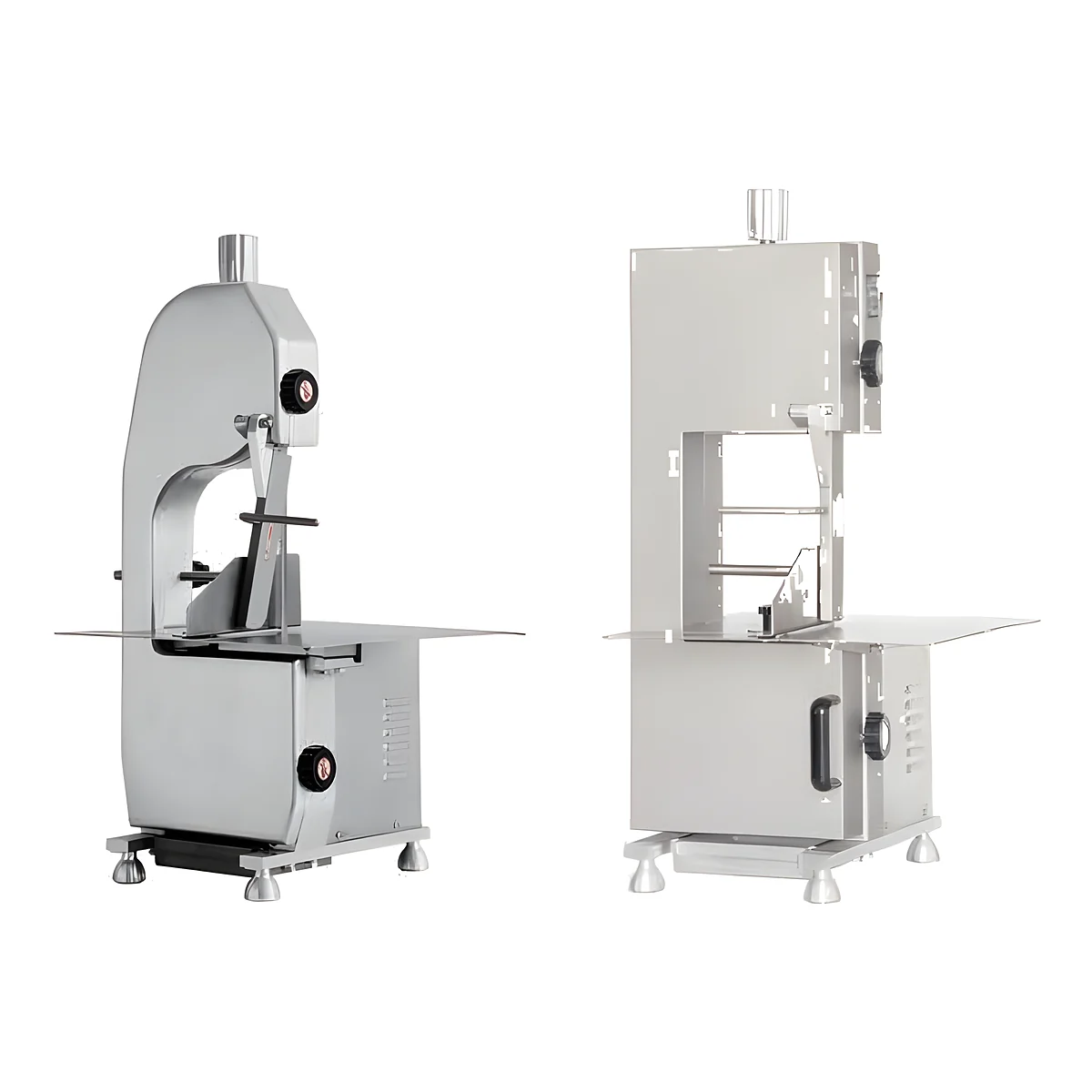
Two bone saw offers can share a motor rating and still include different constructions, supports and after-sales provisions. Build a comparison around the exact machines offered and the products they have been shown to handle. A line headed 'commercial bone saw' is not detailed enough to equalize a purchase.
Identify the construction being priced
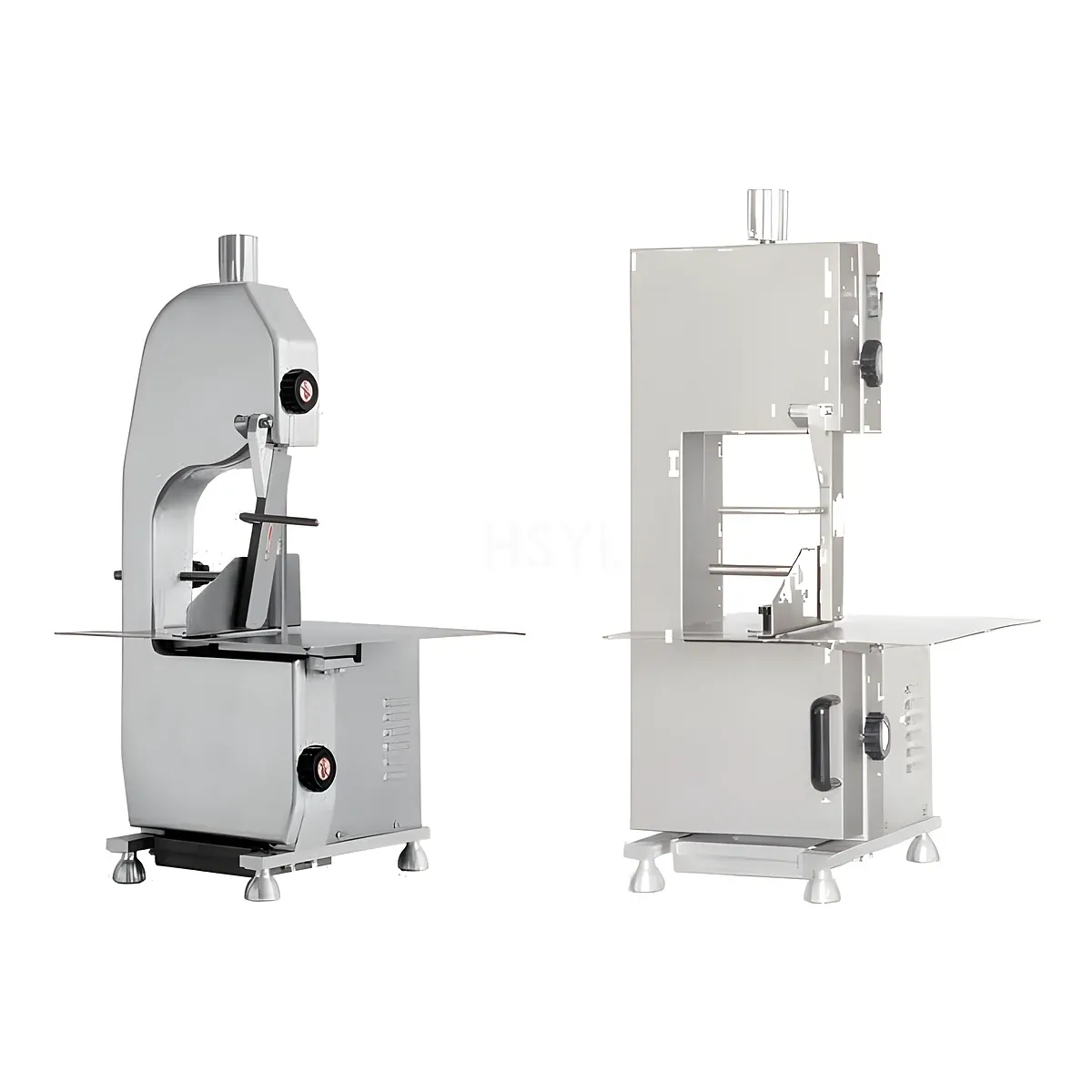
The catalogue distinguishes the HLS-1650A alloy-body entry from the HLS-1650 stainless-body entry. Both rows list a 1660 mm blade and 750 W, yet they remain different named constructions. Those shared figures do not establish equal cutting performance, cleaning access or whole-life cost.
Ask each supplier to identify the materials and finish of the relevant parts, including surfaces exposed during normal cleaning. Do not assume that every component has the same material as the main body. The appropriate question is whether the quoted construction suits the intended environment and documented cleaning method, not whether one broad material word wins every comparison.
Use one acceptance brief for every candidate
Specify the actual bone-in products, workpiece dimensions, condition and required portion outcome. Keep the supplier trial record with the offer. An alternative construction is not an acceptable substitute merely because the catalogue machine family uses a similar model number.
Ask what is included in the supplied handling and protective arrangement. Show any required bench or manufacturer-designed base as a separate priced item. A low equipment price may exclude the support needed to make the proposed workstation complete.
Compare the parts and service evidence
Obtain the exact blade specification, consumable identification and illustrated parts information for the offered model. Ask whether quoted spare parts are supplied with the machine or only available to order later. Record lead-time commitments only when a supplier has provided them for the destination and service arrangement.
Keep routine consumables distinct from fault repair. A spare band does not address an unavailable switch, guide or other model-specific component. Similarly, a general warranty statement does not explain the process for diagnosing a fault overseas, the work included or who pays for transport and labour.
Compare the complete delivered offer
List machine, support, included accessories, packing, freight, installation responsibilities, training and documentation. Use the same destination and commercial basis for each total. Mark omissions for clarification instead of treating them as free supply.
The purchase record should explain the selection through actual differences: an appropriate tested arrangement, usable cleaning access, documented parts and a clear service process. The installation and support handover then becomes part of the agreed scope, rather than an assumption made after the saw arrives.