Direct Answer / Key Takeaway: Check the actual griddle‘s grease path, removable collector and disposal route before counters, drawers or trim obstruct a routine task at the cooking station.
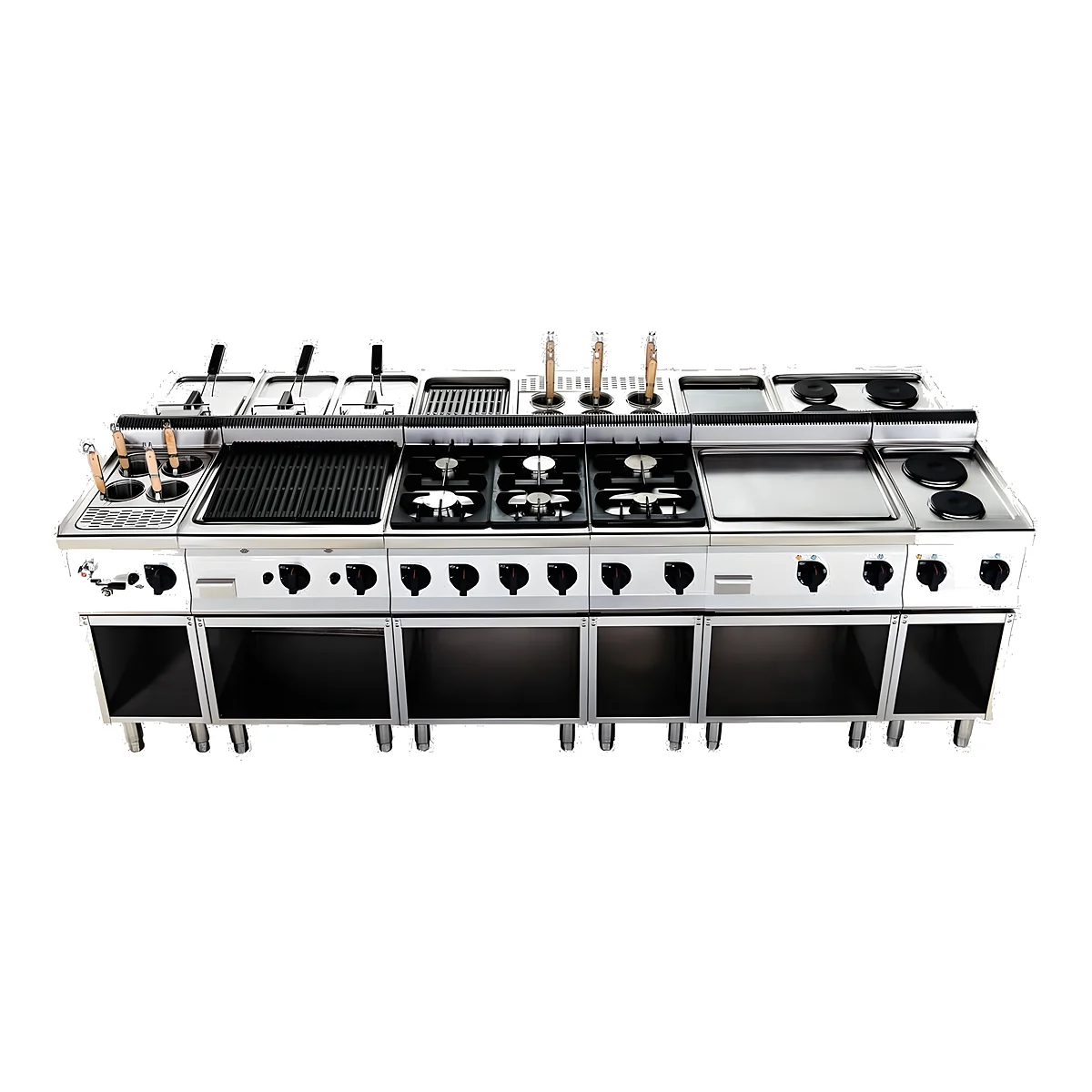
The griddle plate may fit a cookline while its grease collector cannot be removed. Include the actual grease path and collection parts in the installation drawing, with the full handling movement. A cabinet outline misses the task that staff must repeat during operation and cleaning.
Follow the grease to the removable part
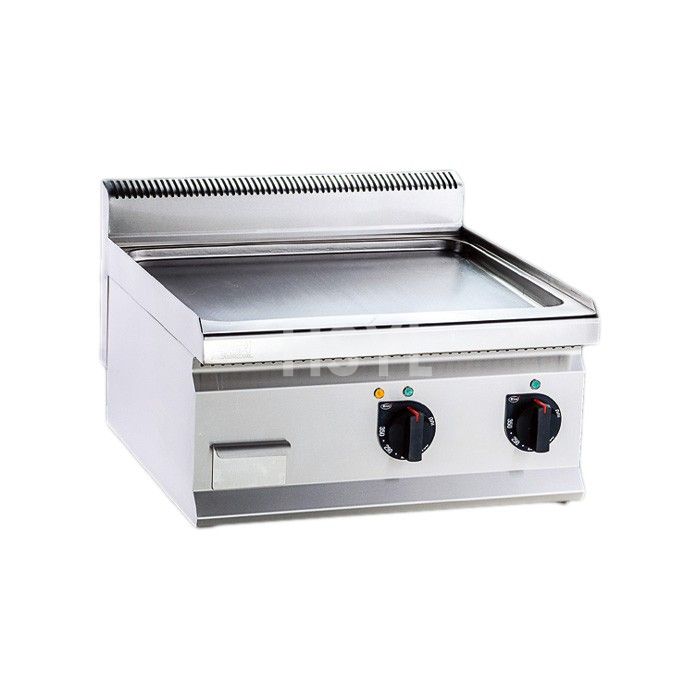
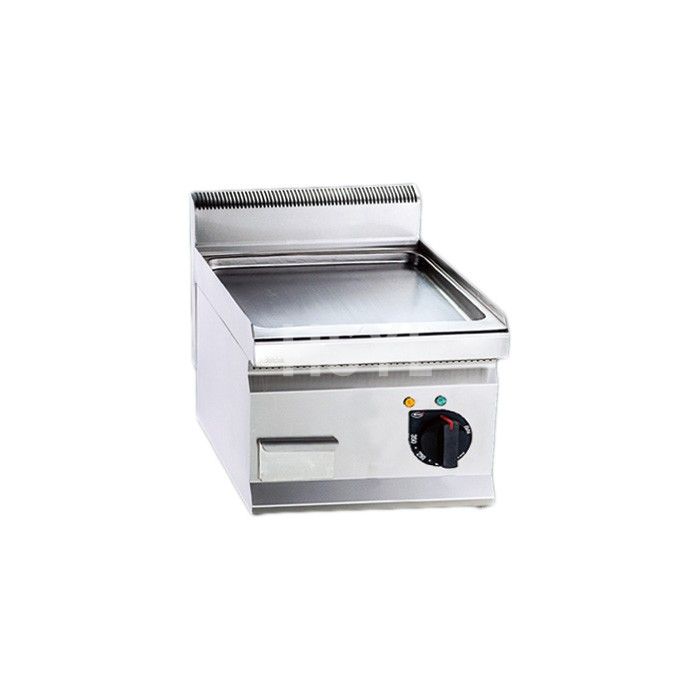
Obtain the supplied assembly drawing and identify where grease leaves the plate, where it collects and which component an operator removes. Confirm its correct fitted position and the permitted handling method. Do not assume that a front drawer, rear cup or another model's extension is part of the delivered equipment.
The catalog identifies the ZCP205BT half-flat, half-grooved griddle, but its overall dimensions do not establish that collector's shape or withdrawal distance. Keep the actual griddle configuration separate from a generic cookline sketch.
Compare two common layout conflicts
In one arrangement, a new fascia panel covers the front of a collection part. The griddle can still cook, but routine removal requires taking off the trim. Resolve the trim and access opening before fabrication; do not accept dismantling as the normal operator method.
In another arrangement, a collector pulls out above a refrigerated drawer or a utensil store. Opening the collector and opening the storage occupy the same space. Check the permitted removal motion, where the contents are handled and what must remain protected below. Simply moving the appliance farther forward may introduce an unsupported overhang or obstruct other controls.
Plan the receiving and disposal route
Provide the approved receiving equipment and destination for the collected material. Show where the operator stands, where the collector is supported during the permitted task and how it returns to the correct position. The procedure must follow the delivered appliance's instructions, including any shutdown or cooling conditions.
Assess the nearby walkway as well as the workstation. A collector carried through the dispatch queue creates a different problem from one handled beside the griddle. Keep the route available when trolleys, ingredients and staff are in their normal service positions.
Check the whole flat-and-grooved plate
Use a safe walkthrough to verify access from both plate sections to the specified collection path. Avoid counting a blocked portion of the plate as useful cooking space or adding a makeshift channel to redirect grease. If the proposed layout interferes with the appliance's collection method, revise the support or neighboring equipment through the approved design.
At handover, show that the collector can be removed, handled and restored through the authorized procedure with the finished cookline in place. Check that the collection route remains clear and that cleaning tools match the specified plate finish. Leave the accepted movement in the staff instruction so later storage changes do not obstruct it.