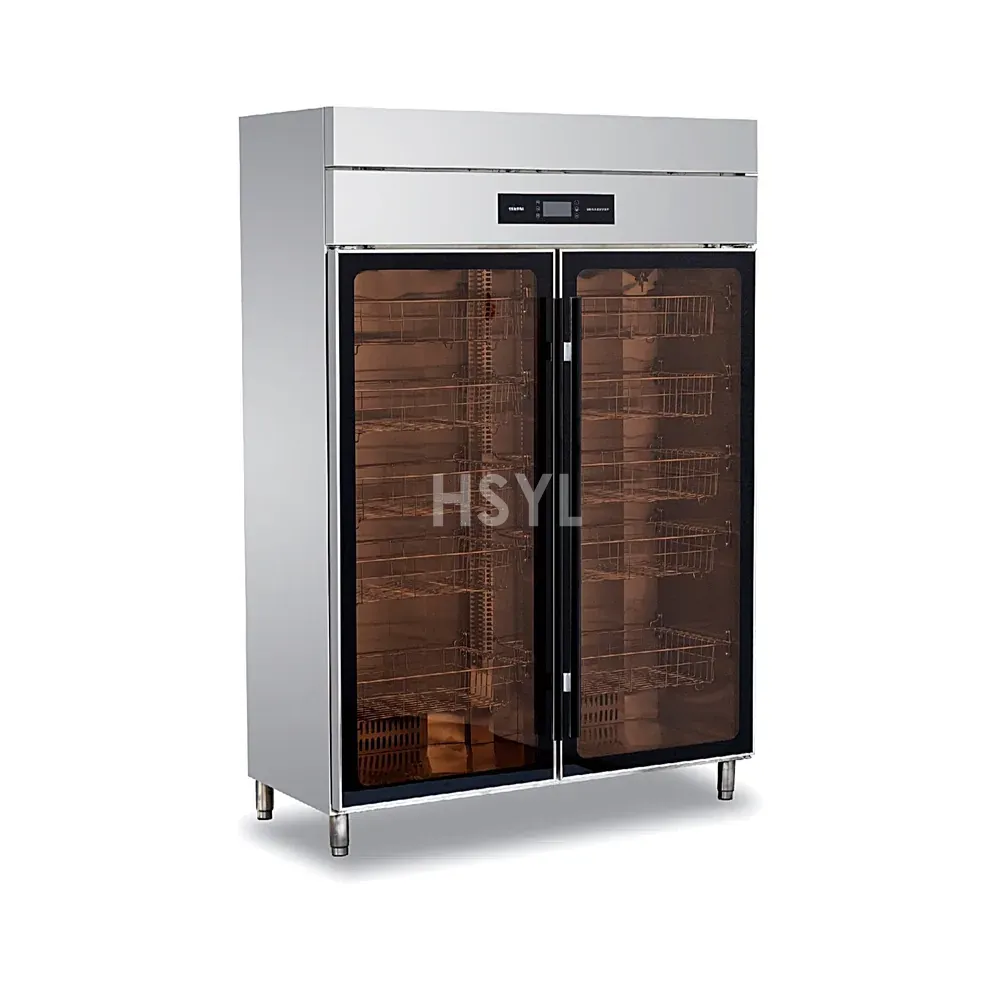
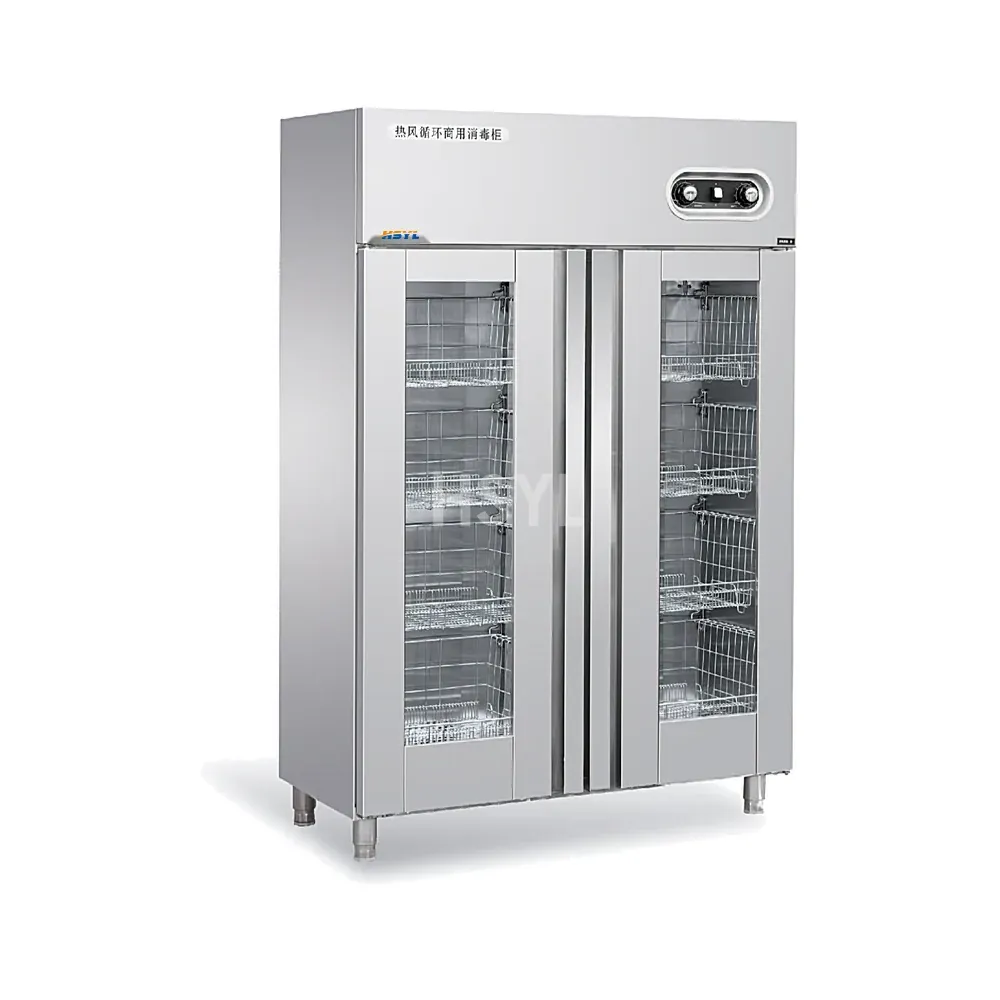
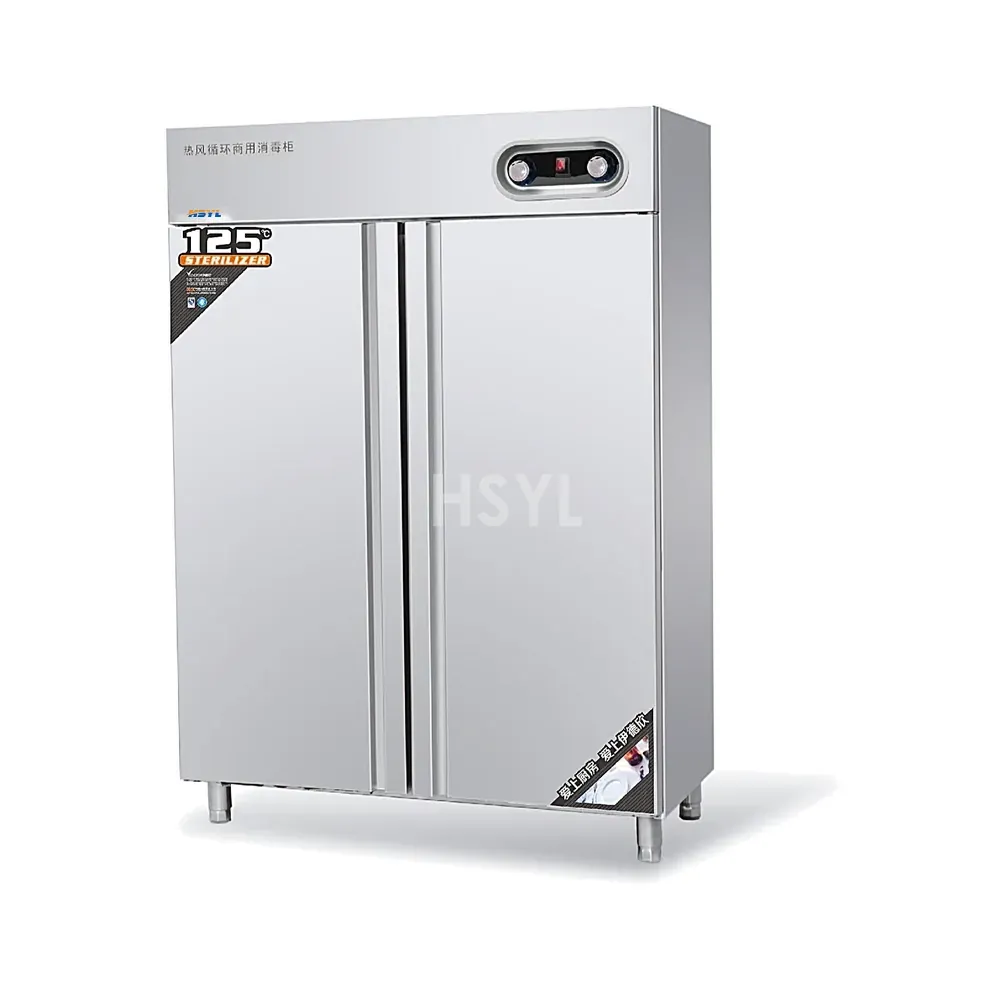
Tableware disinfection standards are temperature-time pairs, and every method has its own: Chinese food-service practice puts thermal cabinet disinfection at 120 °C held for at least 10 minutes, boiling or steam at 100 °C for the same hold, dishmachine disinfection at a water temperature of 85 °C with a rinse contact of 40–45 seconds, and chemical immersion at an available-chlorine concentration of 250 mg/L for 5 minutes or more (regulatory practice, NOT VERIFIED — always confirm the current rule with your local authority). Choose the method first; the number follows. The sterilization equipment and dishwashing ranges each carry equipment built to one of these pairs.
The Method-by-Method Requirements
| Method | Temperature / concentration | Hold time | Suits |
|---|---|---|---|
| Boiling / steam | 100 °C | 10 min+ | Heat-tolerant ware, small batches |
| Infrared / thermal cabinet | 120 °C+ | 10–15 min | Ceramic, glass, stainless — volume |
| Dishmachine | 85 °C water | 40–45 s rinse | Volume wash + disinfect in one pass |
| Chemical (chlorine) | 250 mg/L available chlorine | 5 min+ immersion | Heat-sensitive items; requires potable-water rinse after |
A second dishmachine formulation appears in Chinese guidance and matches the US FDA convention: utensil surface temperature at 71 °C or above, with the final sanitizing rinse at 82 °C or above (regulatory practice, NOT VERIFIED). The two are the same idea measured differently — surface temperature versus water temperature — and the dishmachine's own documentation governs which reading applies.
The Standards Behind the Numbers
The pairs above trace to the Chinese national framework: GB 14934 for the hygienic standard of disinfected drinking and eating utensils, GB 31654-2021 for the general hygienic specification of catering service, and the food-safety operation specification for catering services, with local market-regulator notices applying the numbers site by site (NOT VERIFIED — cited by title, confirm the current editions locally). None of these fix a single machine; they fix outcomes — a demonstrated kill, on clean ware, with records.
Matching Equipment to the Standard
On the cabinet side, the match is direct: the Flat-Door A and Flat-Door B sterilizer cabinets run a 125 °C cycle — above the 120 °C floor with margin for door openings and loading — and the XRTP-720 runs 120 °C as its top program alongside 80 and 60 °C for heat-sensitive loads. On the machine side, the full temperature chain of a sanitizing dishwasher — wash, rinse and the final 82 °C sanitizing rinse, with HACCP verification — is covered in the dishwasher sanitizing rinse guide. The route choice between the two is compared in the disinfection cabinet vs dishwasher guide.
After the Cycle: Storage Is Part of the Standard
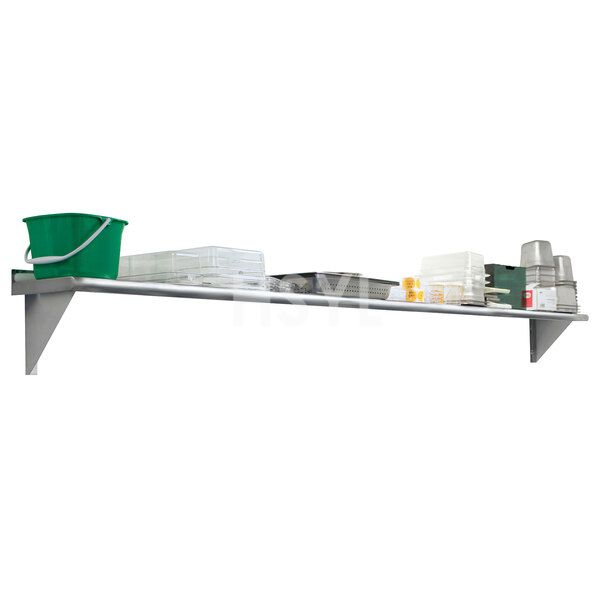
The standard does not end at the kill step. Disinfected tableware is drained or dried naturally — never towel-dried, which re-contaminates what the cycle just cleaned — and moved promptly into a closed, clean storage cabinet reserved for disinfected ware, separated from un-disinfected items and from personal effects. Auditors read the storage step as part of disinfection compliance, not housekeeping: a compliant cycle feeding an open shelf is a nonconformity with a temperature chart attached.
Export Note: One Standard Local, Another at Destination
Equipment built for the Chinese pairs ships worldwide, and the destination market's rule governs at the destination: US practice follows the FDA Food Code's 71 °C surface / 82 °C final-rinse convention on dishmachines, and European and other markets carry their own national versions (NOT VERIFIED). For export buyers the practical path is unchanged — buy equipment whose cycle overshoots the floor (a 125 °C cabinet clears any 120 °C requirement), and verify the destination rule before commissioning.