Commercial Dishwasher Sanitizer
Technical guide to commercial dishwasher sanitizers and sterilizers. Learn high-temp thermal sanitizing (82C) vs chemical sanitization and health inspection compliance.
In commercial hospitality, healthcare, and educational food operations, the warewashing department is the frontline defense against microbial cross-contamination and foodborne illness outbreaks. A commercial dishwasher is not merely a dish cleaner—it is a certified sanitizing machine engineered to eliminate pathogenic bacteria (including Escherichia coli, Salmonella enterica, and Listeria monocytogenes) by a minimum 5-log reduction (99.999% destruction). Facility directors must choose between high-temperature thermal sanitization and low-temperature chemical sanitization while engineering booster heaters, rinse hydraulic pressures, and water softening infrastructure. This comprehensive whitepaper provides an engineering analysis of commercial warewashing sanitization.
1. Sanitization Thermodynamics: High-Temperature Thermal vs. Low-Temperature Chemical
Commercial dishwashers achieve sanitization through two fundamentally different physical mechanisms, each with distinct capital costs, utility footprints, and operational trade-offs:
| Engineering Parameter | High-Temperature Thermal Sanitization | Low-Temperature Chemical Sanitization | Operational Comparison & Trade-Offs |
|---|---|---|---|
| Sanitization Mechanism | Thermal Pasteurization via 82°C - 90°C (180°F - 195°F) fresh water rinse | Chemical Biocide via 50 - 100 PPM Sodium Hypochlorite (Chlorine) at 49°C - 60°C (120°F) | High-temp melts animal fats instantly; chemical relies on chlorine oxidation |
| Wash Tank Water Temperature | 66°C to 71°C (150°F to 160°F) | 49°C to 60°C (120°F to 140°F) | High-temp prevents grease redeposition; low-temp requires heavy alkaline detergent to cut grease |
| Final Rinse Water Temperature | 82°C to 90°C (180°F to 195°F) | 49°C to 60°C (120°F to 140°F) | Rinse water exceeding 90°C flashes into vapor, failing to transfer liquid heat to ware surfaces |
| Drying Velocity & Residual Moisture | Instant Flash-Drying (Dense thermal mass evaporates water in < 45 seconds) | Slow Air Drying (Requires synthetic surfactant chemical rinse aid, 3 - 6 minutes) | High-temp eliminates wet stacking; low-temp risks bacterial growth on moist stacked plates |
| Glassware & Utensil Impact | Gentle on glassware; preserves fine porcelain glaze, gold leaf, and silver plating | Corrosive; chlorine tarnishes silverware, etches soft glassware, and pits stainless steel | High-temp mandatory for fine dining bars and luxury hospitality banquet services |
| Booster Heater Requirement | Mandatory internal or external 9 kW - 45 kW electric or gas booster heater | None (Runs directly off building standard 50°C - 60°C domestic hot water line) | Low-temp saves electrical service panel Capex; high-temp eliminates chemical recurring costs |
2. NSF/ANSI Standard 3 Compliance & Heat Unit Equivalent (HUE)
Public health inspectors validate commercial warewashing compliance under NSF/ANSI Standard 3. Compliance requires delivering a cumulative Heat Unit Equivalent (HUE) across the dishware surface:
NSF Standard 3 Rule: The plate surface temperature must reach a minimum of 71°C (160°F) continuously for at least 10 seconds during the rinse cycle, or accumulate a total of 3,600 HUEs, achieving a certified 99.999% (5-log) bacterial reduction. Technicians verify compliance using irreversible waterproof thermal test labels (thermolabels) affixed directly to test plates.
3. Booster Heater Sizing Physics & Electrical Engineering
The primary point of failure in high-temperature commercial warewashing is an undersized booster heater. Incoming municipal hot water typically enters at 43°C to 60°C (110°F - 140°F) and must be boosted instantaneously to 82°C (180°F) during the 10-second rinse cycle:
Example: A hood-type dishwasher consuming 60 GPH with a 50°C (122°F) incoming supply requires a 58°F rise to reach 180°F.
kW Requirement = (60 × 58 × 8.33) / 3,412 = 8.5 kW minimum. Facility managers should specify a 12 kW booster to compensate for thermal pipe losses.
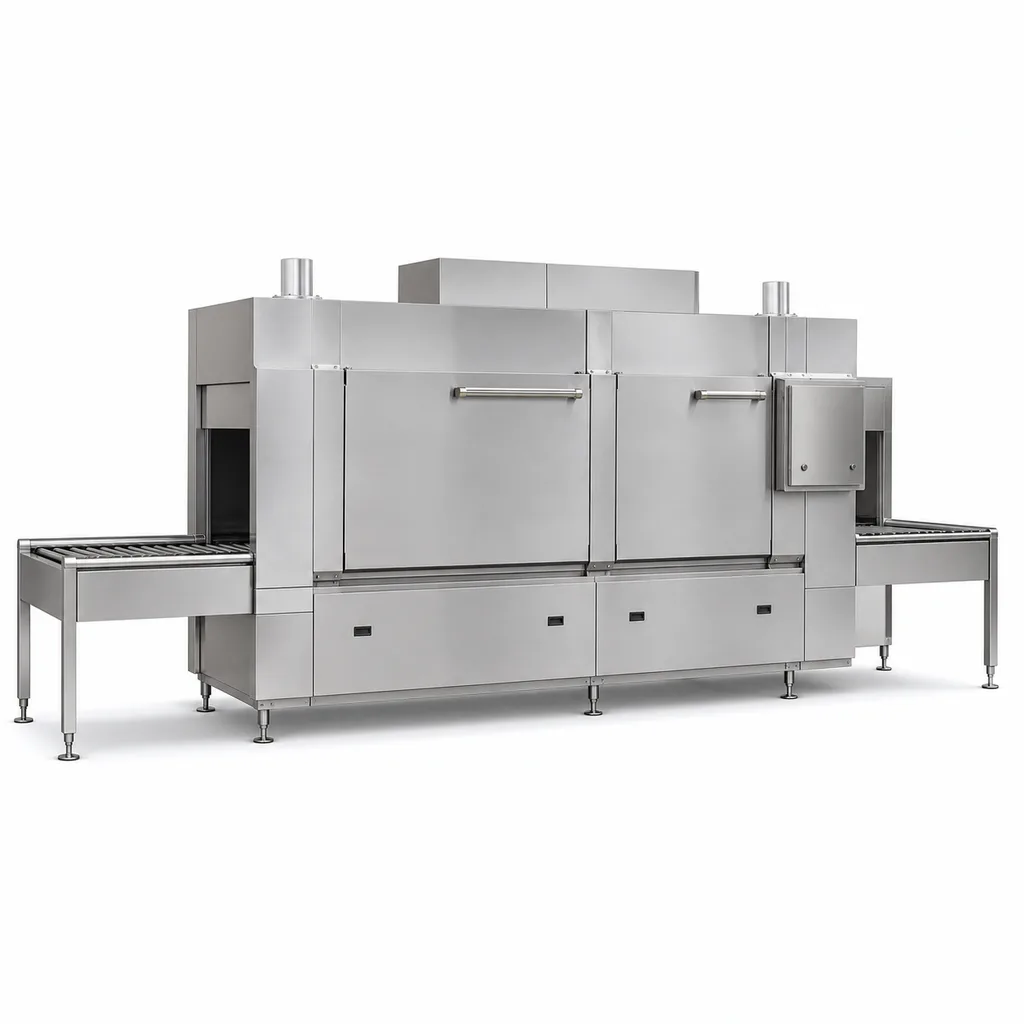
Figure 1: High-capacity multi-tank conveyor dishwashing plant delivering 82°C (180°F) thermal sanitization.
4. Multi-Stage Conveyor Hydraulic Architecture
For operations processing over 800 meal covers per service (hospitals, universities, banquet centers), multi-tank conveyor and flight-type dishwashers separate warewashing into dedicated hydrodynamic zones:
- Pre-Wash Scrap Zone (43°C - 49°C / 110°F - 120°F): High-volume, low-pressure circulating water strips heavy food soils, proteins, and starches. Temperatures must not exceed 49°C to prevent baked-on protein coagulation (egg, cheese, blood) on plate surfaces.
- High-Impact Wash Zone (66°C - 71°C / 150°F - 160°F): 2 HP - 3 HP wash pumps drive recirculating alkaline detergent water through upper and lower fan-jet nozzles, stripping saponified animal fats and vegetable oils.
- Power Pre-Rinse Zone (71°C - 77°C / 160°F - 170°F): Recirculated warm water flushes alkaline detergent residues off plates before they enter the sanitizing chamber.
- Final Sanitizing Rinse Zone (82°C - 90°C / 180°F - 195°F): Fresh, clean water from the booster heater discharges through calibrated solid-cone spray nozzles at 15 to 25 PSI, achieving final thermal sanitization and laying down flash-drying sheeting action.
5. Water Quality Management & Descaling Engineering
Hard municipal water containing dissolved calcium and magnesium minerals is the number one cause of commercial dishwasher heating element burnout and failed health inspections:
| Water Hardness Level | Grains Per Gallon (GPG) | PPM (mg/L CaCO3) | Required Water Treatment Engineering |
|---|---|---|---|
| Soft Water | 0.0 - 3.0 GPG | 0 - 50 PPM | Direct connection; standard chemical detergent dosing |
| Moderate Hardness | 3.5 - 7.0 GPG | 60 - 120 PPM | Inline polyphosphate scale inhibitor cartridge or duplex sodium-ion water softener |
| Severe Hard Water | 7.5 - 15.0 GPG | 130 - 260 PPM | Mandatory commercial duplex alternating water softener; weekly automated acid descaling |
| Extreme Hard Water | > 15.0 GPG | > 260 PPM | Commercial Reverse Osmosis (RO) system with blending bypass to protect internal booster elements |
6. Chemical Titration & Sanitizer Concentration Testing Protocols
When operating low-temperature chemical sanitizing machines, facility managers must verify sanitizer concentration at the wash manifold every shift:
- Chlorine Test Paper vs. DPD Spectrophotometry: Operators should test chlorine sanitizer concentration using fresh chemical test strips (reading 50 PPM to 100 PPM). Concentrations below 50 PPM fail health sanitization standards; concentrations exceeding 200 PPM cause severe pitting corrosion in 304-grade stainless wash tanks and chemical odors on dining plates.
- Peracetic Acid (PAA) Alternative: For healthcare and baby-care environments seeking chlorine-free alternatives, peracetic acid sanitizers (concentrations of 100 to 200 PPM) offer broad-spectrum virucidal and sporocidal destruction without toxic chlorinated byproducts.
7. Commercial Exhaust Heat Recovery & Ventless Warewashing
Modern commercial dishwashers can be engineered with internal heat recovery condensers (heat pumps), eliminating expensive stainless steel exhaust canopy ductwork:
- Heat Recovery Condensation Coils: Saturated steam (82°C) generated during the final rinse is evacuated across a closed-loop cold water coil. The latent heat of the steam pre-heats incoming cold tap water (10°C) up to 45°C before it enters the booster heater, saving up to 6 kW per hour in electrical power.
- Ventless Installation Certification: By condensing steam inside the machine, ambient moisture and heat emissions drop to zero, allowing hood-type and undercounter dishwashers to operate legally without dedicated rooftop exhaust hoods in most municipal jurisdictions.
6. Chemical Dosing Peristaltic Pump Calibration & Flow Kinetics
In low-temperature chemical sanitizing dishwashers, microbiological kill efficacy depends entirely on accurate peristaltic chemical pump calibration:
| Chemical Reagent | Active Chemical Compound | Calibrated Dosing Target | Dispensing Timing | Failure Symptom if Miscalibrated |
|---|---|---|---|---|
| Commercial Detergent | Potassium Hydroxide / Sodium Silicate | 0.25% - 0.40% concentration in wash tank | Injected dynamically during wash tank fill and water refresh | Low: Greasy dishes and food soil redeposition; High: Foaming and chemical glass etching |
| Chemical Sanitizer | 5.25% - 8.25% Sodium Hypochlorite (Bleach) | 50 - 100 PPM available free chlorine | Injected into final rinse water stream under pressure | < 50 PPM: Immediate health inspection failure; > 200 PPM: Corrodes stainless steel and leaves bleach odors |
| Rinse Aid Surfactant | Polyoxyalkylene Glycol Block Copolymers | 2 - 4 mL per rack (Lowers surface tension < 30 dynes/cm) | Injected into final rinse manifold | Low: Water spotting and wet stacking; High: Oily film and foaming in wash pump |
7. Health Inspection Validation & Thermal Data Logging
Public health authorities mandate documented proof of continuous sanitization performance. Modern commercial facilities implement rigorous verification protocols:
- Irreversible Temperature Indicator Strips (Thermolabels): Technicians affix certified single-use waterproof adhesive strips to the center of a clean plate placed in the middle of a loaded wash rack. The strip features calibrated indicator panels (e.g., 71°C / 160°F plate surface, 82°C / 180°F water stream) that permanently turn black when the rated thermal threshold is maintained for the requisite duration.
- Digital HACCP USB / Cloud Data Logging: Modern commercial dishwashers record every cycle's wash temperature, final rinse temperature, rinse hydraulic pressure, and chemical dosing volume to internal flash memory. Exporting these digital logs provides unimpeachable legal compliance evidence during environmental health audits.
8. Hydraulic Spray Impingement Geometry & Wash Arm Dynamics
Soil removal in commercial dishwashing is a function of both chemical solvency and kinetic spray impingement. The wash manifold architecture determines cleaning speed:
Hydraulic Engineering: Commercial 304-grade stainless wash arms feature computer-calibrated fan-jet nozzles inclined at 15-degree angles. Water exiting at 1.8 bar (26 PSI) creates dual rotary propulsion without requiring external drive motors, delivering 120 overlapping spray sweeps per minute across every plate surface to shear off stubborn proteins and starches.
Featured Commercial Equipment Models
Undercounter Sanitizing Washers
Heavy-duty 304 stainless compact dishwashers with built-in booster heaters and automatic chemical pumps.
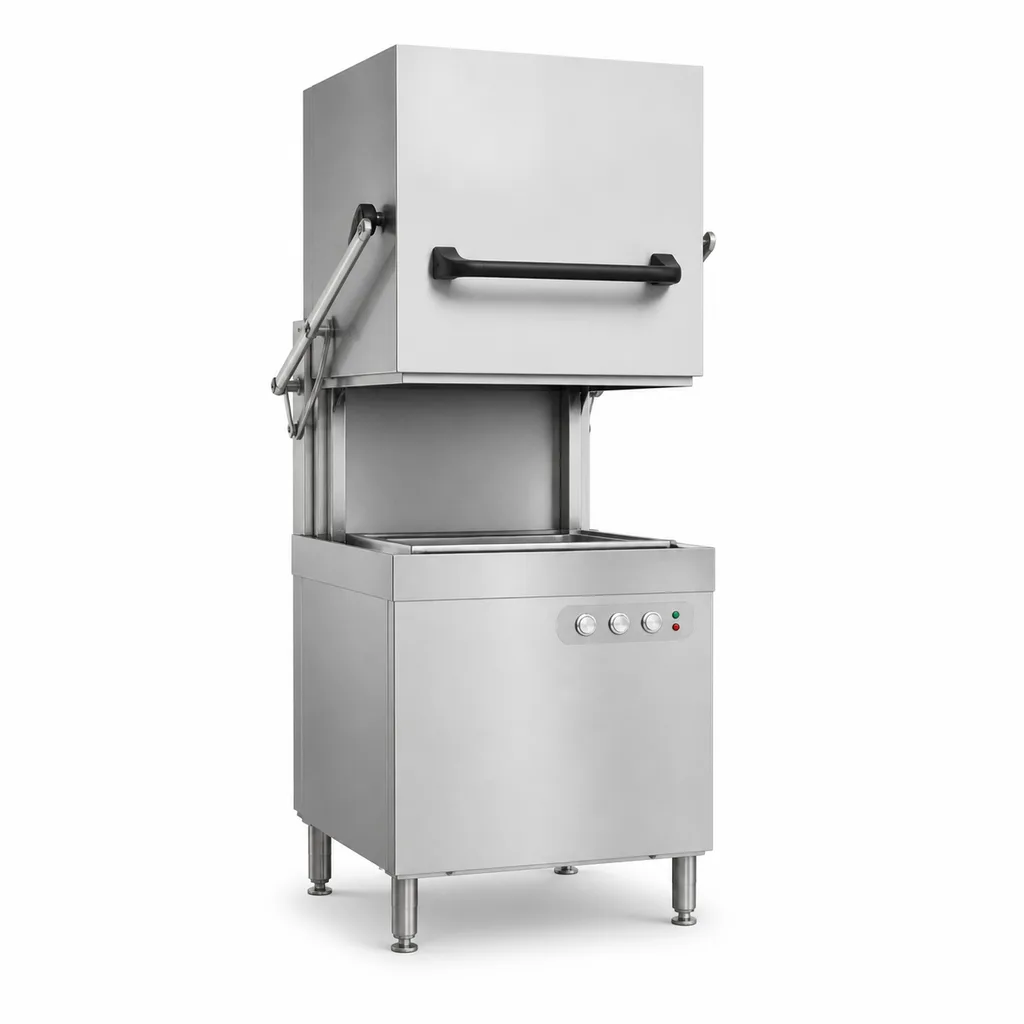
View Undercounter Units →Hood-Type Pass-Through Washers
Ergonomic pass-through dishwashers with cycle times as fast as 55 seconds and automated hood lifting.
View Hood-Type Washers →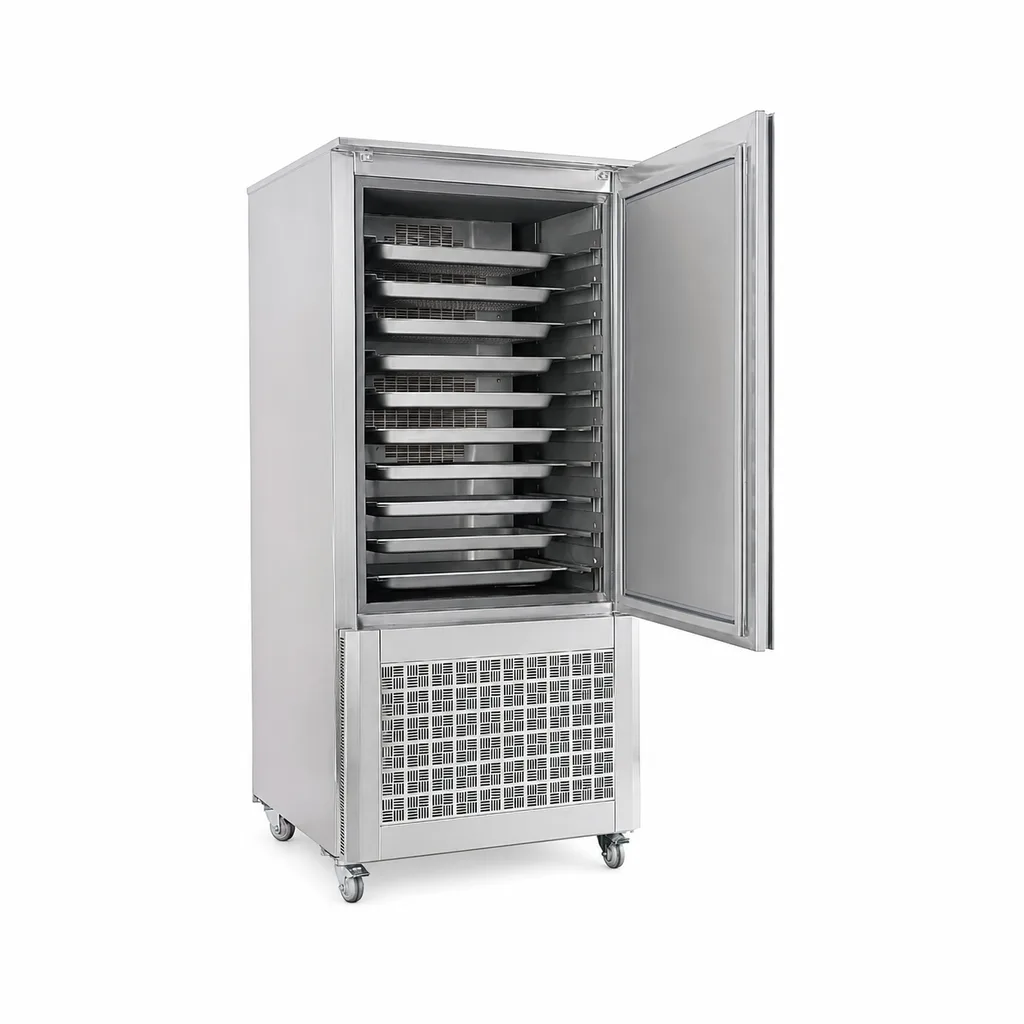
High-Capacity Flight Dishwashers
Continuous multi-tank flight conveyor dishwashing plants engineered for 3,000+ plates per hour.
View Flight Washers →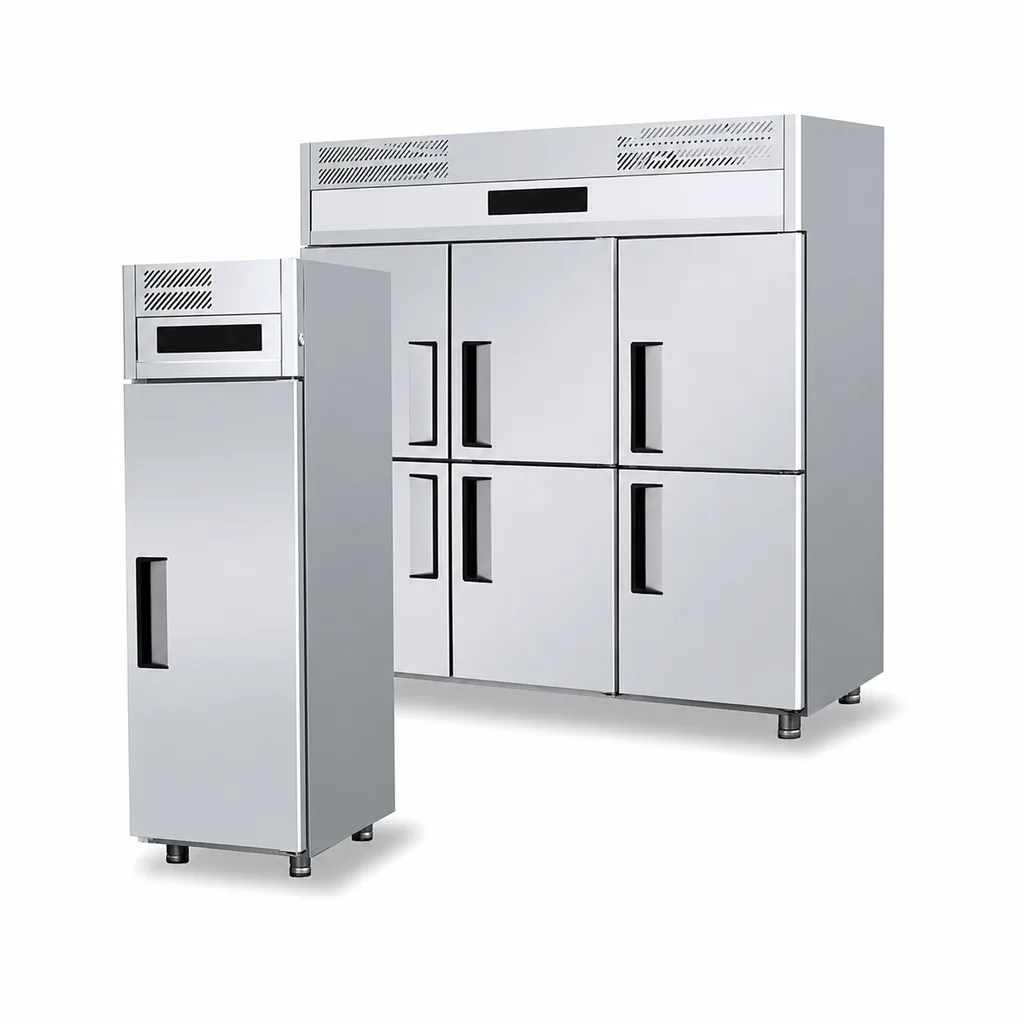
UV-C Sanitizing Storage Cabinets
Medical-grade stainless steel storage cabinets equipped with germicidal UV-C tubes for sterile drying.
View Sanitizing Cabinets →Turnkey Engineering Solutions & Applications
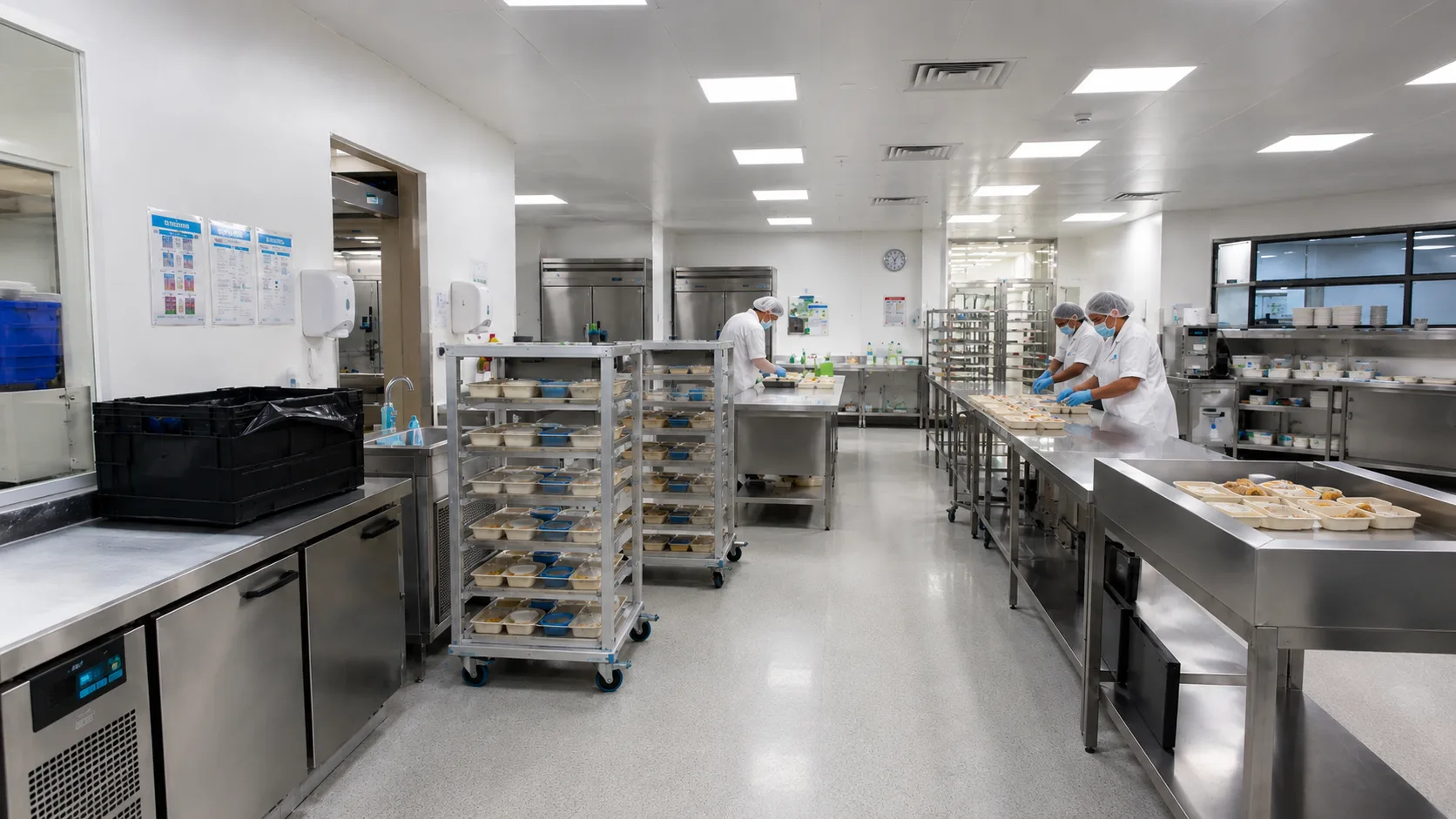
Hospital Healthcare Dishwashing
Strict sanitation wash centers designed to prevent cross-contamination in patient feeding operations.
Explore Hospital Solutions →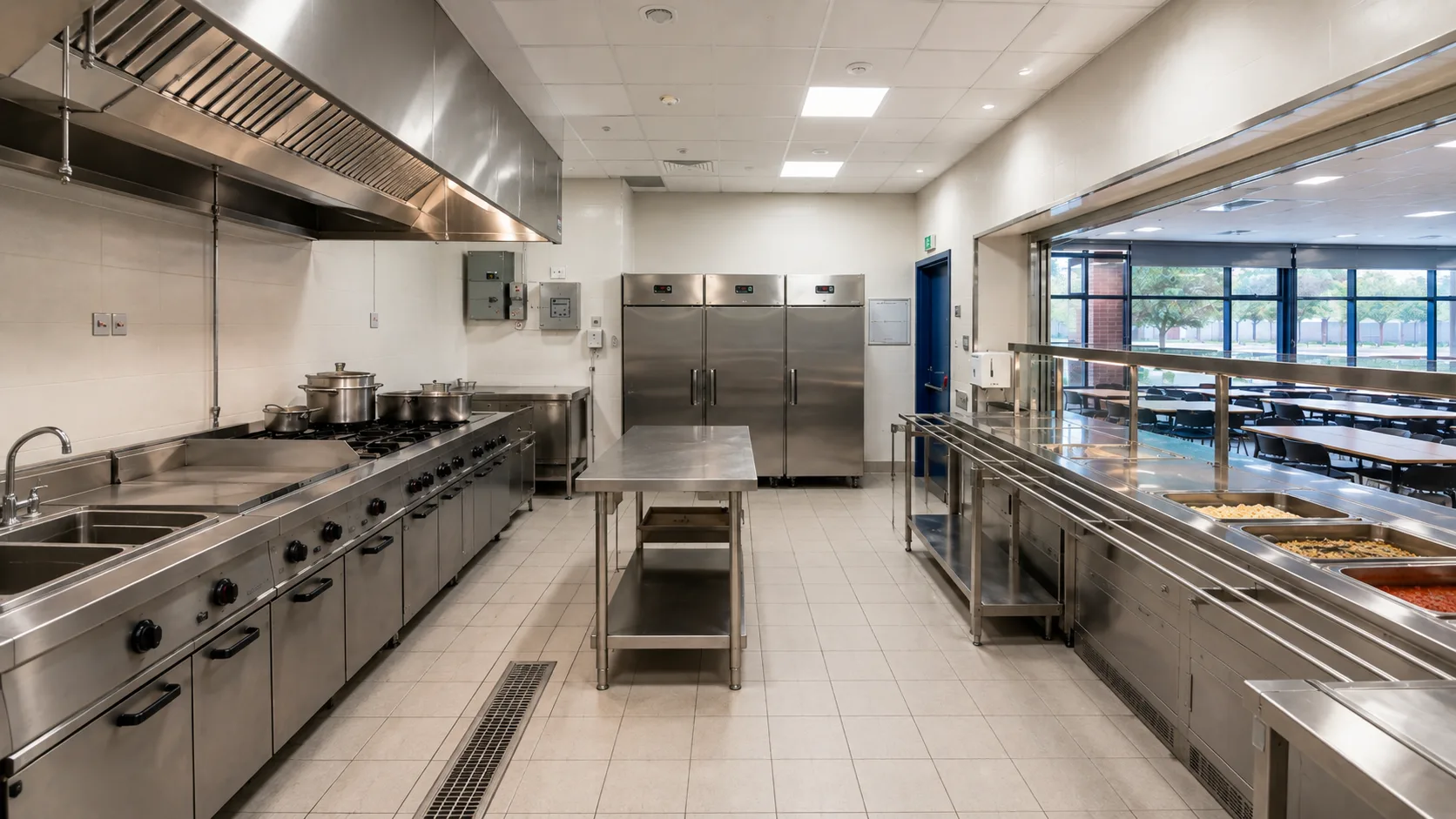
School Canteen Warewashing
High-throughput pass-through wash rooms built to handle 1,000+ student meal trays in limited lunch windows.
Explore School Solutions →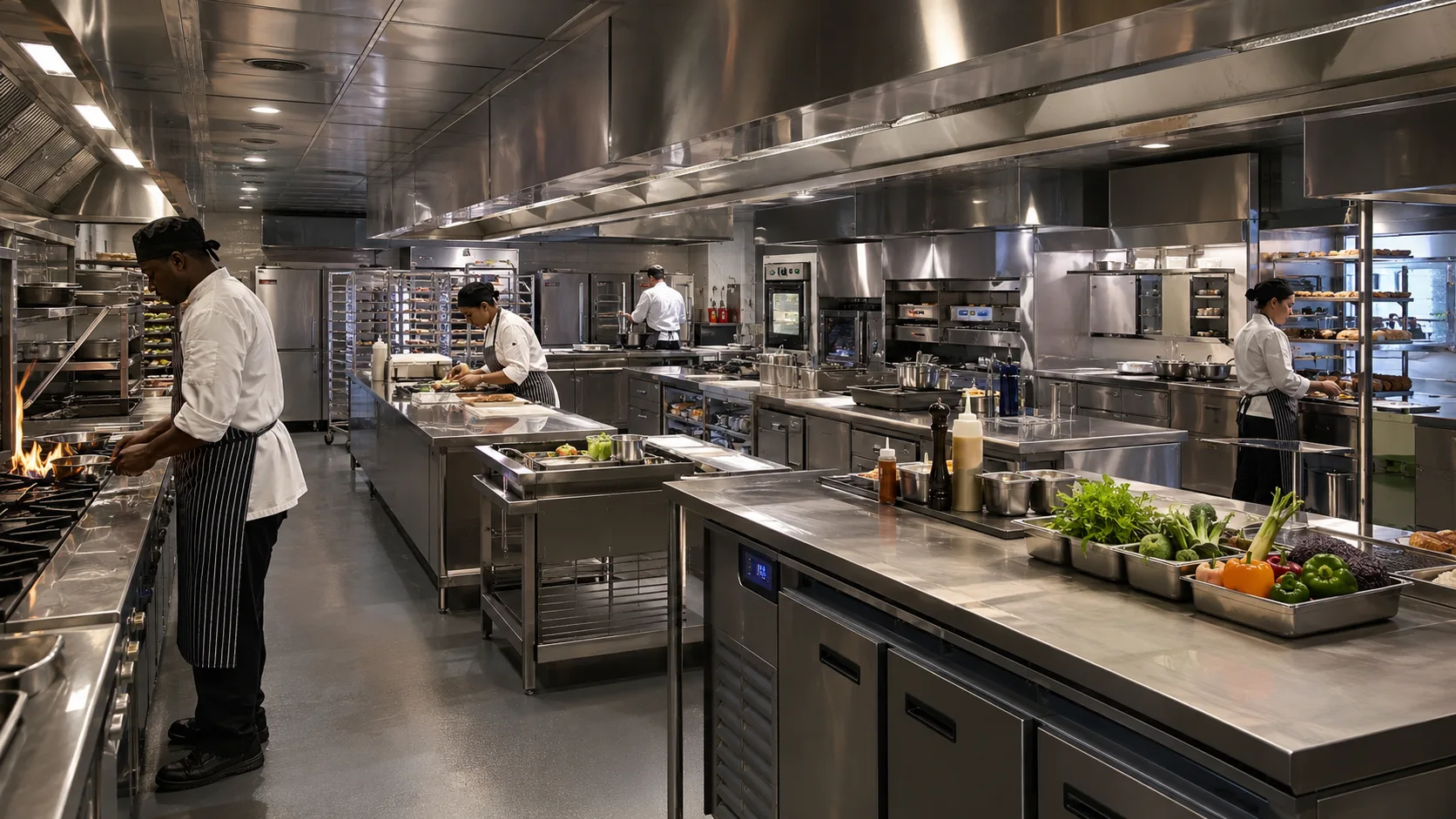
Hotel Banquet Stewarding Departments
Centralized high-volume warewashing rooms supporting multiple ballrooms, bars, and all-day dining venues.
Explore Hotel Solutions →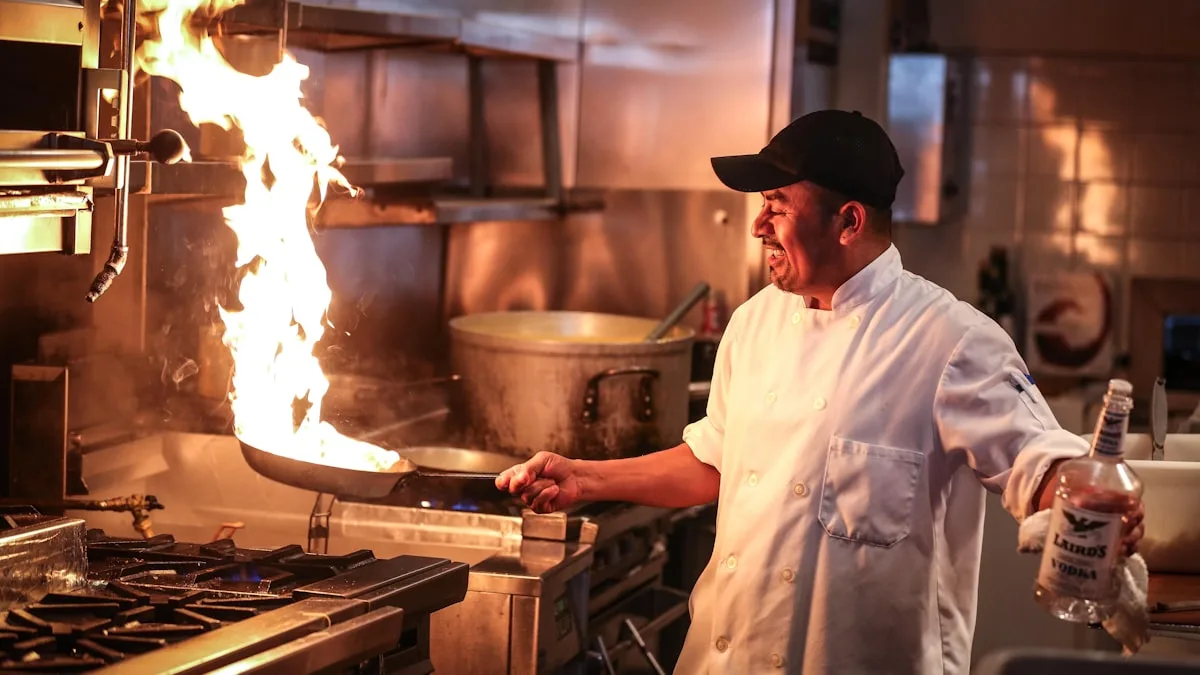
Commercial Bar & Bistro Warewashing
Compact, high-speed sanitizing wash layouts engineered for rapid glass polishing and plate turnover.
Explore Restaurant Solutions →Frequently Asked Questions
What temperature does a commercial dishwasher need to sterilize dishes?
A high-temperature commercial dishwasher must maintain a wash tank temperature of at least 60°C to 65°C and deliver an 82°C to 88°C (180°F-190°F) fresh water final rinse to achieve compliant thermal sanitization.
Why does my commercial dishwasher require a rinse booster heater?
Incoming municipal water is typically 15°C to 50°C. A standard boiler cannot feed an 85°C rinse continuously. The internal high-power booster heater rapidly elevates water to 85°C specifically for the 10-second sanitizing rinse cycle.
Are chemical sanitizing dishwashers compliant with commercial health codes?
Yes. Low-temperature dishwashers that inject 50 to 100 ppm of chlorine sanitizer during the final rinse are compliant, though dishes take longer to dry and glassware may retain a faint chlorine scent.
How do health inspectors verify dishwasher sanitization?
Health inspectors use irreversible thermolabel adhesive strips or calibrated submersible digital thermometers run through a live wash cycle to verify that plate surface temperatures reach at least 71°C (160°F).
Plan the Equipment Around Your Kitchen.
Share your menu, peak service demand, available space and site utilities. Tell us which equipment you are considering so we can review the requirements with you.