Commercial Dishwasher Service Schedule: Daily, Weekly, Monthly and Annual Tasks
A practical commercial dishwasher service schedule: daily, weekly, monthly and annual tasks, from deliming to chemical dosing, plus when to call a technician.
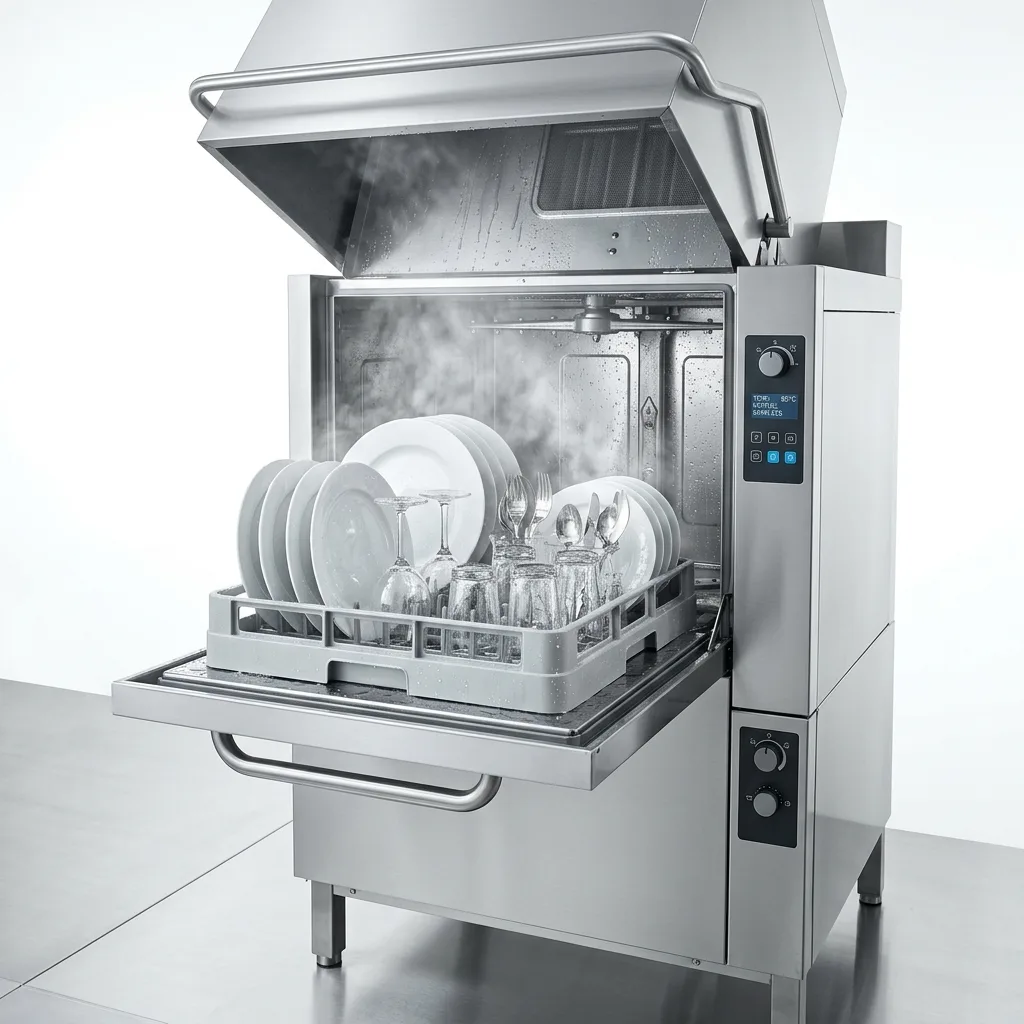
Most commercial dishwasher breakdowns are not random failures. Service contractors consistently report that limescale, blocked spray arms and incorrect chemical dosing account for the majority of call-outs — and all three are preventable with a fixed maintenance routine rather than reactive repairs. A hood-type or rack conveyor machine that is cleaned daily and delimed on schedule will typically run 8–12 years; the same machine on a "fix it when it stops" policy often needs a heating element or pump replacement within 3–4 years.
This schedule is written for kitchen managers and maintenance leads who want to decide exactly which tasks stay with the in-house crew and which justify a paid technician visit. It applies to undercounter, hood-type, utensil washers and rack conveyor machines alike — only the time per task changes with machine size.
Key takeaway: Roughly 80% of commercial dishwasher service calls trace back to three causes — scale build-up, clogged spray arms and wrong detergent dosing. All three are caught by a daily/weekly/monthly checklist that costs about 15 minutes of labour per day, versus $150–$350 for a single emergency call-out plus lost service hours.
Commercial Dishwasher Service Schedule by Interval
The table below splits the 15 core tasks by interval and assigns an owner. Temperature targets assume a high-temperature sanitising machine; low-temp chemical-sanitising models follow the chemical supplier's concentration spec instead of the 82–90 °C rinse.
| Interval | Task | Target / Standard | Owner |
|---|---|---|---|
| Daily (each shift) | Drain tank, remove and scrub scrap trays and filters; change tank water 2–3 times on heavy shifts | No food soil in tank; filters seated flat | Kitchen crew |
| Daily | Check wash and final rinse temperatures on the gauges; wipe door gaskets | Wash 60–65 °C; final rinse 82–90 °C (high-temp) | Kitchen crew |
| Weekly | Remove wash and rinse arms; clear every nozzle with a soft brush; check arms spin freely | All jets open; arms rotate by hand without resistance | Kitchen crew |
| Weekly | Inspect interior walls and curtains for scale film; delime if a chalky layer is visible | No white film; curtains hang straight | Kitchen crew |
| Monthly | Verify detergent and rinse-aid dosing; clean level probes and suction tubes; check chemical stock | Per supplier spec, typically 2–4 ml per litre | Shift leader |
| Monthly | Inspect pumps, hoses, door springs and hinges; look for drips under the machine | No leaks; door closes and latches evenly | Shift leader |
| Quarterly | Full deliming cycle with acid descaler; check booster heater for scale | Element surfaces clean; heat-up time back to spec | Maintenance lead |
| Annual | Technician service: descale booster, calibrate thermostats, test elements, solenoids and rinse pressure | Written service report with measured values | Service contractor |
Preventing the Three Most Common Failures
Limescale on heating elements and tanks
Scale forms fastest on the hottest surface in the machine — the booster heater element. A 1 mm layer of limescale acts as insulation and can cut heat transfer efficiency by roughly 10%, which shows up first as longer heat-up times and then as rinse temperatures falling below the 82 °C sanitising threshold. The trigger point is water hardness: below about 100 ppm (6 grains per gallon) a monthly delime is usually enough; between 100 and 250 ppm plan a weekly acid cycle; above 250 ppm a water softener stops being optional. A softener for a single dishwasher typically costs $400–$1,200 installed depending on flow rate — noticeably cheaper than one burned-out booster element, which runs $300–$800 in parts and labour.
Blocked spray arms and nozzles
Spray arm jets clog with a predictable mixture: food solids that bypass a dirty scrap filter, plus scale flakes breaking off the tank walls. The symptom sequence is consistent — wash pressure drops, glasses come out with a gritty film, and racks at the end of the conveyor look clean on top but dirty underneath. The weekly arm removal in the schedule takes under 10 minutes on a hood-type machine. Two rules make it effective: never poke nozzles with wire or toothpicks (enlarged jets destroy the spray pattern), and always re-seat the arm and spin it by hand before closing the machine. If the arm bearing itself is worn and wobbles, that is a spare-part replacement, not a cleaning task.
Wrong detergent and rinse-aid dosing
Dosing problems run in both directions. Under-dosing leaves grease film and forces staff to rewash, which wastes more water and chemicals than it saves. Over-dosing leaves a sticky alkaline residue, etches glassware over a few months, and can foam the wash pump into cavitation. The monthly check is simple: confirm containers are not empty, squeeze tubes are not crystallised, and the actual delivered dose matches the supplier's specification — commonly 2–4 ml of detergent per litre of wash water, adjusted for soil load and hardness. On machines with external dosing pumps, ask your chemical supplier to re-calibrate the pump at every delivery visit; most do this free of charge because it protects their product's reputation.
When to Call a Professional Service Technician
The dividing line is straightforward: cleaning, inspection and consumable replacement stay in-house; anything involving electrical components, calibration, pressure systems or refrigerant-grade tools goes to a technician. Call for professional service when you see any of the following:
- Rinse temperature will not reach 82 °C even after deliming — indicates a failing element, thermostat or contactor.
- Repeated tripping of breakers or RCDs, burnt smells, or visible corrosion on wiring.
- Pump noise (grinding or cavitation that cleaning the filters does not fix) or water under the machine from a pump seal.
- Wash or rinse pressure outside the range on the data plate after arms and filters are confirmed clean.
- Error codes that return immediately after a reset.
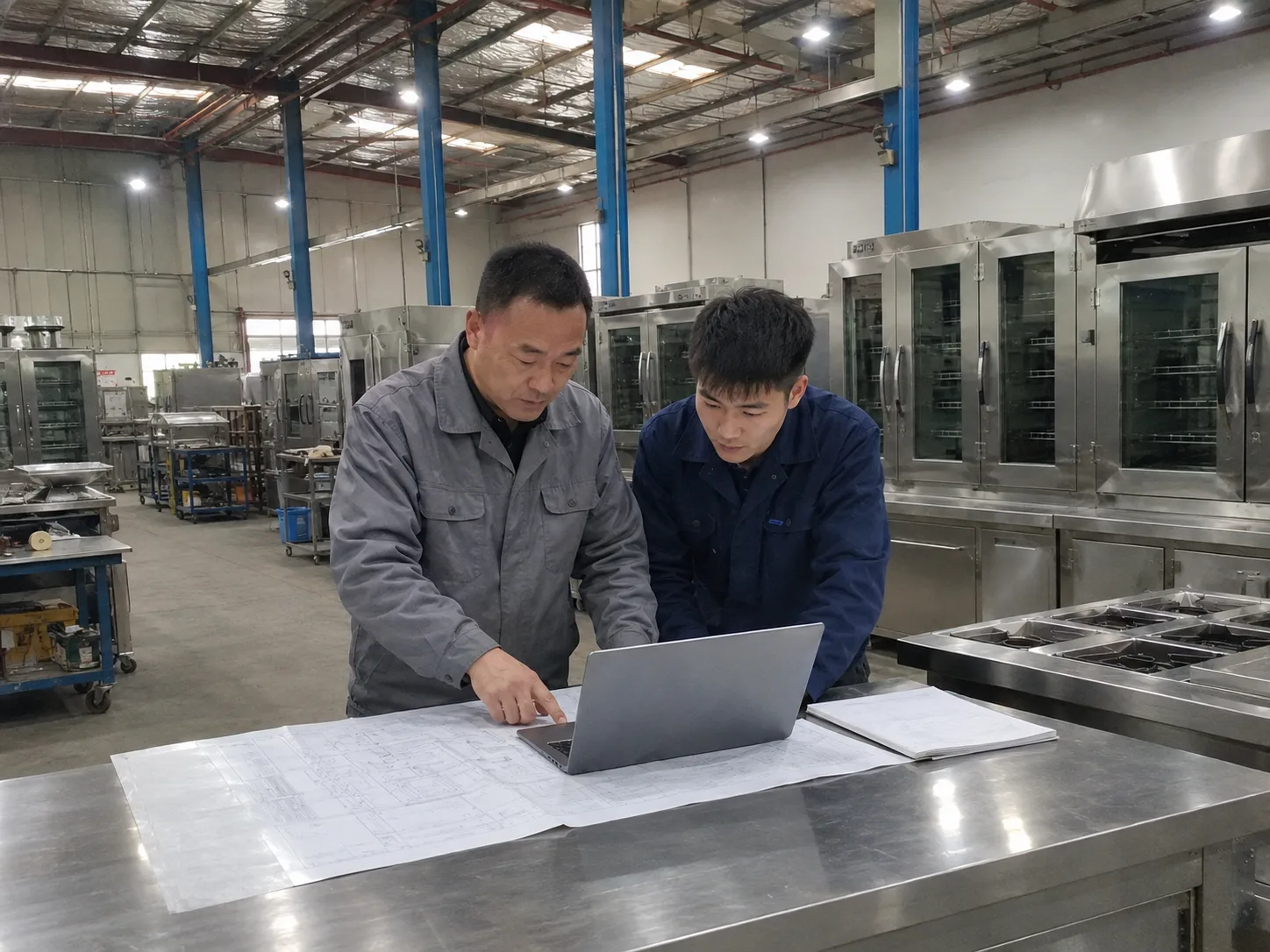
An annual preventive visit typically costs $200–$600 per machine depending on type and region, and a full annual service contract covering parts and labour usually runs $800–$2,500 per machine depending on capacity and coverage level — both figures vary with configuration and local labour rates. Against that, a single mid-service breakdown on a rack conveyor machine can stall a dish room feeding 1,000+ covers. If you are selecting new equipment, ask the supplier about local service coverage before comparing purchase prices; our commercial dishwashing equipment range ships with documented maintenance intervals, and the HSYL support team can confirm parts availability for your region.
Related Resources
- Installation & Maintenance Services
What a professional installation and maintenance visit covers, and how to prepare the site.
- Spare Parts FAQ
Which wear parts — gaskets, curtains, spray arm bearings, heating elements — to keep in stock.
- Hygiene & HACCP Topic Hub
How wash and rinse temperature records fit into a HACCP plan for health inspections.
Print the schedule table, laminate it, and hang it at the dish pit. A checklist that is initialed every shift is worth more than any service contract, because it catches scale, clogs and dosing drift in the week they start — not in the month the machine stops.
Frequently Asked Questions
How often should a commercial dishwasher be serviced?
In-house tasks follow a fixed rhythm: drain and clean filters every shift, remove and scrub spray arms weekly, check chemical dosing and inspect pumps monthly, and run a full deliming cycle quarterly. A professional technician visit is recommended once a year to calibrate thermostats, test heating elements and descale the booster heater, typically costing $200–$600 per machine depending on type and region.
What water temperature should a commercial dishwasher reach?
For high-temperature sanitising machines, the wash tank should hold 60–65 °C and the final rinse must reach 82–90 °C. If the rinse will not reach 82 °C even after deliming, that points to a failing heating element, thermostat or contactor and needs a technician.
How do I prevent limescale in a commercial dishwasher?
Match the deliming frequency to water hardness: below about 100 ppm a monthly delime is usually enough, between 100 and 250 ppm plan a weekly acid cycle, and above 250 ppm install a water softener ($400–$1,200 installed depending on flow rate). A 1 mm scale layer on the booster element can cut heat transfer efficiency by roughly 10% and eventually burn out a $300–$800 element.
When should I call a professional instead of fixing it myself?
Keep cleaning, inspection and consumable replacement in-house, but call a technician for electrical faults (breaker tripping, burnt smells), rinse temperatures that stay below 82 °C after deliming, pump noise or leaks from a pump seal, pressure readings outside the data-plate range, or error codes that return after a reset.
Is a commercial dishwasher service contract worth it?
A full annual contract covering parts and labour typically runs $800–$2,500 per machine depending on capacity and coverage. Compare that with a single mid-service breakdown on a conveyor machine stalling a dish room feeding 1,000+ covers, plus $150–$350 per emergency call-out. For high-volume sites the contract usually pays for itself; low-volume sites can often manage with the annual $200–$600 preventive visit.
Plan the Equipment Around Your Kitchen.
Share your menu, peak service demand, available space and site utilities. Tell us which equipment you are considering so we can review the requirements with you.