Commercial Kitchen Equipment Procurement
Exhaustive engineering and asset management guide to commercial kitchen equipment procurement tenders, Factory Acceptance Testing (FAT), MACRS depreciation, and EPA-certified decommissioning.
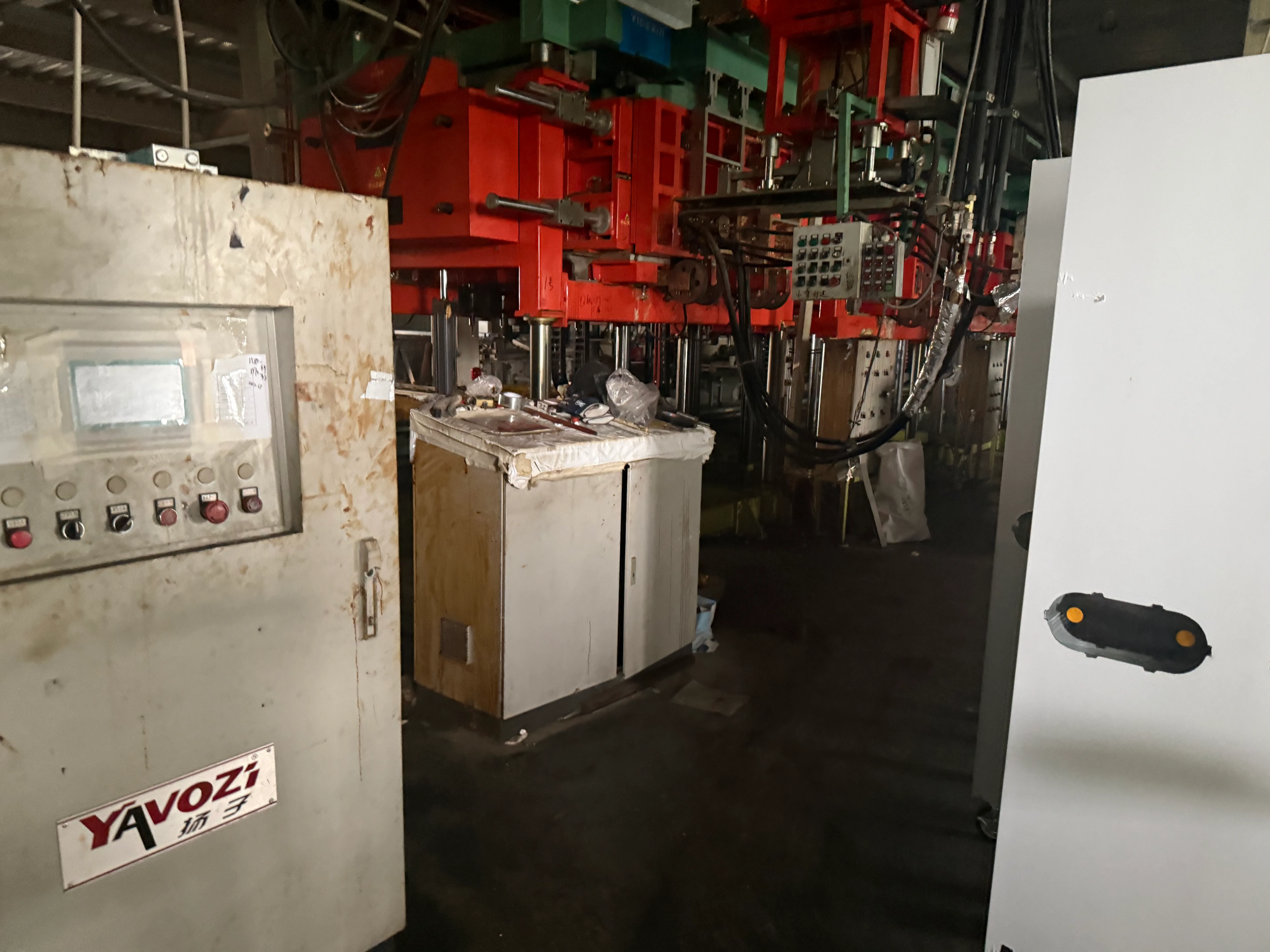
In enterprise hospitality groups, healthcare systems, and institutional catering organizations, managing commercial kitchen equipment requires rigorous lifecycle asset administration. From initial technical tender specification (RFP) drafting and Factory Acceptance Testing (FAT) to safe decommissioning, EPA-certified refrigerant recovery, and secondary market salvage realization, equipment decisions impact balance sheets and regulatory compliance. This comprehensive engineering whitepaper details the institutional procurement lifecycle, MACRS tax depreciation modeling, decommission engineering, and circular economy asset recovery protocols.
1. The Institutional B2B Procurement Lifecycle: Stage-by-Stage Framework
Large-scale commercial culinary fit-outs frequently encounter delays and budget overruns due to vague equipment tender specifications. Enterprise procurement must follow a structured five-phase engineering lifecycle:
| Procurement Phase | Key Engineering Deliverables | Critical Quality Milestones | Primary Risk Mitigation |
|---|---|---|---|
| Phase 1: Technical Specification & RFP Drafting | Line-by-line Equipment Schedule, MEP Utility Rough-In Sheets, BIM/Revit 3D models | NSF, CE, UL, and NFPA 96 compliance standards mandated in tender language | Eliminates contractor substitution of inferior gauge steels or uncertified electrical parts |
| Phase 2: Factory Acceptance Testing (FAT) | Pre-shipment live factory inspection, thermal calibration audit, water-tight weld leak tests | Electrical megger insulation testing, gas pressure safety drop verification | Prevents defective equipment from shipping across international borders |
| Phase 3: Logistics & Site Delivery Coordination | Rigging plans, doorway dimension clearance audits, crane hoist schedules | Shock-watch tilt sensors on crated refrigeration units, container moisture desiccant logs | Eliminates structural transit damage and access bottleneck delays on site |
| Phase 4: Commissioning & Site Acceptance Testing (SAT) | Full-load simultaneous thermal run test (2-hour burnout), refrigeration pulldown verification | Airflow capture velocity balancing, water hardness and pressure regulator sign-off | Ensures all systems operate within specified tolerances before final contractor payment release |
| Phase 5: Staff Handover & Warranty Escrow | Operator training sign-off, preventative maintenance manual handoff, 10% warranty retention release | QR-coded asset tagging uploaded directly into client's CMMS software | Guarantees warranty support responsiveness during the critical initial 90-day operational period |

Figure 1: Turnkey central kitchen commissioning showing standardized equipment staging, utility drops, and asset tagging.
2. Asset Depreciation & Tax Modeling: MACRS 7-Year Schedule
In corporate financial accounting, commercial foodservice equipment is classified as tangible personal property. Under United States IRS guidelines (and similar international accounting standards), equipment depreciates under the Modified Accelerated Cost Recovery System (MACRS) 7-Year Property class (Asset Class 57.0):
| Tax Recovery Year | MACRS 200% Declining Balance Rate | Example: $500,000 Equipment Capex (Annual Depreciation) | Remaining Book Value (Year-End) |
|---|---|---|---|
| Year 1 (Half-Year Convention) | 14.29% | $71,450 | $428,550 |
| Year 2 | 24.49% | $122,450 | $306,100 |
| Year 3 | 17.49% | $87,450 | $218,650 |
| Year 4 | 12.49% | $62,450 | $156,200 |
| Year 5 | 8.93% | $44,650 | $111,550 |
| Year 6 | 8.92% | $44,600 | $66,950 |
| Year 7 | 8.93% | $44,650 | $22,300 |
| Year 8 (Half-Year Convention) | 4.46% | $22,300 | $0 (Fully Depreciated) |
3. Certified Decommissioning Engineering & Regulatory Protocols
When renovating, relocating, or closing a commercial food facility, decommissioning equipment requires strict environmental and engineering protocols to avoid severe regulatory fines:
- EPA Section 608 Certified Refrigerant Recovery: Under the Clean Air Act, venting CFC, HCFC, or HFC refrigerants (such as R404A, R134a, R22) to the atmosphere during walk-in cooler or freezer disposal is a federal offense carrying penalties up to $44,539 per day. EPA-certified universal technicians must evacuate refrigerants into certified recovery cylinders and document serial numbers.
- Gas Supply Line Capping & Pressure Testing: Gas cooking lines must be isolated at the main shutoff valve. Flexible commercial gas hoses must be uncoupled, and rigid black iron pipes must be capped with threaded malleable iron plugs, followed by bubble-leak testing and 10 PSI pneumatic pressure drop verification.
- Electrical Lock-Out / Tag-Out (LOTO): High-voltage equipment (3-phase 400V-480V combi ovens, conveyor dishwashers) must be disconnected following OSHA 29 CFR 1910.147 LOTO safety procedures at the primary breaker panel to prevent arc flash injuries during unbolting.
- Grease Interceptor Purge & Bio-Waste Manifests: Under-sink and floor grease traps must be fully pumped out by licensed waste haulers with certified disposal manifests, followed by neutral caustic flushing to prevent toxic hydrogen sulfide (H2S) gas buildup.
4. Disposal Channels & Residual Asset Valuation Comparison
Decommissioned equipment retains financial value depending on age, functional condition, and disposition channel:
| Disposition Channel | Average Financial Recovery (% of Original Cost) | Turnaround Time (Liquidity Speed) | Labor & Logistics Effort Required | Best Suited Equipment Categories |
|---|---|---|---|---|
| Direct B2B Sale / Intra-Group Transfer | 35% - 55% of Original Capex | Slow (30 - 90 days) | High (Requires crating, marketing, and mechanical testing verification) | Lightly used combi ovens, planetary mixers, high-end espresso machines (< 5 years old) |
| Specialized Commercial Restaurant Auction | 18% - 30% of Original Capex | Fast (10 - 21 days) | Low (Auction house manages cataloging, photography, and buyer rigging) | Entire restaurant facility liquidations, mixed refrigeration, stainless fabrication lines |
| Wholesale Restaurant Equipment Dealer Buyout | 12% - 22% of Original Capex | Instant (24 - 48 hours) | Zero (Dealer provides immediate cash buyout and complete removal crew) | Urgent lease expirations, immediate space turnover requirements |
| Certified Scrap Metal Recycling | 3% - 6% of Original Capex (Raw Scrap Value) | Immediate (1 day) | Moderate (Rigging and transporting to certified scrap processing yard) | Obsolete equipment, rusted frames, broken compressors, non-repairable machinery |
5. Sustainable Asset Disposal & The Circular Kitchen Economy
Forward-thinking culinary enterprises adopt circular asset recovery strategies to reduce Scope 3 carbon emissions and support corporate Environmental, Social, and Governance (ESG) targets:
Sustainable Disposal Guidelines:
- Component Harvesting for Spare Parts Repositories: Prior to scrapping heavy thermal appliances, facilities salvage universal high-value components (digital temperature controllers, blower motors, heating elements, contactors, door handles) to supply internal engineering maintenance inventories across active properties.
- Institutional Equipment Donation: Functional but cosmetically aged equipment can be donated to non-profit vocational culinary schools, soup kitchens, and disaster relief charities, providing fair market value tax deductions under IRS Section 170.
- Certified Metal Fractionation: Metal scrappers must separate 304 austenitic non-magnetic stainless steel from galvanized sheet iron, copper motor windings, and aluminum heat sinks to maximize scrap reclamation pricing.
6. Institutional Tender RFP Technical Specification Checklist
To eliminate contractor ambiguity and prevent the substitution of low-grade residential-grade appliances during commercial culinary fit-outs, procurement directors must include the following ten mandatory technical clauses in tender documentation:
| Specification Item | Mandatory Tender Contract Requirement | Contractor Compliance Verification |
|---|---|---|
| 1. Metallurgy Certification | All food-contact sheets must be certified AISI 304 (18/10) with minimum 14-gauge (1.98 mm) tops | Mill test certificates (MTC) and handheld XRF metal spectrometer spot checks on site |
| 2. International Standards | All equipment must carry CE, UL 197, NSF/ANSI Standard 2, and NFPA 96 compliance credentials | Direct submission of third-party accredited laboratory test reports prior to contract award |
| 3. Thermal Efficiency Ratings | Refrigeration and cooking appliances must be certified ENERGY STAR or equivalent Class A EU energy tier | Verification against official ENERGY STAR qualified product databases |
| 4. Factory Acceptance Testing (FAT) | Client engineer retains right to witness 2-hour live thermal test at manufacturing plant prior to crating | Signed FAT protocol document with electrical megger and gas pressure safety certificates |
| 5. 10-Year Spare Parts Guarantee | Manufacturer must legally guarantee guaranteed availability of functional spare parts for 10 years | Manufacturer corporate escrow warranty letter and universal parts catalog submission |
| 6. MEP Rough-In Blueprints | Contractor must deliver BIM/Revit LOD 300 3D equipment models with exact utility connection drops | Clash detection audit against architectural and structural engineering CAD plans |
| 7. Rigging & Access Route Logistics | Vendor assumes full liability for equipment transit from delivery tailgate through doorways to final position | Submission of site access route dimensional survey and elevator weight limit verification |
| 8. Pre-Commissioning Burnout | All thermal equipment must undergo certified 4-hour high-temperature burnout to clear manufacturing oils | Signed pre-commissioning checklist witnessed by executive chef and client project manager |
| 9. Operator Training Sign-Off | Vendor must provide 16 hours of certified on-site mechanical and sanitization training for kitchen staff | Written training completion certificates signed by executive chef and chief engineer |
| 10. Warranty Escrow Retention | Client withholds 10% of total contract value in escrow for 90 days post-handover until defect-free operation | Formal Certificate of Final Operational Acceptance issued by building ownership |
7. Heavy Equipment Rigging & Structural Slab Load Engineering
Commercial kitchen machinery represents immense concentrated dead loads. Sizing equipment layouts requires structural floor capacity audits:
Structural Safety Rule: A 200-liter commercial tilting boiling pan filled with water weighs over 450 kg distributed across four 50 mm bullet feet, generating concentrated point loads exceeding 2,200 kg/m². Structural engineers must specify 10 mm stainless load-distribution spreader plates beneath legs when installing heavy equipment over suspended concrete floor slabs.
8. Total Cost of Acquisition (TCA) vs. TCO Comparative Framework
Public institutional tenders often fall into the trap of evaluating only the initial purchase bid. Enterprise procurement requires holistic Total Cost of Acquisition (TCA) accounting:
Procurement Insight: A "low-bid" cooking range with uncertified gas valves often requires $3,500 in local field engineering modifications and 4 weeks of inspection delays, wiping out any apparent price discount compared to certified factory-turnkey platforms.
Featured Commercial Equipment Models
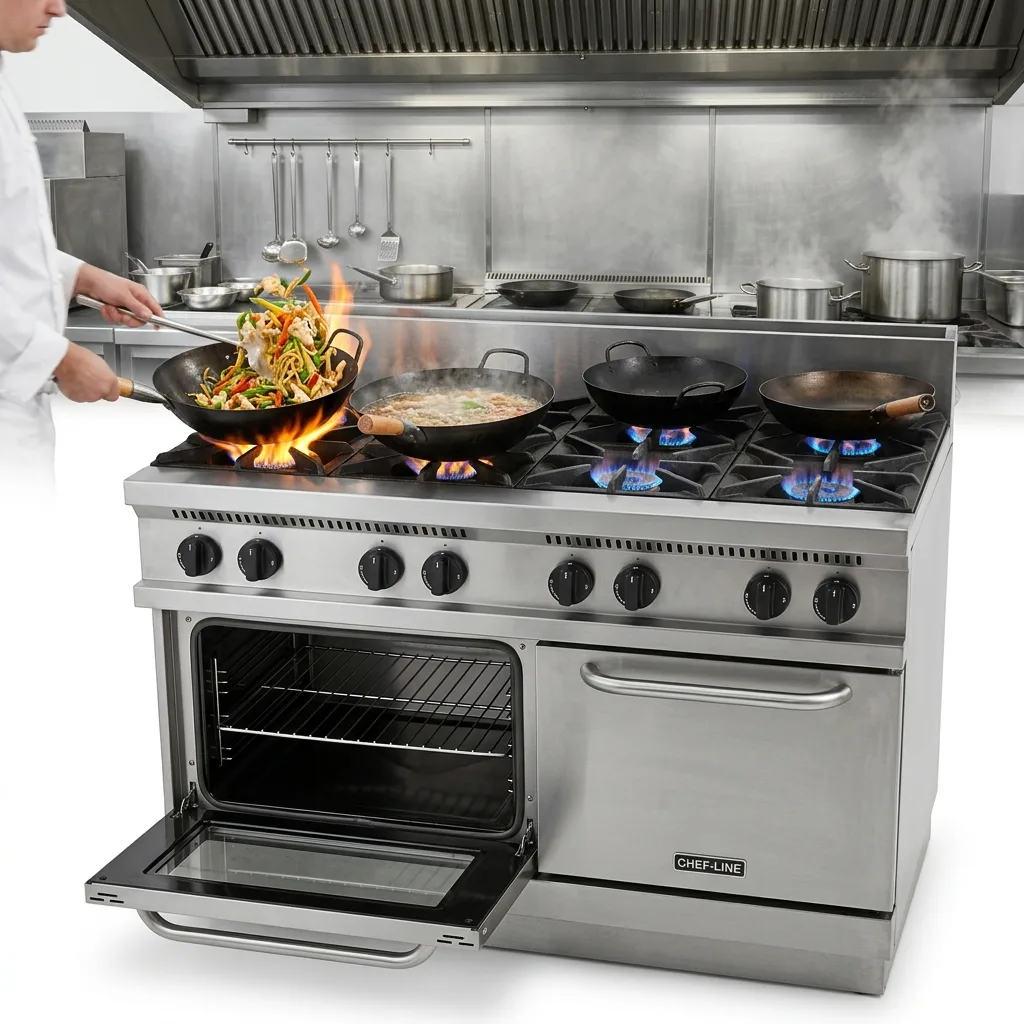
Enterprise Boiling Kettles
High-capacity steam-jacketed boiling kettles engineered for volume commissary batch production.
View Boiling Kettles →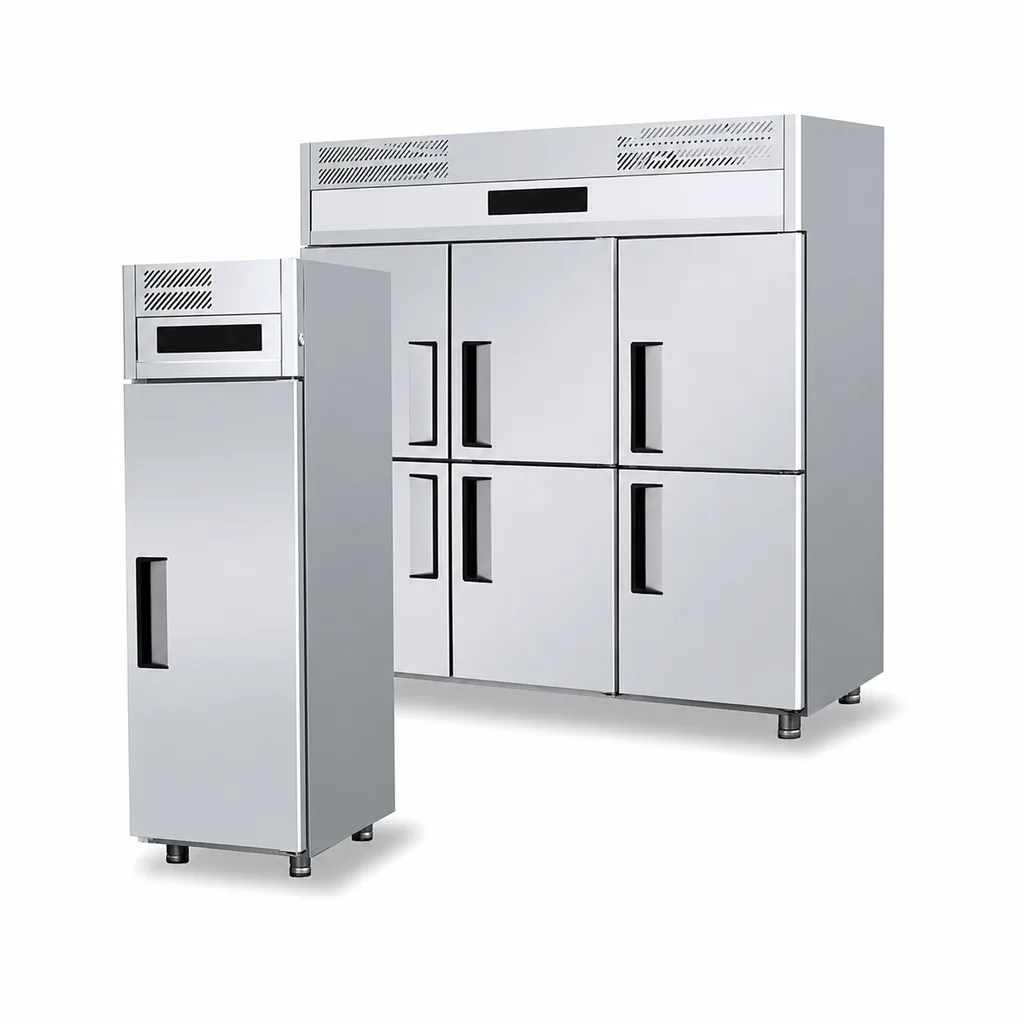
Standardized Refrigeration
Energy-efficient dual-temp stainless upright storage cabinets engineered for low 10-year TCO.
View Upright Refrigeration →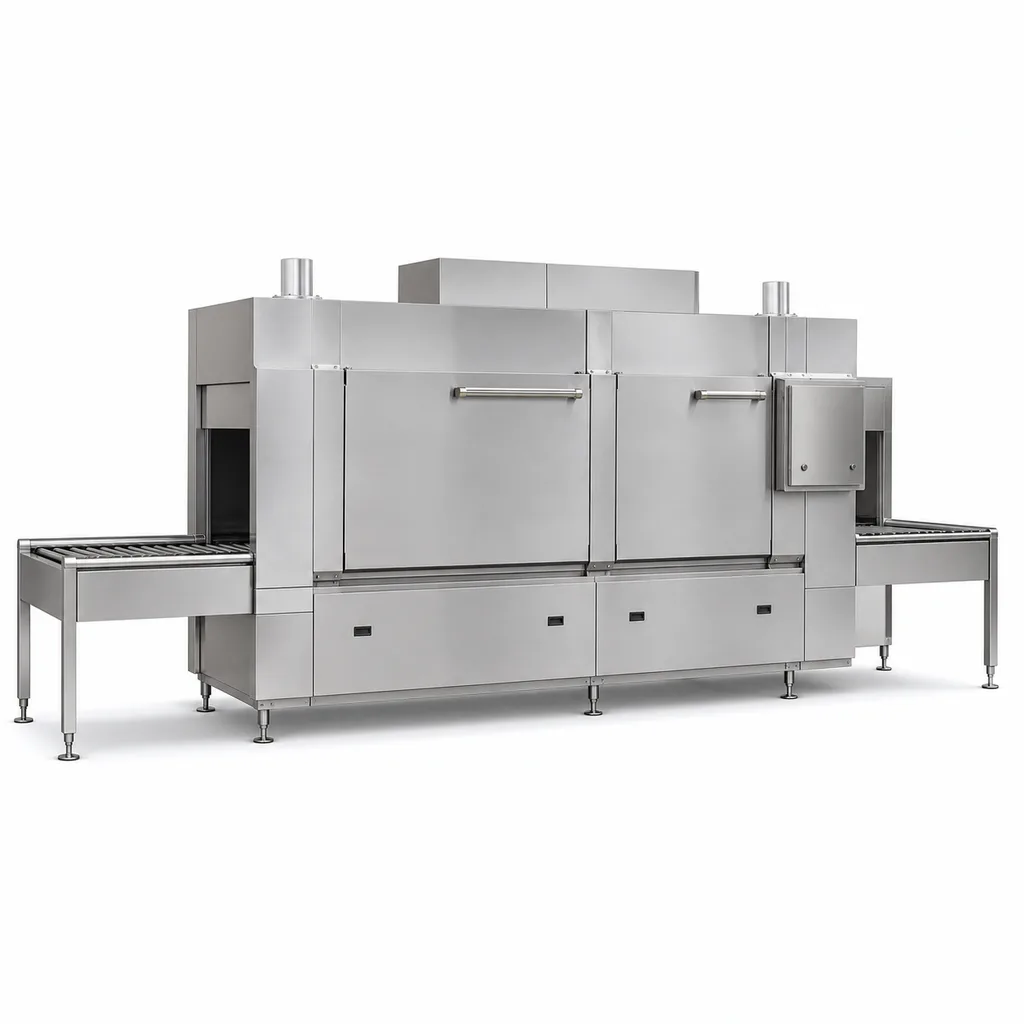
Heavy-Duty Warewashers
High-throughput pass-through and conveyor dishwashing platforms built with high-salvage 304 steel.
View Warewashing Platforms →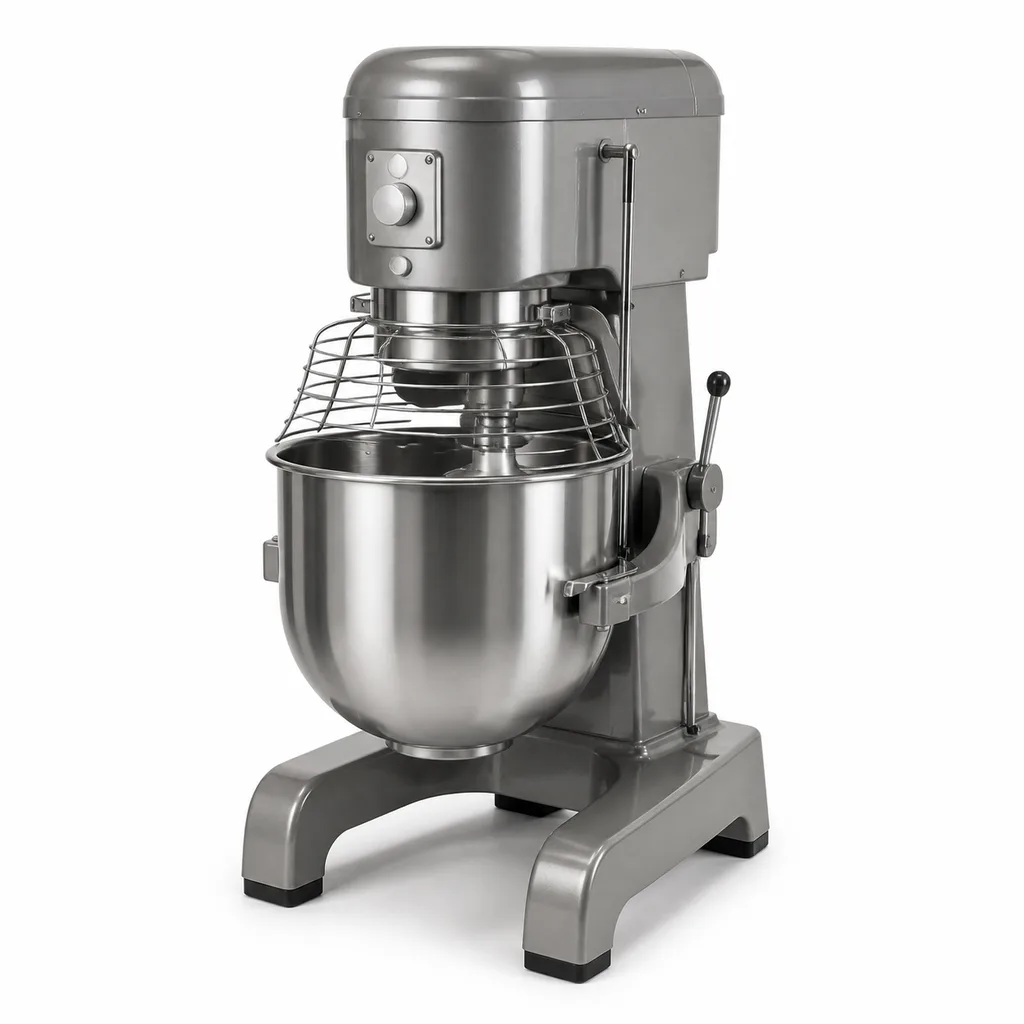
Commercial Food Processing
High-capacity automated vegetable cutters and spiral mixers with certified CE/UL safety interlocks.
View Processing Equipment →Turnkey Engineering Solutions & Applications
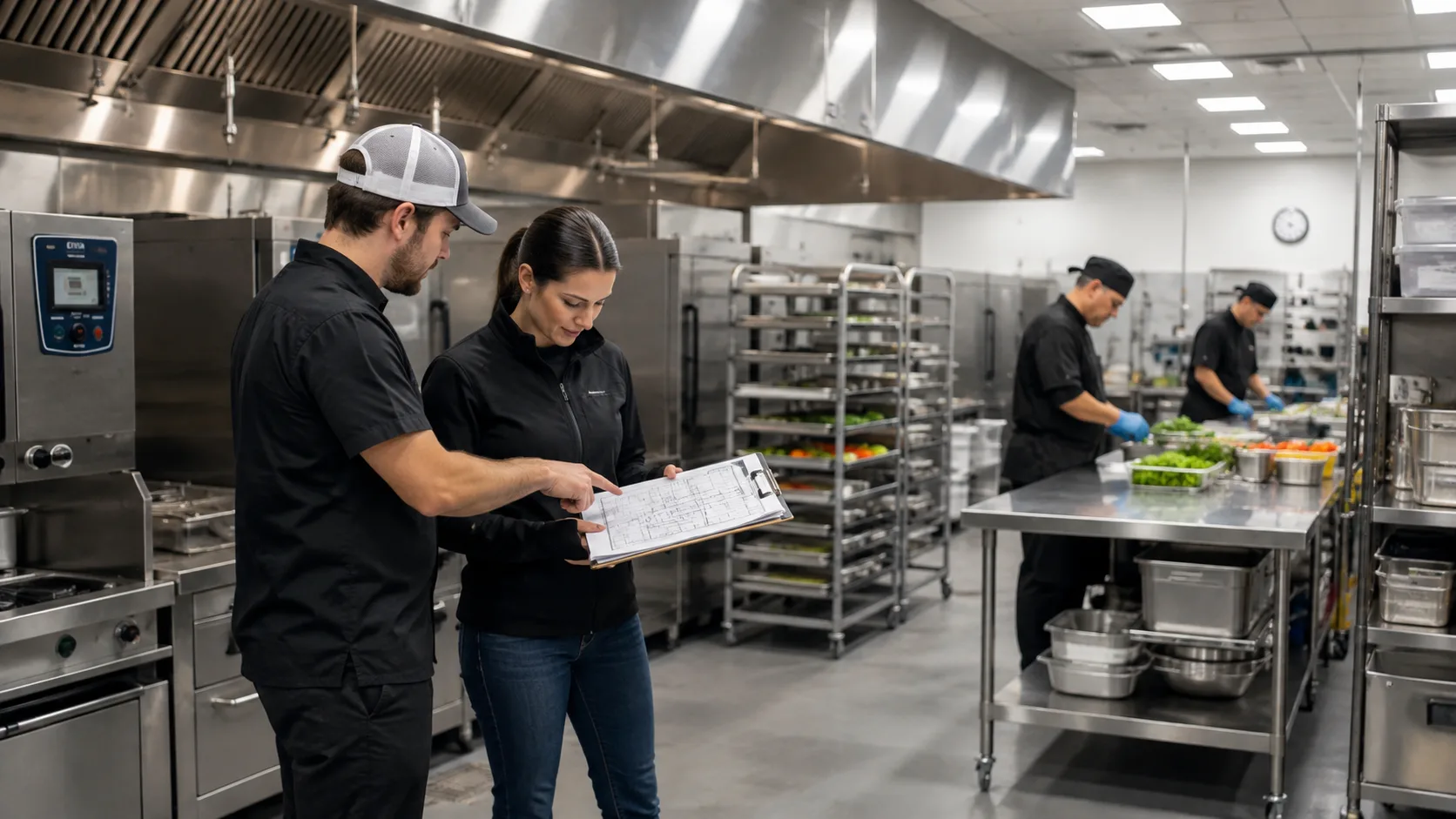
Central Commissary Operations
Large-scale commissary engineering tailored for turnkey procurement, automated lines, and bulk delivery.
Explore Central Kitchen →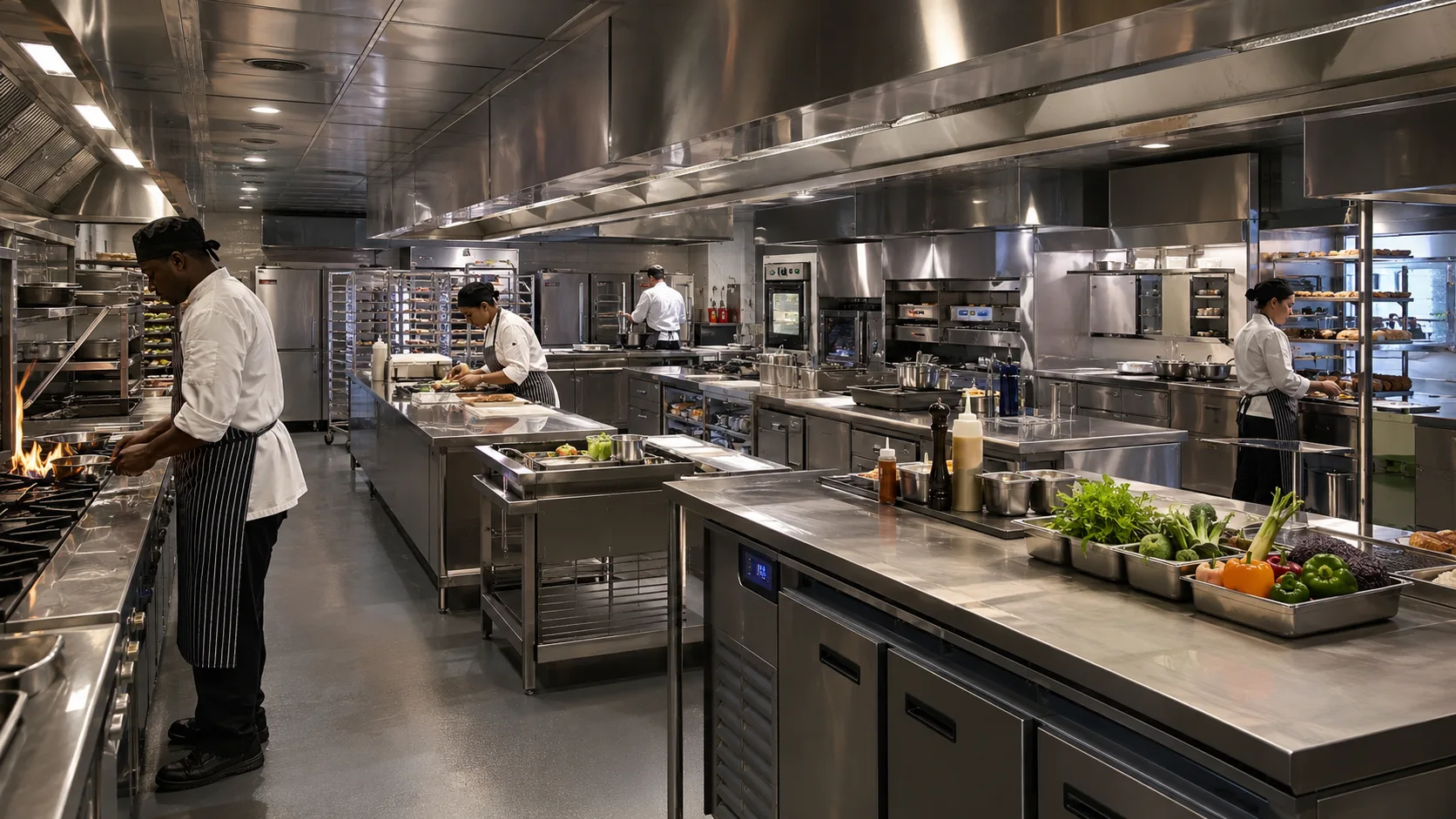
Multinational Hotel Chains
Standardized culinary equipment procurement programs supporting luxury hotel banquets and master suites.
Explore Hotel Solutions →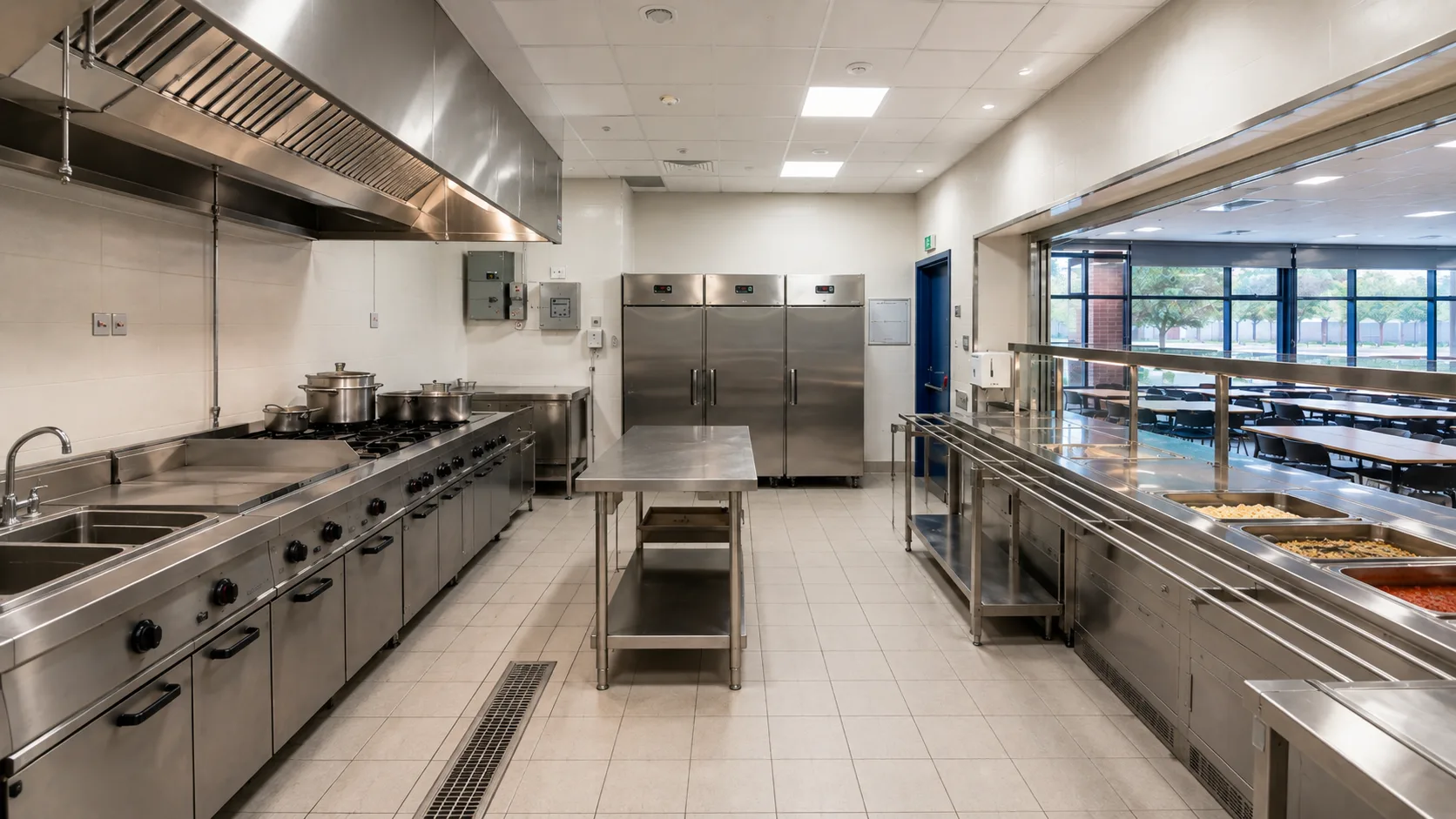
Government & Educational Facilities
Public sector tender procurement compliance engineered for institutional canteens and dining halls.
Explore School Solutions →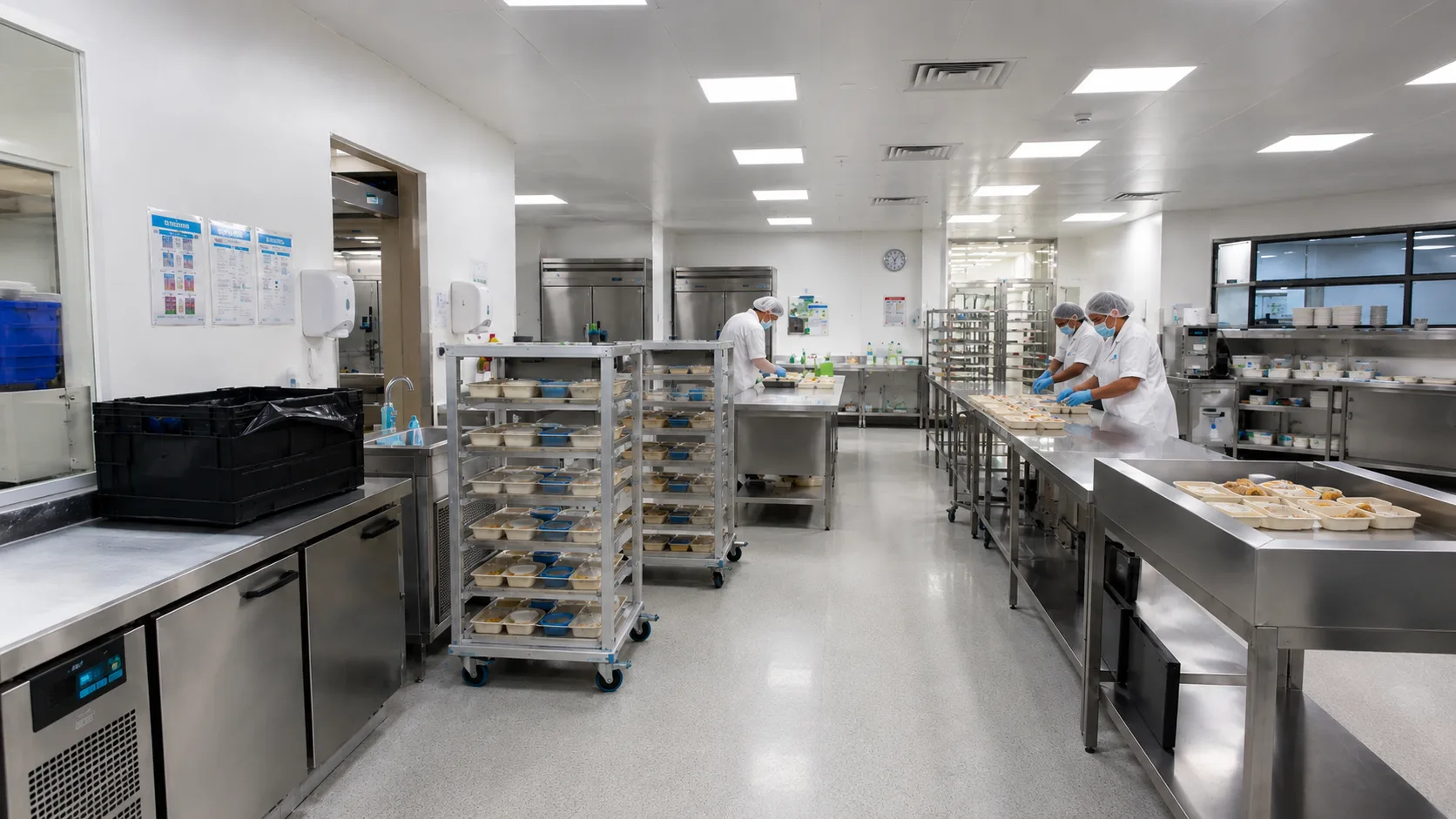
Healthcare System Commissaries
Multi-property healthcare dietary procurement designed for strict HACCP compliance and long asset life.
Explore Hospital Solutions →Frequently Asked Questions
How do commercial kitchens dispose of old refrigeration equipment legally?
Old commercial refrigerators must be de-gassed by EPA/F-Gas certified refrigeration technicians who recover the refrigerant gases before the stainless steel and compressor can be legally scrapped or recycled.
What should be checked before signing a catering equipment procurement contract?
Verify equipment certifications (CE, NSF), factory-direct warranty coverage, availability of local MEP shop drawings, spare parts stock guarantees, and freight delivery terms.
Can old commercial kitchen equipment be traded in when purchasing new units?
Many direct manufacturers and turnkey suppliers offer trade-in allowances for intact stainless steel cooking and warewashing lines, offsetting the capital acquisition expenditure for new equipment.
How long should commercial kitchen equipment last before replacement is required?
Heavy-duty commercial cooking and refrigeration lines last between 8 and 12 years with proper preventive maintenance, while static stainless steel fabrication can easily exceed 15 to 20 years.
Plan the Equipment Around Your Kitchen.
Share your menu, peak service demand, available space and site utilities. Tell us which equipment you are considering so we can review the requirements with you.