Direct Answer / Key Takeaway: Compare a commercial bone saw against the actual bone-in products, cutting envelope and delivery conditions. Separate blade length from usable clearance.
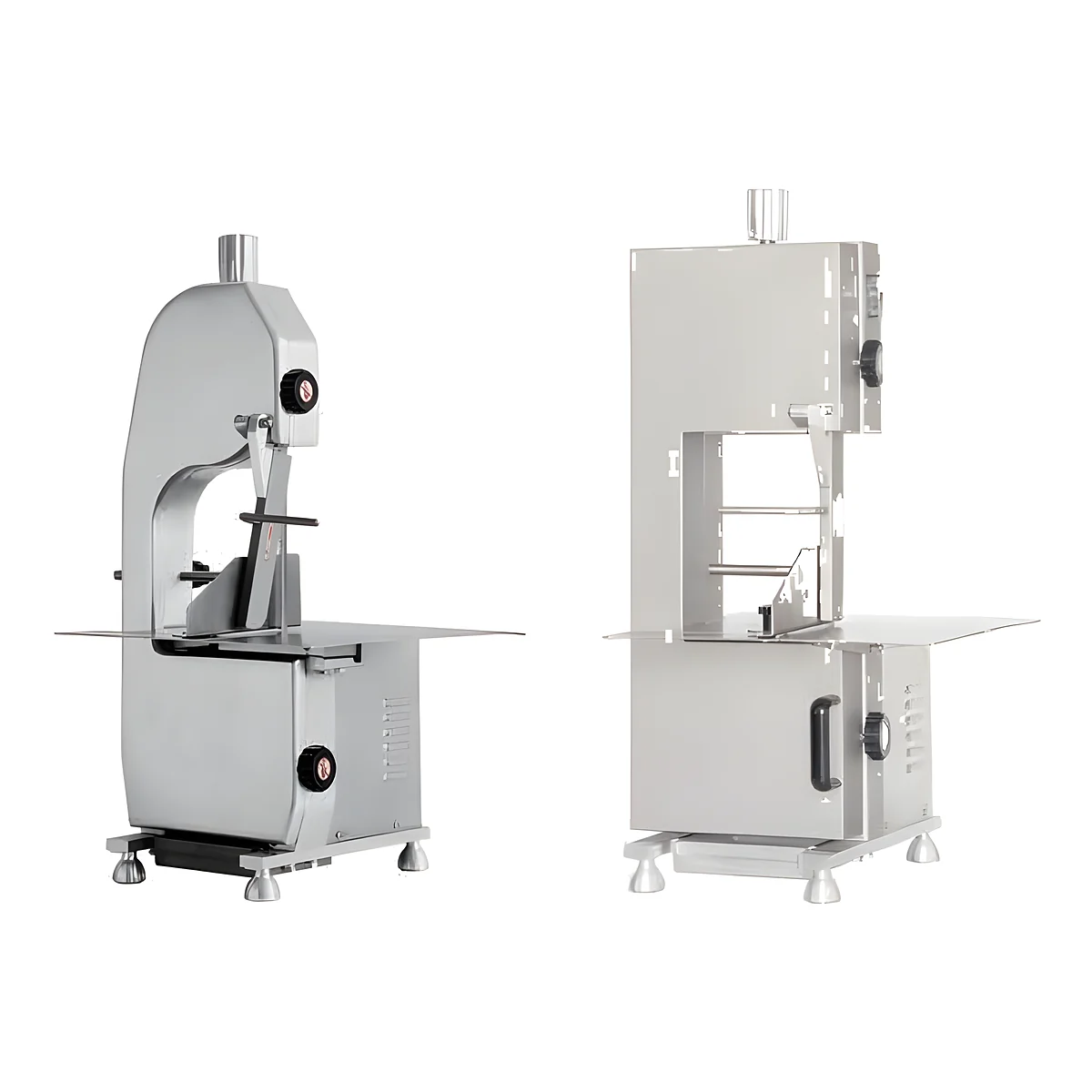
A bone saw should be shortlisted from the products that need portioning, not from motor power alone. A butcher preparing narrow chops and a central kitchen receiving large bone-in blocks may require different workpiece support and clearances even when their daily weights look similar.
Bring a representative cutting brief
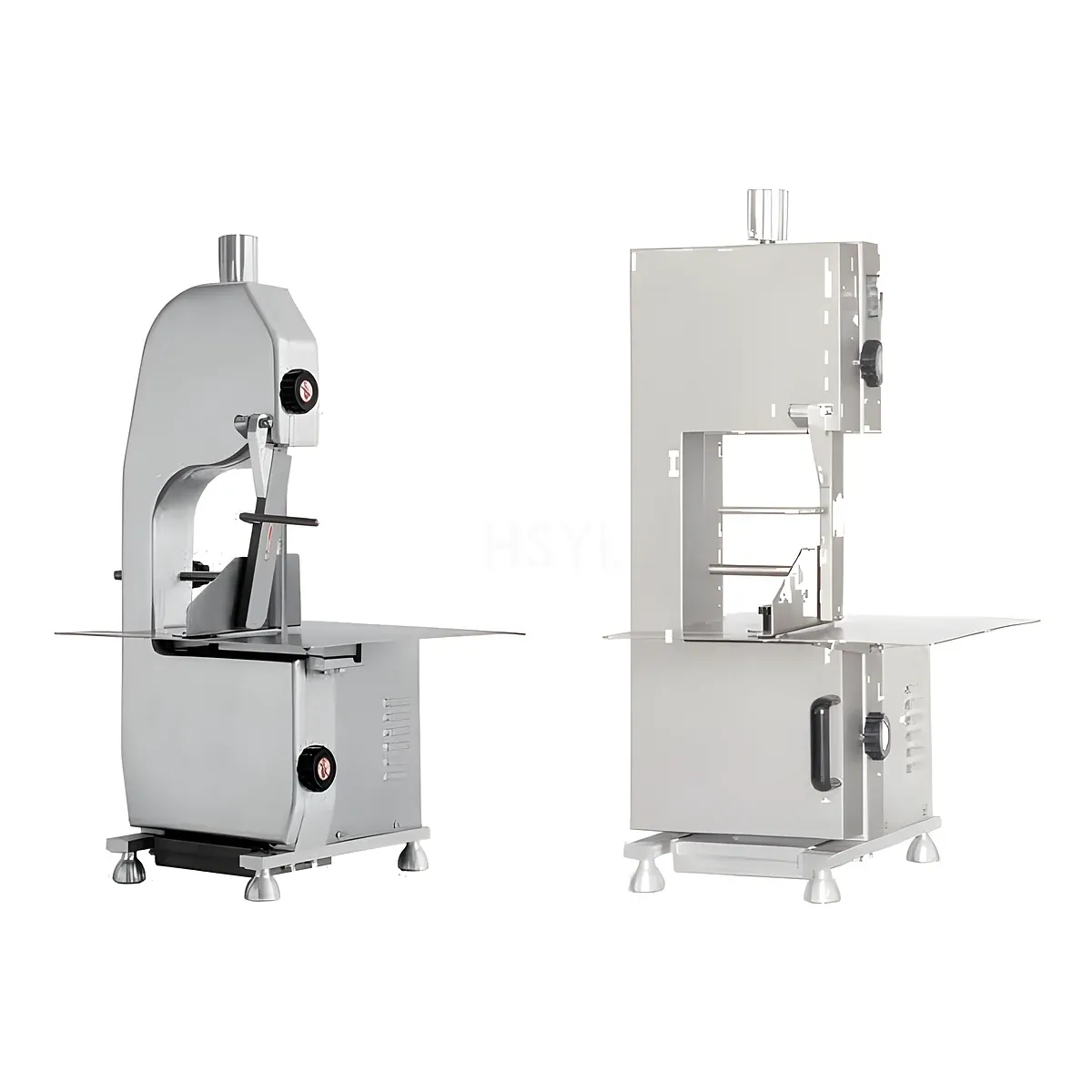
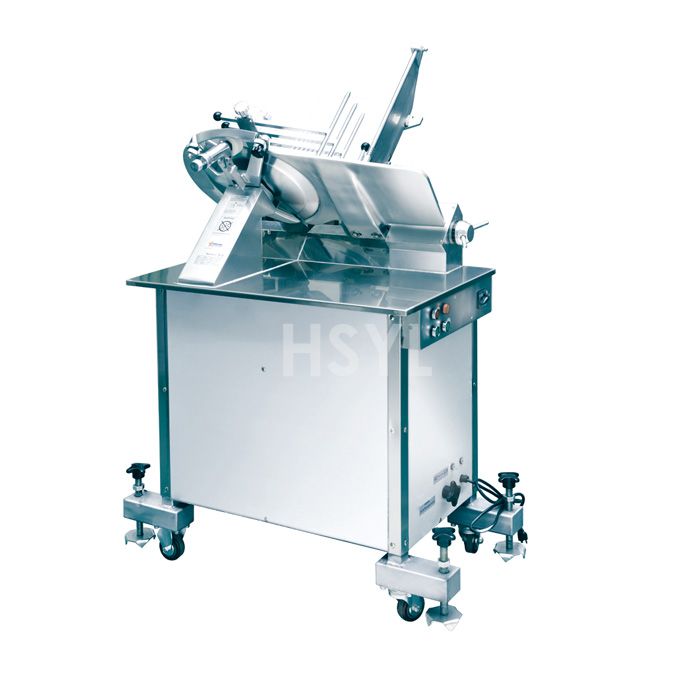
Describe the species and product form, the largest section received, the target portion dimensions and the range of product conditions. Photographs beside a scale and measured samples are more useful than a request for an 'industrial' machine. State what arrives whole and what has already been reduced upstream.
Ask the manufacturer to confirm that the specific material and product condition fall within the machine's intended use. A general photograph of frozen meat is not approval for every frozen block, bone density or fish product. For a trial, agree on representative material and evaluation criteria in advance; the manufacturer's trained operator should conduct the demonstration under the applicable instructions.
Three dimensions that should not be confused
- Blade length: the replacement band specification for a particular machine.
- Usable cutting envelope: the clearances that determine whether the proposed workpiece can be handled within the intended arrangement.
- Table and support arrangement: the surface and manufacturer-provided handling provisions available for the actual product.
For the HLS meat and bone saw range, the HSYL 261008 catalogue lists a 1660 mm blade for the HLS-1650 and a 1908 mm blade for the HLS-1900. Those figures identify blade lengths; they are not usable workpiece heights or widths. Obtain the machine drawing rather than calculating cutting clearance from the model number or the band length.
Evaluate the result as well as the cutting rate
Give each shortlisted supplier the same product brief. Define the desired portion tolerance, acceptable presentation and collection method for the cut portions. Inspect a sample sequence rather than one attractive piece. Record any upstream preparation required for the proposed machine and whether that preparation changes the original labour plan.
Keep throughput claims tied to the demonstration conditions. Report the product type, dimensions, temperature condition, portion size and operator arrangement with the result. A kilogram-per-hour figure from another product does not establish the rate for your own bone-in portions. Include loading, transfers and the change to the next product when evaluating a practical workstation.
Complete the space and receiving check
Check the machine's installed dimensions, approved service clearances and preparation-area movement guidance. The catalogue's packing size should be used for the delivery route only after confirming whether the unit arrives assembled and which components may be removed under the supplier's instructions. A bench-mounted version also requires a suitable, documented support arrangement.
Before purchase, request the correct operating and maintenance handover information, replacement blade specification, parts identification and a demonstration of the supplied protective features. Record the electrical configuration of the ordered unit separately. Do not infer supply compatibility from another model in the same family, and do not bypass a protective device to accommodate a larger workpiece.
A defensible selection ends with a named machine configuration, a confirmed cutting envelope and a trial record for the products actually sold. That is stronger evidence than choosing the largest power rating or treating the word 'heavy-duty' as a defined capacity class.