Direct Answer / Key Takeaway: Prepare a bone saw location using the actual support, machine drawing, power configuration and cleaning access. Separate packing dimensions from installed space.
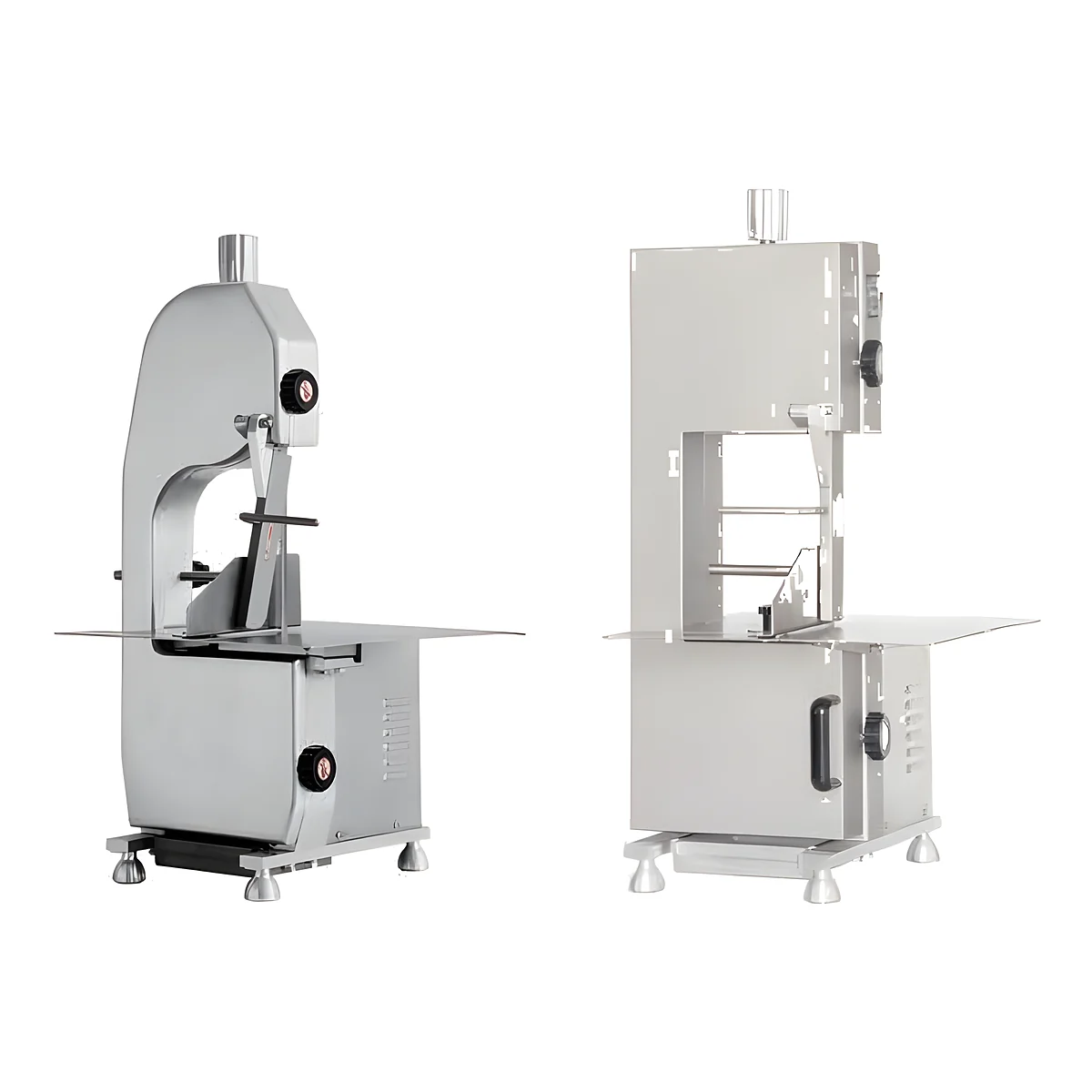
The site survey for a meat and bone saw needs to follow the selected machine. A countertop model, a floor-standing model and a machine on a manufacturer-designed pedestal do not have the same support or access arrangement. Resolve that distinction before routing deliveries or fixing adjacent benches.
Choose the support arrangement deliberately
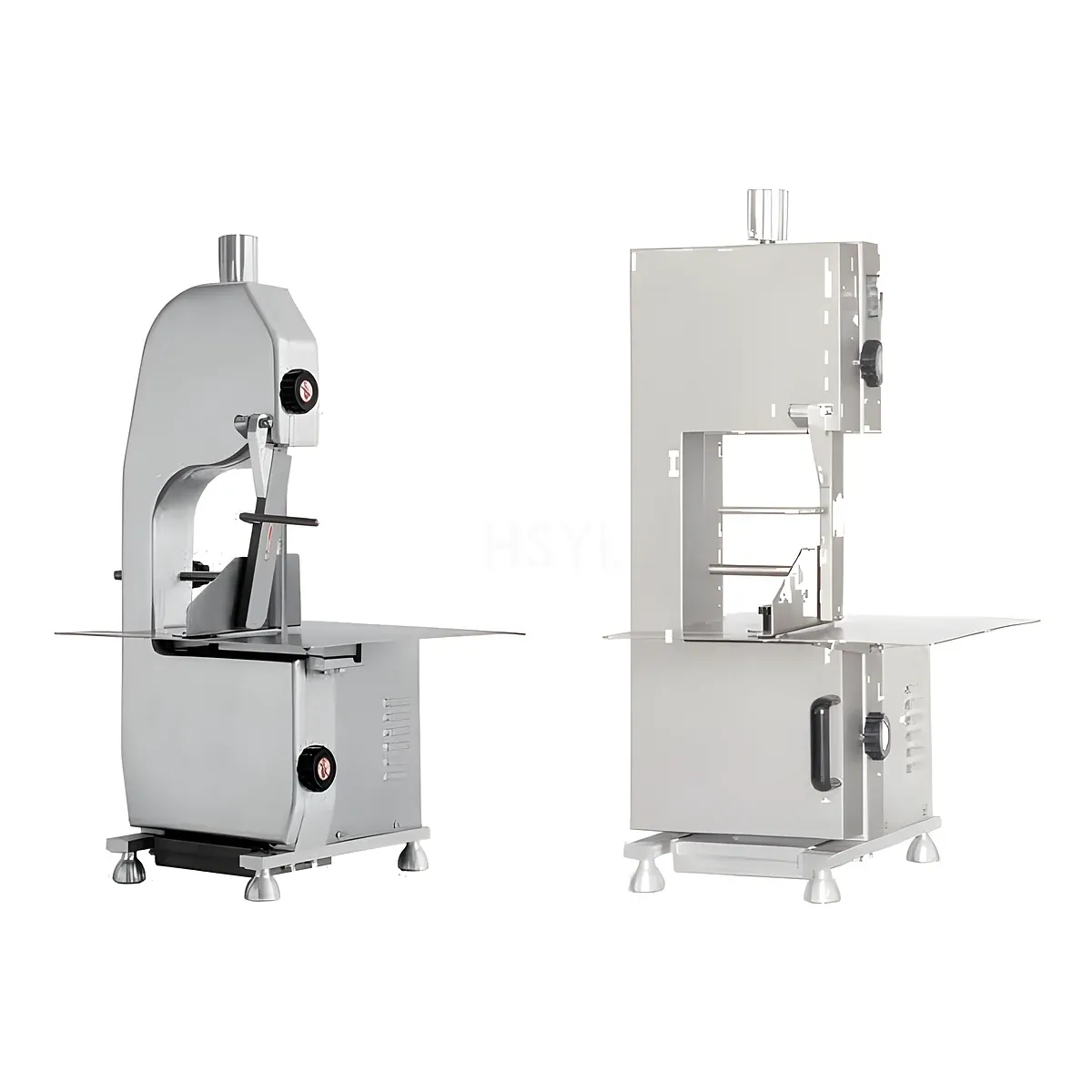
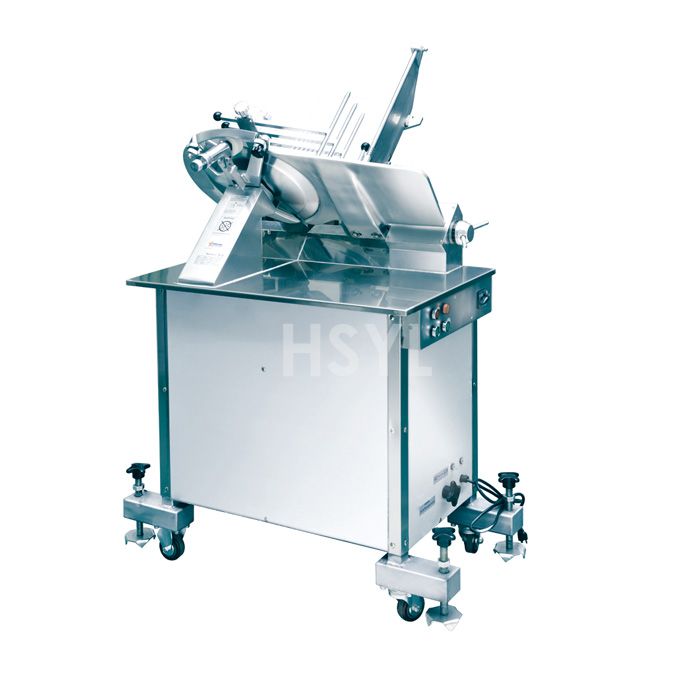
The catalogue identifies HLS configurations with different constructions, including a countertop HLS-2020T and a floor-standing HLS-2020. Ask for the installed drawing of the configuration being quoted. If the unit needs a bench, have the supplier confirm its support and fixing requirements, and include the bench in the layout and purchase scope.
Do not infer stability from the weight of the saw alone. The support, floor condition and intended manufacturer arrangement all matter. Have the responsible installer review these items without improvising feet, brackets or a rolling stand that the manufacturer has not approved.
Draw the product path beside the machine
Identify the side from which raw product arrives and the destination for portions after processing. Include the actual containers and transfer equipment in the site flow plan, using the cross-traffic guide to review the movements. The arrangement should allow the intended handling provisions to be used without borrowing the adjacent worker's position.
Place the cleaning and maintenance access shown in the instructions on the same plan. A convenient production location can become unsuitable if a fixed wall or cabinet prevents the manufacturer's intended access to a removable component. The survey is the time to identify that conflict; it should not be solved later by removing a protective provision.
Keep receiving measurements in their own column
The HLS catalogue table includes packing dimensions. These help start a delivery-route check, but they are not a substitute for a confirmed crate drawing and handling plan. Record the shipment dimensions and mass, the equipment's installed dimensions and the access required for service as three different sets of information.
Check lift limits, doorway turns and the permitted handling method with the delivery team. Confirm which parts, if any, the supplier authorizes to be removed for access. An unverified assumption that the saw will arrive dismantled can invalidate a carefully measured receiving route.
Close the electrical and documentation interfaces
Obtain the actual supply and connection requirements for the ordered unit. The HLS machine family includes different published electrical configurations; the final nameplate and instructions govern the specific machine. A qualified installer should resolve protection, isolation and connection requirements under the applicable site rules.
At handover, identify the correct manual, parts list, blade specification and protective-feature checks for that model. Ensure designated personnel receive the manufacturer's training before production use. Keep the approved site survey with the acceptance record so that later bench additions or machine moves can be checked against the original arrangement.