Direct Answer / Key Takeaway: Check the fryer‘s actual oil-removal arrangement, receiving container, access and cleaning route before the appliance is enclosed by the final cookline.
A fryer placed neatly between two appliances may become difficult to empty if a drain outlet, removable tank or service door cannot be reached. Decide how oil will leave the actual model before fixing the cookline position. The receiving container and its route are part of that layout.
Confirm the supplied emptying arrangement
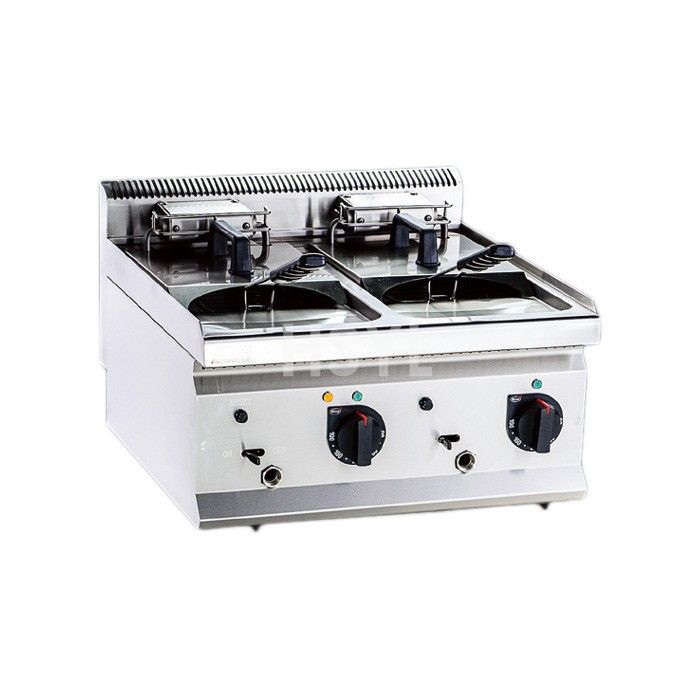
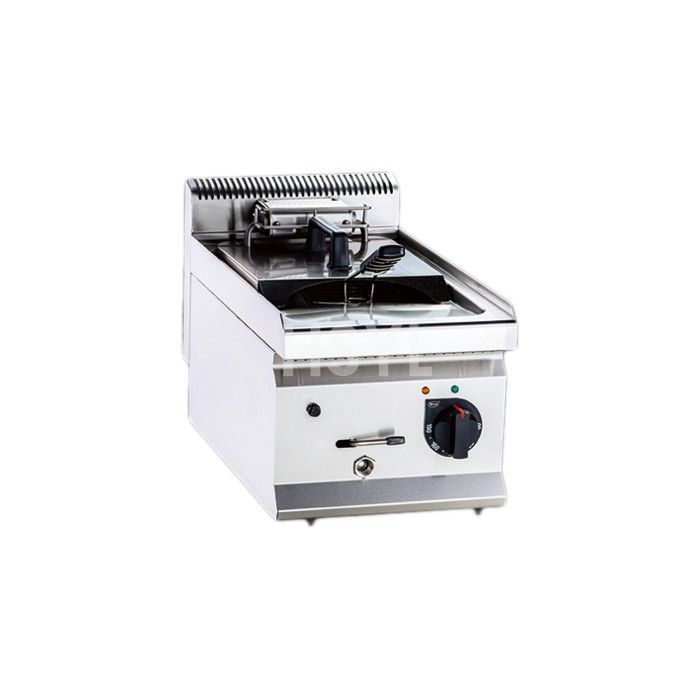
Ask the supplier to show the oil-removal method permitted for the delivered fryer. A drain-valve version, a removable tank and a filtered transfer system create different handling tasks. The catalog distinguishes countertop HDF variants specifically described as having a drain faucet or valve; that feature should not be assumed on every model sharing a tank size.
Get the relevant operating instructions and the list of included fittings. Where an outlet or extension is supplied, check its installed direction and the space needed to use it. Do not specify a makeshift hose or container just because it appears to fit the connection.
Place the receiving equipment in the drawing
Show the approved receiving container in the position required by the procedure. Check its capacity, stability, access and the way it is moved after use. Account for floor levels, doors and the other equipment normally present during cleaning. An empty space on a plan can become occupied by a trolley or storage item once the kitchen opens.
Identify the oil-handling accessories included in the purchase and who confirms their compatibility. The kitchen's accepted waste-oil process should identify the destination and the people responsible. Do not treat a floor drain as an automatic destination for cooking oil.
Keep operating restrictions with the layout
The manufacturer determines the permitted conditions and sequence for oil removal, including shutdown and temperature-related precautions. Staff must have those instructions rather than a contractor's general note saying drain after service. The physical layout should support the approved method without requiring a person to improvise a lift or reach over adjacent equipment.
If a design requires the fryer to move, coordinate the appliance's permitted movement and its utility connections with the qualified installer. Access for emptying cannot be gained by stressing an electrical cable or gas connection. Service-only interventions should remain separate from routine operator handling.
Check the finished cookline before handover
With the neighboring appliances and storage in their final places, demonstrate access using the approved equipment and a safe assessment method. Confirm that the required parts can be fitted and removed and that the container route remains available. Resolve an obstructed outlet before accepting the installation.
Keep an illustration of the accepted arrangement with the fryer instructions. The cleaning method and tools should reflect that real setup. A listed tank capacity or cabinet width cannot substitute for this access check.