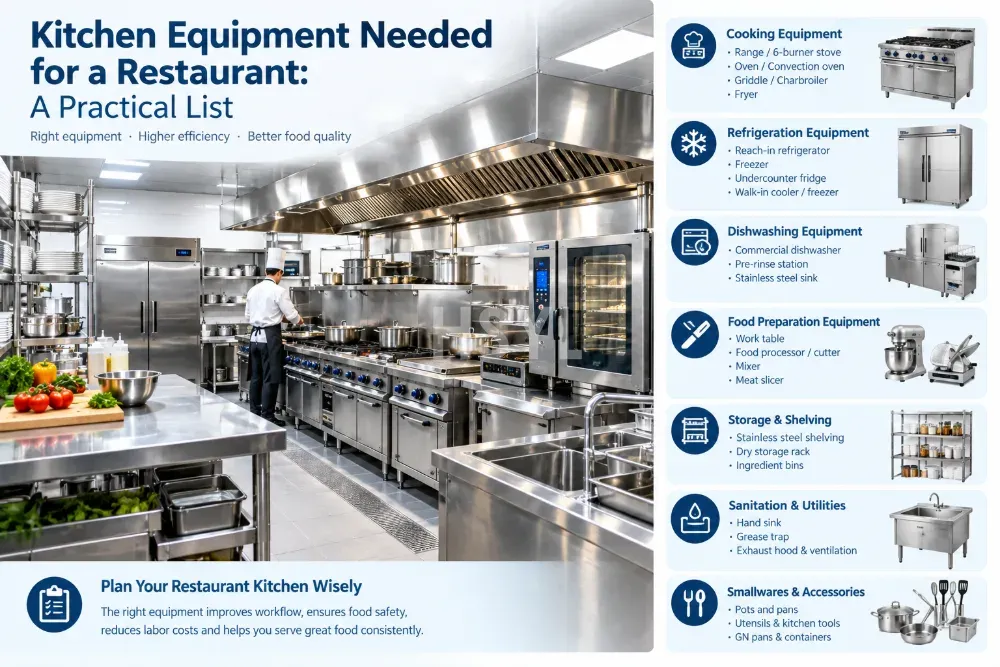
The kitchen equipment needed for a restaurant starts with the menu, how much preparation happens on site and the busiest service period. Most projects need provision for storage, preparation, cooking, cleaning and safe movement of food and utensils. The machines within those functions vary: a grill restaurant, a takeaway kitchen and a small cold-food operation should not purchase an identical equipment package.
Use this list to build your own opening schedule. Mark each item as required now, required only for a particular menu process, or planned for a later phase. Confirm local facility requirements with the responsible project team.
Start with three decisions
What arrives at the back door?
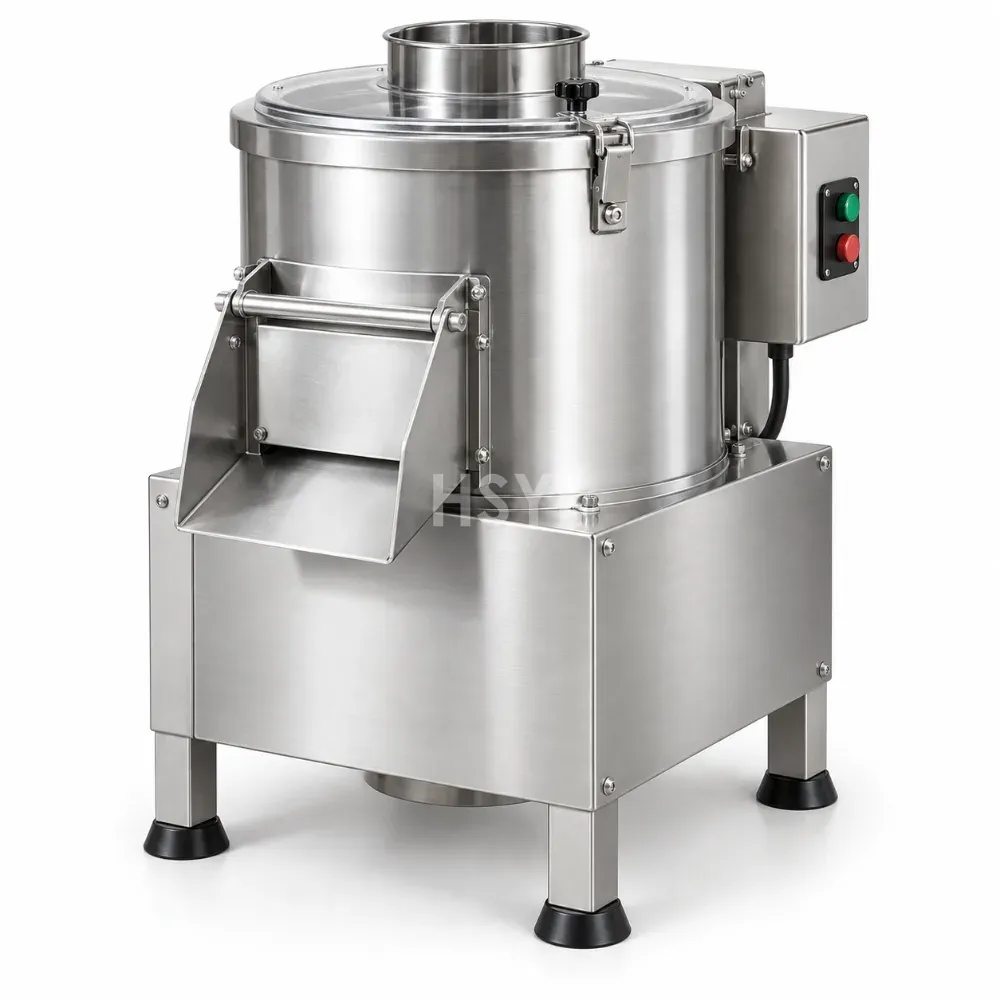
Whole ingredients, portioned products and prepared components create different preparation, storage and washing needs. List the tasks done by your suppliers and the tasks still done in the restaurant. Include deliveries, packaging removal and the temporary space needed while stock is checked.
What must leave the kitchen together?
Identify the busiest order period and the menu items that compete for the same appliance. A grill, oven or fryer that handles average demand may become the shared constraint when several popular dishes are ordered together. Decide how food moves from each station to plating, packing or collection.
What can the building support?
Check space, delivery access, utilities and ventilation interfaces before fixing models. A replacement kitchen may reuse some services; a new restaurant may require substantial separate site work. Bring the equipment layout and service information together early.
Restaurant kitchen essentials by working area
| Working area | Equipment to consider | What determines the selection |
|---|---|---|
| Receiving and dry storage | Washable receiving surface, shelving and suitable storage containers | Delivery frequency, packaging size, inventory and handling route |
| Refrigerated and frozen storage | Refrigerators or freezers with storage and access suited to the ingredients | Stock held between deliveries, separation needs and service access |
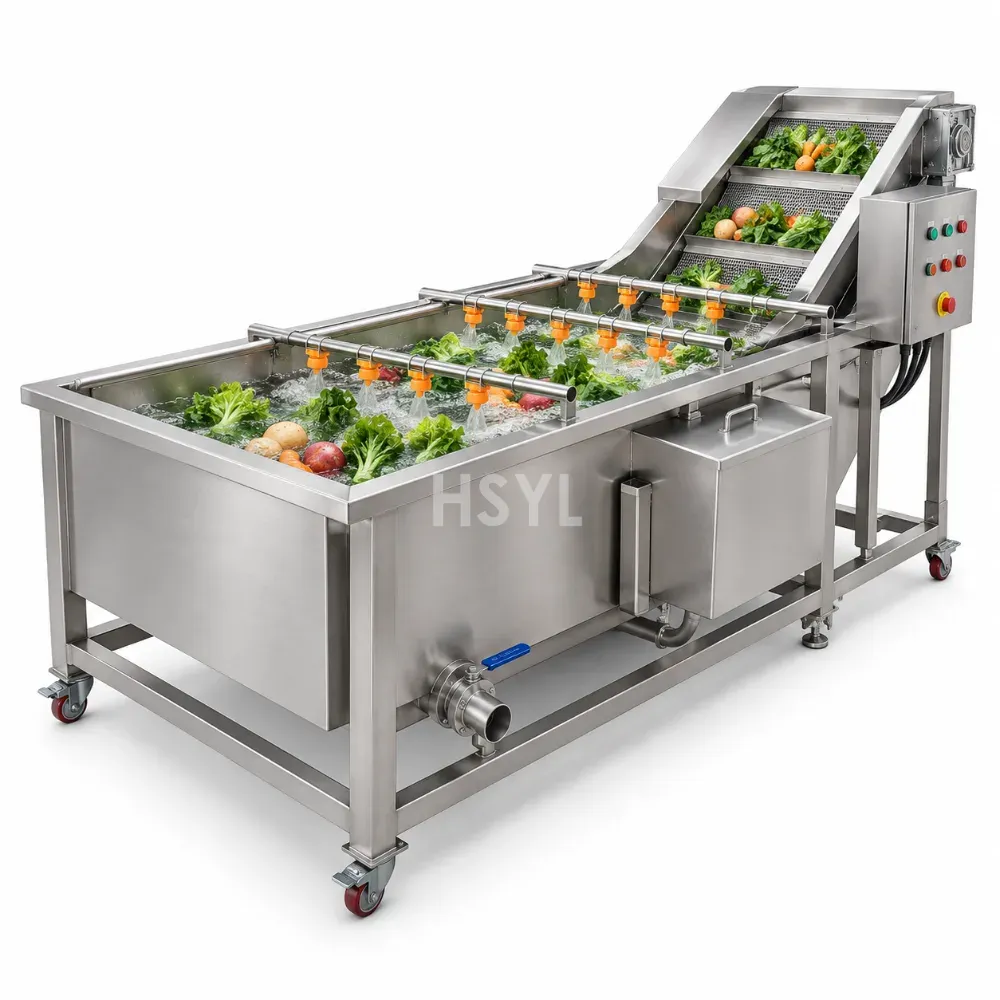
| Preparation | Worktables, task-appropriate sinks, cutting tools and containers | Ingredient condition, preparation done on site and separation of tasks |
| Cooking | The ovens, ranges, griddles, fryers or steamers required by the menu | Cooking method, batch or order pattern and available services |
| Service and packing | Plating or packing surfaces, suitable containers and any required holding equipment | Time between cooking and collection, menu quality limits and service format |
| Warewashing and pot washing | Suitable washing equipment, sinks, racks, landing surfaces and clean storage | Ware mix, reusable items returned during the peak and staffing |
| Handwashing and cleaning support | Appropriately located handwashing provision, cleaning-tool storage and waste arrangements | The facility's food-handling plan, cleaning tasks and local requirements |
This is a functional checklist, not a requirement to buy every possible appliance. Keep handwashing, ingredient preparation and utensil washing as distinct tasks when specifying the commercial kitchen sink arrangement. Confirm the actual facilities required for the operation rather than selecting sinks by appearance alone.
Add equipment only when the menu creates a task for it
- Fried dishes: assess a fryer together with basket handling, landing space, extraction interfaces and the oil-handling method.
- Grilled or griddled dishes: select the cooking surface and zones around the order mix, cleaning access and the support work beside the appliance.
- Baked or roasted dishes: decide the pan format, loading arrangement and concurrent batches before choosing the oven configuration.
- Pasta and boiled foods: review the actual cooking and portioning method, water handling and drainage before adding a dedicated cooker.
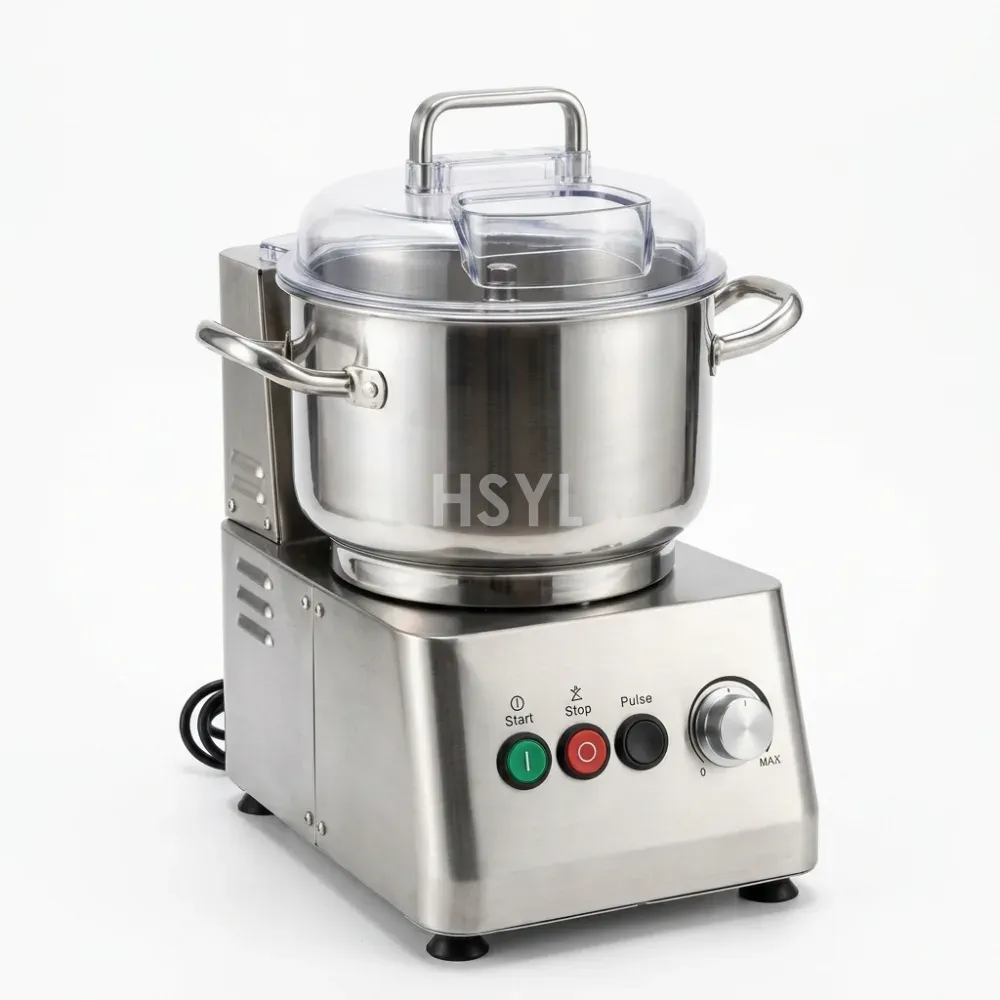
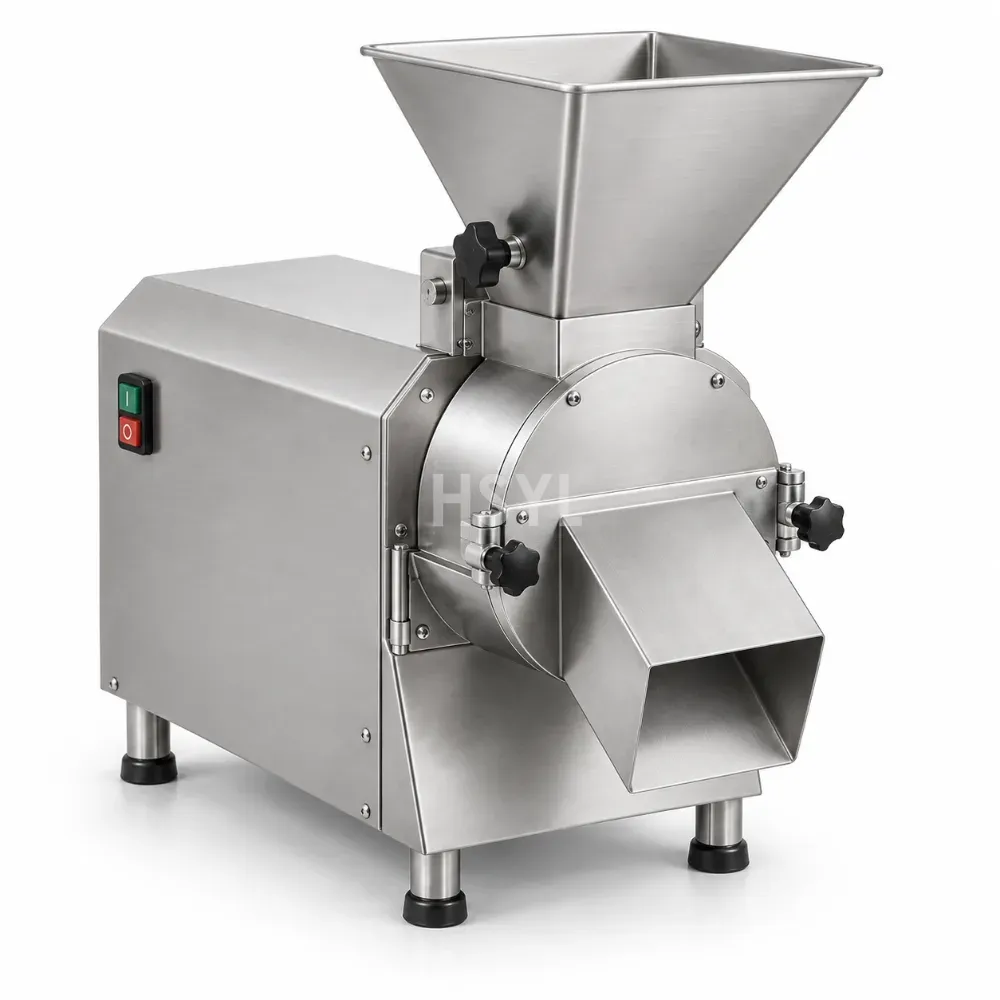
- High preparation volume: consider a slicer or mixer when the measured task, required result and cleaning routine justify it.
- Planned cook-chill production: assess rapid-cooling duty separately from refrigerated storage; include the process checks and containers needed for the chosen method.
Compare the commercial cooking equipment families after defining these tasks. Equipment should remove an identified constraint or perform a necessary process, rather than occupy a space simply because it appears on a generic list.
Smallwares are part of the opening list
A full restaurant kitchen equipment schedule includes the items that connect one process to the next. List pans, lids, racks, baskets, utensils, boards, food containers, service ware and the measurement tools required by your procedures. Record dimensions where an accessory must fit a machine, shelf or trolley.
Work out how many sets must circulate at the same time. Some will be in preparation, some in service and some awaiting washing. Count them from the operating cycle instead of assuming that the accessories supplied with each machine cover the whole restaurant.
Adapt the list to the service model
| Service pattern | Give extra attention to | Question before adding equipment |
|---|---|---|
| Cook-to-order dining | Concurrent appliance demand, plating and communication between stations | Which popular dishes compete for the same position during the busiest period? |
| Takeaway or delivery | Packing surfaces, containers, order identification and collection space | Where do completed orders wait without blocking cooking or clean handling? |
| Cold preparation or limited hot menu | Ingredient access, preparation space and replenishment | Which hot appliances are actually necessary for the opening menu? |
| Batch preparation before service | Container circulation, storage, release timing and any required holding or cooling | What happens between the end of preparation and the moment the food is served? |
Walk the route before finalizing quantities
Follow one delivery from receiving to storage, one dish from preparation to service, and one returned tray or plate through washing to clean storage. Check door openings, cart turning, landing space and staff access at the same time. The commercial kitchen workflow guide helps identify crossings that a simple appliance list can miss.
Also check the movement needed to clean or maintain each item. Equipment packed tightly into an attractive drawing can become difficult to use when a door opens, a rack is removed or a technician needs a service panel.
Turn the list into a purchase schedule
Give each line an item reference, function, quantity, selected model or required duty, dimensions, utilities, included accessories and a responsible supplier. Add a status for decisions still open. Keep optional later purchases in a separate section so they do not inflate or confuse the opening requirement.
Before ordering, check that every menu process has suitable equipment and that every selected machine has a defined use. Confirm accessory compatibility and site connections, then request an itemized quotation. The restaurant kitchen solution page connects the completed list with the wider project discussion.