Display Freezer Price Guide: Cost Ranges by Format and Use Case
Display freezer price guide: single-, double- and triple-door glass freezer costs, compressor and controller impacts, plus scenario-based buying advice.
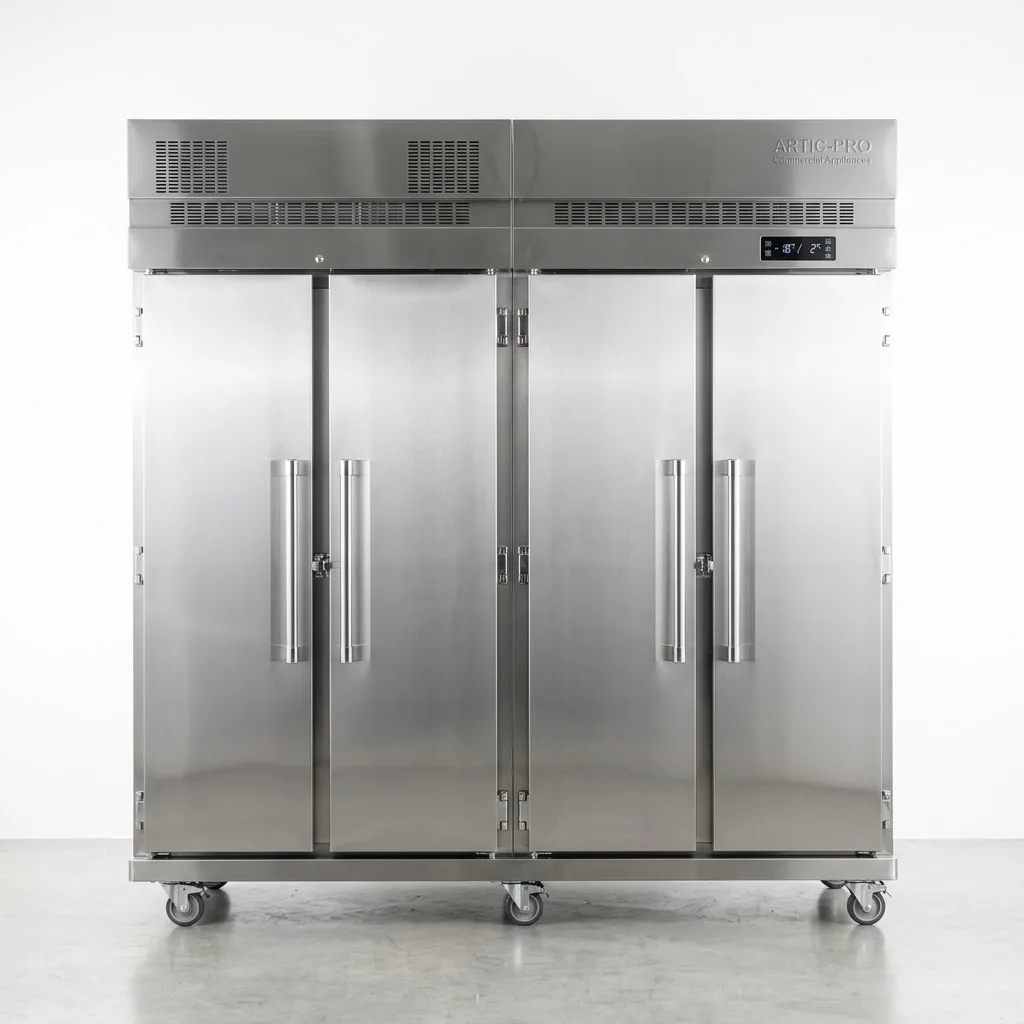
A glass-door display freezer is one of the few pieces of refrigeration that sells product while it stores it, which is why buyers tend to compare units on door count alone and then get surprised by the invoice. The real price of a display freezer is set by three things working together: the cabinet format, the refrigeration system inside it, and the temperature-control hardware that keeps product at a safe -18°C to -22°C under constant door openings.
This guide breaks down current market price ranges by format — countertop, single-door, double-door, and triple-door uprights — then explains which component choices move a unit from the bottom of a range to the top, and which format actually fits a convenience store, supermarket aisle, or restaurant front-of-house. All figures are typical factory and distributor ranges; final quotes shift with configuration, refrigerant, and order volume.
Key takeaway: Expect roughly $400–$1,200 for a countertop display freezer, $800–$2,500 for a single-door, $1,800–$4,500 for a double-door, and $3,500–$8,000 for a triple-door upright. The compressor type and controller grade can swing any of these by 30–50%, so compare specifications, not just door counts.
The Four Display Freezer Formats at a Glance
Display freezers divide cleanly into four formats. Each targets a different sales floor and stocking pattern, and each sits in its own price band.
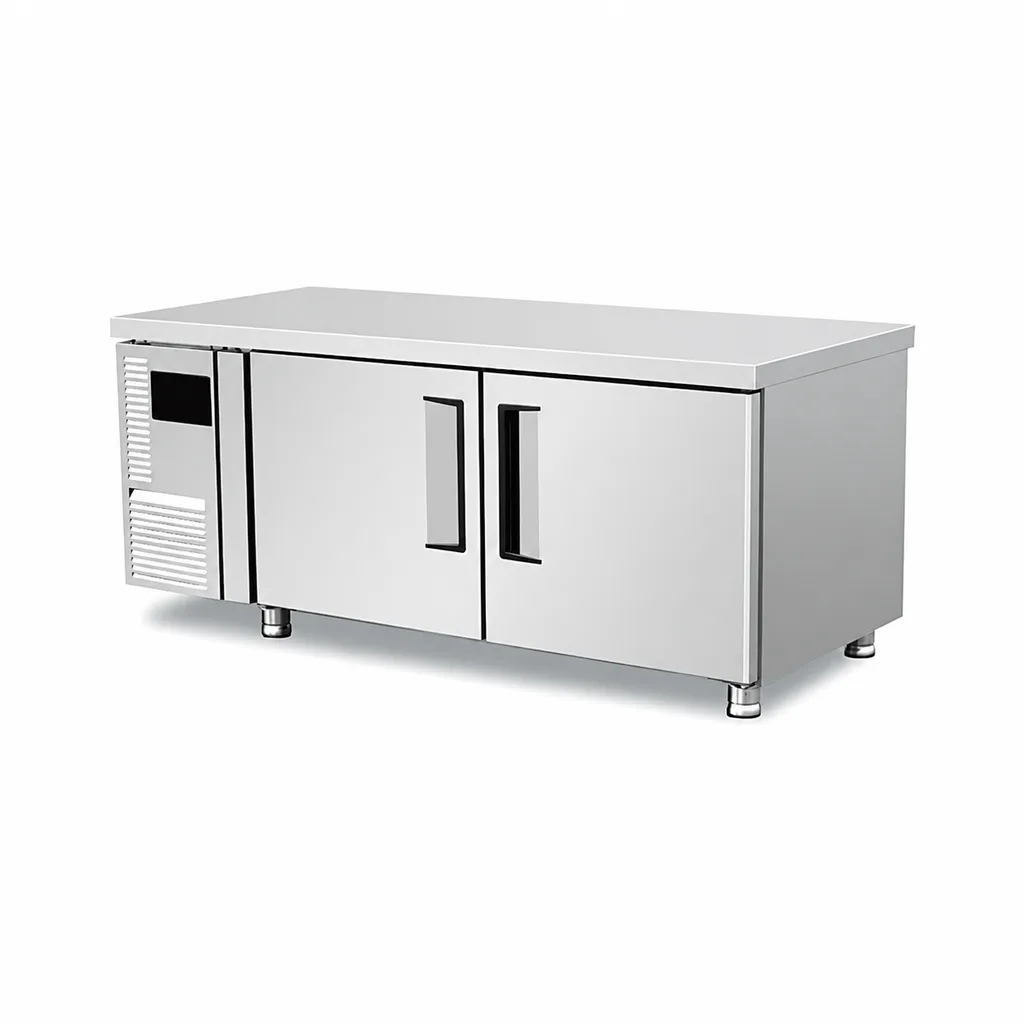
Countertop Display Freezer
0.7–3.5 cu ft of merchandising space for checkout lanes and café counters. Typically $400–$1,200 depending on glazing and branding panels.
View refrigeration equipment →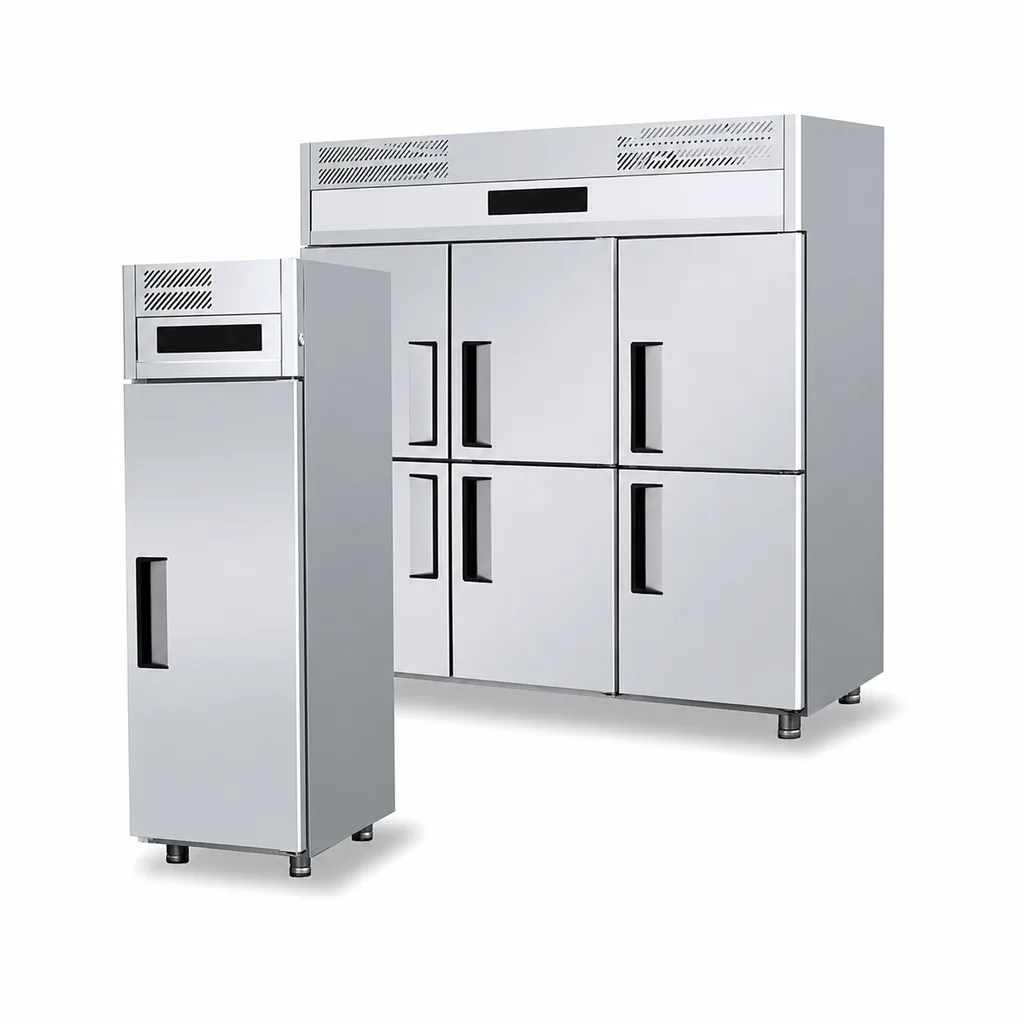
Single-Door Upright
Around 12–25 cu ft with 4–5 shelves. The standard unit for convenience stores and small grocers. Typically $800–$2,500 depending on compressor placement and lighting.
View refrigeration equipment →Double-Door Upright
Roughly 35–50 cu ft across two swing doors. Suits supermarket end caps and high-turnover beverage walls. Typically $1,800–$4,500 depending on refrigeration capacity.
View refrigeration equipment →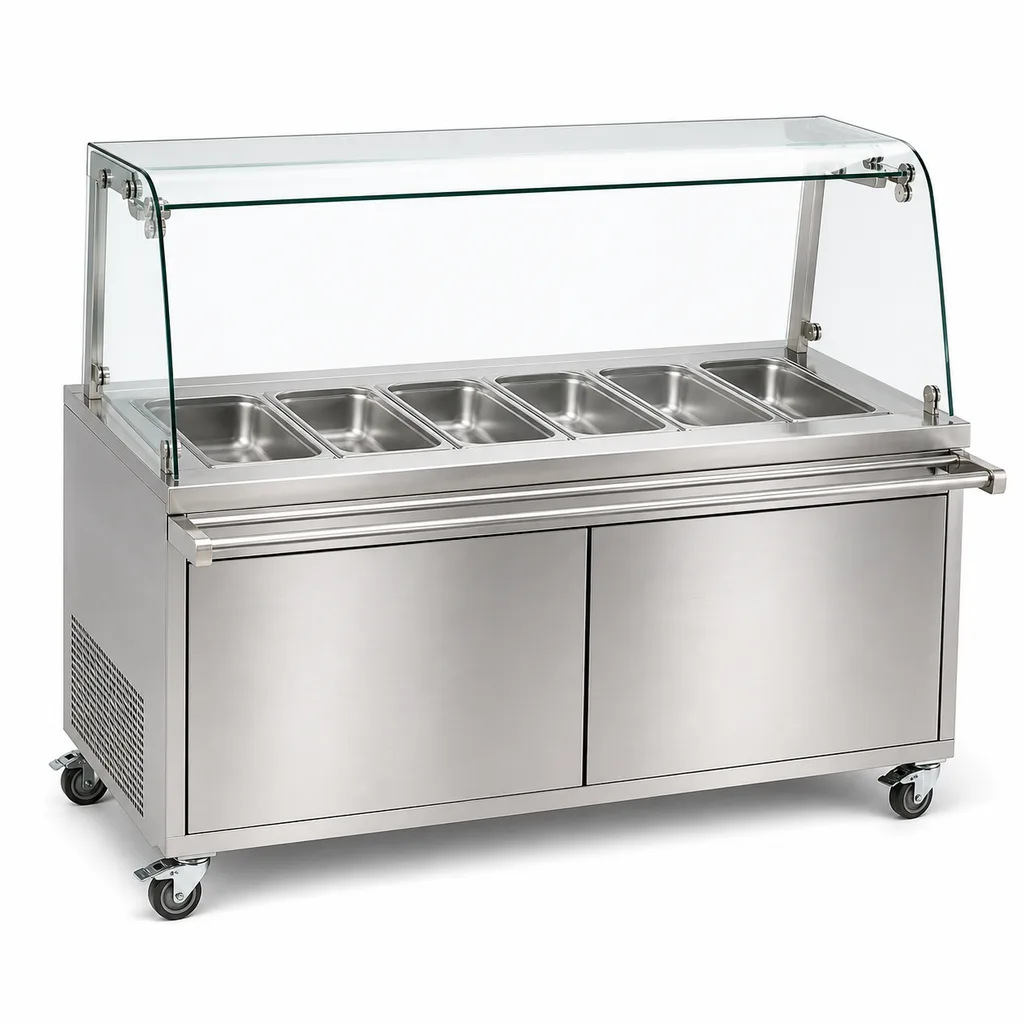
Triple-Door and Serve-Over
72 cu ft and up for triple-door uprights, plus serve-over counters for gelato and deli. Triple-door uprights typically run $3,500–$8,000; serve-over counters vary widely by length.
View refrigeration equipment →Display Freezer Price Comparison by Format
The table below summarizes typical price bands, capacity, and the scenarios where each format earns back its cost fastest. Treat the numbers as budgeting ranges: heated glass, LED upgrades, and premium controllers push a unit toward the top of its band.
| Format | Capacity | Typical Price Range | Best-Fit Scenario |
|---|---|---|---|
| Countertop | 0.7–3.5 cu ft | $400–$1,200 | Checkout impulse items, ice cream pints |
| Single-door upright | 12–25 cu ft | $800–$2,500 | Convenience stores, cafés, small grocers |
| Double-door upright | 35–50 cu ft | $1,800–$4,500 | Supermarket aisles, beverage walls |
| Triple-door upright | 72+ cu ft | $3,500–$8,000 | Hypermarkets, high-traffic frozen sections |
| Serve-over counter | By length (1–2.5 m) | $2,000–$7,000 | Gelato, deli, butcher display |
Two patterns matter when you read these ranges. First, price per cubic foot of capacity falls as cabinets get bigger — a triple-door unit holds roughly three times the product of a single-door for well under three times the price. Second, running cost moves in the opposite direction: larger cabinets draw 1,100–1,800 W versus 300–600 W for a single-door, so an undersized multi-door purchase made "for growth" can cost more in electricity than it saves on hardware.
How Compressor and Temperature Control Move the Price
Two units with identical door counts can differ by 30–50% on price. The gap almost always traces back to the refrigeration system and the control electronics.
Compressor type and placement
Static-cooling units with an emulated compressor sit at the bottom of each price band and suit low-traffic spots where doors open a few times per hour. Ventilated (fan-forced) systems with a commercial-grade compressor — Embraco, Secop, or equivalent — cost more up front but recover temperature in 3–5 minutes after a door opening instead of 15–20, which is what keeps ice cream from softening at the edges during a lunch rush. Bottom-mounted compressors add cost but run cooler and are easier to service; top-mounted units are cheaper and keep the compressor away from floor dust in bakeries and high-flour environments.
Controller and glazing grade
A mechanical thermostat is the cheapest option and drifts ±3°C. A digital controller with a visible display holds ±1°C and adds roughly $80–$200 to a build — money well spent where HACCP logs are required. Triple-pane heated glass, anti-fog coatings, and full LED shelving each add cost, but heated glass is the one upgrade that pays for itself anywhere ambient humidity exceeds 60%: fogged doors cut impulse sales measurably, and manual wiping costs labor hours every day.
Matching the Format to Your Floor
Convenience stores and cafés get the best return from a single-door upright near the checkout, optionally paired with a countertop unit for premium pints. Budget $800–$2,500 for the upright and prioritize a fan-forced compressor — door openings here are frequent but short.
Supermarkets and grocery formats should plan double- and triple-door uprights as a continuous frozen wall. A 10-meter frozen section typically mixes three triple-door units ($3,500–$8,000 each) with double-doors for slower categories. See how this fits a full store layout on our supermarket kitchen solutions page.
Restaurant front-of-house needs are different: open hours are long but door openings are sparse, and appearance matters as much as capacity. A serve-over counter or a quiet single-door display near the pass usually outperforms a larger cabinet. Browse the full refrigeration equipment range for compatible back-of-house storage.
Pre-Purchase Decision Checklist
Before requesting quotes, fix these five parameters — suppliers price against them, and changing them mid-order is where budgets slip.
- Door openings per hour. Under 10: static cooling is acceptable. Over 20: specify fan-forced with a commercial-grade compressor, whatever the format.
- Target capacity in sellable cu ft. Count shelf facings, not gross volume — adjustable shelving typically recovers 10–15% of listed capacity.
- Electrical supply. Confirm voltage and phase; single-door units draw 300–600 W, triple-doors 1,100–1,800 W, and a dedicated circuit is standard practice.
- Ambient conditions. Above 32°C or 60% humidity, specify a tropicalized condenser and heated glass or accept fogging and longer pull-down times.
- Compliance needs. If you log temperatures for HACCP, budget for a digital controller with data output from the start; retrofitting costs more than the factory option.
With those five answers in hand, request quotes on two or three formats at once — the per-cubic-foot economics of a larger cabinet often surprise buyers who walked in set on the smallest unit. For a broader framework on weighing specifications against budget, see our equipment selection topic hub.
Frequently Asked Questions
How much does a single-door display freezer cost?
A single-door upright display freezer typically costs $800–$2,500, depending on compressor type, lighting, and glazing. Units with a fan-forced commercial-grade compressor and heated glass sit at the top of that range.
Why do two display freezers with the same door count differ so much in price?
The compressor system and controller grade can swing the price by 30–50%. Fan-forced units with a commercial-grade compressor recover temperature in 3–5 minutes after a door opening, versus 15–20 minutes for static-cooling units, and digital controllers (adding roughly $80–$200) hold ±1°C instead of ±3°C.
What size display freezer does a convenience store need?
A single-door upright of 12–25 cu ft near the checkout is the standard choice, typically $800–$2,500, optionally paired with a $400–$1,200 countertop unit for impulse items. Specify fan-forced cooling if doors open more than 20 times per hour.
Is a bigger display freezer always more cost-effective?
Per cubic foot, yes — a triple-door upright (72+ cu ft, $3,500–$8,000) holds about three times the product of a single-door for well under three times the price. But it draws 1,100–1,800 W versus 300–600 W, so oversizing for future growth can cost more in electricity than it saves on hardware.
What electrical supply does a display freezer need?
Single-door units typically draw 300–600 W and triple-door units 1,100–1,800 W. Confirm voltage and phase before ordering, and plan a dedicated circuit as standard practice.
Plan the Equipment Around Your Kitchen.
Share your menu, peak service demand, available space and site utilities. Tell us which equipment you are considering so we can review the requirements with you.