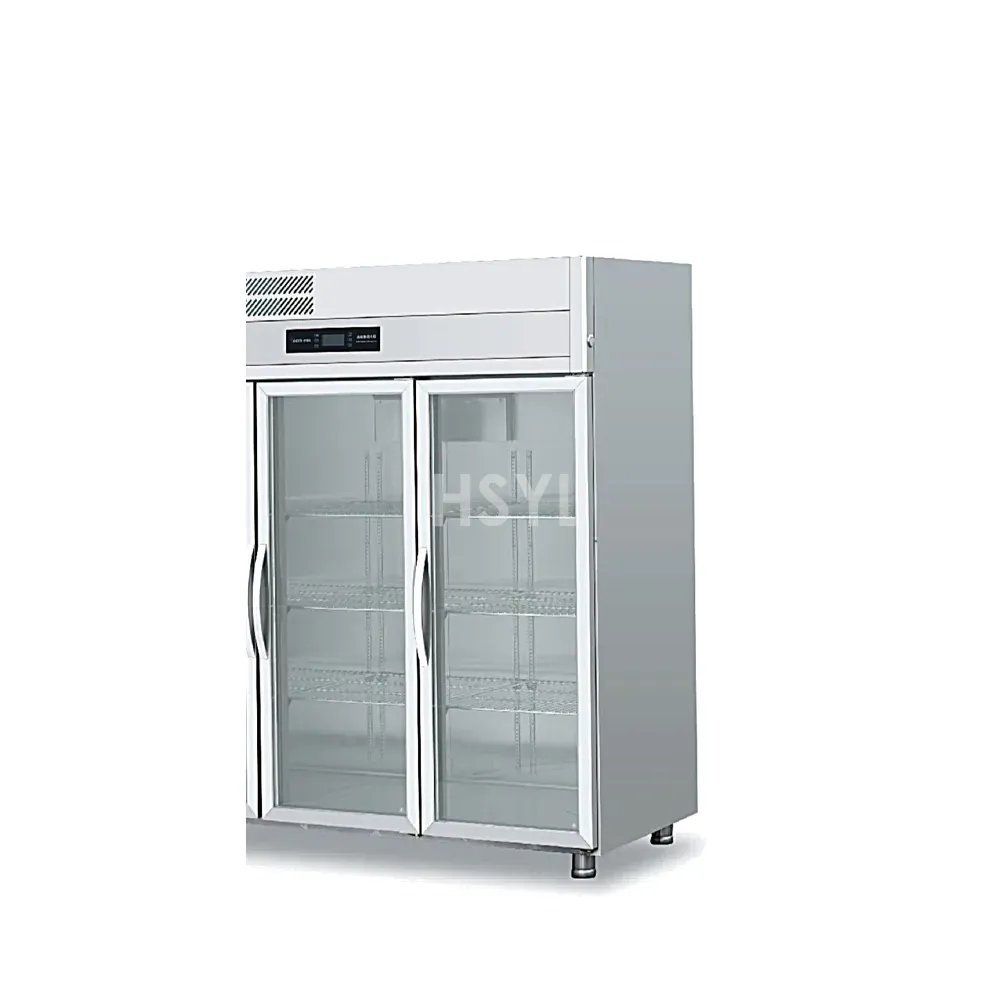
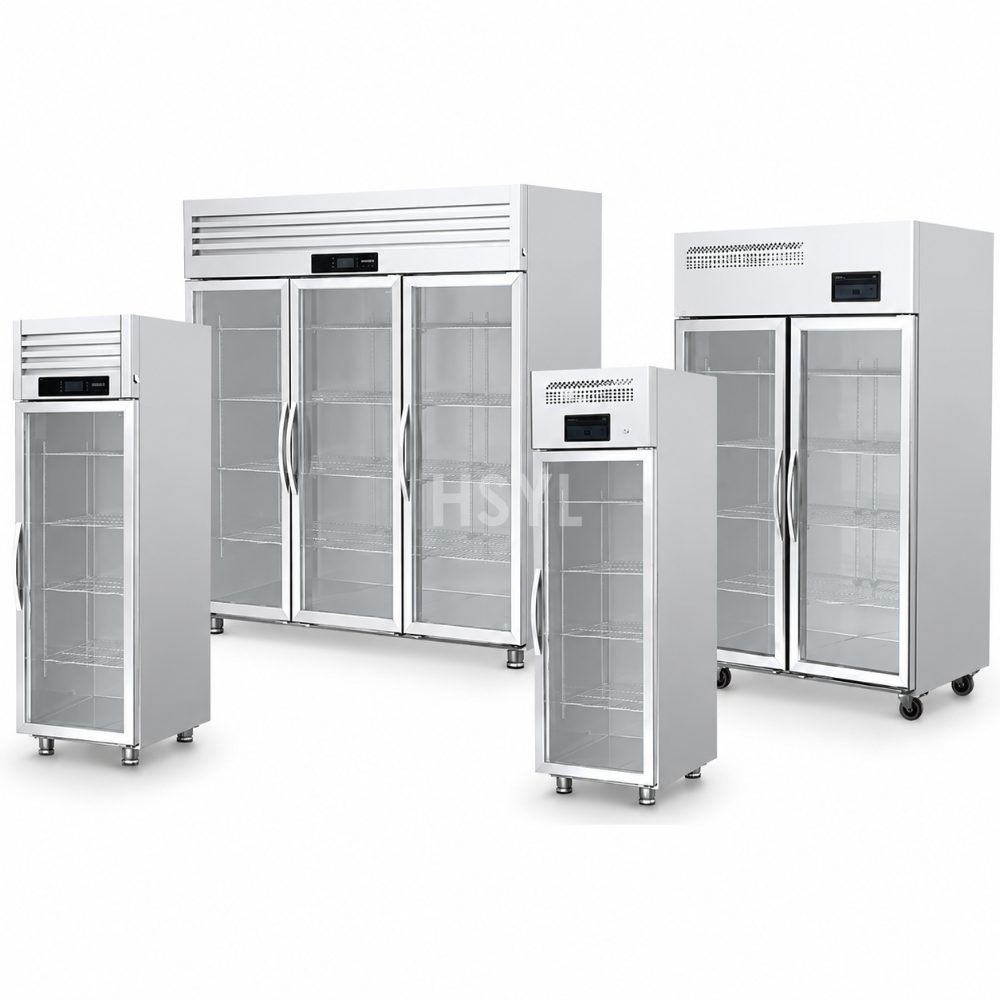
A display refrigerator and a storage refrigerator hold the same temperature and look almost the same from the back — the difference is the door, and the door changes everything about how the cabinet earns its keep. A display refrigerator has a glass door so the product is seen, which turns it from a storage box into a selling surface. A storage refrigerator has a solid door that maximizes volume and minimizes energy, for the product nobody needs to see. The HSYL line carries both: the E-series display refrigerator range and the Q and S series direct-cooling display cabinets for the front of house, against the E-series upright storage refrigerators for the back.
Visibility Is the Product
The reason to pay for a glass door is simple: customers buy what they can see. A beverage, dessert or grab-and-go display case at the point of sale turns the refrigerator from a cost centre into a merchandiser — the same product, placed in a glass-door cabinet at the counter, sells more than the identical product hidden behind a solid door in the back. For bars, cafés, convenience counters and hotel lobbies, that visibility is the whole point of the cabinet, and the display range exists to put it there.
The two display lines split by cooling approach for different front-of-house jobs. The direct-cooling Q and S series display cabinets are the workhorse merchandiser for bottled drinks and packaged product, where the glass door and the chill band do the selling. The E-series display range extends the same glass-door visibility across the upright formats for larger displays.
The Capacity Cost of a Glass Door
The glass door and the display shelving behind it cost usable space, and the number is worth knowing before you spec. On a comparable single-door frame, the display configuration documents 370 litres where the upright storage configuration documents 500 litres — a real difference driven by the glass, the lighting and the shelf spacing that display demands. The storage cabinet packs product to the door; the display cabinet arranges product to be looked at. Neither is wrong; they are sized for different jobs, and mistaking one for the other either overpays for visibility you do not need or hides product you needed to sell.
What the Glass Door Costs to Run
A glass door carries two running costs a solid door does not. First, energy: glass conducts heat faster than an insulated panel, so a display cabinet runs its compressor more to hold the same zone, and the door is opened by customers rather than staff, which costs cold every time. Second, condensation: a glass door in a humid front-of-house can fog or sweat, which needs the door's anti-condensation handling to be working — a display case that fogs up stops selling, because the customer cannot see the product. The trade is visibility against these two costs, and it is worth it exactly when the product sells itself on sight.
Display and Storage Side by Side
| Factor | Display Refrigerator | Storage Refrigerator |
|---|---|---|
| Door | Glass, product visible | Solid, product hidden |
| Capacity (single-door frame) | 370 L | 500 L |
| Purpose | Merchandising at the point of sale | Back-of-house storage |
| Running cost | Higher (glass, customer door openings) | Lower (insulated, staff-only) |
| Fits | Bars, cafés, counters, lobbies | Kitchens, prep, stockrooms |
The full line sits under commercial refrigeration equipment, and the temperature zones and storage map guide covers the 2 to 8 °C and 10 to 0 °C bands both cabinet types hold.
Related Equipment & Systems
Inside both doors, the cooling method is the same decision as on the workbench line — the direct vs fan cooling guide covers that split, and the preventive maintenance guide keeps either door honest.