Commercial Bakery & Pizza Ovens Selection Guide
Selection guide for the best commercial bakery and pizza ovens. Compare deck ovens, electric pizza ovens, countertop units, and convection baking models.
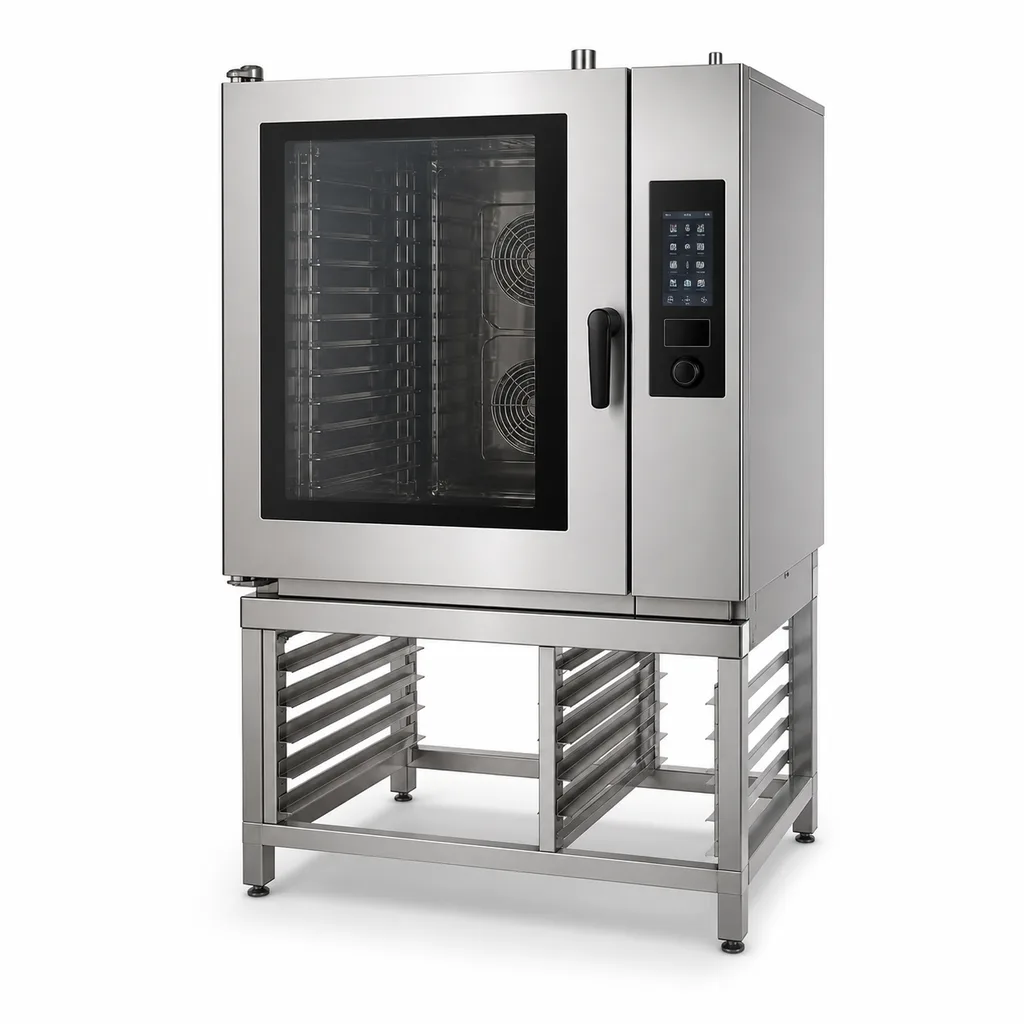
In high-volume commercial baking and artisanal pizza production, an oven is not merely a heated enclosure—it is a precision thermodynamic reactor. Achieving crisp, blistered Neapolitan pizza crusts, caramelized artisanal sourdough boules, or thousands of uniformly golden baguettes requires precise balancing of conductive, convective, and radiant heat transfer. Selecting between deck ovens, rotary rack ovens, convection ovens, and conveyor systems defines an operation's production capacity, energy consumption, and product quality. This comprehensive whitepaper provides an engineering analysis of commercial bakery and pizza ovens.
1. The Thermodynamics of Baking: Heat Transfer Mechanics
Thermal energy transfers into dough through three distinct physical mechanisms. The proportion of each mechanism dictates crust development, crumb structure, and baking velocity:
- Conductive Heat Transfer (Floor Energy): Heat transfers directly from high-density refractory stone decks (cordierite or refractory cement) into the dough base. High thermal conductivity rapidly gelatinizes bottom starches, producing oven spring and crisp bottom crusts without scorching. Essential for artisan hearth breads and traditional pizza.
- Convective Heat Transfer (Air Velocity): Circulating heated air penetrates the outer boundary layer of the dough, evaporating moisture and creating rapid Maillard browning. While optimal for cookies, pastries, and sheet cakes, excessive air velocity dehydrates thin pizza crusts before internal starches fully cook.
- Radiant / Infrared Heat Transfer (Wall & Ceiling Energy): Long-wave infrared radiation emits from heated ceramic stones, cast-iron baffles, or quartz elements, penetrating deep into the dough crumb to cook internal moisture evenly while caramelizing surface sugars.
2. Comprehensive Commercial Oven Engineering Comparison
Baking facilities must select oven architectures tailored specifically to dough hydration, baking temperature, and hourly throughput requirements:
| Oven Classification | Primary Heat Transfer Mechanism | Operating Temperature Range | Steam Injection Capability | Hourly Output Capacity | Optimal Food Products |
|---|---|---|---|---|---|
| Stone Deck Oven (Static Hearth) | Conduction (70%) + Radiation (25%) + Convection (5%) | 200°C - 450°C (400°F - 842°F) | Integrated heavy boiler steam cascades per deck | Moderate (40 - 120 loaves or 60 pizzas/hr) | Artisan sourdough hearth bread, ciabatta, traditional Neapolitan & New York pizzas |
| Rotary Rack Oven (Industrial) | Convection (80%) + Radiation (15%) + Conduction (5%) | 150°C - 300°C (300°F - 572°F) | High-pressure cascade or spherical steam generators | High (120 - 450 kg dough/hr; 15-30 sheet pans) | Baguettes, sandwich loaves, croissants, brioche, buns, cookies, centralized wholesale baking |
| Air Impingement Conveyor Oven | Forced Hot-Air Impingement (85%) + Radiation (15%) | 180°C - 320°C (350°F - 600°F) | None (Dry heat only) | Very High (80 - 200+ pizzas/hr per deck) | High-speed delivery pizza chains, flatbreads, toasted sandwiches, baked pasta |
| Commercial Convection Oven | Forced Air Circulation (85%) + Radiation (15%) | 65°C - 260°C (150°F - 500°F) | Optional moisture injection / pulse steam | Medium (5 - 10 standard full-size sheet pans) | Puff pastries, muffins, scones, sheet cakes, roasting operations |
Figure 1: Multi-deck commercial baking chamber equipped with high-mass cordierite hearth stone and steam injection bars.
3. Deck Oven Engineering: Cordierite Stone vs. Steel Baking Decks
For artisan bread and pizza, floor metallurgy and refractory composition are critical:
| Deck Material | Specific Heat Capacity (J/kg·K) | Thermal Conductivity (W/m·K) | Baking Characteristics & Temperature Limits |
|---|---|---|---|
| Refractory Cordierite Stone (25-30 mm) | 950 - 1,050 J/kg·K | 1.3 - 1.8 W/m·K (Moderate release) | Absorbs dough moisture, prevents bottom scorching at 350°C-450°C; ideal for Neapolitan & artisanal pizza |
| Baking Steel Plate (10-15 mm) | 490 - 510 J/kg·K | 45 - 50 W/m·K (Rapid release) | Ultra-fast heat delivery; excellent oven spring at lower temps (260°C-300°C), but burns dough above 320°C |
| Perforated Aluminized Steel Deck | 890 J/kg·K | 150 - 200 W/m·K (Instantaneous) | Requires sheet pans; rapid heat loss when doors open; used exclusively for pan breads and pastries |
4. Steam Generation Physics in Artisan Bread Baking
To produce a thin, blistered, golden crust with high gloss on hearth bread, steam must be injected into the deck oven chamber during the first 60 to 90 seconds of baking:
Thermodynamic Action: Injected saturated steam condenses onto the cooler dough surface (25°C), instantly releasing latent heat. This liquid water film gelatinizes surface starches, keeps the dough skin extensible for maximum oven spring expansion, and forms dextrin sugars that caramelize into a crisp, glassy crust.
Steam Generator System Design:
- Individual Cast-Iron Heavy Boiler Bars: Industrial deck ovens feature dedicated heavy cast-iron boilers per deck. High-pressure water sprays over red-hot cast-iron rods, instantly flashing 100% of liquid water into saturated steam without dropping the oven chamber air temperature.
- Electrically Timed Exhaust Dampers: After 8 to 12 minutes of baking with steam, pneumatic or motorized dampers open to evacuate all remaining chamber humidity, drying out the crust for optimal crunch and shelf life.
5. Oven Sizing & Hourly Production Formulas
To accurately size an oven for a commercial bakery or pizzeria, engineering calculations must model loading capacity, bake time, and recovery intervals:
Example: A dual-deck oven holding six 16-inch pizzas per deck (12 pizzas total) with a 7-minute bake cycle + 1-minute loading/recovery cycle yields: (12 pizzas) × (60 / 8) × 0.85 ≈ 76 sixteen-inch pizzas per hour.
6. Dough Hydration vs. Thermal Chamber Dynamics
Baking physics varies dramatically with dough water content. High-hydration artisan doughs (75% to 85% hydration) demand vastly different thermal profiles than low-hydration pizza doughs (55% to 62% hydration):
- High-Hydration Hearth Sourdough: High initial thermal mass required. Refractory deck temperature must start at 245°C (475°F) with continuous radiant heat from upper elements to drive core steam expansion through gluten channels.
- Neapolitan Style Pizza: Extremely high temperature (430°C - 485°C / 800°F - 900°F) for 60 to 90 seconds. Demands low-conductivity volcanic Biscotto di Sorrento or porous cordierite decks to prevent the bottom from charring into ash before the fresh mozzarella and raw tomato sauce cook.
7. Flue Gas Exhaust & Ventilation Compliance (NFPA 96 / UL 197)
Gas-fired commercial bakery ovens generate high volumes of hot combustion flue gases (CO2, H2O, NOx) that require strict venting engineering:
- Type 1 vs. Type 2 Exhaust Hoods: Ovens cooking pizzas with raw meats or high-fat toppings require grease-rated Type 1 hoods with UL-listed baffle filters and integrated fire suppression. Ovens dedicated exclusively to dry breads and baked goods may operate under Type 2 heat-and-moisture exhaust hoods where permitted by local building codes.
- Direct Flue Chimney Draft Interlocks: Gas deck and rack ovens equipped with direct flue pipes must feature barometric draft dampers and airflow pressure proving switches. If the exhaust fan fails, the safety interlock instantly cuts off power to the gas burner safety valve, preventing deadly carbon monoxide accumulation.
6. 3-Phase Electrical Load Balancing & Multi-Deck Power Distribution
Commercial electric deck ovens require substantial electrical infrastructure. A triple-deck artisanal bread oven consumes between 24 kW and 48 kW of electrical power, demanding precise 3-phase load balancing:
Where P = total power in Watts, V = line-to-line voltage (e.g., 400V), PF = power factor (≈ 1.0 for resistive heating elements).
Calculation Example: A 36 kW triple-deck oven operating on 400V 3-phase draws: 36,000 / (1.732 × 400 × 1.0) ≈ 52 Amperes per phase. To prevent phase imbalance, top, bottom, and steam generator elements must be symmetrically divided across Phase A, Phase B, and Phase C.
Solid-State Relay (SSR) Pulse-Width Modulation: Modern digital baking controllers avoid mechanical contactor clicks by pulsing heating elements via solid-state relays at 1-second duty cycles. This delivers silky-smooth temperature regulation within ±1°C of setpoint, preventing hot spots and eliminating element thermal shock.
7. Refractory Stone Deck Seasoning & Preventative Maintenance
Cordierite and refractory cement stone baking decks are porous ceramic composites that require meticulous commissioning and daily care to prevent fractures and flavor contamination:
| Maintenance Stage | Operating Procedure & Temperature Regime | Critical Safety Precaution |
|---|---|---|
| Initial Curing / Seasoning | Ramp temperature slowly: 100°C for 3 hours, 180°C for 2 hours, 260°C for 2 hours, then 350°C for 1 hour | Evaporates chemically bound moisture; heating too rapidly turns internal water to steam, shattering the stone |
| Daily Debris Clearing | Scrape charred flour using a brass-bristled oven brush while the oven is at operating temperature | Never use steel wire brushes (bristles snap and contaminate food) or synthetic brushes (melt on contact) |
| Stain & Spill Removal | Run the oven at maximum pyrolytic temperature (450°C / 842°F) for 90 minutes to carbonize organic sugars to white ash | NEVER apply cold water, soapy detergents, or wet cloths to hot stones; thermal shock creates instant catastrophic cracks |
8. Thermal Inertia & Chamber Heat Recovery Modeling
During peak bakery production, oven doors open every 4 to 8 minutes. When a chamber door opens, cold ambient kitchen air rushes in, dropping air temperature by 30°C to 60°C within 15 seconds. Thermal inertia prevents dough collapse:
Thermodynamic Principle: Heavy 30 mm cordierite stone decks store over 18,000 kJ of sensible heat per square meter. Even when ambient air temperature drops during loading, the massive conductive floor continues pumping intense heat into the dough base, maintaining continuous bottom crust caramelization and preventing soggy bread bottoms.
Featured Commercial Equipment Models
Industrial Deck Baking Ovens
Multi-deck stone hearth ovens equipped with independent digital thermostatic zones and steam injection bars.
View Commercial Deck Ovens →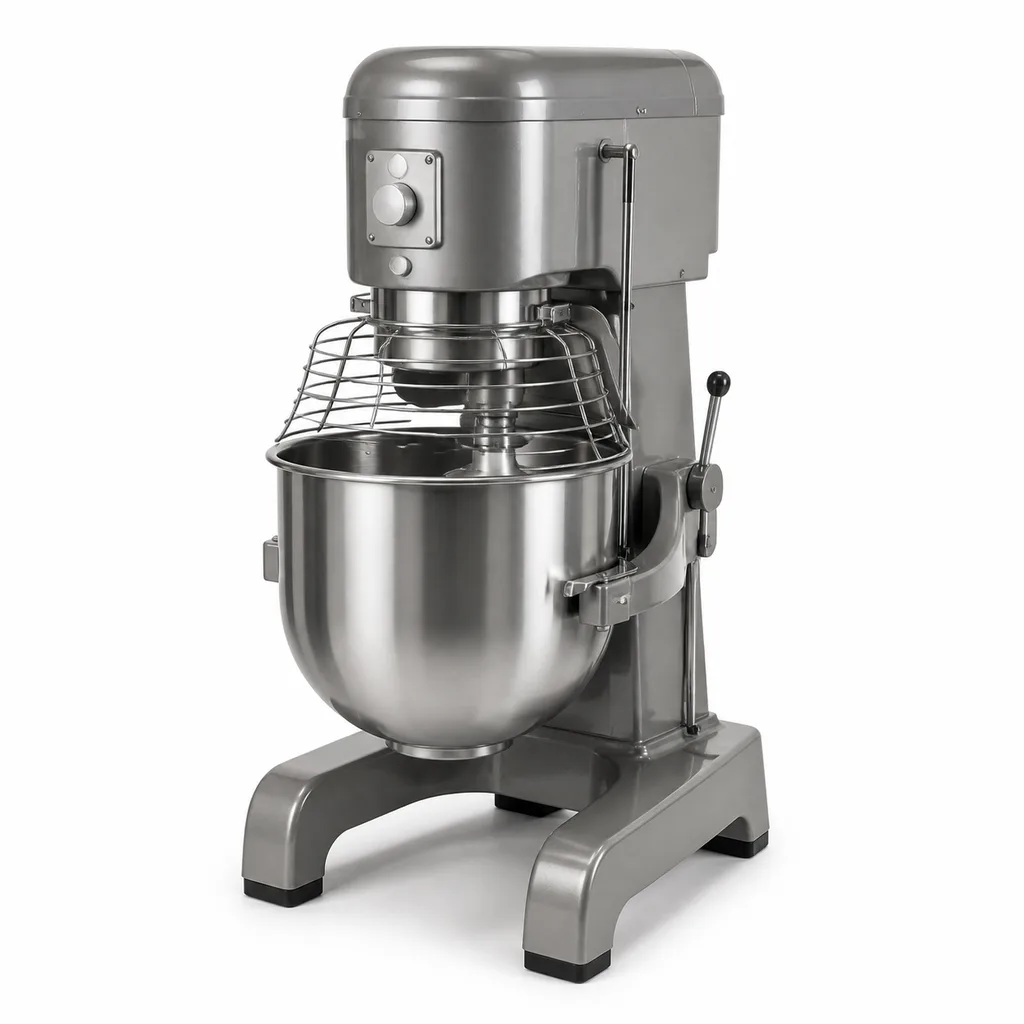
High-Volume Spiral Kneaders
Dual-speed heavy-duty spiral dough mixers engineered for high-hydration sourdough and pizza doughs.
View Spiral Mixers →
Rotary Rack Baking Ovens
High-capacity rotating rack ovens accommodating single or double 18x26-inch bakery racks with steam generators.
View Rotary Ovens →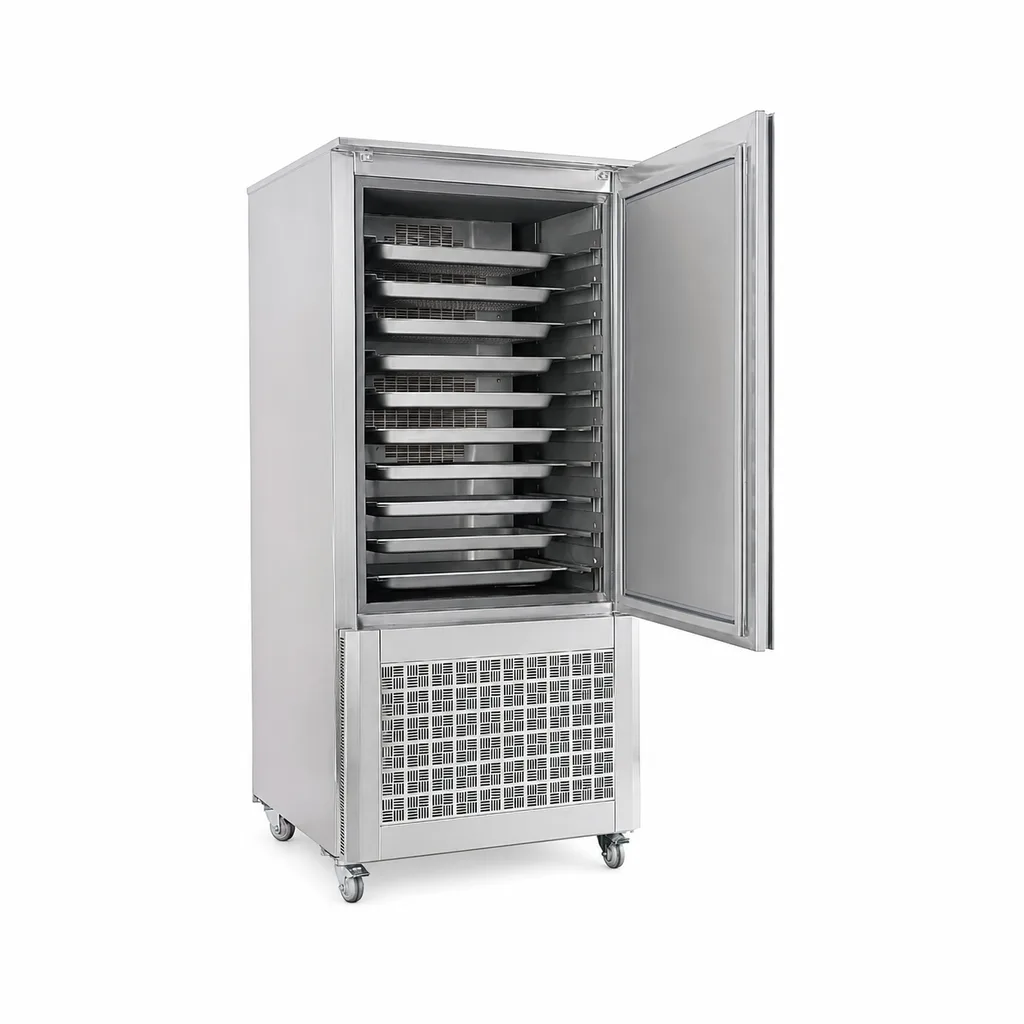
Bakery Blast Freezers
Heavy-duty bakery retarder-proofer and blast chilling cabinets engineered for frozen unbaked dough preservation.
View Dough Freezers →Turnkey Engineering Solutions & Applications
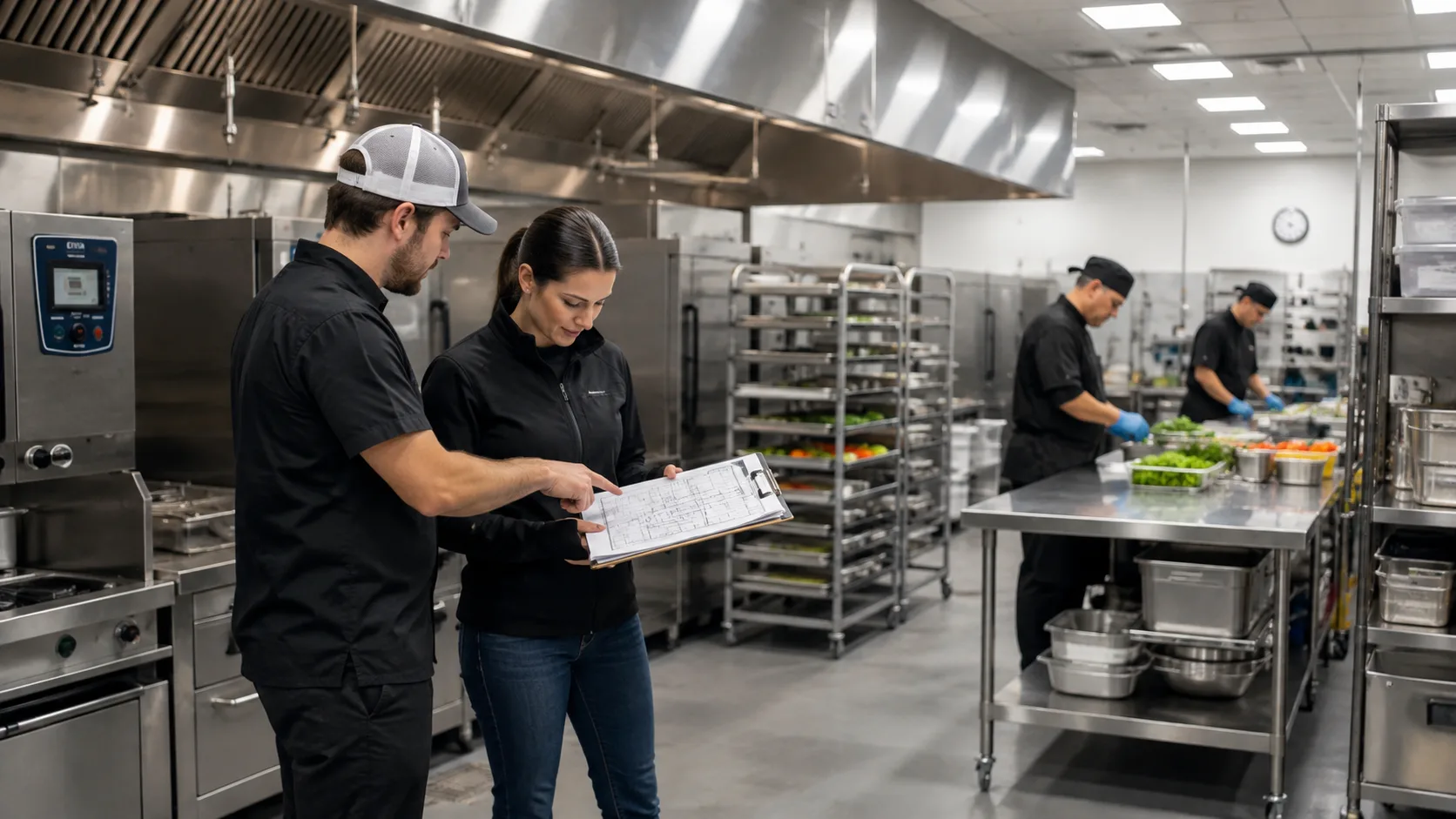
Wholesale Industrial Bakeries
Automated high-capacity bread and pastry manufacturing plants featuring rotary rack and tunnel oven lines.
Explore Central Kitchen →
Artisan Pizzerias & Trattorias
Authentic stone deck and high-temp electric pizza oven engineering tailored for artisanal pizza production.
Explore Restaurant Solutions →
Hotel Pastry & Bakery Commissaries
Comprehensive in-house hotel pastry production facilities supporting banquet and dining room operations.
Explore Hotel Solutions →
Institutional Bakery Facilities
High-efficiency batch baking kitchens engineered for institutional school canteens and cafeteria supply.
Explore School Solutions →Frequently Asked Questions
What type of commercial oven is best for artisan sourdough bread?
A stone deck oven equipped with independent top/bottom digital temperature regulation and an integrated high-capacity steam injection boiler provides the essential conductive bottom heat and steam spring needed for artisan bread.
Can you bake cookies in a pizza oven?
While technically possible, deck pizza ovens are optimized for intense bottom conductive heat. For cookies, pastries, and biscuits, a multi-tray bakery convection oven is far superior, ensuring even golden coloring across all trays.
What electrical supply is required for a commercial electric pizza oven?
Most commercial multi-deck pizza ovens require a 3-phase 380V-415V electrical supply, drawing between 8 kW and 18 kW depending on deck width and operating temperature ratings.
How thick should a commercial pizza stone deck be?
Professional deck stones should be at least 15mm to 20mm thick. High-density cordierite stone retains heat across back-to-back pizza launches without suffering severe bottom temperature drops.
Plan the Equipment Around Your Kitchen.
Share your menu, peak service demand, available space and site utilities. Tell us which equipment you are considering so we can review the requirements with you.