Catering Equipment Service Contracts
A good catering equipment service contract defines response time, spare parts, preventive maintenance frequency and operator training. Compare pay-per-call and annual plans here.
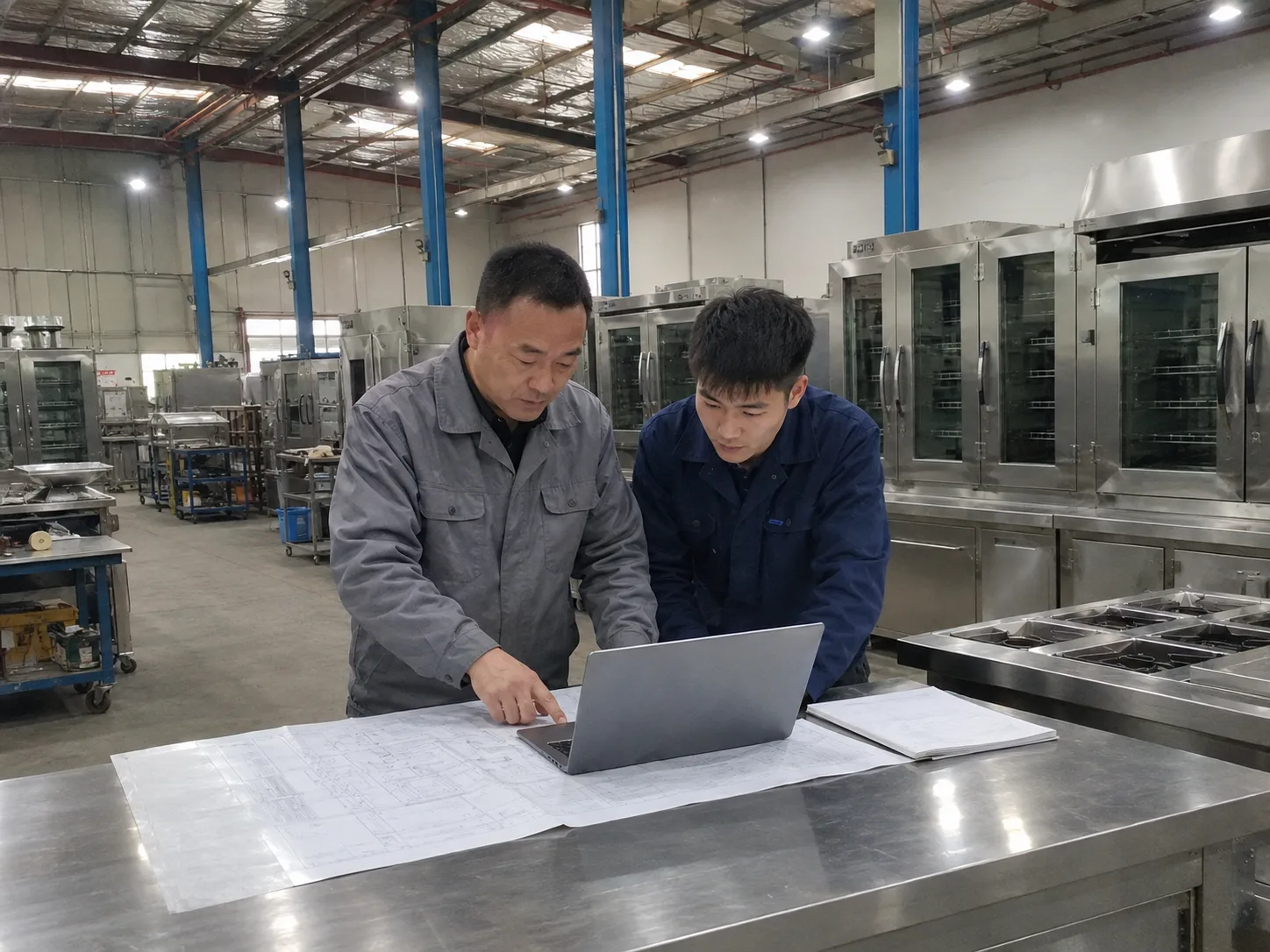
Why service contracts matter more than warranties
A manufacturer warranty covers defects in materials and workmanship, usually for one to two years. It does not cover wear items, misuse, or failures caused by poor maintenance. A catering equipment service contract fills that gap by defining response times, spare-parts logistics, and preventive maintenance schedules. For operators running 300-plus covers per day, the difference between a four-hour response and a next-day response is measured in lost covers and overtime dishwashing labor.
Response time and coverage windows
Standard commercial kitchen service contracts offer three tiers: next-business-day, same-day, and four-hour emergency response. Emergency response is priced at a premium because it requires a technician to carry common spares and to be geographically close. Operators in remote locations—island resorts, mining camps, or inland Africa—should negotiate response-time exceptions in exchange for on-site spare-parts kits or loaner machines.
Preventive maintenance frequency
Preventive maintenance should be risk-based, not calendar-based. Dishwashers in hard-water regions need quarterly descaling regardless of run hours. Fryers need weekly oil-filtration verification and quarterly tank inspection. Ovens need door-seal and heating-element checks every six months. A good contract specifies the task, the acceptable measurement, and the documentation format. If the contract only says "inspect every six months," ask for a task list tied to OEM maintenance bulletins.
Pay-per-call versus annual plans
Pay-per-call contracts appeal to operators who want maximum flexibility and believe their in-house team can handle most issues. The risk is cost unpredictability: a single after-hours call can cost more than a full month of an annual plan. Annual plans smooth expenditure and typically include a set number of preventive visits, discounted labor rates, and priority parts ordering. For kitchens with five or more critical units, annual contracts almost always cost less over a 36-month horizon.
| Feature | Pay-per-call | Annual plan (basic) | Annual plan (premium) |
|---|---|---|---|
| Emergency response | Next business day | Same day | 4 hours |
| Preventive visits | None | 2 per year | 4 per year |
| Spare parts | List price | 10% discount | 15% discount + consignment |
| Labor rate cap | None | 15% below standard | 25% below standard |
| Loaner units | Not included | Available | Included |
Key takeaway: Buy the response time you cannot afford to lose. A 300-cover restaurant cannot wait 24 hours for a dishwasher repair; a 40-cover cafe can survive a one-day delay if it has manual fallback.
Spare parts, consumables, and training
Contracts should distinguish between spare parts (heating elements, pumps, door seals), consumables (gaskets, filters, chemicals), and wear items (belts, bearings, brushes). Operators should negotiate consignment stock for fast-wearing parts; a five-year dishwasher will need heating elements and door gaskets, and waiting six weeks for an overseas shipment is not acceptable during peak season. Training clauses are often overlooked: a contract that includes quarterly operator training on cleaning, daily inspection, and fault reporting reduces unnecessary callouts by 20% to 30%.
Vendor selection and contract renewal
Evaluate service vendors on technician density, spare-parts warehouse proximity, and response-time track record—not just price. Request references from kitchens of similar size and complexity. At renewal, benchmark labor rates, parts discounts, and response-time performance against current market terms. If the vendor has missed SLA targets, use renewal as leverage to add penalty credits or to open a competitive tender.
Performance guarantees and penalty clauses
Some premium service contracts include performance guarantees such as 95% uptime for covered equipment or a cap on repeat-failure rates. These guarantees only work if the contract defines measurement, reporting, and remedy. Ask for a penalty clause that credits future invoices if response-time SLAs are missed twice in a quarter. Without financial consequence, SLAs are suggestions rather than obligations.
Digital service platforms and sustainability clauses
Modern service contracts increasingly include digital asset-management dashboards that log every repair, part replacement, and calibration event. These platforms help operators plan capital replacement cycles and prove compliance during health or insurance audits. Some vendors now offer sustainability clauses that track carbon intensity per repair visit or offer carbon offset options for parts shipments. For multi-site operators, a single dashboard that aggregates service records across hotels, airports, or central kitchens is worth more than a small price reduction on hourly labor.
Learn more about equipment maintenance at /installation-maintenance/ or review support options at /support/.
Frequently Asked Questions
Is a service contract worth it if my equipment is new and under warranty?
Yes. Warranties do not cover wear items, misuse, or poor-maintenance failures, and they rarely include labor reimbursement for downtime. A service contract fills those gaps with defined response times and preventive maintenance.
What response time should I negotiate?
Match response time to your operational tolerance. High-volume operations should target same-day or four-hour emergency response. Smaller venues can accept next-business-day if they have manual fallback procedures.
Should I choose pay-per-call or an annual plan?
Annual plans usually cost less over 36 months for kitchens with five or more critical units, because they smooth expenditure, include preventive visits, and offer parts discounts. Pay-per-call works only if you have very low failure rates.
What should a preventive maintenance task list include?
It should specify the task, the acceptable measurement, and the documentation format—tied to OEM maintenance bulletins where possible. Generic 'inspect every six months' language is too vague to enforce.
Can I negotiate spare-parts consignment?
Yes. Consignment stock places fast-wearing parts on-site without upfront capital. It is standard in premium contracts and worth requesting for heating elements, door seals, and pump assemblies.
Plan the Equipment Around Your Kitchen.
Share your menu, peak service demand, available space and site utilities. Tell us which equipment you are considering so we can review the requirements with you.