Commercial Combi Oven Guide
A commercial combi oven can replace multiple appliances in one footprint. We cover capacity planning, price bands and ROI logic for bakeries, hotels and central kitchens.
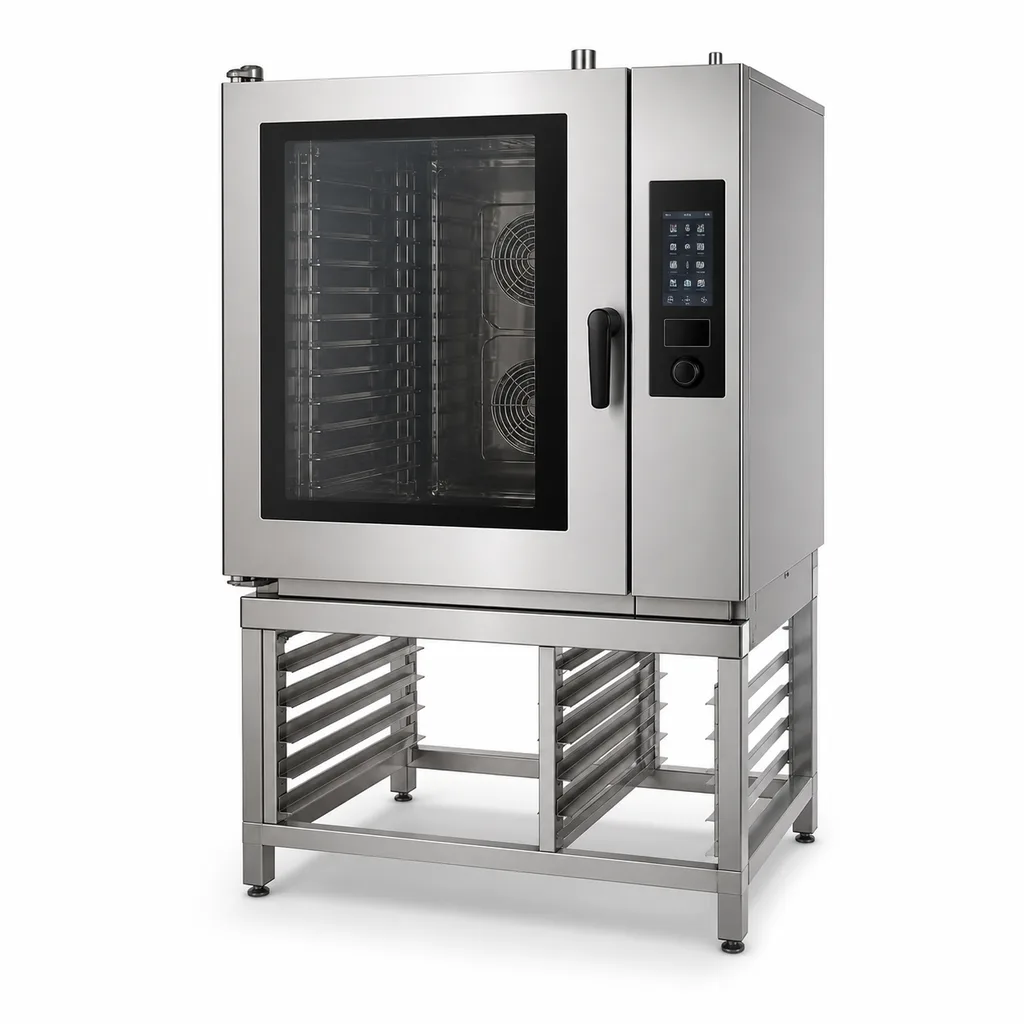
What a commercial combi oven actually replaces
A combi oven combines convection, steam, and sometimes holding/proofing in one chamber. In a compact hotel kitchen, one 10-grid combi can replace a steamer, a convection oven, and a heated holding cabinet. The value proposition is floor-space efficiency, but the real test is menu fit. If your kitchen roasts, steams, and proofed bakes in the same day, a combi oven reduces changeover labor and cleaning time. If you only roast, a dedicated convection oven is cheaper and simpler.
Capacity sizing
Combi ovens are specified by grid size, pan rails, or GN 1/1 tray count. A 10-grid unit handles roughly 20 to 30 full-size sheet pans per hour in convection mode and 40 to 60 kg of vegetables in steam mode. A 20-grid unit doubles that but needs an extra meter of aisle space for loading. For central kitchens that run multiple menus on the same line, oversizing by one grid tier is cheaper than adding a second machine later.
Price bands
Entry-level electric combi ovens start around $4,000 to $6,000. Mid-tier models with programmable cooking profiles, USB/ ethernet data logging, and automatic cleaning run $8,000 to $15,000. High-end gas-fired combi units with cascade control and predictive maintenance modules can exceed $25,000. The price jump from mid to high tier is usually about connectivity and service agreements, not cooking performance.
ROI logic: one unit versus three
Compare a 10-grid combi oven against three standalone units: a steamer, a convection oven, and a holding cabinet. The combi uses 1.8 m to 2.2 m of floor space and one utility connection. Three separate machines need at least 4.5 m of line space, three sets of utility hookups, and three cleaning cycles per shift. Labor savings are hard to quantify precisely, but operators consistently report 0.5 to 1.5 FTE reduction in kitchen throughput time after switching to combi layouts.
| Option | Capital cost | Floor space | Daily cleaning cycles |
|---|---|---|---|
| Three standalone units | $7,000 – $12,000 | 4.5 m+ | 3 |
| 10-grid combi oven | $8,000 – $15,000 | 2.0 m | 1 |
| 20-grid combi oven | $14,000 – $24,000 | 2.4 m | 1 |
Key takeaway: A combi oven makes sense when labor, floor space, or utility connections are the binding constraints. If your kitchen already has space and utilities for dedicated units, the combi premium is harder to justify.
Utilities and installation requirements
Electric combi ovens need 400 V three-phase power, typically 12 kW to 24 kW depending on size. Water quality matters: hardness above 150 ppm will scale the steam generator quickly, so install a reverse-osmosis or ion-exchange softener upstream. Drainage should be trapped and rated for 90°C discharge. Gas combi models reduce electrical load but add ventilation complexity; verify canopy capacity with your HVAC engineer before specifying.
Selecting the right configuration
Start with your peak daily output in trays or covers, then check the manufacturer's cycle-time table. Add 20% headroom for menu growth. If you run breakfast, lunch, and dinner, confirm that the combi's holding mode keeps food above 140°F without drying it out—some models pulse steam automatically, others need manual adjustment. Request a trial cook with your own recipes before signing; combi algorithms differ, and a poorly tuned program can overcook fish or collapse souffles.
Brand comparison and warranty considerations
Combi oven brands compete on steam-generation speed, insulation quality, and service-network density rather than on raw cooking power. Rational, Alto-Shaam, and Convotherm each have different strengths in sensor accuracy and cleaning-system design. Warranty length is one metric, but parts availability matters more: a two-day wait for a steam generator in a remote location is unacceptable during peak season. Ask vendors for warehouse locations for steam valves, heating elements, and fan motors before you sign. A service contract with annual calibration checks extends both warranty coverage and cooking consistency.
Browse cooking equipment at /cooking-equipment/. For central kitchen planning, see /central-kitchen/.
Frequently Asked Questions
Question: When does a combi oven make financial sense?
A combi oven pays back when you need to save floor space, reduce changeover labor, or consolidate utilities. If your kitchen already has space and capacity for dedicated steamer, convection oven and holding cabinet, the combi premium is harder to justify.
Question: How many grids do I need?
A 10-grid combi suits most hotels and mid-size restaurants. Central kitchens or multi-menu operations should size up to 20 grids plus 20% headroom for growth.
Question: What utilities does a combi oven require?
Electric combi ovens need 400 V three-phase power and a water softener. Gas models reduce electrical load but need larger ventilation. Always verify local code for 90°C drain discharge.
Question: Can a combi oven replace a steamer and convection oven simultaneously?
Yes. A combi oven can steam, roast, and hold in one chamber, but cycle sequencing matters. Plan menus so that steam and convection tasks do not collide during peak service.
Question: How do I avoid overpaying for combi oven features?
Entry-level models cook as well as premium ones. Extra cost buys connectivity, automated cleaning, and service contracts. If your team is small and your menu simple, a mid-tier machine with a good warranty usually delivers better value.
Plan the Equipment Around Your Kitchen.
Share your menu, peak service demand, available space and site utilities. Tell us which equipment you are considering so we can review the requirements with you.