What a Complete Restaurant Equipment Service Program Should Include
A solid commercial kitchen equipment service program covers commissioning, maintenance cycles, spare parts and response times. See what to demand.
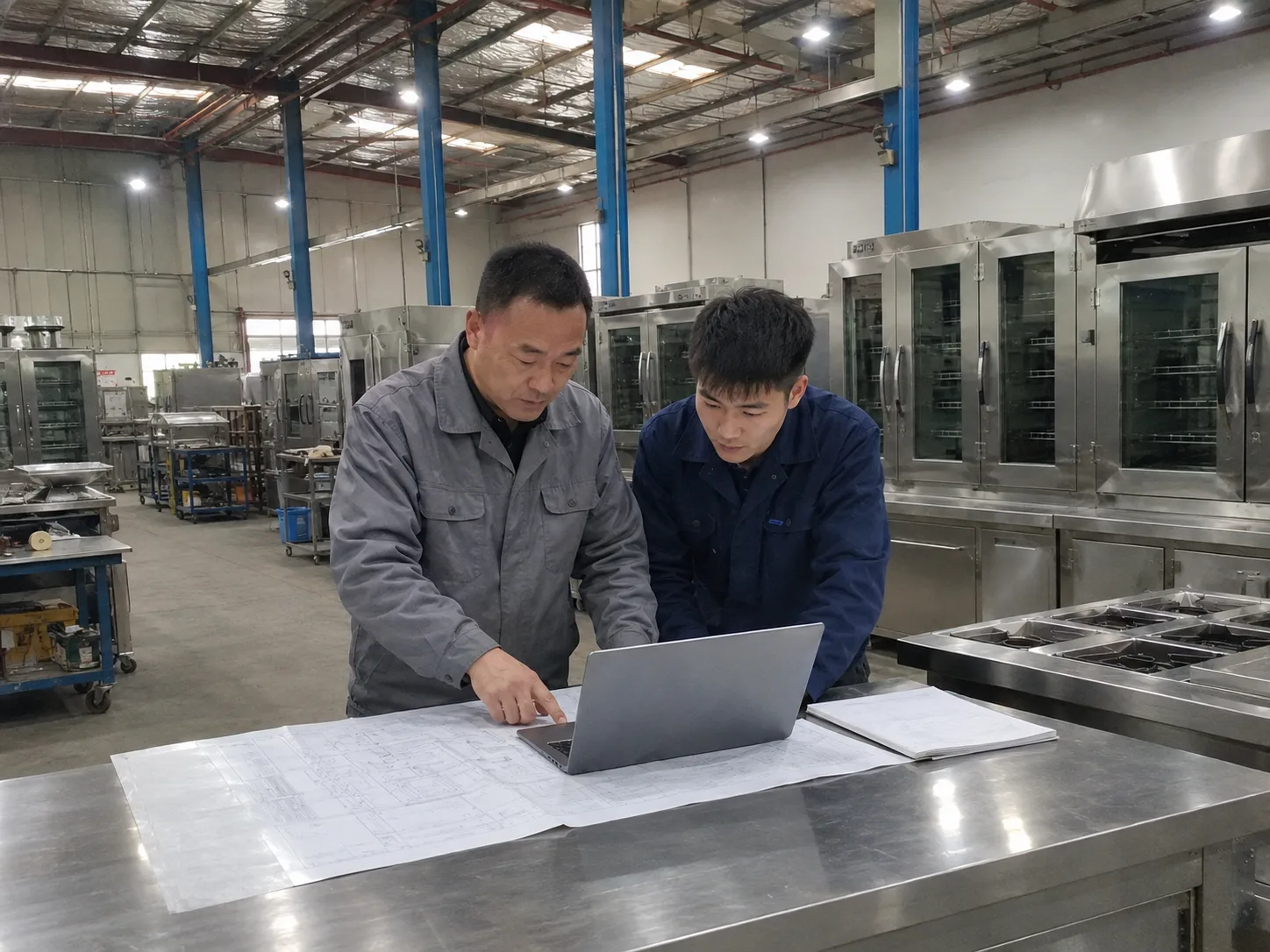
A combi oven that fails on a Friday night costs far more than the repair bill — it costs covers, prep hours and sometimes the weekend's bookings. Yet most operators only start asking about service after the first breakdown. A restaurant equipment service program is not a repair hotline; it is a structured agreement that keeps every asset — from the cooking line to the cold room — inside its designed performance envelope for its full working life. This guide breaks down what a complete commercial kitchen equipment service should include, step by step, so you can evaluate any supplier's proposal against a concrete checklist.
Key takeaway: A service program worth paying for covers four things in writing: verified commissioning, a documented preventive maintenance (PM) schedule, guaranteed spare parts availability, and a contractual response time. If any of the four is "to be discussed later," the program is incomplete.
Step 1: Verify Commissioning and Baseline Records
Service quality is decided on day one. Poorly commissioned equipment runs hotter, consumes more energy and fails earlier — no maintenance contract can fully compensate for a bad start. Before signing off on any installation, demand a commissioning report for each major appliance that records:
- Utility verification: actual voltage/phase, gas pressure (typically 20–25 mbar for natural gas at the appliance), water pressure and hardness, drain fall.
- Performance baseline: oven cavity temperature variance (should stay within ±5 °C of setpoint), refrigeration pull-down time, dishwasher final rinse temperature (82–88 °C for thermal sanitizing).
- Safety checks: gas tightness test, flame failure devices, interlocks on combi ovens and tilting pans, ventilation capture test.
- Signed handover: operator training record and warranty registration with serial numbers.
These baseline numbers become the reference points for every future service visit. If your supplier does not offer documented commissioning as part of its installation and maintenance scope, treat that as a red flag rather than a cost saving.
Step 2: Lock In a Preventive Maintenance Schedule
Reactive repair is the most expensive way to run a kitchen. Industry data consistently shows planned maintenance costs roughly 30–50% less per year than breakdown-only service once downtime is counted. The PM schedule must be written into the contract with visit frequency per equipment class — "regular maintenance" without a table is not a schedule.
| Equipment class | PM frequency | Key tasks per visit | Expected lifespan with PM |
|---|---|---|---|
| Combi ovens, ranges | Every 3–4 months | Descale steam generator, door gaskets, burner/ignition check, probe calibration | 10–15 years |
| Refrigeration, cold rooms | Every 3 months | Condenser coil cleaning, refrigerant pressure, door seals, drain lines | 8–12 years |
| Dishwashers | Every 2–3 months | Wash/rinse arms, pump seals, detergent dosing, rinse temperature verification | 8–10 years |
| Fryers, griddles | Every 3 months | Thermostat calibration, gas valve check, oil filtration system inspection | 8–12 years |
| Ventilation & hoods | Every 3–6 months | Grease filter and duct cleaning, fan belt, airflow measurement | 15+ years |
Ask the provider to state visit duration and deliverables per visit — a 20-minute "check" that produces no written report is not preventive maintenance. Each visit should end with a signed service sheet listing measured values against the Step 1 baseline.
Step 3: Confirm Spare Parts Supply Before You Need It
A service contract is only as good as the parts pipeline behind it. A failed door gasket on a Friday should be a Monday fix, not a three-week wait for an overseas shipment. Before signing, get written answers to three questions: which wear parts are stocked locally, what the guaranteed parts availability window is (8–10 years after purchase is a reasonable standard for commercial equipment), and what happens when a part is discontinued. A reputable manufacturer will publish a parts policy — see our spare parts FAQ for the typical stocking list and lead times we commit to.
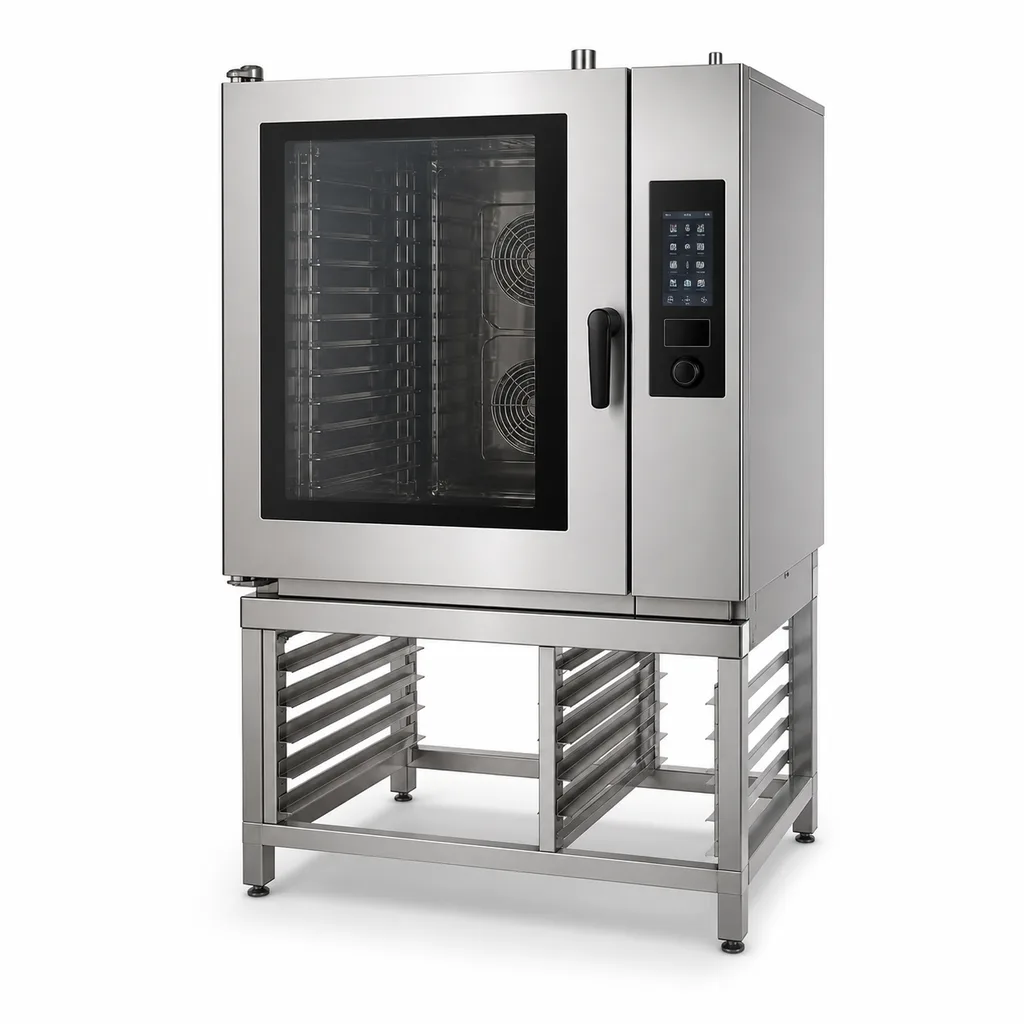
Cooking Equipment
Highest wear-part consumption: door gaskets, ignition electrodes, thermocouples, steam generator heating elements. PM every 3–4 months.
View cooking equipment →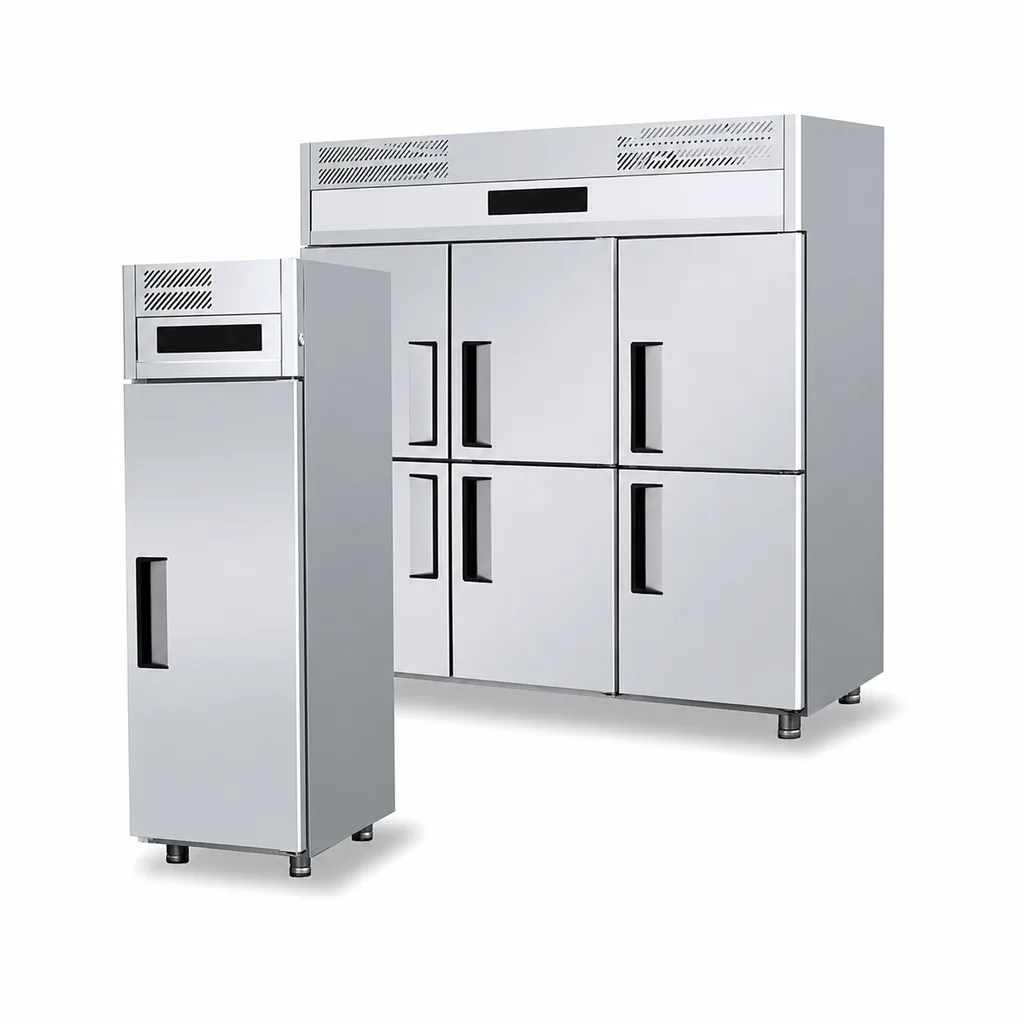
Refrigeration Equipment
Condenser cleaning is the single highest-ROI service task — a fouled coil can raise energy use 20–30% and shorten compressor life.
View refrigeration equipment →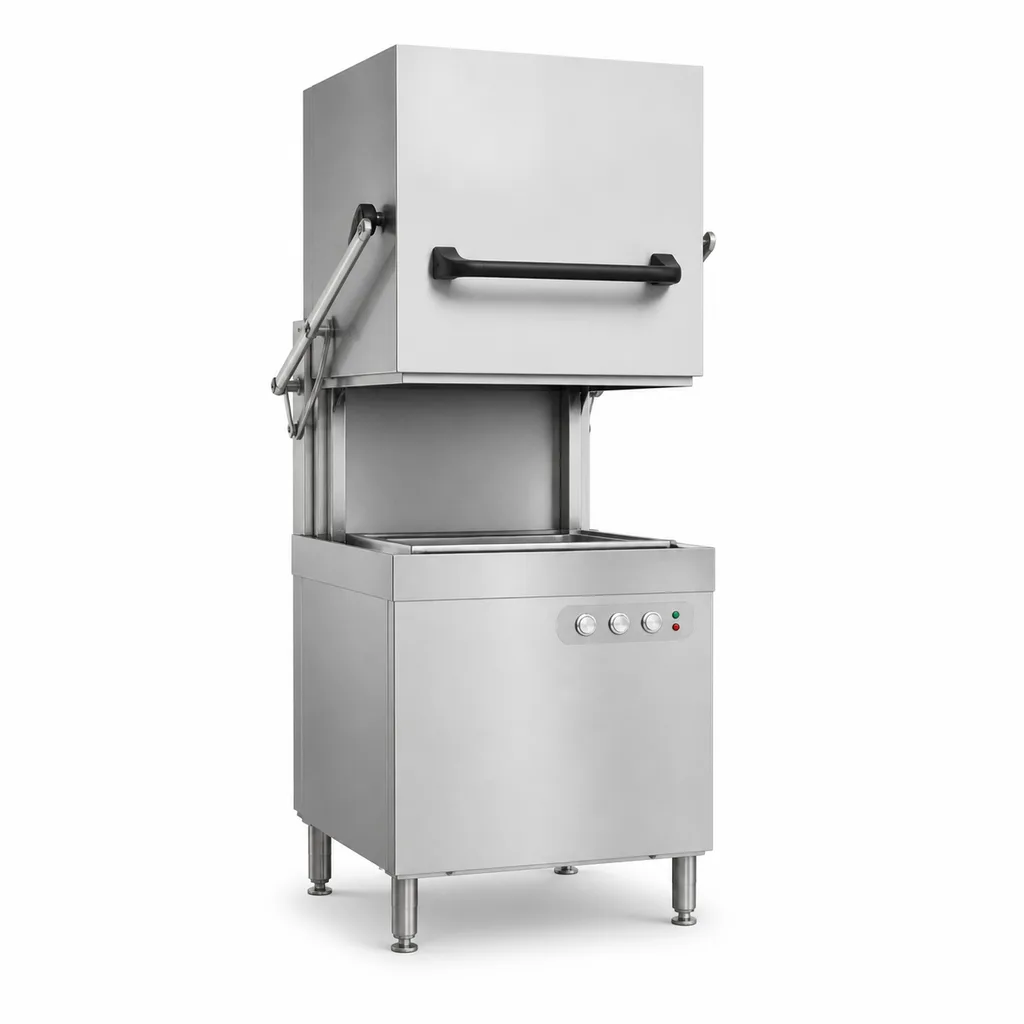
Dishwashing Equipment
Most sensitive to water quality. Without treatment and PM, scale buildup can cut heating efficiency by half within 18 months.
View dishwashing equipment →Step 4: Set Response Times and Escalation Rules in Writing
"We respond quickly" is not a service level. The contract should define response time by fault severity, in hours, and state what "response" means — remote diagnosis, a technician on site, or a completed repair. A workable structure for a full-service restaurant:
- Critical (production stopped): e.g., only oven down, walk-in above safe temperature — phone diagnosis within 2 hours, technician on site within 24 hours, 7 days a week.
- Major (redundancy covers): one of two fryers down — on site within 48 hours.
- Minor (no production impact): cosmetic or single-component faults — scheduled within 5 working days.
Also define the escalation path: if the first visit does not fix a critical fault, the contract should trigger loan equipment or a senior engineer within a stated window. Ask for the provider's actual first-time-fix rate; anything above 85% indicates well-stocked service vehicles.
Step 5: Match Service Intensity to the Equipment Lifecycle
Service needs are not flat across an asset's life. A good provider adjusts the program as equipment ages instead of selling the same visit schedule for 12 years.
Years 0–2 (warranty & run-in): focus on commissioning verification, operator retraining, and warranty-registered repairs. Wear-part failures should be near zero; repeated faults here signal an installation or water-quality problem.
Years 3–7 (productive life): full PM cadence as in Step 2, plus annual deep service (combustion analysis, refrigerant leak test, door alignment). Track repair cost per asset per year — this is your replacement trigger data.
Years 8+ (end-of-life decisions): apply the 50% rule: when a single repair quote exceeds 50% of the replacement cost, or annual repair spend exceeds roughly 30% of a new unit's price, plan replacement rather than another repair. Confirm spare parts availability for the remaining years before extending the contract.
Common Mistakes When Buying Equipment Service
- Buying on call-out price alone. Ad-hoc repairs typically run $150–$400 per call-out plus parts, depending on region and equipment; a PM contract for a mid-size restaurant kitchen usually lands at $1,500–$5,000 per year depending on equipment count and visit frequency. The contract looks pricier until one weekend breakdown wipes out the difference.
- No severity-based response times. A single "24–72 hour response" clause means your only oven queues behind a loose door handle.
- Ignoring water treatment. Scale is the leading cause of premature failure in combi ovens and dishwashers; many providers exclude scale damage from warranty unless treatment is documented.
- Letting warranty lapse unregistered. Failing to register serial numbers at commissioning can void extended warranty terms — a paperwork task, not a technical one.
- No end-of-life plan. Contracts renewed year after year on 12-year-old equipment often cost more than a planned replacement with a fresh warranty.
Build these five steps into your next service negotiation and the conversation shifts from promises to numbers: baseline values, visit frequency, parts windows, response hours and lifecycle triggers. That is what separates a commercial kitchen equipment service that protects your operation from one that merely invoices it. For equipment-specific service documentation and manuals, check our manuals and documentation library or contact our engineering team via the support page.
Frequently Asked Questions
How often should commercial kitchen equipment receive preventive maintenance?
It depends on the equipment class. In a heavy-use restaurant kitchen, combi ovens and ranges need service every 3–4 months, refrigeration every 3 months, dishwashers every 2–3 months, and ventilation hoods every 3–6 months, each with a written checklist of measured values.
What response time should a restaurant equipment service contract guarantee?
Response times should be defined by fault severity: for critical faults that stop production (e.g., the only oven down), phone diagnosis within 2 hours and a technician on site within 24 hours; major faults within 48 hours; minor faults within 5 working days.
How much does a commercial kitchen equipment service contract cost?
A preventive maintenance contract for a mid-size restaurant kitchen typically runs $1,500–$5,000 per year depending on equipment count and visit frequency, while ad-hoc call-outs cost roughly $150–$400 each plus parts. Prices vary by region and configuration, so always request a quote against your actual asset list.
When should I repair versus replace a piece of kitchen equipment?
Apply the 50% rule: if a single repair quote exceeds 50% of the replacement cost, or annual repair spending exceeds about 30% of a new unit's price, plan replacement instead. With proper preventive maintenance, cooking equipment lasts 10–15 years and refrigeration 8–12 years.
What spare parts availability should a service provider guarantee?
Ask for written confirmation of which wear parts (door gaskets, ignition electrodes, pump seals, heating elements) are stocked locally, plus a guaranteed parts availability window — 8–10 years after purchase is a reasonable standard for commercial kitchen equipment — and a policy for discontinued parts.
Plan the Equipment Around Your Kitchen.
Share your menu, peak service demand, available space and site utilities. Tell us which equipment you are considering so we can review the requirements with you.