Which Commercial Ovens Don't Require a Hood?
Hood-free and ventless commercial ovens explained: electric countertop, catalytic and condensing options, plus how the thermostat controls venting and combustion.
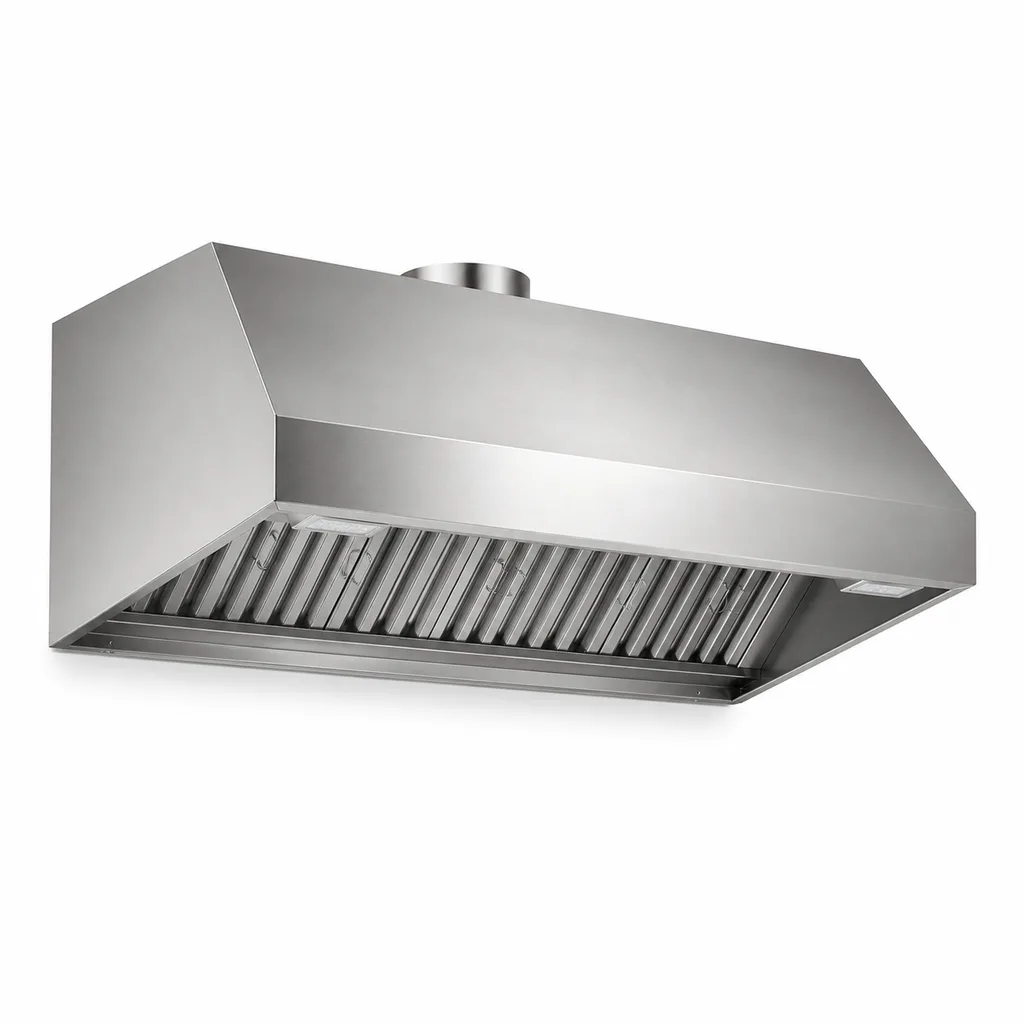
Specifying ventilation for a commercial oven starts with the fuel and the food you cook, not the model name on the door. A gas deck oven and an electric countertop convection oven live under completely different code sections, and that difference decides whether you pour concrete for a duct chase or simply set the unit on a stainless bench.
This page separates ovens that need a Type I exhaust hood from the ventless and hood-free families, and explains where the thermostat sits in that picture. The goal is to help you shortlist models before an engineer sizes the make-up air.
Key takeaway: An electric oven with no open flame is usually hood-free; a gas oven almost never is. The thermostat's high-limit switch is what keeps a ventless unit from overheating the catalytic converter that replaces the duct.
Do You Actually Need a Hood Above That Oven?
The decision runs on three variables: combustion, grease, and heat. Gas ovens burn fuel inside the kitchen and release combustion products, so most jurisdictions require a Type I hood with fire suppression no matter how little you cook. Electric ovens have no flue gas, which removes the combustion trigger but not the grease and odour trigger. A dry bakery deck sheds little aerosol; a pizza oven running at 300°C throws grease vapour and smell that still push you toward a hood in many codes.
Heat load is the third driver. A half-size electric convection oven at 2.2 kW adds about 3,000 BTU/h to the room; a 10 kW electric combi adds closer to 34,000 BTU/h. Above roughly 4.5 kW, some authorities expect mechanical extraction even without grease, because the thermal plume defeats a simple ceiling diffuser. Confirm the threshold with your local authority having jurisdiction before you rely on a hood-free layout.
Clearance also matters: most hood-free electric units need 50 mm (2 in) at the rear and sides and 450 mm (18 in) above the cavity, measured to combustible material.
Question-by-Question: The Venting Checklist Each Oven Type Must Pass
Run every candidate model down this table. A single failed column is enough to require a ducted hood, so verify the manufacturer's listing rather than the sales sheet.
| Oven type | Venting requirement | Hood-free option | What to verify |
|---|---|---|---|
| Electric countertop convection | Usually none; electric heat only, 2.2–5.0 kW | Free-standing on NSF counter, 50 mm rear clearance | UL/ETL listing; local cap often 4.5 kW unhooded |
| Catalytic ventless hood (electric) | No external duct; built-in catalytic scrubber | Self-contained canopy, 120 mm service clearance | Filter life 1,000–1,500 h; NFPA 96 exemption |
| Condensing hood (electric) | No roof duct; condensate to floor sink | Recirculating, 6–12 kW, 25 mm drain line | Drain trap; 400–600 CFM internal fan |
| Gas convection / deck oven | Type I hood, 300–500 CFM per foot, 8–12 in duct | None — combustion plus grease | Make-up air 80% of exhaust; gas interlock |
| Electric pizza oven | Hood for odour; some conveyor rated ventless | UL/ETL ventless conveyor, 8–11 kW, catalyst | Confirm ventless listing; 18 in front clearance |
Hood-Free and Catalytic Options, Explained
Five families cover almost every hood-free or low-venting installation. Each trades a different constraint for the freedom to skip the duct.
Electric countertop ovens
Half-size and full-size electric convection ovens from 2.2 kW to about 5.0 kW are the simplest hood-free choice. They produce no combustion gas and little grease, so they sit on a non-combustible counter with basic clearances. The limit is throughput: a 5 kW unit bakes roughly 4–8 sheet pans per cycle, which suits cafés, kiosks, and satellite prep rather than a 200-cover line. Size them against your peak hour, not your daily total.
Catalytic-converter ventless hoods
These canopies bolt onto an electric combi or convection oven and replace the roof duct with a catalyst cartridge. The catalyst oxidizes grease vapour at 250–350°C, and a fan returns filtered air to the room. Expect a 120 mm service clearance and a 1,000–1,500 cooking-hour cartridge life. They are electric-only; the catalyst cannot tolerate gas combustion products, so they never pair with a flame oven.
Condensing hoods
A condensing hood cools the thermal plume so grease and steam condense into a drain instead of rising to the roof. It needs a 25 mm condensate line to a floor sink and a trap, and it suits low-grease electric cooking in the 6–12 kW band. Internal fans run about 400–600 CFM, far below a ducted Type I system, which is why it fits tight retrofits where a chase is impossible.
Combination (combi) ovens
Combi ovens are electric and steam-based, so most qualify as hood-free under the catalytic or condensing route. Plan for water, not just venting: a 10-grid combi draws 0.1–0.3 L of feed water per minute and needs softened supply to protect the boiler. Because they carry the heaviest steam load, combis are the most common unit to fail a hood-free claim on odour alone, so confirm the catalyst rating for your menu.
Pizza ovens
Deck pizza ovens radiate heat and smell that usually call for a hood, but some impingement conveyor pizza ovens carry a UL/ETL ventless listing with a built-in catalyst. They run 8–11 kW and need an 18 in front clearance for door swing and loading. Solid-fuel and wood-fired pizza ovens never qualify as hood-free and require full Type I extraction plus a spark arrestor.
What the Thermostat Has to Do With Venting and Combustion
The commercial oven thermostat is more than a dial. It cycles the heating elements or modulates the gas valve, it sets the high-limit safety band, and on ventless units it keeps the catalytic converter inside its safe window.
Temperature accuracy is the first link to venting. A typical oven thermostat holds ±3°C (±5°F) across the cavity. Tighter control means the cavity spends less time overshooting, which means fewer vapour spikes for a catalytic converter to absorb. A drifting thermostat lets the chamber climb past setpoint, loads the catalyst, and shortens filter life below the rated 1,000 hours.
The high-limit thermostat is the second link. It is a manual-reset safety switch set roughly 38°C (100°F) above the operating maximum. If the control thermostat fails closed, the high-limit cuts power before the cavity reaches the temperature that would damage the catalyst or ignite grease residue. On a ventless unit this switch is the only thing standing between a stuck element and a ductless fire, so it must be tested on commissioning and at each service interval.
For gas ovens the thermostat also governs the bypass and flue. A standing-pilot or intermittent burner keeps a small bypass flame and a flue that vents combustion products to the hood; the thermostat modulates main burner gas but the pilot load is constant. That continuous flue output is exactly why a gas oven cannot be made hood-free by adding a catalyst — the combustion stream must leave the building. Our installation and maintenance guides cover thermostat calibration and high-limit testing step by step.
Where to Read More
Use these resources to confirm listings, clearances, and local thresholds before you finalize a hood-free specification.
- Commercial cooking equipment range
Browse electric countertop, combi, and conveyor ovens with published kW and clearance data.
- Commercial kitchen compliance standards
NFPA 96, ventilation, and certification thresholds that decide hood-free eligibility.
- Equipment selection resources
Cross-reference oven type against menu volume and utility capacity.
- Technical guides and utility planning
Make-up air, gas interlocks, and drain requirements for ventless installations.
Frequently Asked Questions
Do electric commercial ovens need a hood?
Most electric ovens under about 4.5 kW with no grease load are hood-free, but check your local code; higher kW or pizza use may still require extraction.
Can a gas oven be ventless?
No. Gas ovens burn fuel inside the kitchen and release combustion products, so they require a Type I hood with fire suppression and a flue to outside.
What does the thermostat do on a hood-free oven?
The control thermostat holds setpoint within about ±3°C, and the high-limit switch cuts power roughly 100°F above maximum to protect the catalytic converter.
Are ventless pizza ovens allowed?
Only specific impingement conveyor models with a UL/ETL ventless listing and built-in catalyst; wood-fired and deck pizza ovens still need a full hood.
Plan the Equipment Around Your Kitchen.
Share your menu, peak service demand, available space and site utilities. Tell us which equipment you are considering so we can review the requirements with you.