Commercial Kitchen Stainless Steel Tables
Technical engineering guide to commercial kitchen stainless steel tables, work benches, and catering shelving. Covers AISI 304 vs 430 metallurgy, 14 vs 16-18 gauge deflection ratings, NSF-certified undershelves, mobile casters, and hygienic cleanability.
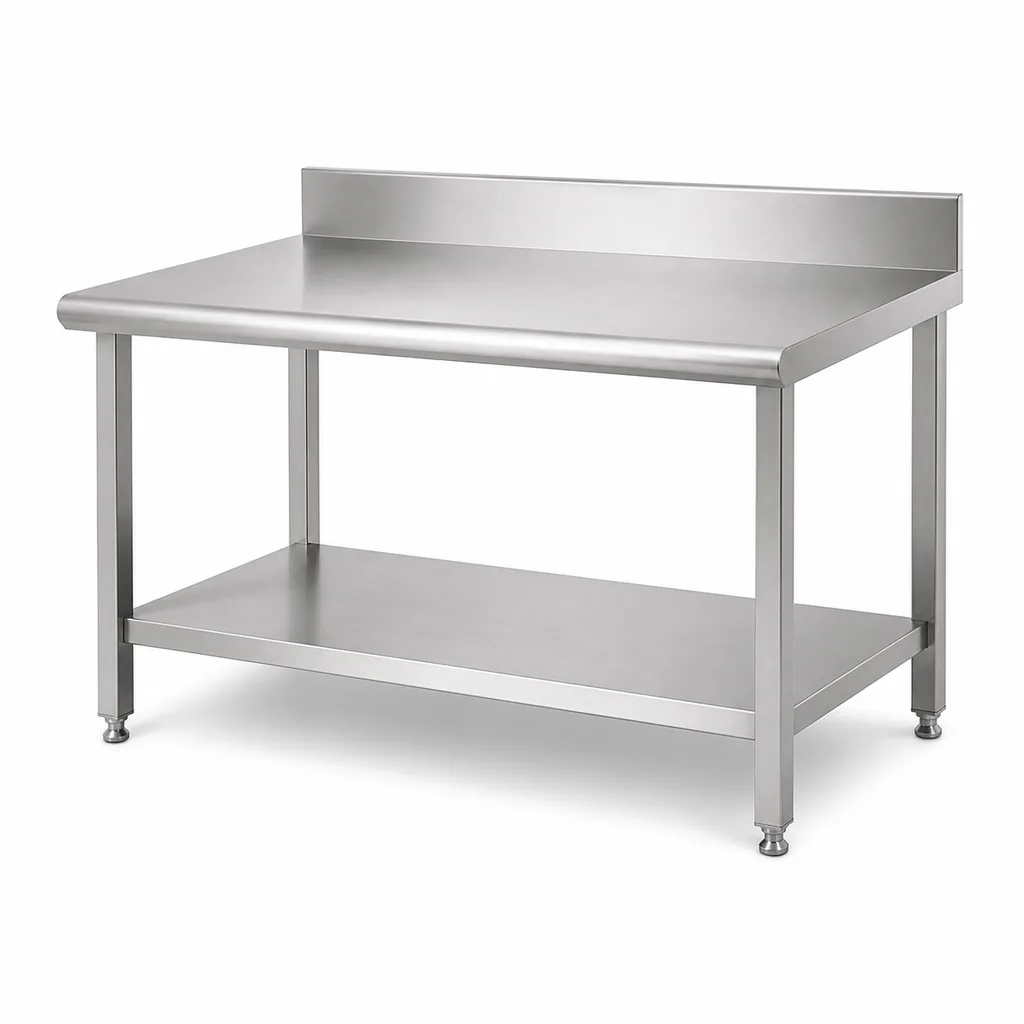
Executive Engineering Summary: Stainless Steel Fabrication in Commercial Kitchens
In high-throughput food service operations, stainless steel preparation tables, workbenches, and shelving units constitute the fundamental operational infrastructure. Unlike domestic or light-commercial cabinetry, industrial commercial kitchen stainless steel tables must withstand continuous static and dynamic loading, severe impact stresses, high-salinity marine environments, aggressive chlorite sanitizers, and rigorous daily high-pressure thermal washdowns. Specifying the correct austenitic alloy grade (AISI 304 vs ferritic AISI 430), structural metal gauge (14-gauge vs 16-gauge vs 18-gauge), under-table hat channel reinforcement, sound-deadening dampeners, and sanitary coved upstands directly determines equipment longevity, operator ergonomics, and NSF/ANSI Standard 2 sanitation compliance.
Metallurgical Grade Selection: Austenitic AISI 304 vs Ferritic AISI 430
Selecting stainless steel tables for restaurants requires an exact metallurgical analysis of operating conditions. The two predominant grades utilized across commercial fabrication are AISI 304 and AISI 430:
- Austenitic Grade AISI 304 (18/8 Chrome-Nickel): Formulated with 18% chromium and 8-10.5% nickel. The inclusion of nickel creates an austenitic microstructure that delivers superior ductility, weldability, and resistance to intergranular corrosion. AISI 304 is mandatory for butchery stations, vegetable washing areas, seafood handling, and direct food-contact surfaces where exposure to organic acids, blood, vinegar, and saline solutions is constant. It maintains a stable non-magnetic profile under standard fabrication and resists pitting under routine chlorite washdown regimes.
- Ferritic Grade AISI 430 (16-18% Chrome, 0% Nickel): A straight-chromium, magnetic alloy offering moderate corrosion resistance. While cost-effective, AISI 430 is prone to surface oxidation and stress corrosion cracking when exposed to prolonged moisture and industrial detergents. Within professional foodservice facilities, AISI 430 is restricted to secondary dry storage shelving, equipment stands in air-conditioned zones, or back-panel structural framing where direct contact with acidic liquids is engineered out.
Structural Gauge Standards, Deflection Physics & Load Capacity
Sheet metal thickness in commercial stainless steel kitchen units is governed by the American Wire Gauge (AWG) standard. In heavy-duty fabrication, lower gauge numbers denote thicker material. The mechanical integrity and load-bearing deflection under uniformly distributed loads (UDL) or concentrated point loads are governed by classical beam deflection equations:
Beam Deflection Engineering Formula for Worktable Surfaces
For a rectangular stainless worktable surface supported at the tubular perimeter legs, maximum deflection under a uniformly distributed load is expressed as:
δ_max = (5 · w · L⁴) / (384 · E · I)
Where:
• δ_max = Maximum mid-span deflection (mm, allowable operational tolerance ≤ L / 250)
• w = Uniformly distributed load per unit length (N/mm)
• L = Span between supporting vertical tubular legs (mm)
• E = Modulus of elasticity of AISI 304 stainless steel (approx. 193 × 10³ N/mm²)
• I = Area moment of inertia of the reinforced table cross-section (mm⁴)
- 14-Gauge (1.98 mm Thickness): Heavy-duty industrial standard. Mandatory for heavy meat preparation, dough kneading, countertop equipment stands (housing griddles, heavy slicers, or combi ovens), and central prep islands. Capable of supporting static loads exceeding 450 to 600 kg when braced with dual internal hat channels. Deflection under heavy cleaver chopping impacts remains negligible, preventing weld fatigue and surface bowl deformation.
- 16-Gauge (1.52 mm Thickness): The professional standard for general restaurant prep tables, plating stations, vegetable trimming, and mobile catering carts. Supports 250 to 350 kg distributed load with proper gusset-welded leg sockets.
- 18-Gauge (1.21 mm Thickness): Economy and light-duty grade. Suitable only for dry goods storage shelving, lightweight dishing benches, or secondary utility carts carrying under 120 kg. Subject to visible oil-canning and harmonic vibration if operated under heavy vibrating machinery.
Under-Table Hat Channel Bracing, Sound Dampening & Edge Profiles
A bare stainless steel sheet, regardless of gauge, exhibits resonance and oil-canning without internal structural substructures. Premier commercial kitchen stainless steel tables incorporate longitudinal hat channels (16-gauge 304 omega profiles) spot-welded or bonded with structural epoxy along the table underside. These channels elevate the area moment of inertia I by over 400%, preventing surface bounce. Furthermore, acoustic sound-deadening mastic or high-density elastomer damping pads are sandwiched between the channel and the stainless top, dampening high-frequency metallic impact noise by 18 to 24 dBA during heavy knife work.
Edge geometry directly dictates sanitary hygiene and worker safety:
- 1.5-Inch Bullnose / Rolled Front Edge: Provides ergonomic forearm support for chefs standing during 8-hour prep shifts, eliminating pressure-point nerve fatigue while preventing liquid surface run-off.
- Marine Drip-Stop Countertop Lip: A raised 10mm perimeter hem that contains liquid spills, meat juices, and melting ice within the tabletop plane, directing fluids toward integrated drainage troughs rather than dripping onto the floor.
- Rear Sanitary Coved Upstand / Splashback: Formed with a 100mm to 150mm vertical turn-up featuring a 10mm radial bend at the juncture. This seamless radius eliminates 90-degree dirt-trapping crevices against back walls, facilitating rapid sanitization compliant with health code inspections.
Undershelves vs Cross-Braced Frames: Storage vs Sanitation Trade-Offs
Kitchen designers must balance storage capacity with floor cleanability when configuring lower table frames:
- Solid Stainless Undershelves: Welded or die-cast aluminum collar mounted at a minimum height of 150mm (6 inches) above the finished floor to comply with NSF cleaning clearance. Provides convenient storage for ingredient bins, food pans, and small appliances. However, solid shelves obstruct mop access and require manual wipe-downs.
- Tubular Open Cross-Braced Underframes (H-Frame or U-Frame): Constructed from 38mm (1.5-inch) diameter 16-gauge stainless tubular legs tied with three-sided horizontal bracing. This open architecture allows mobile ingredient bins (Commercial food storage bins on casters) or mobile under-counter refrigeration units to roll seamlessly beneath the table, maximizing floor area utilization and enabling unimpeded hose-down sanitation.
Catering Shelving & High-Density Storage Engineering
Storage zones in commercial kitchens demand specialized stainless steel catering shelves and metal catering shelves capable of withstanding cold-room condensation, salt crystallization, and concentrated loading. Solid shelving is standard for dry ingredients and bagged spices, preventing falling debris from contaminating lower tiers. Louvered or wire-slotted stainless shelves are required within walk-in chillers and blast freezers to ensure 360-degree aerodynamic airflow around stored perishables, maintaining uniform temperature stratification (±0.5°C across shelves).
Mobile Casters vs Heavy-Duty Bullet Feet
For static installations, adjustable stainless steel bullet feet allow precise leveling up to ±35mm over sloping kitchen drainage tiles, transferring vertical loads directly through solid threaded inserts. In dynamic kitchens, commercial kitchen carts and mobile prep tables utilize 125mm (5-inch) industrial polyurethane casters with double ball-bearing swivels and dual-pedal directional locks. Casters must feature grease-resistant polyolefin cores, non-marking treads, and integrated protective thread guards that prevent fallen string, plastic wrap, and debris from binding the wheel axels.
Technical Specification Matrix: Professional Stainless Table Series
| Model Code | Worktop Dimensions (mm) | Alloy & Gauge Rating | Static / Dynamic Load (kg) | Under-Structure Configuration | Target Operational Application |
|---|---|---|---|---|---|
| HS-WT120-HD | 1200 × 700 × 850 | AISI 304 / 14-Gauge (1.98mm) | 450 kg / N/A (Static) | Dual Hat Channels, Welded Undershelf | Heavy butchery, cleaver work, bone saws |
| HS-WT180-HD | 1800 × 800 × 850 | AISI 304 / 14-Gauge (1.98mm) | 550 kg / N/A (Static) | Triple Hat Channels, Marine Edge, 6 Legs | Central commissary prep, multi-operator station |
| HS-MB150-MOB | 1500 × 700 × 850 | AISI 304 / 16-Gauge (1.52mm) | 350 kg / 250 kg (Dynamic) | Full U-Frame, 4 Locking Polyurethane Casters | Mobile prep, cookline assembly, tray replenishment |
| HS-CS120-4T | 1200 × 500 × 1800 | AISI 304 / 16-Gauge (1.52mm) | 1000 kg (250 kg per tier) | 4-Tier Louvered Shelves, Tapered Collar Lock | Walk-in cold storage, pot storage, chemical warehouse |
Systematic Troubleshooting & Maintenance Protocol
Engineering Matrix: Surface Degradation, Deflection & Caster Diagnostic Flow
| Symptom / Failure | Underlying Root Cause | Engineering Diagnostic Procedure | Corrective & Preventative Action |
|---|---|---|---|
| Localized rust blooms & pitting on tabletop | Chloride attack from bleach sanitizers or contact with unpassivated carbon steel tools | Perform copper sulfate droplet test; inspect surface under 10x magnification for localized pit voids | Remove rust with fine 3M Scotch-Brite (parallel to grain); passivate using 10% citric or nitric acid solution; prohibit chlorine cleaners |
| Permanent sagging / center dish deflection | Exceeded yield strength σy from heavy equipment point loading or severed hat channel spot welds | Measure deflection with 1.5m straight edge and feeler gauges across span L; verify if δ > 3mm | Upgrade to 14-gauge table with longitudinal truss underbracing; re-weld disconnected hat channels via TIG stitch welding |
| Table wobbling / leg oscillation under lateral load | Loose die-cast gusset set screws or unlevel floor tile slope exceeding bullet foot travel | Check torque on all hex-head grub screws in leg gussets; measure horizontal level across X and Y axes | Torque set screws to 25 Nm with medium-strength threadlocker; level via bullet foot hex adjusters; ensure all 4/6 feet contact floor |
| Caster wheel jamming / squealing during transport | Accumulation of mop fibers and plastic wrap in axle hub; ball bearing grease washed out by degreasers | Lift cart and rotate wheels by hand; check for lateral play or gritty bearing rotation | Disassemble wheel axle, purge debris, and repack with food-grade water-resistant calcium sulfonate grease; install wheel thread guards |
Related Product Groups
HS-WT180 Heavy-Duty 14-Gauge Central Prep Table
Butchery-grade 1800x800mm worktable fabricated from 1.98mm AISI 304 with double hat-channel sound-deadened underbracing. Supports 550 kg distributed load with adjustable marine front edge.
- 1800×800×850mm dimensions
- 14-Gauge AISI 304 construction
- 550 kg static load capacity
- Hat-channel reinforced tabletop
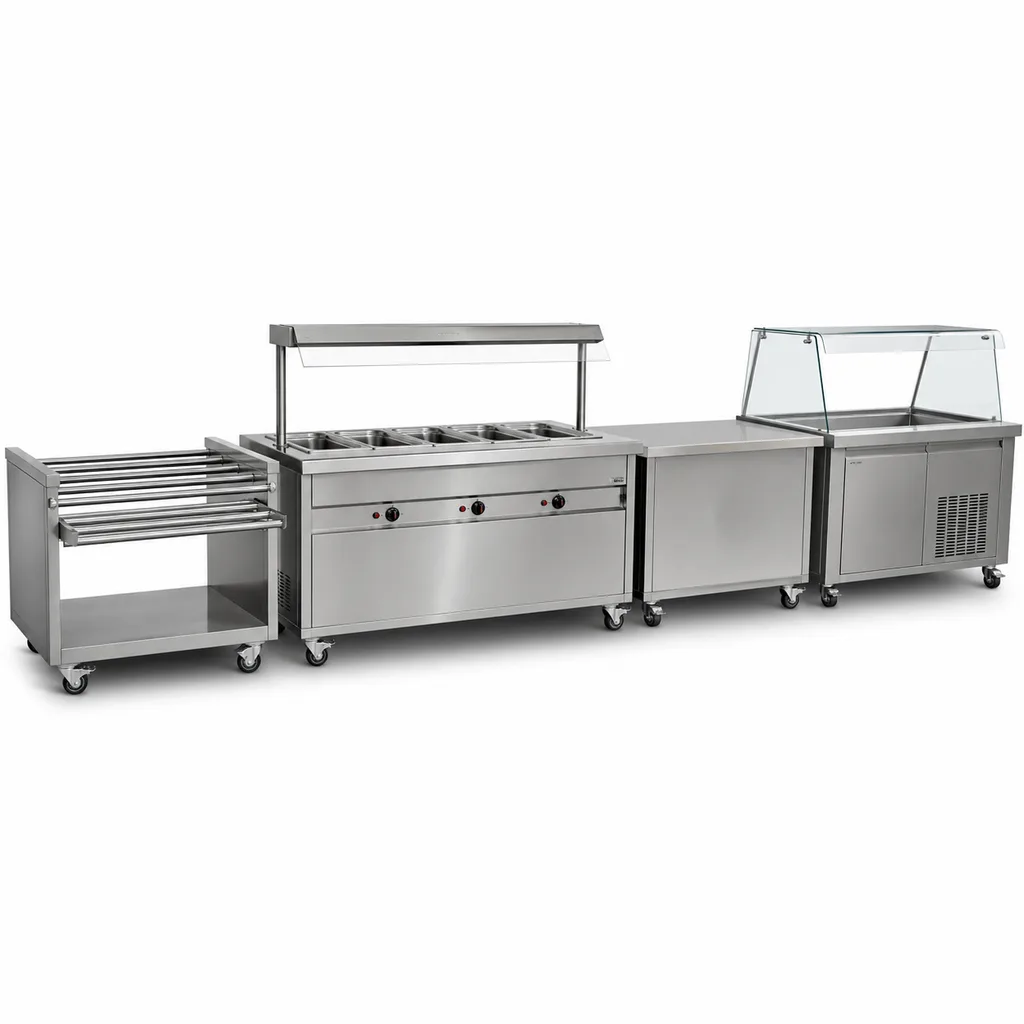
HS-MB150 Mobile Stainless Steel Work Bench with Drawers
Gastronorm-compatible prep bench featuring 3 fully enclosed soft-close drawers, 125mm heavy-duty polyurethane locking casters, and 100mm rear sanitary splashback.
- 1500×700×850mm footprint
- 16-Gauge 304 stainless top
- 4 Heavy-duty locking swivel casters
- 3 GN 1/1 enclosed drawers
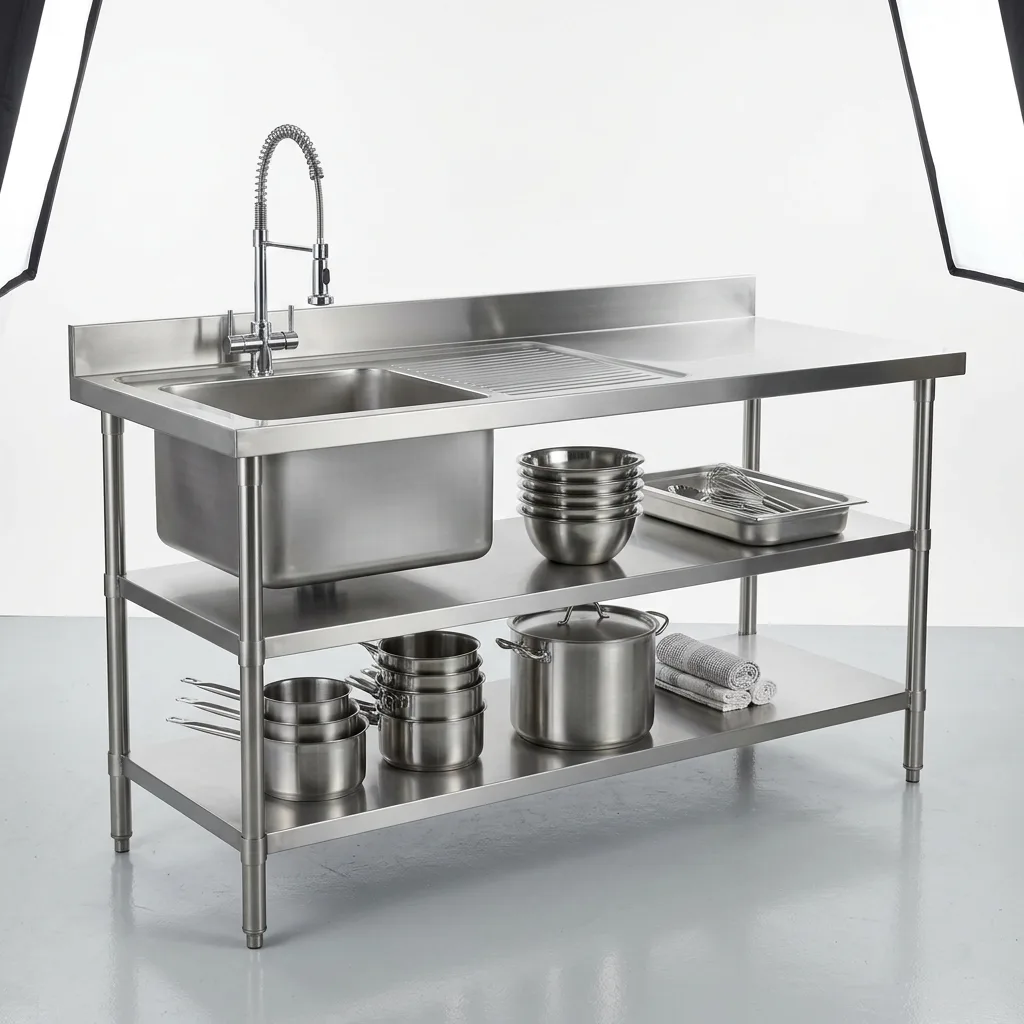
HS-CS120 4-Tier Solid Stainless Steel Catering Shelving
NSF-compliant high-density storage rack with 1.5mm stainless tubular uprights, corner collar lock mechanics, and marine perimeter lips preventing container slide-off.
- 1200×500×1800mm modular frame
- 4 Solid AISI 304 tiers
- 250 kg capacity per shelf tier
- Tool-free tapered collar assembly
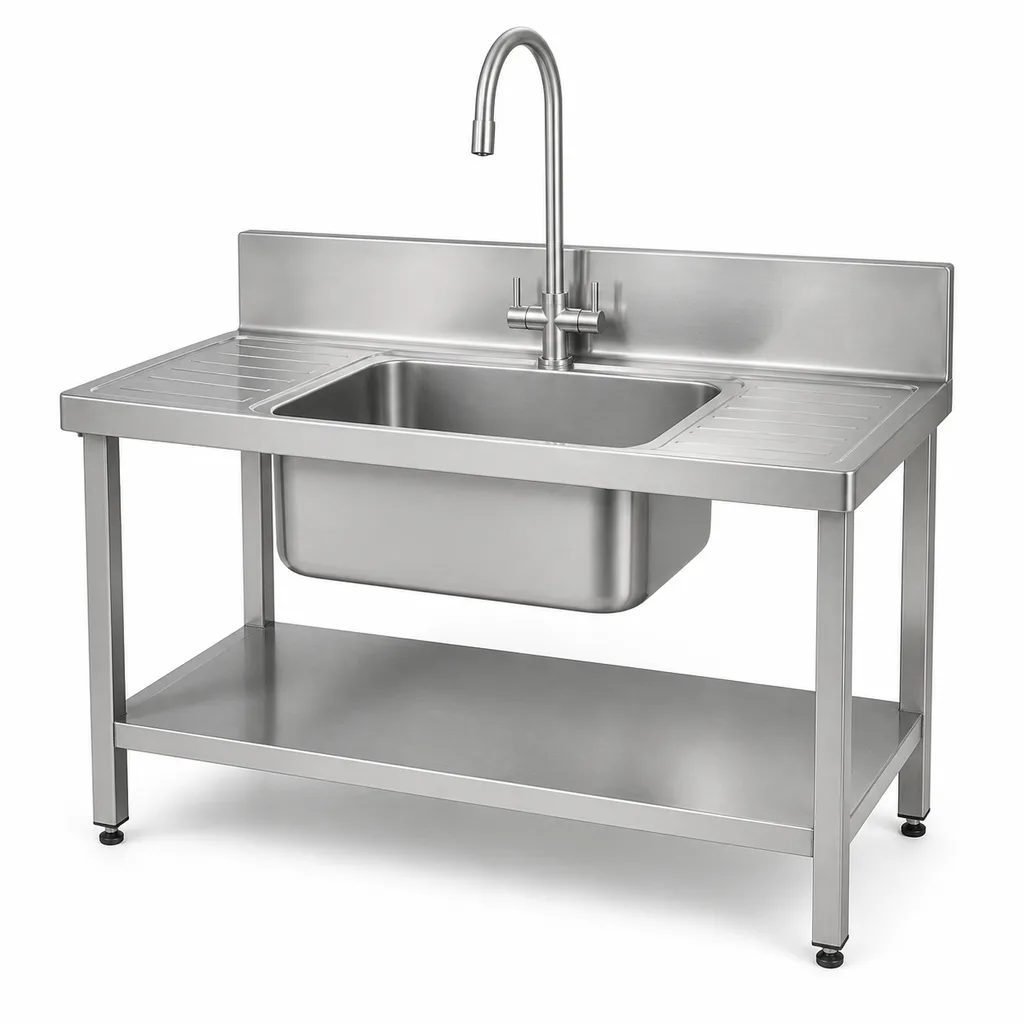
HS-SK200 Integrated Sink & Clean Prep Workstation
Seamless welded combination table with deep drawn 500x500x300mm sink bowl, grooved drainboard slope, and under-counter knife and cutting board sanitary slots.
- 2000×750×850mm combined unit
- Deep drawn 14-gauge sink bowl
- Continuous pitch drainboard
- Anti-splash coved corner radiuses
Engineering Solutions: Commercial Installation Case Studies
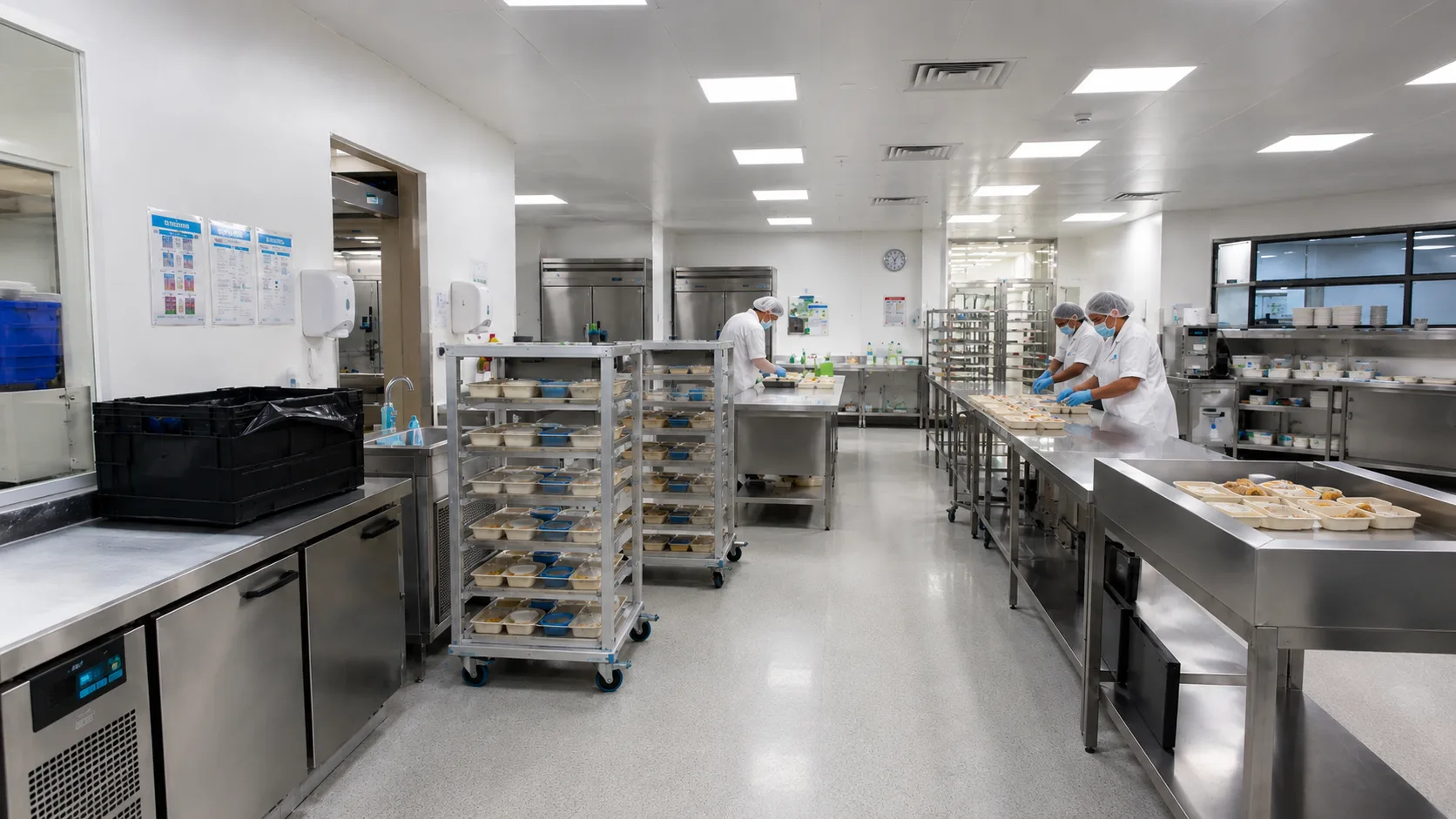
Central Hospital Commissary Bulk Prep & Slicing Suite
Engineered 36 interconnected 14-gauge stainless steel preparation benches with seamless welded coved upstands and overhead power-drop rails for a 4,000-bed clinical healthcare complex.
View Case Blueprint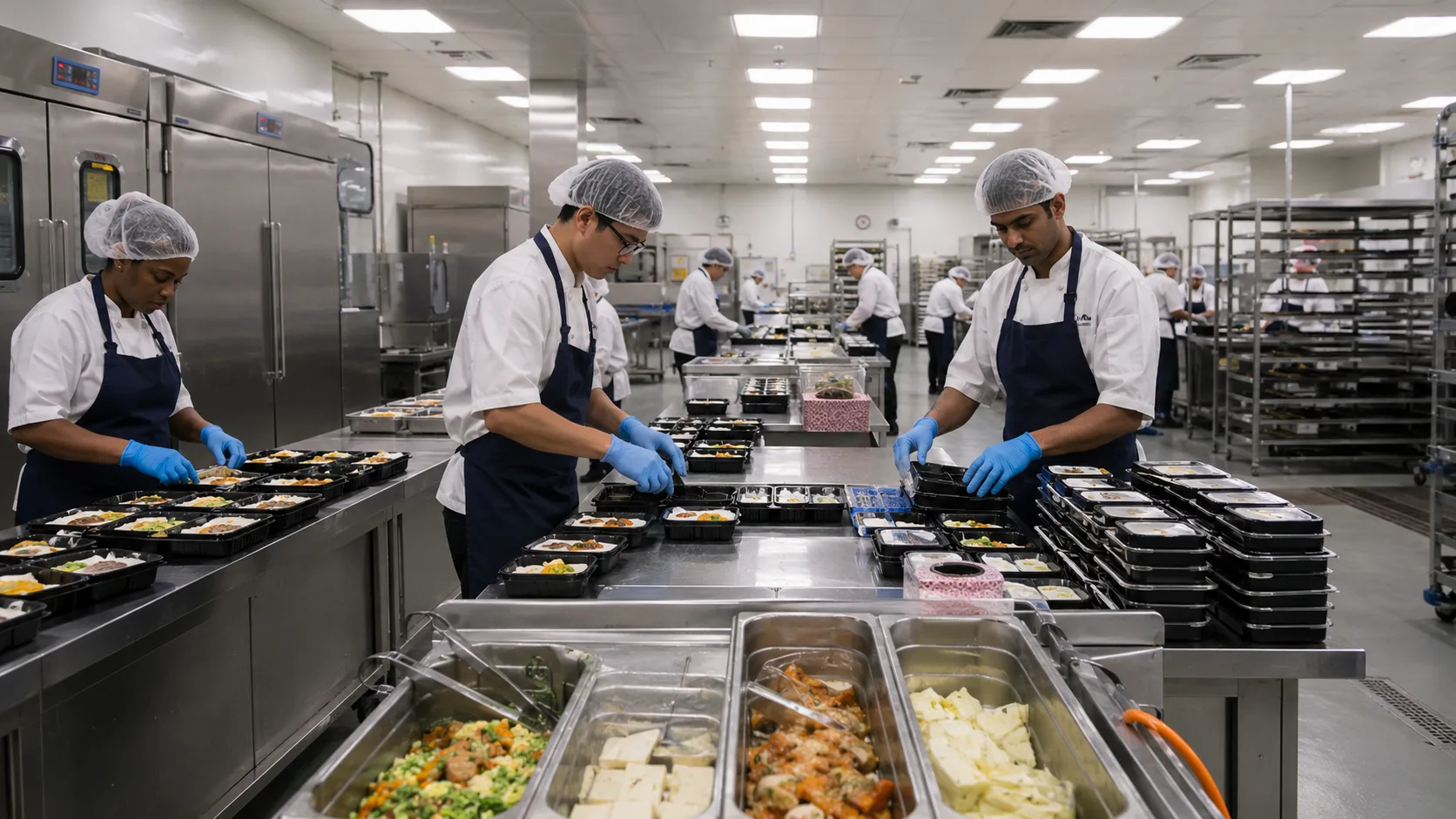
Airline Flight Catering High-Throughput Assembly Line
Delivered 48 modular mobile stainless steel worktables with integrated GN food pan runners and heavy-duty polyurethane castors for rapid tray-set assembly and washdown sanitation.
View Case Blueprint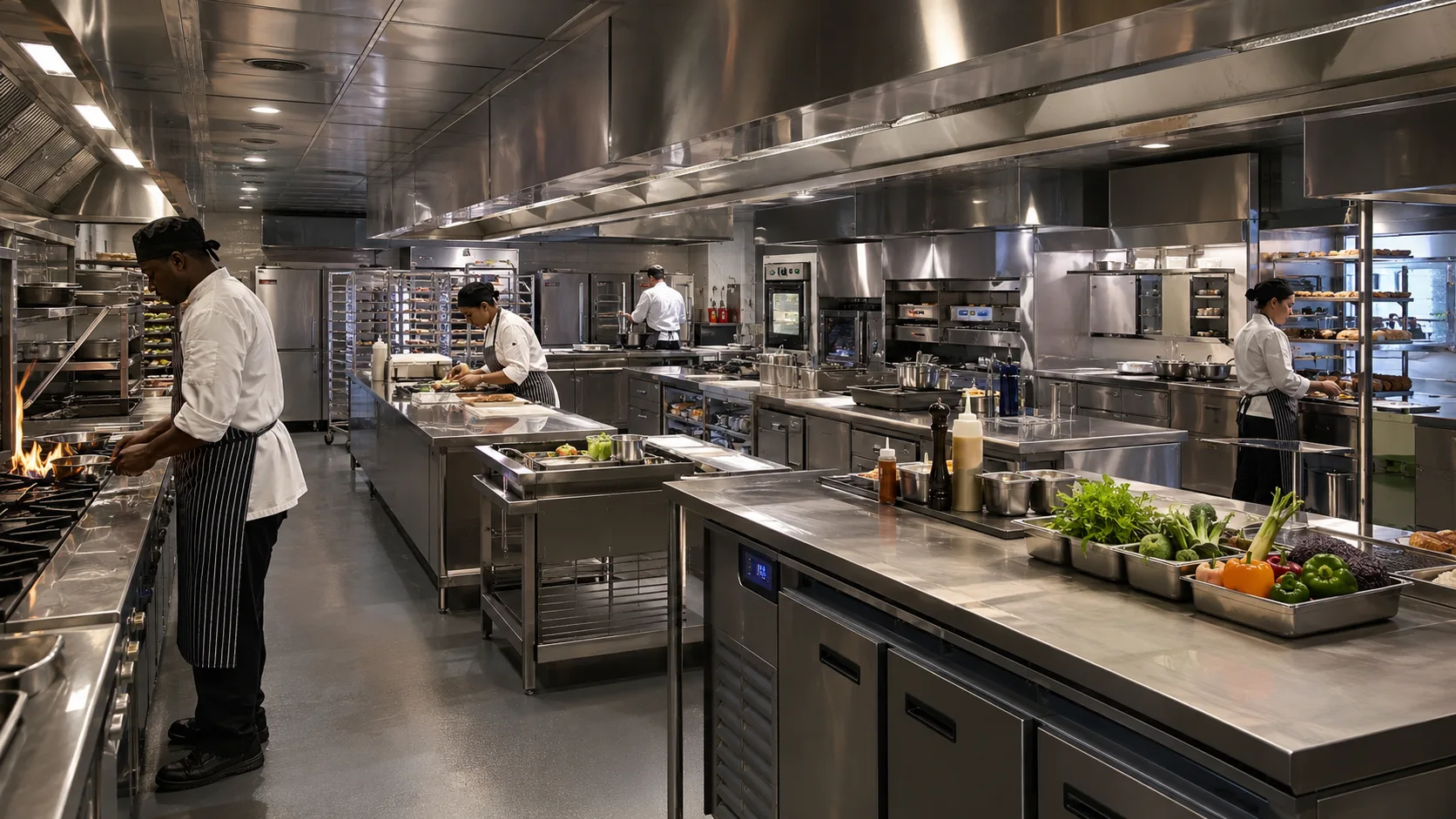
5-Star Hotel Main Banquet Kitchen Butchery & Garde Manger
Custom fitted heavy-gauge 304 workbenches with welded sink basins, removable antibacterial PE cutting blocks, and undermount insulated refrigeration drawer integration.
View Case Blueprint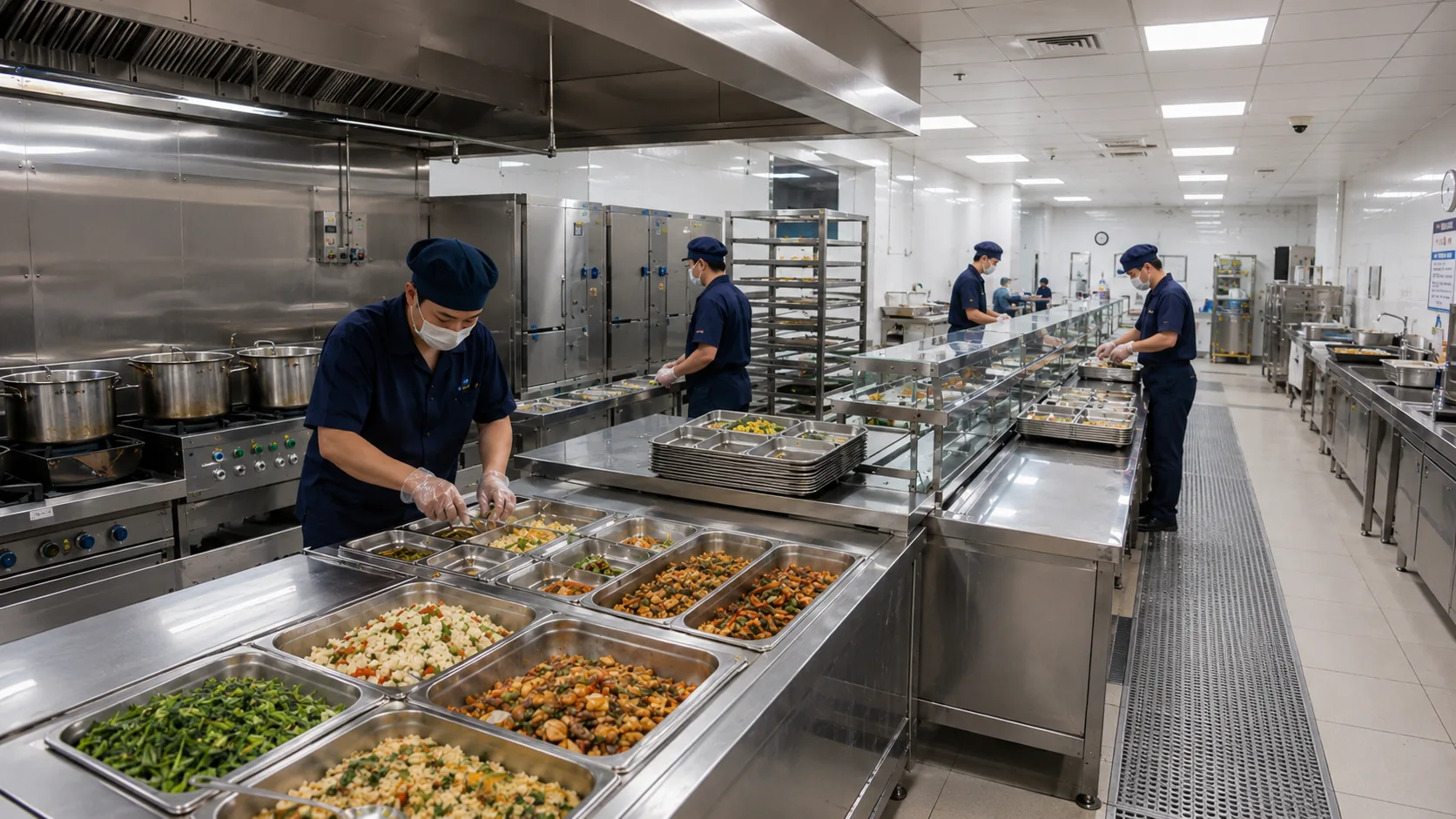
Industrial Catering Dry Goods & Cold Room Racking Facility
Fabricated 120 linear meters of 4-tier solid and louvered AISI 304 shelving systems with seismic floor anchoring and 300kg per tier load certification for refrigerated operations.
View Case BlueprintProcurement & Fabrication Sizing Checklist
- Verify Metallurgy Against Sanitizer Chemistry: Specify AISI 304 for wet preparation, warewashing, and raw meat butchery; avoid AISI 430 in washdown corridors.
- Audit Gauge Requirements by Equipment Weight: Mandate 14-gauge tops for any table supporting equipment over 50 kg or undergoing repeated pounding shocks; use 16-gauge for light assembly.
- Confirm NSF/ANSI 2 Sanitation Detailing: Require 150mm floor clearance, continuous TIG welds with ground-and-polished seams (#4 sanitary finish), and 10mm minimum coved internal corners.
- Specify Leg Tubing Diameter and Gusset Quality: Ensure legs utilize minimum 38mm (1.5-inch) outer diameter 16-gauge tubing locked into cast stainless or heavy aluminum gussets with dual set screws.
- Define Acoustic and Structural Reinforcement: Require hat-channel dampening channels with sound-deadening mastic underneath all open table surfaces wider than 600mm.
Frequently Asked Questions
What is the main difference between 14-gauge and 16-gauge stainless steel tables in a commercial kitchen?
A lower gauge number indicates thicker metal. 14-gauge stainless steel is approximately 1.98 mm thick and is engineered for heavy butcher work, cleaver impacts, and heavy countertop machinery like bone saws or combi ovens. 16-gauge is 1.52 mm thick and is the commercial standard for general food prep, plating, and light prep stations.
Can I use AISI 430 stainless steel tables in a restaurant prep line?
AISI 430 contains chromium but no nickel, making it less resistant to corrosion, especially when exposed to salt, food acids, and chemical detergents. It is suitable for dry storage, office equipment, or secondary prep, but AISI 304 (which contains 8% to 10% nickel) should always be specified for food contact, wet preparation, and butchery.
Why do commercial stainless steel tables have hat channels underneath?
Hat channels are longitudinal structural steel channels welded or bonded to the underside of the table surface. They dramatically increase the tabletop's stiffness and load capacity, eliminate center sagging (deflection), and incorporate sound-deadening mastic to dampen metallic noise during knife chopping and food preparation.
How do I prevent pitting and surface corrosion on commercial stainless steel workbenches?
Corrosion is typically caused by prolonged contact with bleach (chlorine sanitizers) or unpassivated carbon steel tools. Clean tables daily with neutral or mild alkaline detergents, rinse thoroughly with fresh water, and wipe completely dry. Periodically passivate the surface with a 10% citric acid solution to rebuild the protective chromium oxide layer.
Are mobile stainless steel tables on casters safe for commercial food prep?
Yes, provided they are fitted with commercial-grade polyurethane casters (minimum 125mm diameter) featuring dual-action pedal locks that lock both wheel rotation and swivel simultaneously. Tables on casters facilitate rapid under-bench floor cleaning and flexible kitchen line reconfiguration.
Plan the Equipment Around Your Kitchen.
Share your menu, peak service demand, available space and site utilities. Tell us which equipment you are considering so we can review the requirements with you.