Every commercial refrigerator is really two decisions written on one dial: what temperature it holds, and what goes where inside it. The temperature is a food-safety control point, and the placement is the storage map that keeps cross-contamination out. This guide sets out the zones — the 2 to 8 °C chill band, the 10 to 0 °C freeze band, and the danger zone between them — and maps each food type to its place, using the documented dual-temperature range of HSYL's upright line, where the E-series upright refrigerators hold 2 to 8 °C and the matching freezers hold 10 to 0 °C.
The Danger Zone That Runs Everything
The temperature band to keep food out of is 5 to 60 °C, where bacteria multiply fastest. A refrigerator is the machine that holds food below it and a freezer holds food well below it, which is why the numbers matter more than the door labels. The HSYL upright range documents its refrigerators at 2 to 8 °C and its freezers at 10 to 0 °C — the refrigerator band sits at the cold edge of safety, and the freezer band sits far below the danger zone where food holds for weeks instead of days.
The practical reading of those two numbers: a 2 to 8 °C cabinet is for food that turns over in days, and a 10 to 0 °C cabinet is for food that holds in weeks. Mixing the two — running a freezer warmer or a fridge colder than its band — is where both quality and compliance quietly fail.
The Storage Map: Raw Over Cooked, High Over Low
Inside the chilled cabinet, the map follows one rule: put what can contaminate below what can be contaminated. From top to bottom in a typical upright:
- Top shelf — ready-to-eat and cooked. Food that needs no further cooking: prepared dishes, cooked meats, dairy and desserts. Nothing above it can drip into it.
- Middle shelves — produce and dairy. Washed vegetables, eggs and dairy in covered containers, above the raw meat but below the ready-to-eat.
- Bottom shelf — raw meat, poultry and seafood. The highest-risk items go lowest, in sealed containers or drip trays, so nothing drips onto food below.
- Door — the warmest zone. The door is the least stable temperature in the cabinet, so it holds the least perishable items: condiments, drinks and sealed sauces, never milk or raw product.
The same logic applies across the room: the display refrigerator range and the direct-cooling display cabinets run the same 2 to 8 °C chill and 10 to 0 °C freeze bands, so the storage map holds whether the product is in the back-of-house upright or the front-of-house display. What changes is visibility, not the temperature discipline.
Matching the Model to the Zone
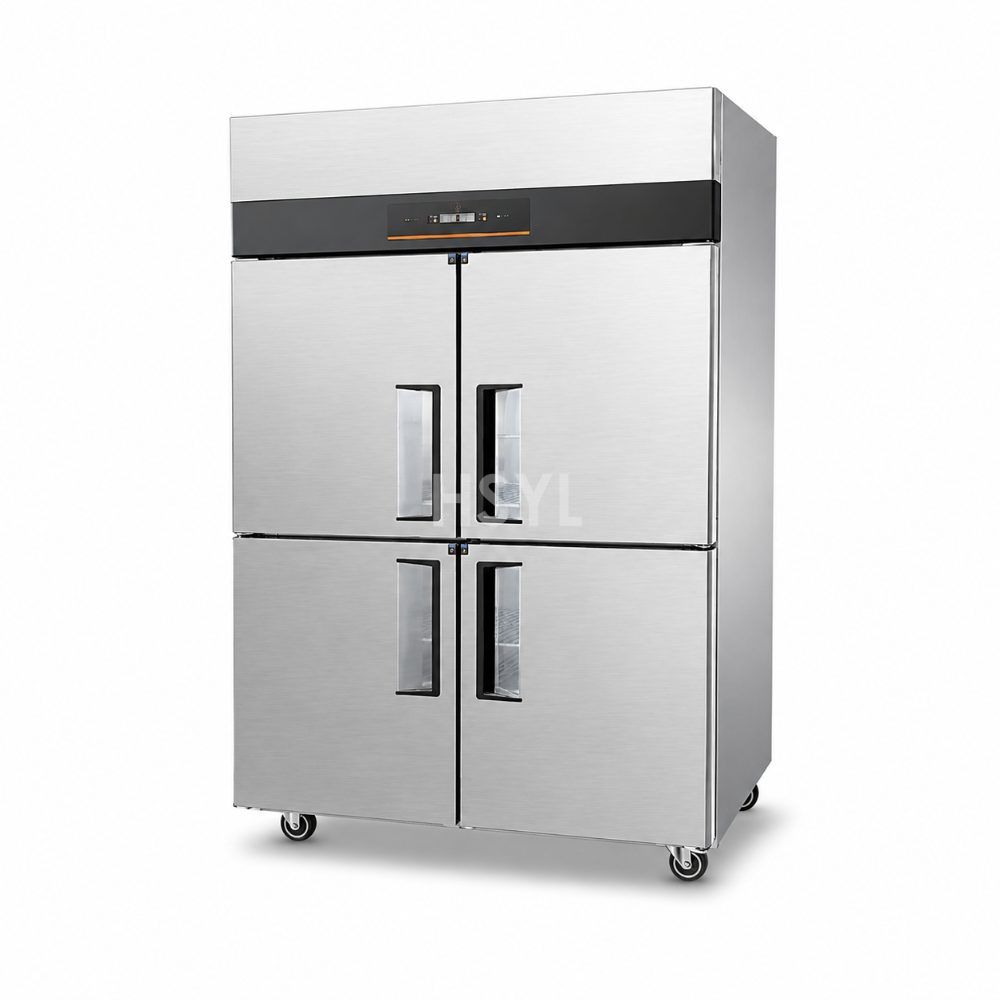
The upright line documents its two zones on paired models: the direct-cooling EDTR refrigerators hold 2 to 8 °C, and the EDTF freezers hold 10 to 0 °C, on identical frame sizes from single-door 500-litre units up to six-door 1370-litre units. The pairing matters because a kitchen usually needs both zones in matched cabinets — one for the day's chill storage and one for frozen reserve — and matching the two keeps the storage map consistent across the room instead of mixing brands with different temperature behaviors. R290 refrigerant runs through the line, holding those zones with a natural, low-impact refrigerant.
Related Equipment & Systems
Temperature is only as reliable as the cabinet holding it — the refrigeration preventive maintenance guide covers the condenser, gaskets and defrost that keep a zone from drifting. The direct vs fan cooling guide covers the cooling method behind the temperature. The full range sits under commercial refrigeration equipment.