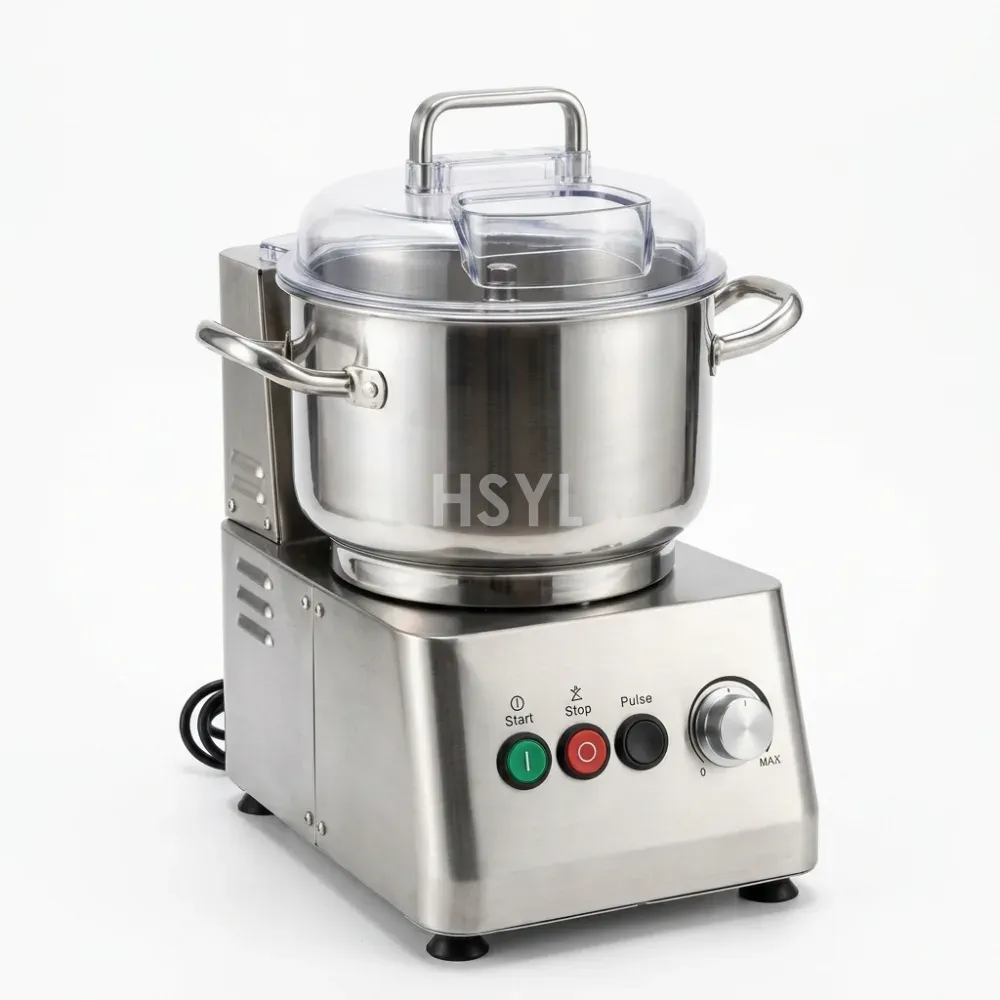
A soup kettle is a single-purpose warmer for a single product — soup, sauce or gravy held hot and served straight from the pot. It is the countertop workhorse of a buffet or a soup-and-salad bar, where one liquid dish needs to stay at a safe serving temperature all through service without a whole bain marie worth of wells. On the HSYL line that is the SL-SB-5700 commercial soup kettle, documented at 5.7 litres on a 300 W, 295 × 295 mm countertop footprint.
A Soup Kettle Is Not a Small Bain Marie
The two get confused because both hold hot food, but they are built for different jobs. A bain marie is a bank of GN wells for several dishes at once — a sauce here, a protein there. A soup kettle is one heated pot for one liquid dish, which is exactly what a soup bar needs: a single deep vessel that holds its heat evenly and pours from the front. Where a buffet runs a soup alongside several hot dishes, the soup kettle covers the soup while the bain marie covers the rest; where the whole hot offer is one soup or gravy, the kettle alone is the cheaper, smaller answer. The bain marie guide covers the multi-well case in full.
The SB-5700 at a Glance
| Spec | Value |
|---|---|
| Capacity | 5.7 L |
| Power | 300 W |
| Voltage | 230 V / 50 Hz or 110 V / 60 Hz |
| Footprint | 295 × 295 mm |
| Net weight | 3.58 kg |
The 5.7-litre capacity holds roughly a full service of a single soup for a small to mid counter — enough to serve continuously without the batch going stale in the pot. The 300 W draw is the quiet advantage: it is a light load that a counter can carry without a dedicated circuit, which is why the unit drops into a buffet line, a café counter or a concession without an electrical rethink.
Dual Voltage for Export and Counter Markets
The documented dual-voltage rating — 230 V at 50 Hz or 110 V at 60 Hz — is the field worth noticing on the spec sheet. The same kettle ships for a European or Asian 230 V supply or a North American 110 V supply, so an export or multi-market order does not need a separate model per region. Confirm the voltage against the destination market when ordering, because a kettle specced for the wrong supply is a returned box, not a field fix.
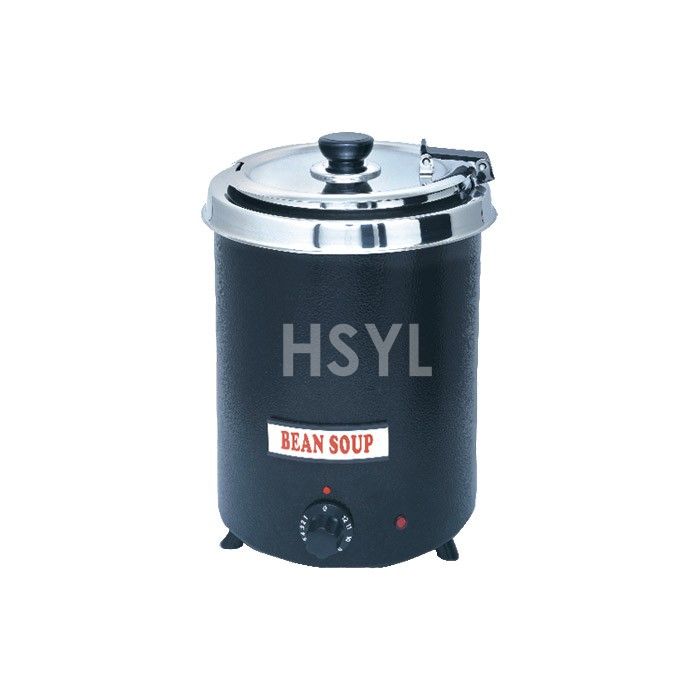
Service Use: Hold Hot, Not Lukewarm
Run the kettle in its 70 to 80 °C band — the widely applied holding range for soup, sauce and gravy — so the liquid stays above the 60 °C floor without simmering down and thickening on the bottom. Stir the pot periodically through service; the surface cools faster than the middle, and a stirred kettle holds a more even temperature. The hot holding temperature guide sets the full food-safety picture, and the commercial food holding equipment lineup is where the kettle slots in alongside the bain maries and warmers.
Related Equipment & Systems
For a hotel or banquet buffet where the soup kettle joins a full hot line, the hotel banquet kitchen solution shows how the kettle, bain maries and holding cabinets sequence into one serving front.