Commercial Wok Range
Choose a commercial wok range from simultaneous cooking tasks, wok fit, gas or induction operation and the workspace each cook needs during peak service.
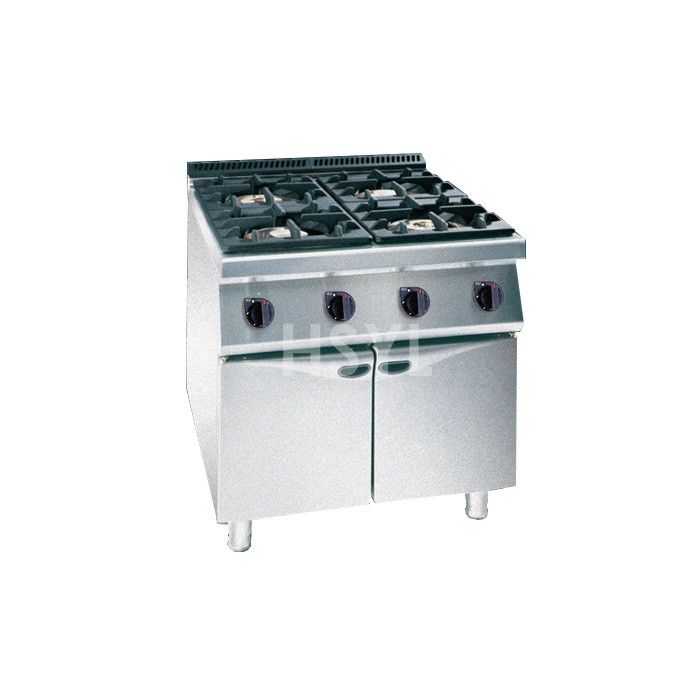
The right commercial wok range keeps your busiest stir-fry sequence moving with the cookware and cooks you intend to use. Choose active wok positions from simultaneous cooking work, then select the heating method, bowl support and surrounding preparation space. Burner count alone is a poor measure of a complete station.
A kitchen frying dishes to order has a different requirement from one batch-cooking rice, simmering sauces and using a wok occasionally. Separating those duties avoids buying a large wok range while leaving preparation or boiling undersized.
Count simultaneous jobs, not menu items
List what happens during peak service: ingredient loading, frying, sauce addition, plating and wok reset. Identify jobs continuing while the wok is occupied, such as boiling noodles. They may need their own equipment rather than another wok hole.
| Service pattern | Arrangement to investigate | Reason |
|---|---|---|
| One cook makes dishes in sequence; sauces are prepared separately | One active wok position with efficient ingredient and plating access | A second position does little if the cook cannot operate both effectively |
| Two cooks handle separate stir-fry orders simultaneously | Two positions with adequate individual working space | Supports genuine parallel cooking |
| Stir-frying competes with noodle boiling | A wok station plus a dedicated boiling station | Boiling no longer occupies the position needed for finishing orders |
| Large batches are prepared before service | Compare the wok duty with other batch-cooking equipment | This is a different process from repeatedly frying small portions to order |
Illustrative planning calculation: assume an observed recipe cycle takes four minutes, including loading, cooking, plating and reset. One position can complete at most three cycles in twelve minutes, before delays. That does not establish three portions: acceptable batch size must also be known. If six separate single-portion orders arrive together, changing ingredient access, order sequencing or the number of staffed positions are different solutions to evaluate.
Do not enlarge a batch just to make the calculation work. Loading changes the cooking conditions and may change the dish. Test the portion load the chef is prepared to serve.
Gas and induction suit different working arrangements
Gas wok equipment
A compatible gas wok station allows the chef to use the intended flame, support ring and pan movement. It is a candidate where that technique is central to the menu and an appropriate gas installation is available. Burner shape, control range and distance to the pan affect the result; headline heat input alone does not describe how heat reaches the food.
Natural gas and LPG require the correct appliance configuration and installer review. Water-cooled tops and drainage are features of some ranges, not universal requirements for every wok appliance.
Induction wok equipment
A purpose-built induction wok station can suit an electric kitchen when its bowl and compatible cookware support the recipe. A flat induction hob should not be assumed to support a round-bottom wok. Coil geometry, bowl shape, cookware material and controls need to work together.
Demonstrate the chef's lifting and tossing movement on the proposed appliance. Cooking methods that rely on a particular pan position need to be tested on that equipment. A successful gas recipe is not proof of identical induction operation. Prefer the option that achieves the food result within the site's utilities rather than assuming one energy source is always superior.
Check the wok, support and heat source as one system
An opening diameter is not the same as a supported cookware range. A wok can sit too deeply, rock on its support or leave the handle awkwardly positioned. Use normal cookware and portions in the demonstration, including the heaviest finished load.
- Pan stability: the support must hold the loaded wok without improvised rings.
- Working height: the cook must lift, turn and empty the pan comfortably. Appliance height does not include the pan's working height.
- Control access: controls should be reachable without crossing another cook's hot workspace.
- Adjacent pots: handles and lids must not prevent normal wok movement.
- Reset: ingredient replenishment and cleaning between dishes must fit the sequence.
Give each cook a complete working area
The operating route is cold ingredients to measured preparation, then wok cooking, then plating and collection. Keep frequent ingredients within reach while separating raw handling from finished dishes. The wok position should not become storage for utensils, waiting orders or sauce pots.
| Area | Purpose | Layout mistake to avoid |
|---|---|---|
| Preparation and cold storage | Measured ingredients and replenishment | Sending the cook across the aisle for every order |
| Boiling and sauce work | Processes longer than the stir-fry cycle | Blocking a wok position with a standing pot |
| Plating and pass | Immediate transfer of completed dishes | Passing hot food across the next cook's position |
| Cleaning and waste route | Removal of dirty items from production | Returning used utensils through finished food |
A two-position range needs working room for two people if both positions will operate together. Otherwise the second burner may be accessible on a drawing but unusable in service. Include ingredient drawers and refrigerator doors in the layout test.
Compare quotations for the same equipment scope
Separate the wok appliance from water fittings, drainage, hood, utility connections, furniture and commissioning. The installer needs the exact model's heat input or electrical rating, connections and approved clearances. Generic dimensions for a “Chinese range” are insufficient.
The Chinese and Asian restaurant kitchen overview places the station within preparation, steaming and wash-up. The commercial range families cover adjacent cookline options; their open burners are not automatically equivalent to a dedicated wok range.
Request a wok-station configuration review with your menu, cookware dimensions, cooks working simultaneously and available utilities. Identify whether you need a dedicated wok appliance, complementary boiling equipment, or both, before comparing prices.
Compare supporting cookline equipment
Use these existing range references to discuss the wider hot line. A dedicated wok burner, wok support and heat requirement still need their own model-specific confirmation.
Commercial Range Platforms
Compare the pan positions needed for stock, sauces and other jobs beside wok cooking. Confirm the actual burner arrangement and pan support rather than treating an open burner as a dedicated wok burner.
View product details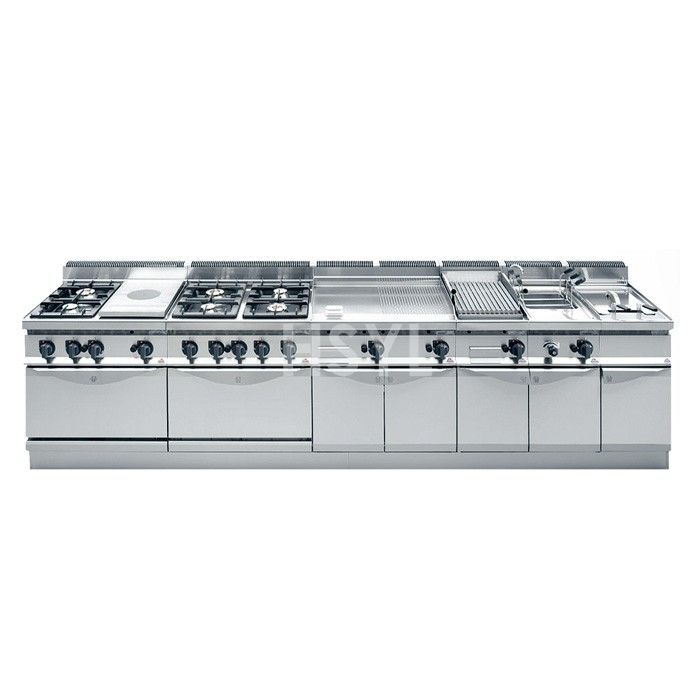
700-Series Modular Cookline
Review the whole station when wok cooking shares staff, aisles and extraction with other processes. Ask for the proposed modules, utility schedule and working clearances on the same layout.
View product detailsFrequently Asked Questions
Can I use a standard open-burner range instead of a dedicated wok range?
Only if the exact appliance is intended to support your wok and cooking method. A general-purpose range and a dedicated wok station can differ in pan support, burner arrangement, working height and surrounding workspace. Do not improvise a wok support or assume that a high burner rating alone makes the range suitable.
When is a second wok station worth the extra space?
A second station is useful when two cooking jobs must run at the same time and the kitchen has the staff, preparation space and plating capacity to use it. If the delay comes from ingredient preparation or one cook moving between tasks, a second burner may not remove the queue. Observe a peak service period and record which operations overlap.
Will my existing woks work with an induction wok unit?
Check the exact unit's required pan material, diameter and base profile. A wok that works over gas is not automatically compatible with an induction surface or recessed bowl. Have the supplier confirm the intended cookware and test the tossing, lifting and heating routine with the pan you will actually use.
Does every commercial wok range require a water supply?
No. Water requirements depend on the station design. Some units include cooling, rinsing or other water-related features; others do not. Request a connection schedule for the offered model, including any water and drainage requirements, rather than adding plumbing based only on the term wok range.
What should I prepare for a wok-range quotation?
Send the dishes cooked to order, the number of simultaneous wok jobs, wok dimensions, preferred fuel, available supply and a measured station sketch. Show ingredient storage, landing space and the pass on the sketch. A dedicated wok model has not been confirmed in this guide, so ask the supplier to identify the exact offered configuration first.
Plan the Equipment Around Your Kitchen.
Share your menu, peak service demand, available space and site utilities. Tell us which equipment you are considering so we can review the requirements with you.