Industrial Pizza Oven Price Guide
Industrial pizza oven prices reflect throughput, multi-deck capacity and heavy-duty build. Compare deck, conveyor and modular systems for high-volume sites.
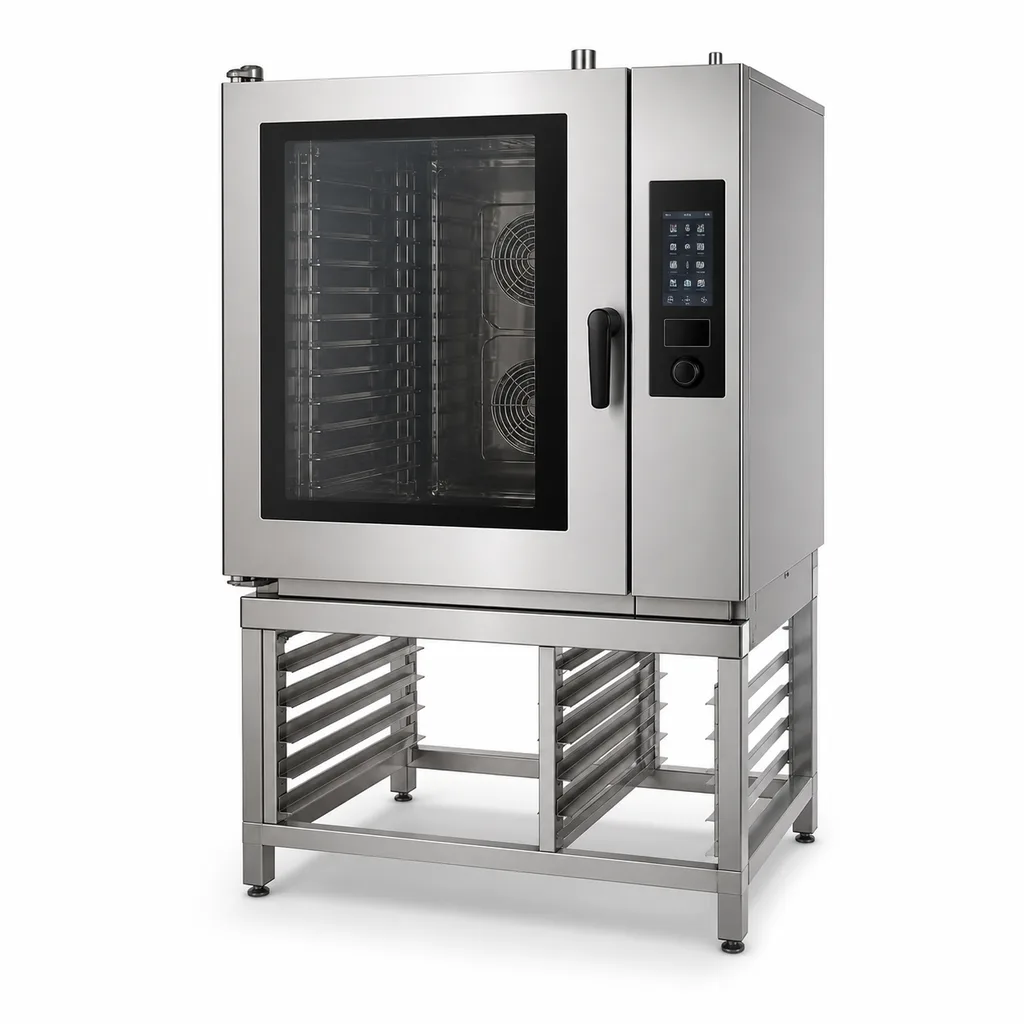
An industrial pizza oven costs roughly $6,000 to $30,000 for the equipment alone, and installation can add tens of thousands more — hood, fire suppression, gas piping, reinforced floor and commissioning. A rack convection oven starts around $6,000; a two-deck stone-hearth oven runs $8,000–$15,000; a five-deck model reaches $18,000–$30,000; and a conveyor system lands at $10,000–$30,000 installed. The right number depends on your daily pizza volume, the crust character you need, and whether you want a continuous line or flexible batch baking. Buy the oven for your peak marketing day, not your average Tuesday.
Industrial pizza ovens are built for throughput, not ambiance. A stone-hearth deck oven, a modular conveyor, and a rack convection oven each produce hundreds to thousands of pizzas per day, but their price drivers differ: decks need ventilation and a reinforced floor; conveyors need longer duct runs and dedicated circuits; rack ovens need less ventilation but more floor space. Request a fully installed price covering mechanical rough-in, electrical, hood and commissioning before comparing vendors.
Key takeaway: Buy pizza oven capacity for your peak daily volume plus 20% headroom. A two-deck stone hearth covers 300–600 pizzas a day; a five-deck reaches 800–1,500; a conveyor handles 1,000–2,000; a rack oven 600–1,200. Undersized ovens force batch cooking, raising labor cost per pizza.
What Actually Drives the Price
Pizza oven pricing tracks four variables more than brand:
- Throughput and deck count: each added deck or conveyor lane is more steel, burners and control hardware
- Crust and bake method: stone hearth for character, conveyor for repeatability, rack convection for flexibility
- Fuel type: gas heats faster and runs cheaper per hour; electric conveyor is simpler but draws 15–40 kW per unit
- Installation complexity: hood, suppression, gas piping, reinforced floor and commissioning often equal or exceed the equipment price
Certification (NSF, ETL/UL or CE) and build grade explain most of the remaining gap between an economy and a premium unit.
Industrial Pizza Oven Price and Throughput by Type
The table gives typical ranges for new equipment. Figures shift with deck count, belt width, certification and order volume.
| Oven type | Price range | Daily output | Installation complexity |
|---|---|---|---|
| Two-deck stone hearth | $8,000–$15,000 | 300–600 pizzas | High |
| Five-deck stone hearth | $18,000–$30,000 | 800–1,500 pizzas | High |
| Conveyor pizza oven | $10,000–$30,000 | 1,000–2,000 pizzas | Medium–high |
| Rack convection oven | $6,000–$18,000 | 600–1,200 pizzas | Medium |
Stone-hearth decks run at independent temperatures, so one five-deck oven bakes several crust profiles at once. Conveyor output assumes continuous feeding; a rack oven's daily figure assumes manual load and unload cycles.
Stone-Hearth vs Conveyor vs Rack
Stone-hearth ovens start around $8,000 for a two-deck unit and scale past $25,000 for five-deck bakery models. They suit pizzerias and bakeries needing traditional crust character at volume, with each deck at an independent temperature.
Conveyor and rack systems serve different needs. Conveyor ovens ($10,000–$30,000 installed) produce 1,000–2,000 pizzas a day with consistent bake, suiting high-volume chains where labor per unit matters. Rack convection ovens ($6,000–$18,000) use less floor space but need manual loading. The trade-off is flexibility: conveyors excel at repetitive products; rack ovens handle mixed menus better.
Fuel Choice, Ventilation, and Operating Cost
Gas ovens heat faster and run cheaper per hour than electric, but need ventilation for combustion and radiant heat. Electric conveyors are simpler to install but draw 15–40 kW per unit — verify panel capacity first. Over five years the gas-vs-electric gap can reach $15,000–$30,000 for high-volume pizzerias. Wood-fired ovens add flavor but need more ventilation, cleaning, and often a fire-expert inspection.
Sizing for Your Peak Volume
Size the oven for your peak marketing day — a Friday night, a catering contract, a holiday — plus 20% headroom. A two-deck stone hearth covers 300–600 pizzas a day; a five-deck reaches 800–1,500; a conveyor handles 1,000–2,000; a rack oven 600–1,200. Undersized ovens force batch cooking between tickets, slowing service and raising labor per pizza. Oversizing wastes floor space, energy and capital, so anchor the number to a documented peak.
Maintenance, Service Support, and Resale
Industrial pizza ovens need daily crumb cleaning, weekly door-seal checks, and monthly fan or belt inspection. Stone-hearth decks should be checked for cracks every three months; a cracked tile loses heat and bakes unevenly. Conveyor belts need tension adjustment and scraper replacement. Over five years, maintenance runs $1,000–$5,000 per year. Brands with local agents and stocked spares cut downtime. Well-maintained units retain 30%–50% of value after five years with documented cleaning and inspections.
Common Pizza Oven Purchasing Mistakes
- Sizing to average volume: size for the peak plus headroom
- Quoting equipment only: hood, suppression, gas and floor reinforcement can exceed the oven price
- Ignoring electrical load: electric conveyors draw 15–40 kW — confirm panel capacity first
- Skipping service reach: ask for the nearest service center and lead time for spares
- Confusing bake methods: match the oven to the bake method you actually need
Budgeting Checklist Before You Request Quotes
- Peak daily volume: pizzas per day at your busiest, plus 20% — fixes oven type and count
- Crust profile: stone hearth for character, conveyor for repeatability, rack for flexibility
- Fuel: gas if a line exists and volume is high; electric if simpler installation wins
- Installation scope: fixed-price mechanical package — hood, suppression, gas, floor, commissioning
- Certification: state NSF, ETL/UL or CE in the RFQ and ask for the certificate number
- Service: confirm local agent, spares stock and maintenance budget of $1,000–$5,000 per year
Cooking Equipment
Industrial pizza ovens, deck ovens and conveyor systems for bakeries.
View cooking equipment →
Browse the full cooking equipment range. For kitchen layout planning, see our central kitchen planning guide.
For projects with specific raw material requirements, target capacity needs, or custom factory drawing specifications, contact our team to discuss your working hours and operational requirements. We support full project planning from specification to installation.
Frequently Asked Questions
How much does an industrial pizza oven cost?
Two-deck stone-hearth ovens cost $8,000 to $15,000. Five-deck ovens cost $18,000 to $30,000. Conveyor systems cost $10,000 to $30,000. Rack convection ovens cost $6,000 to $18,000. Installed cost can double the equipment price.
Which industrial pizza oven is best for high volume?
Conveyor ovens produce 1,000 to 2,000 pizzas per hour with consistent bake. Multi-deck stone-hearth ovens produce 300 to 800 pizzas per deck per day with better crust character.
Do industrial pizza ovens need special ventilation?
Yes. Type 1 hoods with fire suppression are mandatory. Conveyor and multi-deck ovens need higher airflow than countertop units. Hood design should be calculated by a mechanical engineer.
How do I maintain an industrial pizza oven?
Clean crumbs daily, inspect door seals weekly, and check fan motors or conveyor belts monthly. Stone-hearth decks need crack inspections every three months. Documented maintenance extends resale value.
Do industrial pizza ovens hold resale value?
Yes. Well-maintained units retain 30% to 50% of their value after five years. Stone-hearth deck ovens hold value better than countertop units because the hearth can be replaced.
Plan the Equipment Around Your Kitchen.
Share your menu, peak service demand, available space and site utilities. Tell us which equipment you are considering so we can review the requirements with you.