Pizza Oven Cost Guide
A pizza oven cost is more than the purchase price. We break down installation, fuel, maintenance and energy expenses so operators can calculate true ownership cost.
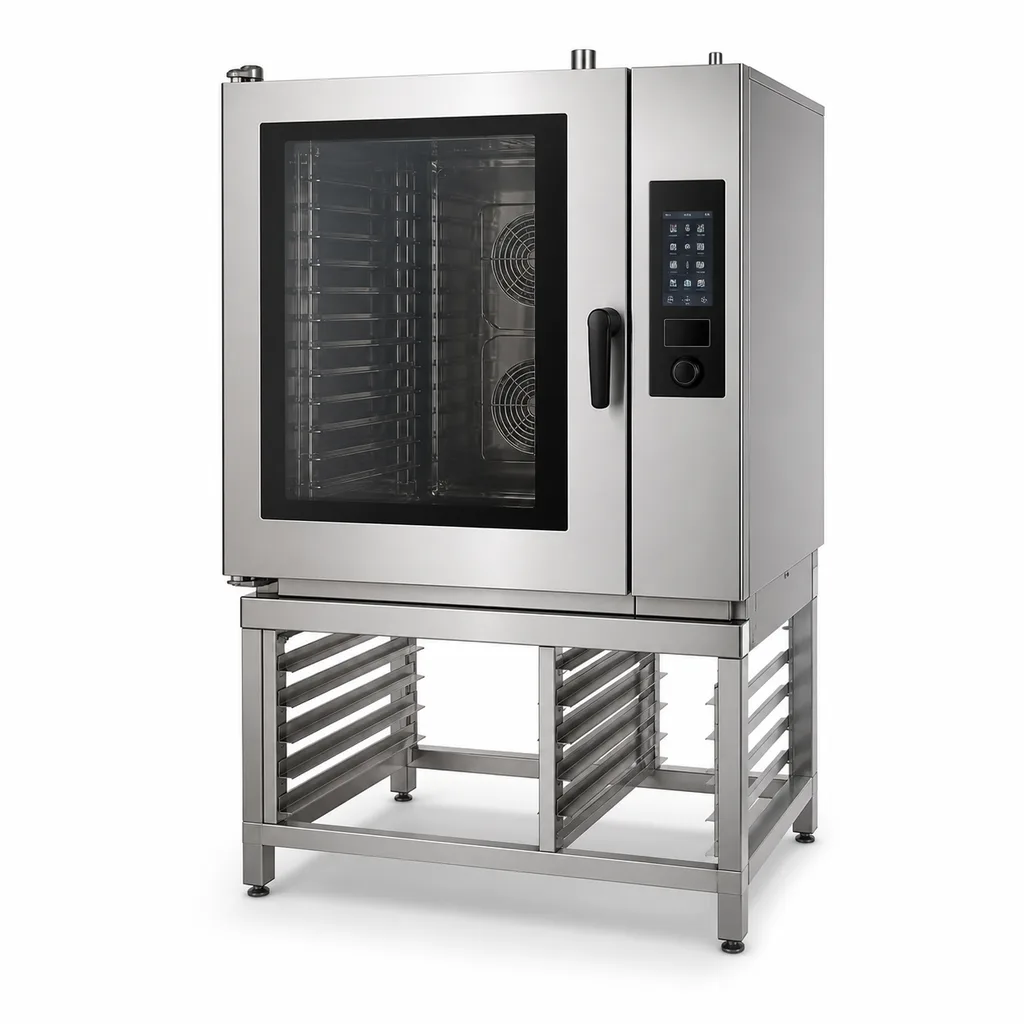
Commercial oven prices vary widely based on type, size, and fuel source. This guide covers the cost ranges for deck, convection, and countertop models so you can choose the right oven for your kitchen layout and output requirements.
What drives the true cost of a pizza oven
The purchase price is only the first line item. Installation, fuel, maintenance, and energy costs determine whether a pizza oven is profitable over five years. A $4,000 countertop electric oven needs a dedicated circuit and minimal ventilation, so installed cost stays close to the sticker price. A $10,000 double-deck stone-hearth gas oven needs a Type 1 hood, fire suppression, gas piping, and commissioning, which can double the installed cost. Operators who plan a pizza oven purchase should request a fully installed quote before comparing options.
Installation and utility costs
Gas deck ovens need a properly sized exhaust canopy, fire suppression, and a gas pipe sized for total BTUH draw. Hood design should capture both radiant heat and grease-laden vapors. Electric convection ovens need 3-phase power and a standard vent hood. Countertop electric units need only a dedicated outlet and minimal ventilation. In retrofit projects, existing hood capacity or electrical panels are often undersized, adding $3,000 to $8,000 in mechanical work.
Energy and fuel costs
Natural gas costs 40% to 60% less per BTU than electricity in most markets. Over a five-year window, a gas deck oven can save $6,000 to $12,000 versus an electric unit at high volume. The trade-off is ventilation complexity and compliance cost. Electric ovens are simpler to install but more expensive to run. Wood-fired ovens have low fuel cost but high labor cost for cleaning and ash disposal.
Maintenance and longevity
Stone-hearth deck ovens need hearth inspection every six months. A cracked hearth tile loses heat and creates uneven bake. Convection ovens need fan-motor bearings and temperature sensors checked annually. Countertop units need crumb trays emptied daily and heating elements descaled monthly. Over five years, maintenance costs range from $500 to $2,000 per year depending on oven type and usage. Brands with local service agents and stocked spare parts reduce downtime more than brands with lower sticker prices. Ask for the nearest service center and the lead time for a heating element or fan motor before buying.
| Oven type | Purchase price | Installed cost | 5-year energy and maintenance |
|---|---|---|---|
| Countertop electric | $400 – $2,500 | $500 – $3,000 | $1,500 – $3,000 |
| Convection pizza oven | $1,800 – $6,000 | $3,000 – $8,000 | $3,000 – $6,000 |
| Single-deck gas stone hearth | $2,500 – $5,000 | $8,000 – $14,000 | $4,000 – $8,000 |
| Double-deck gas stone hearth | $6,000 – $12,000 | $14,000 – $22,000 | $6,000 – $12,000 |
Key takeaway: Calculate total cost of ownership before buying. A cheap oven with expensive installation and high energy costs can cost more over five years than a mid-tier oven with lower installed and operating expenses.
Resale value and refurbishment
Well-maintained commercial pizza ovens retain 35% to 55% of their value after five years. Stone-hearth deck ovens hold value better than countertop units because the hearth can be replaced and the oven body is durable. Refurbished ovens from OEM programs cost 25% to 40% less than new and usually include a short warranty. Before buying used, test-fire the oven and check hearth condition, door seals, and control calibration. Documented maintenance records increase resale value and make warranty claims easier.
Insurance, downtime, and risk planning
Pizza oven failures during peak service generate insurance claims, lost revenue, and reputational risk. A hearth crack that causes a $12,000 oven to overheat and fail during Friday dinner service can cost $3,000 to $8,000 in lost covers and refunds. Include business-interruption coverage in your insurance review, and keep a documented maintenance schedule that proves you followed OEM guidelines. Some commercial property insurers reduce premiums for kitchens with documented preventive maintenance programs.
Comparing quotes and vendor selection
When comparing pizza oven quotes, request energy-use data in the same units—BTUs per tray-hour or kWh per cycle—so the comparison is apples to apples. Ask for NFPA 96 compliance documentation and a copy of the hood design before accepting the price. Vendors who bundle oven, hood, and installation into a single fixed-price contract reduce coordination risk. At contract signing, confirm commissioning procedures, operator training, and warranty start date. A handover pack that includes wiring diagrams, part numbers, and service-contact details saves hours of troubleshooting later.
Cooking Equipment
Pizza ovens, deck ovens and convection ovens for high-volume kitchens.
View cooking equipment →
Browse the full cooking equipment range. For kitchen layout planning, see our central kitchen planning guide.
For projects with specific raw material requirements, target capacity needs, or custom factory drawing specifications, contact our team to discuss your working hours and operational requirements. We support full project planning from specification to installation.
Frequently Asked Questions
What is the total cost of a commercial pizza oven?
Total cost includes purchase price, installation, fuel, maintenance, and energy. A double-deck gas stone-hearth oven can cost $14,000 to $22,000 installed and $6,000 to $12,000 over five years in energy and maintenance.
Are gas pizza ovens cheaper to run than electric?
Yes. Natural gas typically costs 40% to 60% less per BTU than electricity. Over five years, fuel savings can reach $6,000 to $12,000 for high-volume pizzerias.
How much does a countertop pizza oven cost installed?
Countertop electric units cost $500 to $3,000 installed. They need minimal ventilation but draw 2 kW to 5 kW each.
How do I maintain a stone-hearth pizza oven?
Inspect the hearth for cracks every six months, clean crumb trays daily, and check door gaskets and fan housings weekly. Replace cracked hearth tiles promptly to avoid heat loss.
Do pizza ovens hold resale value?
Yes. Well-maintained commercial pizza ovens retain 35% to 55% of their value after five years. Documented maintenance records increase resale value and support warranty claims.
Plan the Equipment Around Your Kitchen.
Share your menu, peak service demand, available space and site utilities. Tell us which equipment you are considering so we can review the requirements with you.