Selecting a commercial pasta cooker comes down to four decisions in order: how many orders overlap at your peak (that sets cylinder and basket count), which gas source your site actually supplies (that is a category code, not a preference), how the unit drops into your counter line (the modular footprint), and how much recovery power sits behind each cylinder. This guide works through the sequence using the documented data of HSYL's HP countertop gas pasta cooker range — two configurations, three factory gas calibrations, published dimensions and weights — so every criterion lands on a real machine instead of a generic checklist.
Start with Order Overlap, Not Menu Size
A pasta cooker earns its bench space for one capability a stockpot cannot copy: several portions cooking at several different timings, simultaneously, in one station. Fresh tagliatelle at 90 seconds, dried penne at nine minutes, filled ravioli in between — landing on the pass together because each basket is timed separately. A stockpot gives every portion the same start time and the same increasingly starchy water; the pasta station is where an undersized cooker first shows up as a docket rail backing up on a busy night.
The sizing variable dealers quote is litres or total basket count. The variable that predicts service is order overlap: how many pasta tickets sit in the water at the same time during your worst 15 minutes. Count it on a typical peak service — if six tables order pasta within the same window and your average cook time is five minutes, six baskets need to be in service concurrently, regardless of how long your menu is. Menu breadth sets water management needs (a station running gluten-free pasta needs separation); order overlap sets hardware.
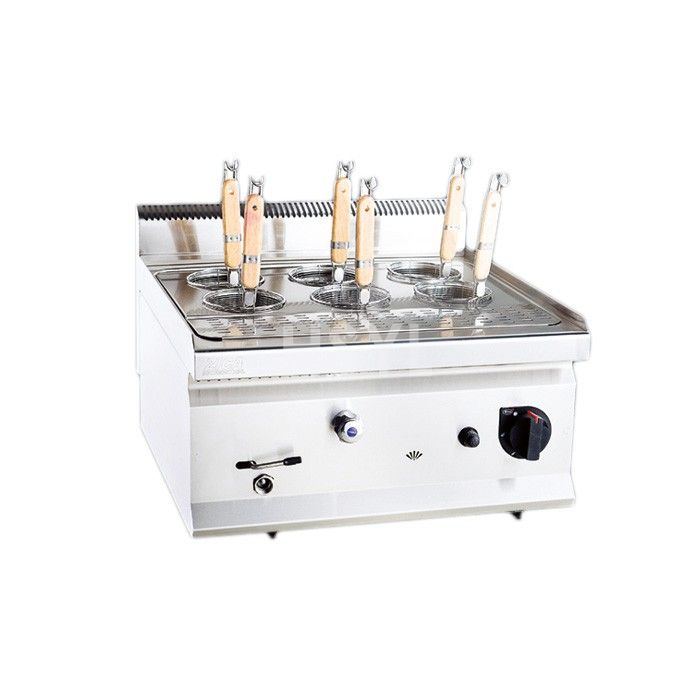
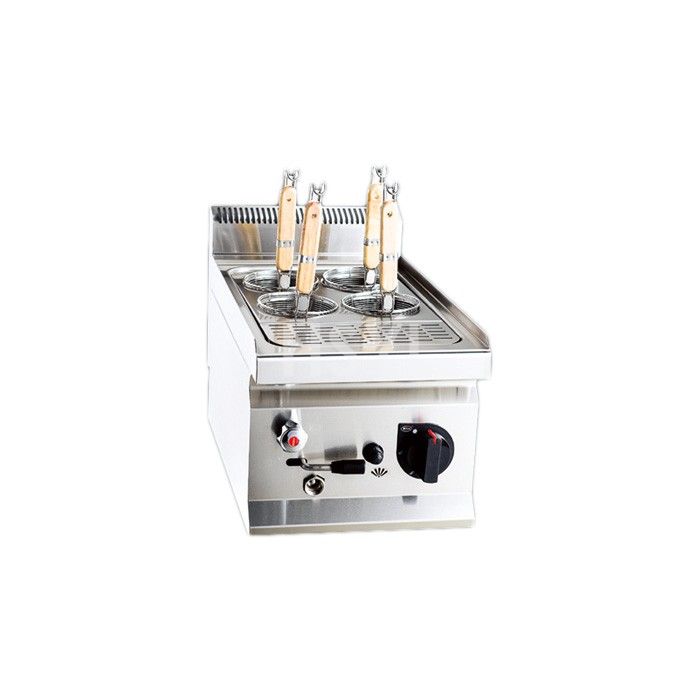
Cylinder count and power then follow together. The HP range ships as a single-cylinder 5.5 kW unit on a 350 × 600 mm footprint and a twin-cylinder 11 kW unit on 600 × 600 mm — two independent wells, each with its own burner, so a station can run two water conditions at once: one at a rolling boil for dried pasta, one held gentler for fresh noodles or blanching vegetables. Eleven kilowatts across two wells is not the same as eleven across one — the split matters more than the total.
Match Recovery Power to Your Service Pace
Every basket of cold product pulls the water off the boil, and power is what pulls it back. The relevant figure is kilowatts per cylinder: the HP single-cylinder unit carries 5.5 kW behind one well, and the twin unit carries the same 5.5 kW behind each of its two wells — so recovery pace is identical per well, and the twin simply doubles throughput without diluting it. A cooker that holds a rolling boil through consecutive basket drops keeps pasta texture consistent from the first table to the last; one that falls off the boil and stays there cooks the dinner rush differently from the quiet afternoon, which is exactly the inconsistency a dedicated cooker is supposed to eliminate.
Verify the Gas Source Code Before Anything Else
Gas pasta cookers are calibrated at the factory for a specific gas category, and a mismatch is a re-order, not a field adjustment. The HP range is documented for three calibrations, each with its own supply pressure:
| Gas Category Code | Gas Type | Supply Pressure |
|---|---|---|
| 12T | Natural gas | 2000 Pa |
| 20Y | Liquefied petroleum gas (LPG) | 2800 Pa |
| 6R | Manufactured / artificial gas | 1000 Pa |
Read the code off your site's gas installation report and match it to the order. Note the unit difference that trips up international buyers: these pressures are stated in pascals — 2000 Pa is 2 kPa, or 20 mbar, or about 0.08 inches water column. Export orders should state the destination market's gas category and pressure with the enquiry, because the same physical machine ships in three different calibrations. The same discipline applies across the gas line: our gas vs electric fryer guide covers how natural gas and LPG calibrations differ across export builds, and the logic carries over to any gas appliance on the same bench.
Drop It into the 600-Series Counter Line
Countertop pasta cookers rarely work alone — they sit in a bench lineup with a fryer, a griddle and an oven, and footprint compatibility decides how clean that lineup is. The HP range follows the 600-series module: 350 × 600 mm for the single cylinder, 600 × 600 mm for the twin, at a common 415 mm depth. That is the same interface as the HF countertop electric fryer range and the HG countertop griddle range, so a snack or noodle station can mix gas and electric modules on one continuous bench without stepping in depth. The HS6035E 600-series countertop cooking equipment page shows the same module in a combined cooking unit for stations that prefer one machine over several.
Plan the station's services as one block: the pasta cooker needs its gas connection, a water fill point and a drain for the well, and the fryer beside it needs its own power or gas — running those services under a continuous bench is cheaper than retrofitting them after positioning day. For the full connection-by-connection checklist, see the commercial kitchen equipment utility schedule guide, which maps every hookup contractors should verify before delivery.
HP Model Data at a Glance
| Model | Dimensions (mm) | Gas Calibration | Supply Pressure | Gas Power | G.W. / N.W. (kg) |
|---|---|---|---|---|---|
| HP6035G | 350 × 600 × 415 | 20Y / 12T / 6R | 2800 / 2000 / 1000 Pa | 5.5 kW | 35.1 / 21.5 |
| HP6060G | 600 × 600 × 415 | 20Y / 12T / 6R | 2800 / 2000 / 1000 Pa | 11.0 kW | 49.3 / 32 |
Tank volume per well and basket count are confirmed on the model specification sheet before quotation — bring your peak order overlap and the basket count falls out of it directly. The full countertop and floor-standing lineup sits under commercial cooking equipment.
Water Management Is Half the Operating Cost
The running cost of a pasta station is mostly water and the gas to keep it boiling. Two habits keep both down: an overflow or skim routine that carries starch off the surface instead of letting it build, and scheduled full drains with a boil-out clean rather than topping up indefinitely. Where the menu runs multiple pasta types, split them across the twin cylinders — fresh and dried pasta want different water ages, and separating them slows the starchy breakdown that forces early water changes. Baskets are consumables: a bent or corroded basket takes a portion slot out of service mid-rush, so order spares with the unit.
Related Equipment & Systems
A pasta station is usually specified together with the rest of the counter line. For hotel and banquet projects where noodle or pasta sections run inside a larger buffet, the hotel kitchen solution covers how cooking modules, holding and serving integrate in one layout. Buyers weighing whether a dedicated pasta cooker is even the right call for their volume should start with order overlap — and if the answer is two or fewer concurrent baskets, a combi oven with a steam mode may cover the duty with more menu flexibility.