Direct Answer / Key Takeaway: Treat ENERGY STAR as a verified performance boundary for a defined machine type—not a marketing badge. Match your peak rack return, rinse temperature requirement and heat-recovery option to the same test scope before comparing models.
An Energy Star commercial dishwasher is selected only after the dishroom duty is defined. Two kitchens with the same seat count can require different machine architectures, rinse boosters and heat-recovery layouts. Certification language is useful only when the certificate, the machine type and your operating boundary describe the same work.
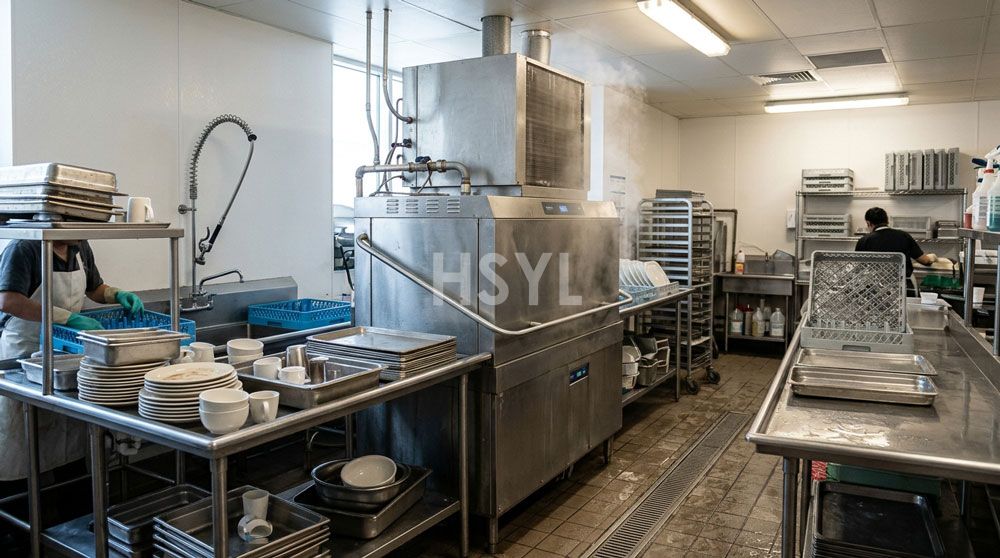
What ENERGY STAR Means in a Commercial Dishroom
ENERGY STAR publishes machine-type categories and energy/water metrics for commercial dishwashers. Use the published scope exactly:
- Undercounter
- Stationary single-tank door / hood-type
- Single-tank rack conveyor
- Multiple-tank rack conveyor
- Flight-type
A rinse-water-per-rack figure from a laboratory cycle is not the same as total facility water use. A certified result must not be transferred to an unverified configuration, a different feed direction, or a machine with a different booster arrangement.
For HSYL project work, the engineering question is practical: which documented consumption basis applies to the offered SKU under your water hardness, inlet temperature, peak racks/hour and sanitizing method?
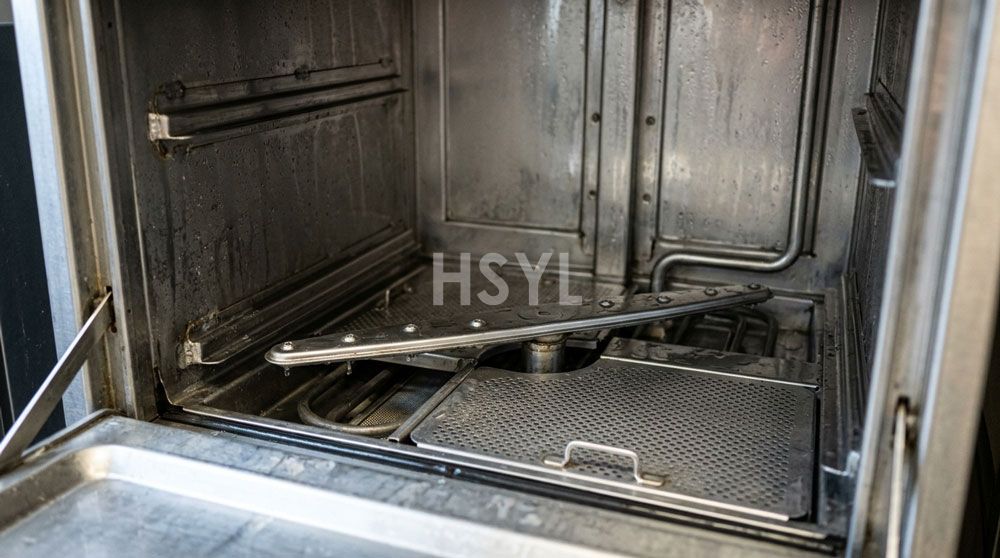
Specify Duty Before Asking for a Certificate
| Decision input | What to record | Why it changes the model |
|---|---|---|
| Peak return load | Racks/hour in the busiest 15–30 minutes | Sets hood vs conveyor vs flight architecture |
| Ware mix | Plates, trays, GN pans, glass, cutlery | Changes rack type, clearance and rewash rate |
| Sanitizing method | High-temp final rinse target (e.g. 82°C / 180°F manifold) or chemical sanitizing | Defines booster size and utility load |
| Inlet water | Temperature, hardness (gpg/ppm), TDS | Affects recovery, delimer frequency and rinse quality |
| Heat recovery | Required / optional / not allowed by site exhaust plan | Changes connected load and steam plume control |
| Observation boundary | Machine-only vs complete dishroom | Prevents false operating-cost comparisons |
Related sizing: How to calculate commercial dishwasher capacity and Hood vs undercounter vs conveyor dishwasher.
Energy Levers That Actually Move Operating Cost
Most dishroom cost is not “nameplate kW.” It is the combination of:
- Rinse water volume per accepted rack
- Booster energy to reach sanitizing temperature
- Tank heat losses and idle/ready energy
- Rewash rate (repeat processing)
- Labour hours inside the same observation boundary
Heat recovery is one of the few hardware choices that can cut rinse booster demand by preheating cold inlet water with exhaust vapour. Review the factory configuration for the Heat-Recovery Hood-Type Pass-Through Dishwasher HDW80CH when a hood-type line is the correct architecture.
For a full cost worksheet, use: Commercial dishwasher operating cost per 1,000 meals.
Selection Matrix: Match Architecture to ENERGY STAR Scope
| Kitchen profile | Typical architecture | ENERGY STAR-relevant checks | HSYL starting point |
|---|---|---|---|
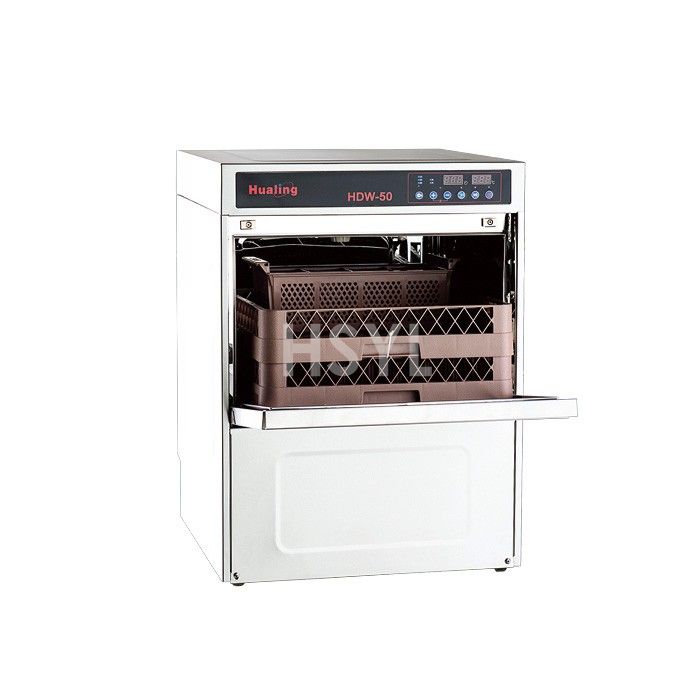
| Café / bar / small restaurant | Undercounter or compact hood | Rack size, rinse L/rack, glassware cycle | Glasswasher / undercounter range |
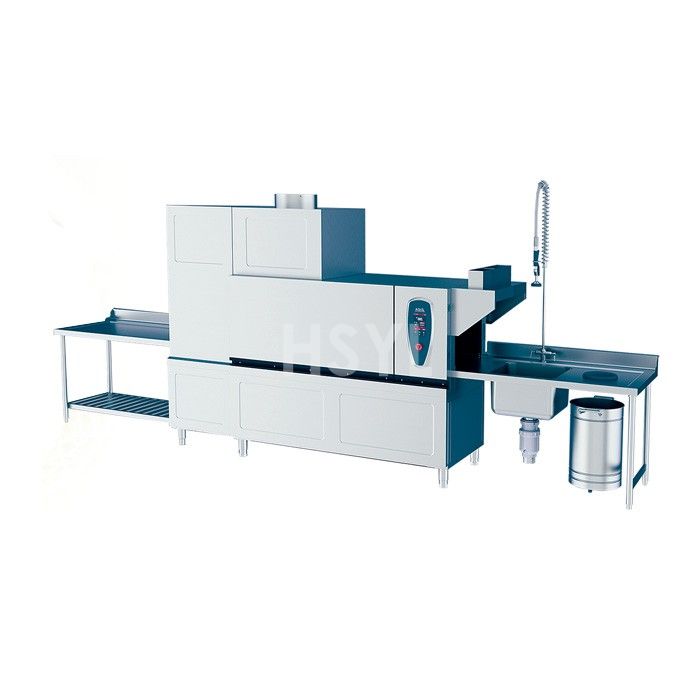
| Full-service restaurant / hotel stewarding | Hood-type pass-through | Heat recovery, 82°C rinse, 50–80 racks/h | HDW80 / HDW80CH |
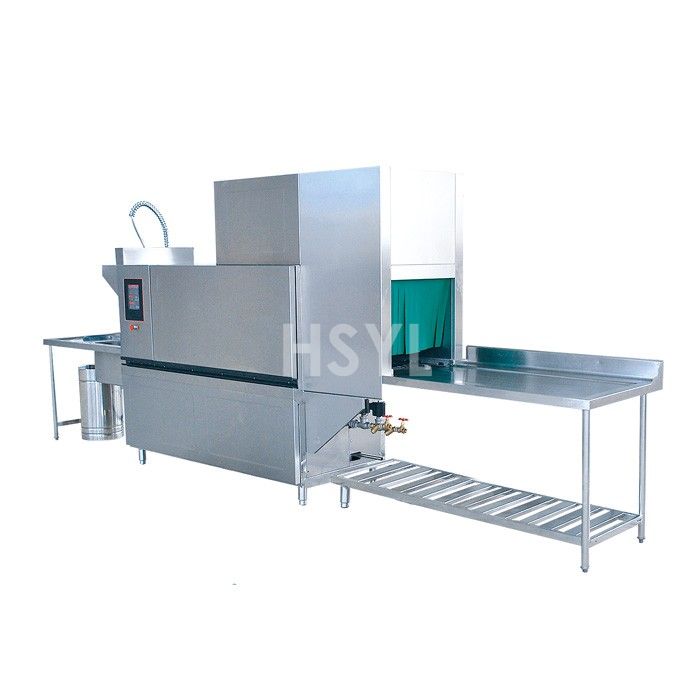
| Canteen 300–800 covers | Rack conveyor | Tanks, dryer option, water L/h | HDW220 / HDW260 series |
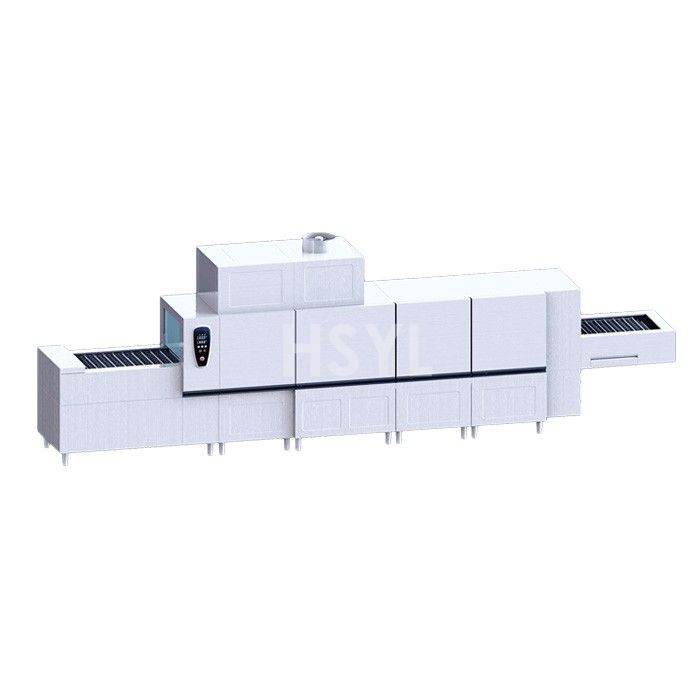
| Campus / factory / airline | Flight-type | Plates/h, steam vs electric heat, drying | HDW3000 / HDW8000L |
Do not compare a hood-type ENERGY STAR metric to a flight-type proposal. Keep machine type constant, then compare documented consumption, then compare price.
What to Request in the Quotation Package
Ask the supplier to state, in writing:
- Exact model / SKU and feed direction (L→R or R→L)
- Machine type category used for any ENERGY STAR or equivalent claim
- Documented rinse water per rack and energy basis (test scope + exclusions)
- Final rinse method and temperature control point
- Whether heat recovery is included, optional, or unavailable
- Booster electrical / steam load and inlet water assumptions
- Included racks, tables, scrap filters and critical spare parts list
Site utilities and water quality coordination: Commercial dishwasher water quality guide and Commercial kitchen energy efficiency.