Direct Answer / Key Takeaway: Labour falls when accepted racks move through a continuous, correctly sized line with low rewash—not when a machine simply lists a higher connected load.
A labor-saving commercial dishwasher is specified from the stewarding workflow. Peak return timing, sorting method, drying requirement and rewash causes determine whether an undercounter, hood-type, rack conveyor or flight-type line reduces person-hours.
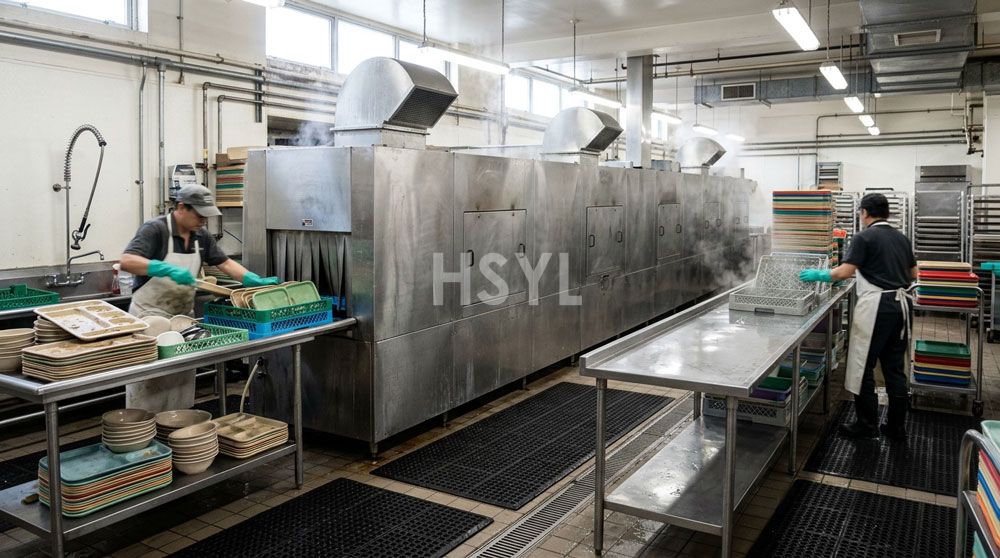
Where Dishroom Labour Actually Goes
| Task | Typical labour driver | Machine / layout lever |
|---|---|---|
| Scraping & sorting | Mixed ware arriving in waves | Soiled landing table length, scrap trough, pre-rinse position |
| Loading | Awkward racking, wrong rack type | Correct pin/flat racks, tray clearance, feed direction |
| Waiting for cycle | Undersized machine at peak | Architecture matched to peak racks/hour |
| Unloading & stacking | Wet ware, no dryer, blocked clean landing | Dryer module, clean table length, rack dollies |
| Rewash | Soil, hardness, low rinse temp, overloaded racks | Water treatment, verified rinse, loading discipline |
| End-of-shift cleaning | Hard-to-access arms/filters | Tool-free arms, scrap screens, drain access |
In many institutional dishrooms, labour is the largest line in a complete operating-cost boundary. See the worked method in Commercial dishwasher operating cost per 1,000 meals.
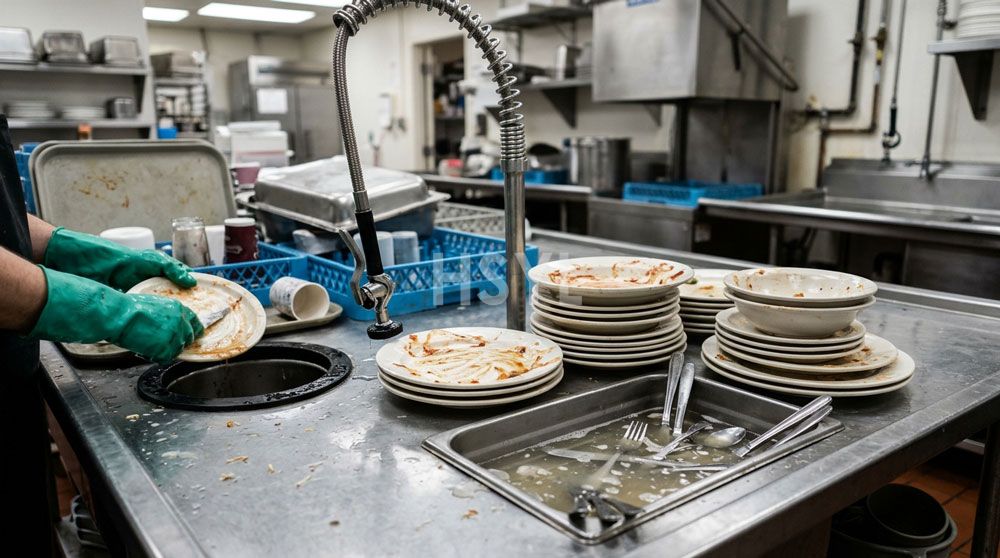
Match Architecture to Labour Pattern
| Peak pattern | Labour risk if undersized | Prefer |
|---|---|---|
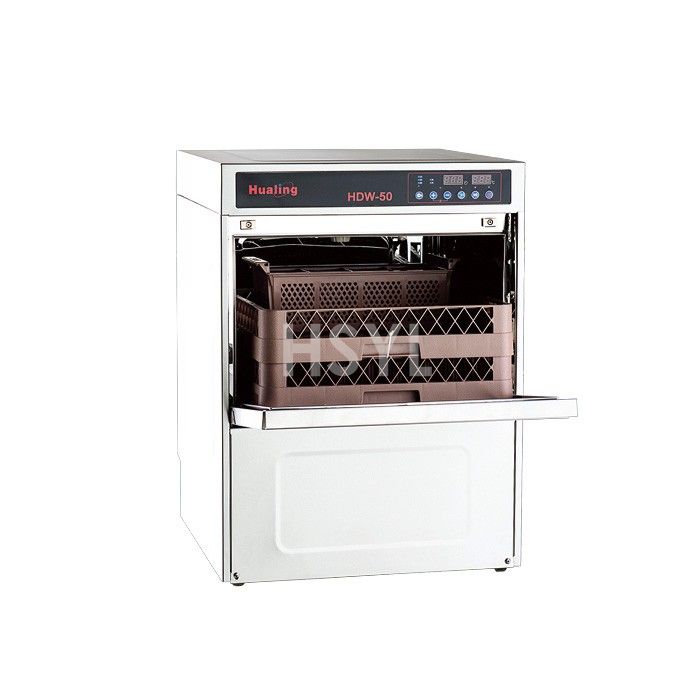
| Small continuous café flow | Staff idle between cycles, or hand-wash overflow | Undercounter / glasswasher sized to steady racks/h |
| Restaurant wave after each turn | Queue at hood, overtime after close | Hood-type with correct tables + heat recovery option |
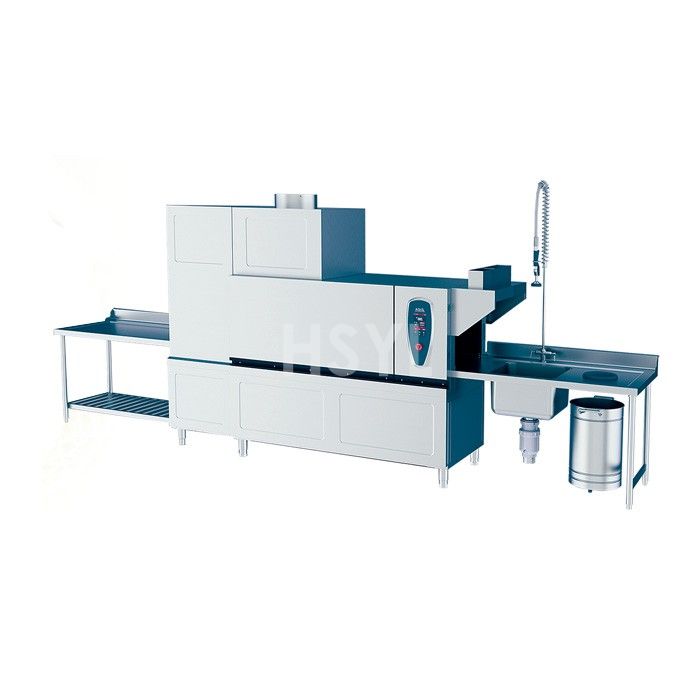
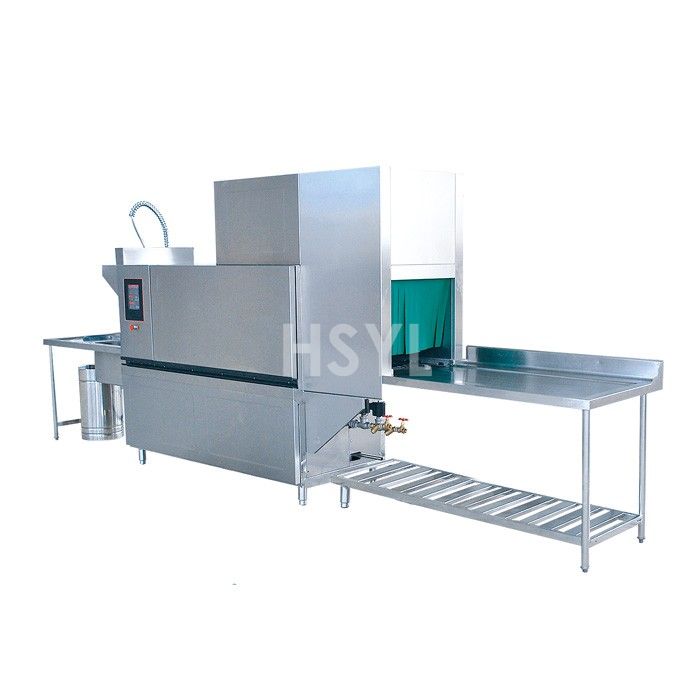
| Canteen / banquet dump | Multiple staff scraping while machine waits | Rack conveyor with clear soiled/clean staging |
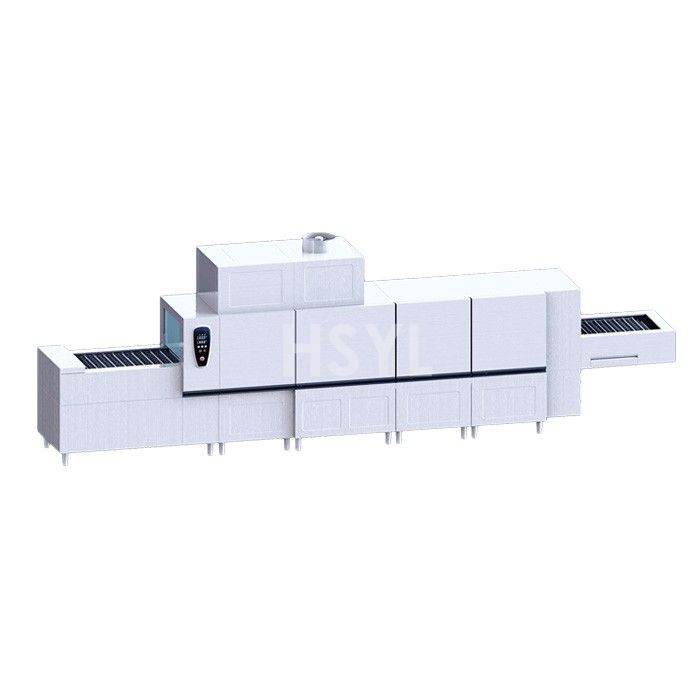
| Campus / factory tray return | Manual tray washing, long overtime | Flight-type sized to plates/trays per hour |
Sizing references:
- How to calculate commercial dishwasher capacity
- Flight-type vs rack conveyor dishwasher sizing
- Hood vs undercounter vs conveyor dishwasher
Design Rules That Cut Person-Hours
1. Size for the peak 15–30 minutes, not the daily average
Average meals/day hides the return spike that creates overtime. Count racks (or trays) in the busiest window and add a rewash allowance.
2. Make the line one-way
Raw/soiled to clean must be physical. Crossing paths adds staff and contamination risk. Coordinate with workflow design and hygiene zoning pages.
3. Buy landing space with the machine
A correctly sized hood or conveyor still fails if soiled and clean tables are too short. Staff then double-handle racks.
4. Reduce rewash before adding people
Rewash multiplies labour and utilities. Verify rinse temperature, water hardness treatment, detergent dosing and rack loading. Water quality: dishwasher water quality guide.
5. Decide drying inside the machine boundary
If ware must leave dry for immediate re-use, specify dryer modules or adequate drain/air-dry staging. Wet unloading is a hidden labour cost.
Labour Observation Worksheet (Copy into RFQ)
| Record | Unit | Project value |
|---|---|---|
| Observation dates / services | text | |
| Meals in period | count | |
| Peak racks (or trays) / 15 min | count | |
| Staff on soiled side | persons | |
| Staff on clean side | persons | |
| Total dishroom person-hours | hours | |
| Rewash % of racks | % | |
| Average minutes from scrape to clean rack away | minutes |
Send this sheet with floor sketch, voltage and water data when requesting a factory proposal for commercial dishwashing equipment.
Model Families to Shortlist by Labour Goal
| Goal | HSYL direction |
|---|---|
| Cut post-service overtime in a hotel stewarding room | Hood-type line; consider HDW80CH heat recovery |
| Reduce canteen tray backlog | Rack conveyor HDW220 / HDW260 with correct feed direction |
| Eliminate manual tray washing at scale | Flight-type HDW3000 / HDW8000L after plate/tray rate confirmation |
| Free bartender time on glass only | Dedicated glasswasher, not a shared dish machine |
Review factory evidence Email : info@hsylkitchen.com