Commercial Food Warmer Price Guide
Commercial food warmer prices depend on capacity, heating method and portability. Compare holding cabinets, heated counters and transport units.
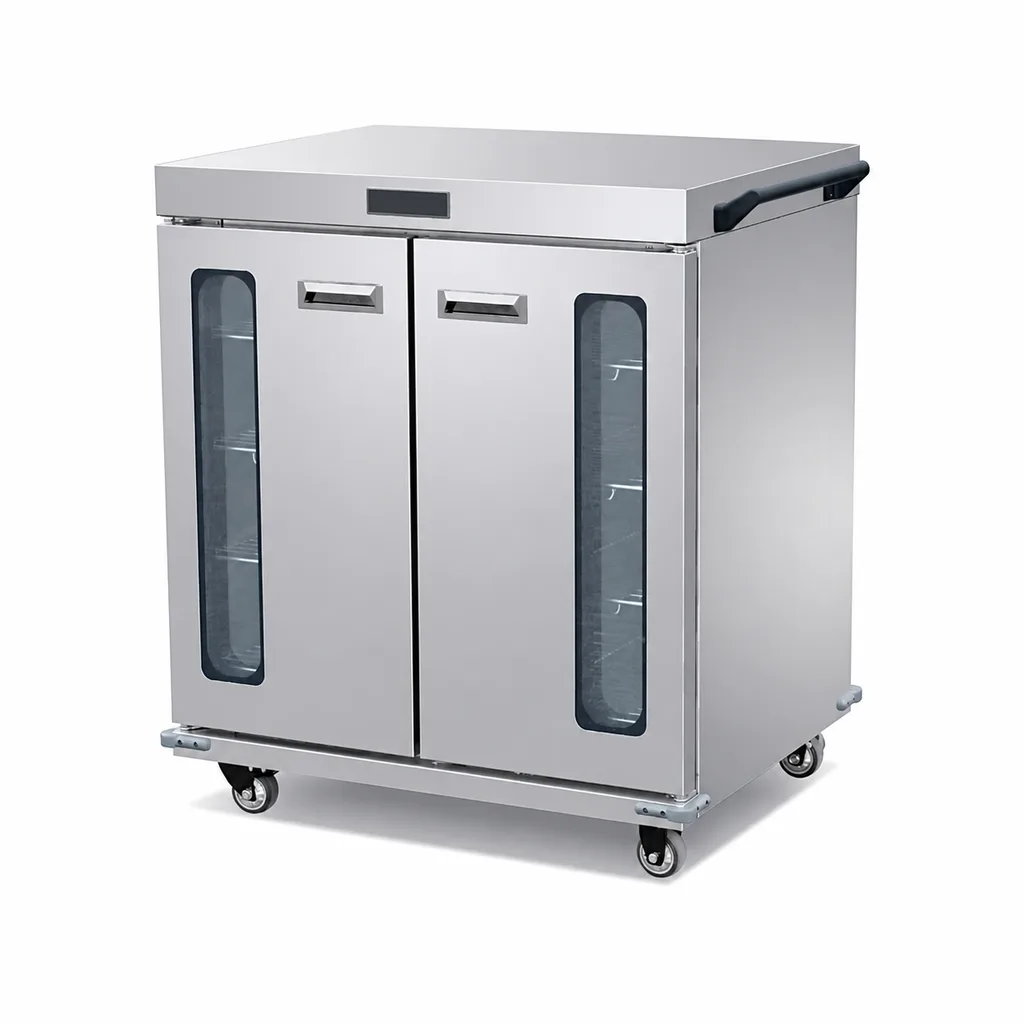
Commercial food warmer prices range from under $1,000 for countertop models to $5,000+ for large holding cabinets. This guide covers the cost factors and helps you select the right holding equipment for your service volume.
How commercial food warmer prices break down
Commercial food warmers include heated holding cabinets, heated counters, and transport units. Prices depend on capacity, heating method, and whether the unit is stationary or mobile. Heated holding cabinets keep food above 140°F for extended periods and are used in banquet halls, hospitals, and schools. Heated counters combine a warming surface with storage space and suit line-cooking setups where plates are assembled before service. Transport units are insulated and heated for moving food between kitchen and service area without temperature abuse.
Heated holding cabinets
Heated holding cabinets range from $1,200 to $6,000 depending on pan capacity, insulation quality, and humidity control. A 10-pan cabinet suits a small hospital or school. A 20-pan cabinet suits a hotel or central kitchen. Humidity injection keeps roasted meats from drying out; dry holding is better for fried items. Look for digital temperature controls, heated doors, and easy-clean interiors. Mobile cabinets with casters cost $200 to $500 extra but improve workflow flexibility.
Heated counters and transport units
Heated counters cost $2,000 to $8,000 and combine a stainless steel work surface with a heated well or dry holding space. They suit serving lines where operators assemble plates in front of guests. Transport units cost $800 to $3,000 and use insulated walls with heating elements to maintain temperature during movement. For catering, choose transport units with internal ledges for sheet pans and external thermometers for temperature verification.
Temperature control, energy use, and compliance
Food warmers must hold food above 140°F (60°C) to prevent bacterial growth. Dry holders rely on heated air; humidified holders inject steam to reduce moisture loss. Energy use varies: a 20-pan insulated cabinet uses 1.5 kW to 3 kW, while an uninsulated heated counter can use 4 kW to 8 kW. Over a year, insulation quality determines whether the warmer costs $300 or $1,200 in electricity. HACCP rules require temperature logs; choose a cabinet with a data logger or USB export to simplify compliance.
| Type | Capacity | Price range | Best for |
|---|---|---|---|
| Heated holding cabinet | 10 pan | $1,200 – $3,000 | Hospitals, schools |
| Heated holding cabinet | 20 pan | $2,500 – $6,000 | Hotels, central kitchens |
| Heated counter | Single well | $2,000 – $5,000 | Serving lines, banquets |
| Transport unit | 8–12 pans | $800 – $3,000 | Catering, room service |
Key takeaway: Buy holding capacity for your longest service gap, not your average hold time. Undersized warmers force operators to hold food above 160°F, which dries out product and triggers health-code warnings.
Maintenance and total cost of ownership
Heated cabinets need door-seal inspection, heating-element cleaning, and temperature-sensor calibration quarterly. Humidity systems need water-quality management; hard water scales steam generators and reduces humidity output. Over five years, maintenance costs range from $400 to $1,500 per year depending on usage. Brands with local service agents and stocked spare parts reduce downtime more than brands with lower sticker prices. Ask for the nearest service center and the lead time for a heating element or control board before buying.
Brand selection, warranty, and resale value
Food warmer brands differ in insulation quality, humidity-system design, and service-network density. Premium brands offer longer warranties, better insulation, and local service agents; mid-tier brands offer lower prices but longer parts lead times. Over five years, a well-insulated cabinet from a mid-tier brand can cost less to run than a premium brand with poor insulation. Ask vendors for energy-use data in kWh per pan-hour and verify that heating elements and control boards are stocked locally. Well-maintained food warmers retain 30% to 50% of their value after five years if you document maintenance and keep original manuals.
Product-specific considerations and menu matching
Different foods behave differently in holding cabinets. Roasted meats benefit from humidified holding at 140°F to 150°F with 80% to 90% relative humidity; fried foods need dry holding at 140°F to 145°F to preserve crispness. Rice and pasta dishes can dry out quickly; use covered inserts or low steam. Soups and sauces need stirred holding wells with temperature gradients below 10°F between top and bottom. Match the warmer type to your menu mix rather than buying a single cabinet for every product. A kitchen that runs both fried and roasted items may need two cabinets: one dry, one humidified.
Food Holding Equipment
Heated holding cabinets, transport units and food warmers for service.
View food holding equipment →
Browse the full food holding equipment range. For hygiene and compliance guidance, see our hygiene and HACCP guidance.
For projects with specific raw material requirements, target capacity needs, or custom factory drawing specifications, contact our team to discuss your working hours and operational requirements. We support full project planning from specification to installation.
Frequently Asked Questions
How much does a commercial food warmer cost?
Heated holding cabinets cost $1,200 to $6,000. Heated counters cost $2,000 to $8,000. Transport units cost $800 to $3,000. Installed cost includes ventilation and electrical work.
What is the difference between dry and humidified holding?
Dry holders use heated air and are better for fried items. Humidified holders inject steam to prevent moisture loss and are better for roasted meats. Choose based on your menu.
How do I maintain food temperature during transport?
Use insulated transport carriers with heated or chilled inserts. Log start and finish temperatures for every event. Health inspectors increasingly audit transport temperatures.
Do food warmers need data logging?
HACCP rules require temperature logs. Choose a cabinet with a data logger or USB export to simplify compliance. A $20 data logger can prove temperature maintenance after a claim dispute.
How do I reduce food warmer energy costs?
Insulation quality matters more than heating element size. A 20-pan insulated cabinet uses 1.5 kW to 3 kW; an uninsulated heated counter can use 4 kW to 8 kW. Upgrade insulation before replacing the unit.
Plan the Equipment Around Your Kitchen.
Share your menu, peak service demand, available space and site utilities. Tell us which equipment you are considering so we can review the requirements with you.