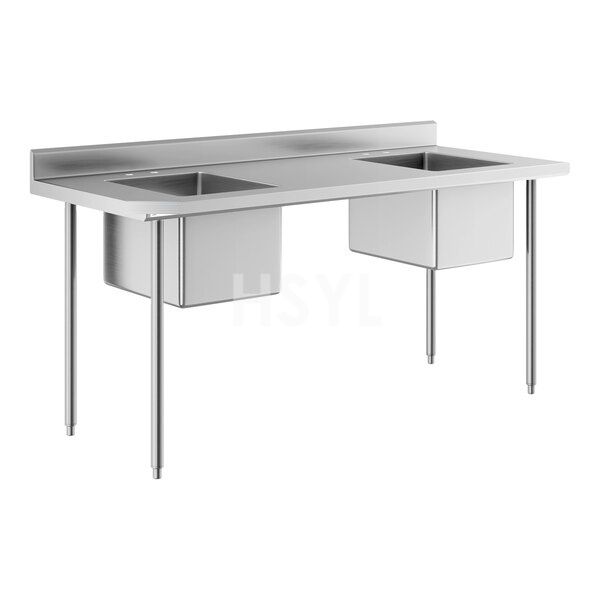
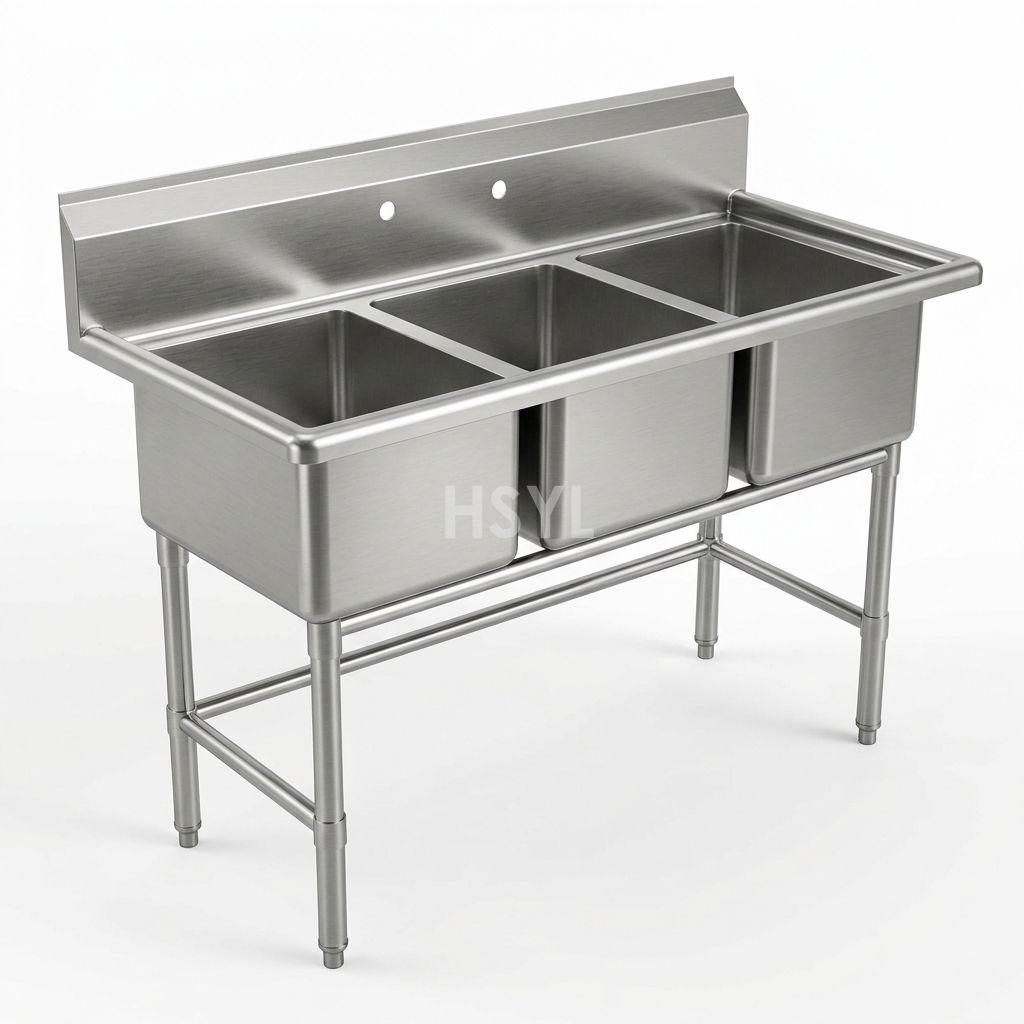
Direct Answer / Key Takeaway: Calculate 3-compartment commercial sink bowl dimensions for 18x26 sheet pans and PDI-G101 grease trap flow rates (GPM & lb capacity) using 75% fill surge math.
Rough-in plumbing failures in commercial dish pits and prep zones rarely stem from pipe diameter errors alone; they occur when mechanical, electrical, and plumbing (MEP) engineers specify warewashing sinks and hydromechanical grease interceptors (HGIs) as decoupled fixtures. When a health inspector verifies utensil immersion under the FDA Food Code while a municipal pretreatment auditor calculates peak fixture discharge under plumbing codes, an undersized sink bowl or an unthrottled grease trap triggers failed occupancy inspections, floor-drain backups, or municipal Fats, Oils, and Grease (FOG) surcharges. Within our Commercial Kitchen Utilities, Drainage & Ventilation Engineering Hub, this specification guide establishes the mathematical sizing methodology linking three-compartment commercial sinks and stainless steel commercial grease traps.
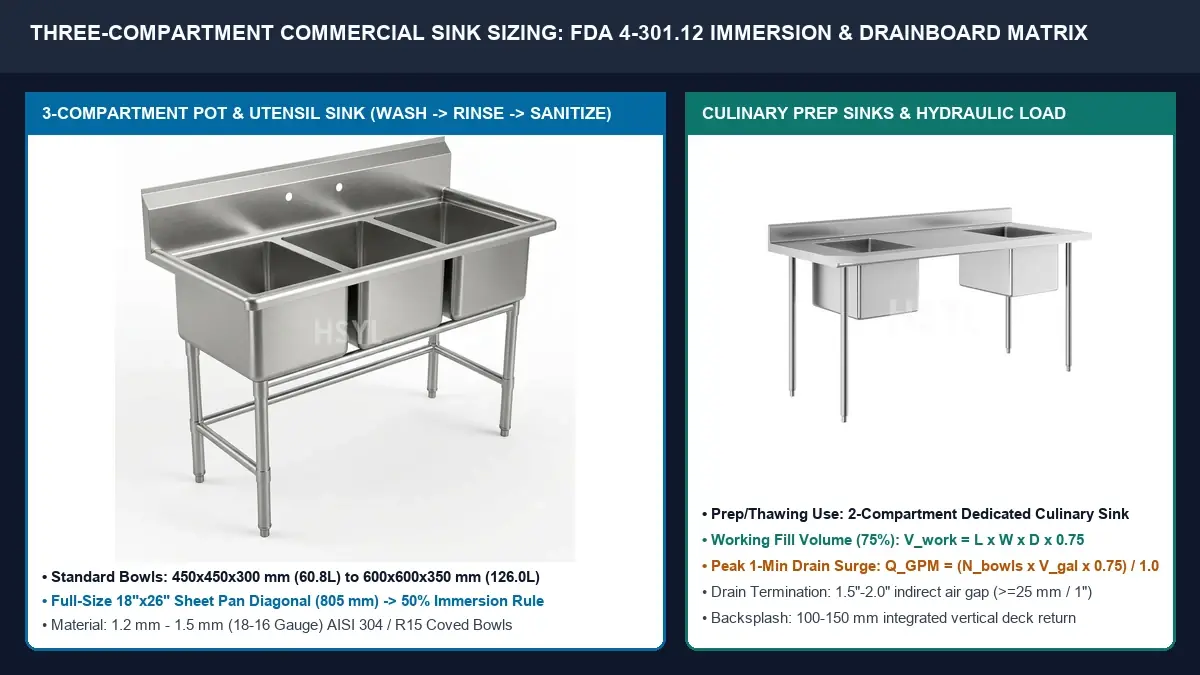
- FDA Food Code §4-301.12 Immersion Geometry: Each sink compartment must submerge at least 50% of the largest kitchenware item during manual washing, rinsing, and sanitizing. Full-size 18" × 26" (457 × 660 mm) sheet pans with an 805 mm (31.7 in) diagonal require minimum 500 × 500 × 350 mm or 600 × 600 × 350 mm compartments to achieve compliant immersion without splashing across adjacent divider walls.
- Working Liquid Volume & PDI-G101 Surge Calculation: Hydromechanical grease interceptors (HGIs) are sized using the 75% displacement fill factor across all three bowls:
QGPM = [3 × (Lin × Win × Din ÷ 231) × 0.75] ÷ Tdrain. A triple 500 × 500 × 350 mm sink holds 69.3 gallons (262.5 L) gross capacity and discharges 52.0 GPM under a 1-minute drain test or 26.0 GPM under a 2-minute restricted drawdown, requiring a 50 GPM / 100 lb or 35 GPM / 70 lb interceptor respectively. - Stokes' Law Thermal & Velocity Thresholds: Gravity separation of emulsified Fats, Oils, and Grease (FOG) collapses when wastewater velocity exceeds 0.015 m/s inside the interceptor chamber or when water temperature exceeds 48.9°C (120°F) without a vented flow-control orifice.
- Metallurgical & Hygienic Fabrication: Specify 1.2 mm to 1.5 mm (18 to 16 Gauge) AISI 304 stainless steel with R15 to R25 coved interior corners for wash compartments, and corrosion-resistant 2.0 mm AISI 304/316L welded baffle chambers for under-sink grease traps exposed to anaerobic organic acids.
Key takeaway: Rough-in plumbing failures in commercial dish pits and prep zones rarely stem from pipe diameter errors alone; they occur when mechanical, electrical, and plumbing (MEP) engineers specify warewashing sinks and hydromechanical grease interceptors (HGIs) as decoupled fixtures. When a health inspector verifies utensil immersion under the FDA Food Code while a municipal pretreatment auditor calculates peak fixture discharge under plumbing codes, an undersized sink bowl or an unthrottled grease trap triggers failed occupancy inspections, floor-drain backups, or municipal Fats, Oils, and Grease (FOG) surcharges. Within our Commercial Kitchen Utilities, Drainage & Ventilation Engineering Hub, this specification guide establishes the mathematical sizing methodology linking three-compartment commercial sinks and stainless steel commercial grease traps.
Hydraulic & Gravimetric Separation Physics: Stokes' Law, Fixture Surge & Immersion Geometry
Designing a compliant scullery station requires reconciling two opposing physical mandates: the sink compartments must maximize liquid volume to submerge bulky cookware and retain thermal mass at 43.3°C–48.9°C (110°F–120°F) during washing, whereas the downstream grease interceptor must decelerate that exact discharge volume rapidly enough for low-density lipid globules to float out of suspension before reaching the sanitary sewer.
Utensil Immersion Kinematics & Thermal Retention in Manual Warewashing
Under the U.S. FDA Food Code (§4-301.12 Manual Warewashing, Sink Compartment Requirements), a manual warewashing station must provide at least three dedicated compartments for washing, rinsing, and sanitizing, each large enough to accommodate immersion of the largest equipment and utensils. Specifically, when an item is too large for 100% single-pass submersion, the compartment must submerge at least 50% of the utensil's surface area so that a single 180-degree rotation achieves full sanitization coverage.
Consider the two universal benchmark items in commercial foodservice:
- Full-Size 18" × 26" × 1" (457 × 660 × 25 mm) Sheet Pan: Placed flat, the pan requires a bowl length exceeding 660 mm; tilted diagonally across the compartment width, its diagonal hypotenuse is
√(4572 + 6602) = 802.8 mm (31.6 in). In a compact 450 × 450 × 300 mm sink bowl, a full-size sheet pan jams high above the waterline, spilling detergent solution onto the floor. Stepping up to a 500 × 500 × 350 mm or 600 × 600 × 350 mm bowl allows the pan to rest diagonally or flat below the 75% working liquid level for compliant two-step immersion. - 40-Quart to 60-Quart (38 L to 57 L) Stock Pots & Full-Size GN 1/1 (530 × 325 × 150 mm) Hotel Pans: A 60-quart stock pot measures approximately 450 mm (17.7 in) in diameter. Only a 600 × 600 × 350 mm (24" × 24" × 14") bowl provides the necessary 75 mm perimeter hand clearance around the pot handles for ergonomic scrubbing and full sanitization immersion.
Liquid volume also governs thermal stability. In the first compartment (Wash), detergent efficacy drops sharply when water temperature falls below 43.3°C (110°F) because animal tallow and hydrogenated frying shortenings solidify between 38°C and 44°C. In the third compartment (Sanitize), chemical sanitizers require strict temperature envelopes under FDA §4-501.114—24°C–49°C (75°F–120°F) for quaternary ammonium compounds (200–400 ppm) and 13°C–49°C (55°F–120°F) for sodium hypochlorite (50–100 ppm)—while hot-water sanitization demands an immersed booster heater holding water at ≥77.2°C (171°F) for a minimum of 30 seconds.
Stokes' Law Gravity Separation & Emulsification Breakdown
Once the operator pulls the standpipe drain plugs on a 3-compartment stainless steel sink, the high-head hydrostatic column rushes through the 1.5-inch or 2.0-inch (DN40 or DN50) waste outlet into the hydromechanical grease interceptor. Inside the interceptor, separation of non-emulsified lipid droplets from the aqueous carrier flow is governed by Stokes' Law for terminal rise velocity (vr):
Governing Engineering Equations & Parameters:
- v_r = [ g × (ρ_water - ρ_grease) × d_droplet² ] / (18 × μ_water)
- v_r = Terminal vertical rise velocity of the grease globule (m/s)
- g = Gravitational acceleration (9.81 m/s²)
- ρ_water = Density of wastewater (~992 kg/m³ at 40°C)
- ρ_grease = Density of liquid culinary fats/oils (~890 to 920 kg/m³)
- d_droplet = Effective diameter of the coalesced lipid droplet (typically 150 to 500 μm)
- μ_water = Dynamic viscosity of water (~0.653 × 10⁻³ Pa·s at 40°C)
This fluid-dynamic relationship exposes three failure mechanisms that engineers must eliminate at the specification stage:
- Hydraulic Short-Circuiting (Excess Horizontal Velocity): If the sink discharges at 55 GPM into a compact 20 GPM grease trap lacking an inlet flow-control orifice, horizontal flow velocity (
vh) overwhelms vertical rise velocity (vr). Turbulence shears large 500 μm oil droplets into sub-50 μm micro-globules that pass directly under the outlet baffle into the municipal main. - Chemical Emulsification from Sanitizer & Surfactant Surge: Heavy doses of high-alkaline degreasers and quaternary ammonium sanitizers reduce interfacial tension between lipids and water, creating stable micelles that lower effective droplet diameter (
ddroplet) by an order of magnitude. Because rise velocity scales with the square of droplet diameter (d2), a 10× reduction in droplet diameter causes a 100× reduction in buoyancy rise speed. - Thermal Carryover Above 48.9°C (120°F): When hot-water sanitizing compartments (77.2°C) or commercial dishwashers discharge directly into a compact under-sink HGI without cooling dilution, elevated thermal convections create density currents inside the interceptor chamber that re-melt and scour the accumulated grease cap off the top baffle zone.
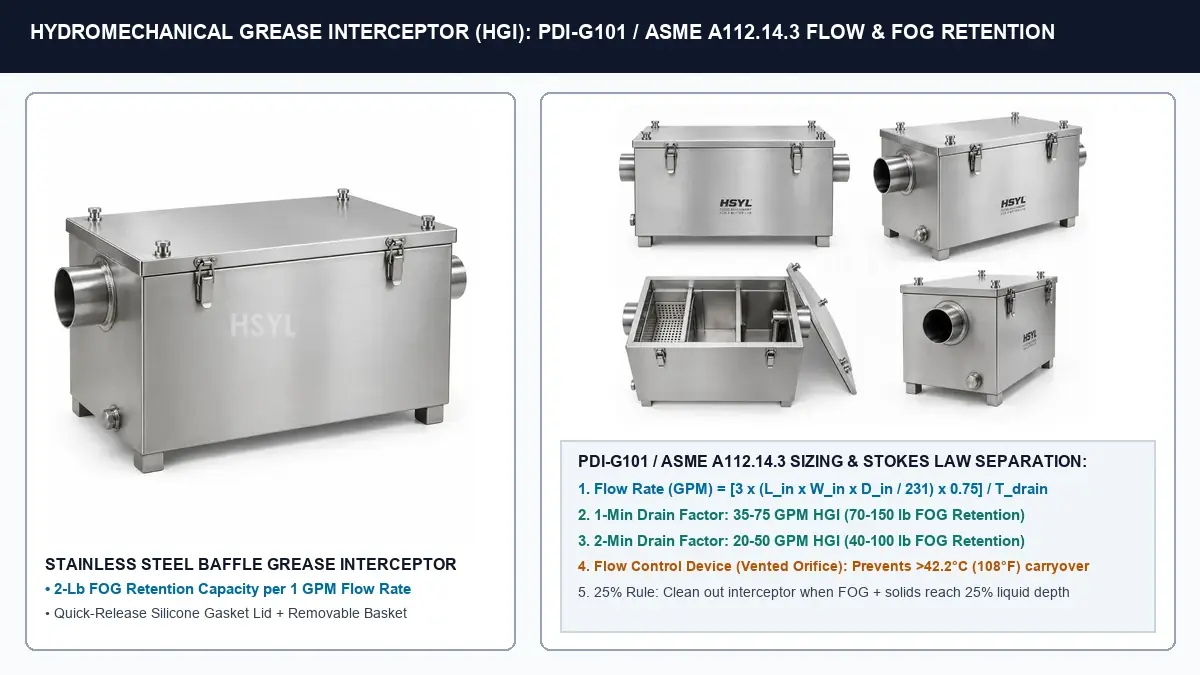
Engineering Specification & Sizing Matrix: 3-Compartment Sinks & PDI Grease Interceptors
To prevent mismatched MEP schedules, the hydraulic output of the sink bowls must directly determine the GPM and grease retention capacity of the interceptor under ASME A112.14.3 / PDI-G101 (Hydromechanical Grease Interceptors).
Step-by-Step PDI-G101 / IPC Flow-Rate Calculation Formula
Both the Plumbing and Drainage Institute (PDI-G101) and the International Plumbing Code (IPC Section 1003.3) size hydromechanical grease interceptors using four sequential calculations:
- Step 1 — Gross Compartment Volume: Multiply interior bowl length × width × depth in inches and divide by 231 in3/gal (or multiply millimeters and divide by 1,000,000 mm3/L, where
1 US Gallon = 3.7854 Liters). - Step 2 — Total Gross Sink Capacity: Multiply single-bowl volume by the number of compartments (
N = 3for a three-compartment sink, plus any connected two-compartment prep sink or pre-rinse scrap sink on the same branch line). - Step 3 — 75% Working Displacement Factor: Multiply gross capacity by 0.75 to account for the volume displaced by submerged pots, sheet pans, and operator hands below the overflow rim.
- Step 4 — Drainage Period Factor (1-Minute vs. 2-Minute Drawdown): Divide the working volume in gallons by the jurisdictional drainage period—1.0 minute for unrestricted high-velocity municipal districts, or 2.0 minutes where a vented flow-control fitting is permitted. Under PDI-G101, minimum grease retention capacity in pounds (lb) equals exactly 2 × the rated GPM flow rate (e.g., a 35 GPM interceptor must retain ≥70 lb of FOG at ≥90% separation efficiency).
Master 3-Compartment Sink & Grease Interceptor Engineering Matrix
| Sink Bowl Dimensions (L × W × D per Bowl) | Overall Unit Length (with 2 Drainboards) | Gross Volume (3 Bowls Total) | 75% Working Volume (Gal / L) | 1-Min Drain Surge (PDI HGI Rating) | 2-Min Drain Surge (PDI HGI Rating) | Target Cookware Immersion & Facility Profile |
|---|---|---|---|---|---|---|
| 400 × 400 × 300 mm (16" × 16" × 12") | 1,800 – 2,100 mm (2 × 300–450 mm boards) | 144.0 L (38.0 US Gal) | 28.5 Gal (108.0 L) | 28.5 GPM — 35 GPM / 70 lb | 14.3 GPM — 15 GPM / 30 lb | Coffee bars, satellite beverage stations, bar glassware, half-size (18"×13") sheet pans, 1/2 GN pans |
| 450 × 450 × 300 mm (18" × 18" × 12") | 2,100 – 2,400 mm (2 × 375–450 mm boards) | 182.3 L (48.1 US Gal) | 36.1 Gal (136.7 L) | 36.1 GPM — 50 GPM / 100 lb | 18.1 GPM — 20 GPM / 40 lb | Quick-service restaurants (QSR), cafes, full-size GN 1/1 hotel pans (530×325 mm), 20-qt stock pots |
| 500 × 500 × 350 mm (20" × 20" × 14") | 2,400 – 2,700 mm (2 × 450–600 mm boards) | 262.5 L (69.3 US Gal) | 52.0 Gal (196.9 L) | 52.0 GPM — 75 GPM / 150 lb | 26.0 GPM — 35 GPM / 70 lb | Full-service casual dining, bakeries, diagonal immersion of 18"×26" sheet pans, 40-qt sauce pots |
| 600 × 600 × 350 mm (24" × 24" × 14") | 2,700 – 3,300 mm (2 × 450–750 mm boards) | 378.0 L (99.9 US Gal) | 74.9 Gal (283.5 L) | 74.9 GPM — 75 GPM / 150 lb | 37.5 GPM — 50 GPM / 100 lb | Hotels, hospital kitchens, university commissaries, 60-qt stock pots, roasting pans, fryer baskets |
| 700 × 600 × 400 mm (28" × 24" × 16") | 3,300 – 3,600 mm (2 × 600–750 mm boards) | 504.0 L (133.1 US Gal) | 99.9 Gal (378.0 L) | 99.9 GPM — 100 GPM / 200 lb (or ExteriorGGI) | 49.9 GPM — 50 GPM / 100 lb | Central food processing plants, banquet halls, horizontal flat immersion of 18"×26" sheet pans & 80-qt pots |
Drainboard Pitch, Air-Dry Staging & Multi-Sink Segregation
Under NSF/ANSI 2 (Food Equipment) and FDA Food Code §4-301.13, a three-compartment warewashing sink must integrate dual self-draining drainboards—one on the soiled entry side for scraping and stacking unwashed cookware, and one on the clean exit side for air-drying sanitized wares. Towel-drying sanitized utensils is strictly prohibited under FDA §4-901.11 because cloth towels re-inoculate wet stainless surfaces with Staphylococcus aureus and Listeria monocytogenes. Consequently, the clean-side drainboard must measure at least 450 mm to 750 mm (18" to 30") in length with a die-stamped longitudinal drainage pitch of 2% (1/4 inch per foot / 20 mm per meter) directed back toward the adjacent bowl.
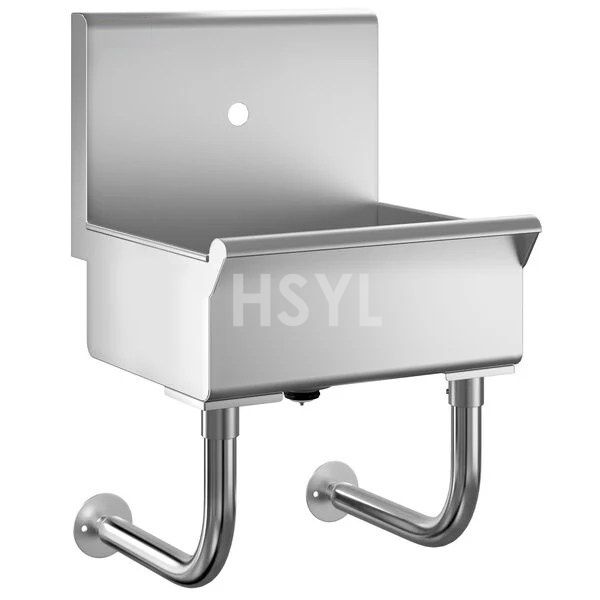
In addition, health codes prohibit washing raw produce or thawing frozen protein inside a warewashing sink unless a strict multi-step clean-and-sanitize turnaround SOP is logged between tasks. High-throughput facilities eliminate cross-contamination bottlenecks by specifying a separate two-compartment stainless steel prep sink for culinary washing alongside dedicated single-bowl handwashing stations selected from our commercial kitchen sinks catalog. When a dish pit combines manual pot scrubbing with mechanized rack washing, consult our commercial dishwasher capacity calculation guide to balance pot-sink volume against flight or conveyor machine throughput.
Regulatory, Sanitation & MEP Plumbing Compliance (FDA, NSF/ANSI 2, IPC/UPC & PDI-G101)
Indirect Waste Air Gaps vs. Direct Trap Connections
One of the most frequent field rejection items during municipal plumbing inspections involves how the sink waste manifold connects to the building drainage system:
- Culinary Food-Prep & Ice-Melt Sinks: Must discharge through an indirect waste pipe with a true physical air gap (minimum 25 mm / 1.0 inch or twice the effective diameter of the drain outlet above the flood-level rim of the floor sink) under IPC Section 802.1.1. This prevents raw sewage backflow from ever contacting thawed meat or washed vegetables.
- 3-Compartment Warewashing Sinks: Under the Uniform Plumbing Code (UPC) and select state amendments, the third compartment (Sanitize) or the entire 3-compartment continuous waste header often requires an indirect air break or air gap into a floor receptor upstream of the grease interceptor. Where direct connection to an under-sink commercial grease trap is permitted, a vented flow-control tee must be installed between the fixture trap and the grease interceptor inlet.
Vented Flow-Control Orifice & Vapor-Lock Prevention
Every PDI-G101 certified hydromechanical grease interceptor relies on an external or internal flow-control fitting equipped with an integral air intake vent. Without this orifice, a full 3-compartment sink standing 850 mm (33.5 in) above the floor generates enough hydrostatic head to force 60+ GPM through a 2-inch waste line, overwhelming a 35 GPM under-sink interceptor. The air intake vent on the flow-control tee must terminate either above the flood-level rim of the sink or connect into the building sanitary vent stack; capping this vent tube in the field causes air-binding and sluggish bowl drainage.
NSF/ANSI 2 Corner Radii, Splash Guards & Crevice Elimination
Under NSF/ANSI Standard 2, food-zone and splash-zone fabrication on commercial sinks must eliminate bacterial harborage crevices:
- Internal Bowl Coving: All vertical and horizontal intersections inside each sink bowl must feature a minimum internal radius of R15 mm to R25 mm (0.6" to 1.0") formed by hydraulic deep-drawing or continuous TIG welding polished to a #4 brushed satin finish (
Ra ≤ 0.8 μm). - Backsplash & Tile Ledge Integration: The rear deck must turn upward into a 100 mm to 150 mm (4" to 6") splashback with a 45-degree return top lip and Z-clip wall mounting bracket, sealed to the kitchen wall with NSF-listed antimicrobial silicone.
- Rolled Rim Bullnose: Front and side edges require a 38 mm (1.5 in) diameter rolled bullnose rim that reinforces structural rigidity when staff lean heavy 60-quart stock pots against the apron.
Point-of-Use Hydromechanical (HGI) vs. Exterior Gravity Grease Interceptors (GGI)
Plumbing engineers must also distinguish between point-of-use Hydromechanical Grease Interceptors (HGIs, governed by ASME A112.14.3 / PDI-G101) and exterior in-ground Gravity Grease Interceptors (GGIs, governed by IAPMO/ANSI Z1001 and UPC Chapter 10). While exterior concrete or fiberglass GGIs rely on a 30-minute hydraulic retention time (typically 750 to 3,000 US gallons) to serve entire commissaries, point-of-use stainless steel HGIs use engineered inlet baffles, air-entrainment flow orifices, and short laminar flow paths to achieve ≥90% FOG separation within a 1-minute to 2-minute retention envelope directly beneath or adjacent to the 3-compartment sink. Point-of-use HGIs capture lipid discharges while wastewater is still near 40°C, preventing animal fats from congealing inside long horizontal sub-slab branch lines before reaching an exterior tank.
Metallurgy, Fabrication Integrity & Baffle Corrosion Engineering
Selecting the wrong stainless steel alloy or sheet gauge across wet scullery equipment leads to work-hardening cracks around drain bosses and rapid perforation inside grease interceptors. Our commercial stainless steel kitchen equipment engineering standards enforce strict metallurgical differentiation between above-floor sinks and below-deck grease interceptors.
AISI 304 vs. AISI 201 / 430 in High-Chloride Sanitizing Environments
Budget sinks fabricated from AISI 201 (manganese-substituted austenitic steel) or AISI 430 (ferritic steel) suffer rapid pitting corrosion within 6 to 12 months when exposed to third-compartment sodium hypochlorite (bleach) sanitizers, acidic tomato/citrus marinades, and salty food scrap brines. True commercial warewashing sinks require AISI 304 (18Cr-8Ni) austenitic stainless steel as a baseline, or AISI 316L (16Cr-10Ni-2Mo) in coastal seafood commissaries where chloride concentrations exceed 300 ppm.
Sheet Gauge Deflection: 1.5 mm (16 Ga) vs. 1.2 mm (18 Ga) vs. 0.8 mm (20 Ga)
When three 600 × 600 × 350 mm bowls are filled to 75% capacity, the static water mass alone equals 283.5 kg (625 lb), before adding 60 kg of cast-iron cookware and dynamic scrubbing impact:
- 1.5 mm (16 Gauge) AISI 304: Mandatory for heavy institutional pot sinks with bowls ≥500 × 500 mm. Eliminates bottom-panel oil-canning flexing around the 90 mm (3.5-inch) basket strainer opening, preventing rotary lever waste valves from leaking.
- 1.2 mm (18 Gauge) AISI 304: Suitable for compact 400 × 400 mm bar sinks and medium-duty two-compartment prep sinks.
- Underframe & Leg Bracing: Sink bowls must sit on a perimeter angle-iron or tubular stainless frame supported by Ø38 mm × 1.2 mm stainless legs with gusseted cross-bracing and adjustable stainless bullet feet (+35 mm leveling travel) meeting OSHA ergonomic working height guidelines (850–900 mm deck height).
Sulfuric & Free Fatty Acid Corrosion Inside Grease Interceptors
Inside a commercial grease trap, trapped food solids settle into the primary removable strainer basket while lipids float to the top of the primary separation chamber. Between pump-outs, anaerobic bacteria metabolize trapped triglycerides and sulfur-bearing proteins into free fatty acids (pH 3.5–4.5) and hydrogen sulfide (H2S) gas, which oxidizes into dilute sulfuric acid (H2SO4) in the humid headspace above the waterline. Epoxy-coated carbon steel interceptors inevitably blister, rust through at the baffle welds, and leak foul wastewater onto the kitchen floor within 3 to 5 years. Specifying a full-welded 1.5 mm to 2.0 mm AISI 304/316 stainless steel grease interceptor with an EPDM or food-grade silicone perimeter lid gasket and heavy-duty over-center latch clamps eliminates structural perforation across a 15-year operating lifecycle. Prior to shipment, all welded sink bowls and grease interceptor chambers should undergo hydrostatic leak verification as detailed in our commercial kitchen equipment Factory Acceptance Testing (FAT) checklist.
Rotary Lever Waste Valves vs. Standpipe Overflow Strainers
In high-volume sculleries, reaching bare hands into 49°C (120°F) greasy wash water or 77.2°C (171°F) hot-water sanitizing compartments to pull rubber drain stoppers creates severe scalding and broken-glass laceration hazards. Specifying heavy-duty nickel-plated bronze or AISI 304 rotary twist-handle lever waste valves with 2-inch NPT (DN50) outlets and removable perforated stainless flat strainers allows operators to drain each compartment externally from beneath the sink apron. Each waste valve should include an integrated overflow tube port connected to the adjacent compartment overflow boss so floating foam and surface grease can be skimmed without draining the entire thermal bath.
5-Year TCO, FOG Surcharge Avoidance & The "25% Rule" Maintenance SOP
Comparative 5-Year TCO: Properly Sized AISI 304 System vs. Undersized Economy Setup
Facilities that cut upfront capital expenditure by installing thin-gauge 0.8 mm AISI 201 sinks paired with undersized, unbaffled 15 GPM carbon-steel grease traps incur severe downstream operating penalties from emergency hydro-jetting, municipal FOG non-compliance fines, and premature fixture replacement:
| 5-Year Cost Category | Compliant System: 1.5 mm AISI 304 3-Comp Sink + PDI-Sized 50 GPM SS Grease Trap | Undersized Budget System: 0.8 mm AISI 201 Sink + 15 GPM Carbon-Steel Trap | Engineering Variance & Operational Driver |
|---|---|---|---|
| Initial Equipment & Plumbing Rough-In | $1,850 | $920 | +$930 upfront investment for 16-Ga 304 bowls, rotary waste valves, and 50 GPM/100 lb SS interceptor |
| Emergency Drain Line Hydro-Jetting & Plumbers (5 Yrs) | $450 (1 scheduled preventive line flush) | $5,400 (12 emergency grease blockages @ $450/call) | Unthrottled 52 GPM sink surge flushes emulsified grease past a 15 GPM trap into cold horizontal floor drains |
| Municipal FOG Effluent Surcharges & Citations (5 Yrs) | $0 (Effluent consistently ≤100 mg/L FOG) | $3,800 (BOD/FOG exceedance fines & re-inspection fees) | Municipal pretreatment limits enforce 100–150 mg/L max FOG discharge at sampling port |
| Mid-Cycle Fixture Replacement (Year 3–4) | $0 (15+ year service life) | $1,950 (Rusted carbon trap + cracked sink drain boss replacement) | H2SO4 headspace corrosion perforates carbon steel; bleach pits AISI 201 welds |
| Total 5-Year Lifecycle Cost (TCO) | $2,300 | $12,070 | Net 5-Year Savings: $9,770 (3.0-Month Payback on Upgrade) |
The Municipal "25% Rule" & Daily Scullery Maintenance Protocol
Even a properly sized PDI-G101 grease interceptor loses separation efficiency if the accumulated floating grease mat and settled bottom sludge reduce the active hydraulic detention volume. Municipal wastewater authorities universally enforce the "25% Rule": whenever the combined depth of the floating FOG layer (top) and settled food solids layer (bottom) reaches 25% of the total liquid depth inside the interceptor, separation efficiency drops below 50% and the unit must be skimmed and pumped out immediately.
- Daily Strainer Basket Evacuation: At the end of every dinner shift, kitchen staff must lift the primary perforated stainless steel solids basket from the commercial grease trap before food scraps undergo anaerobic fermentation.
- Dry-Scraping Before the First Sink Compartment: Enforcing rubber-spatula dry scraping of plates and sheet pans into compost/trash receptacles before immersion in the Wash bowl reduces solid organic loading by 60% to 75%, extending grease trap skimming intervals from weekly to bi-weekly or monthly.
- Prohibition of Enzyme/Solvent "Grease Dissolvers": Never dose bacterial enzymes or caustic emulsifiers into an under-sink HGI unless explicitly approved by the local sewer authority; chemical emulsifiers simply keep liquid fat suspended until it cools and congeals 30 meters downstream inside the municipal collector main.
Discuss Your Scullery Sink & Grease Interceptor Sizing with HSYL Engineers
Share your largest cookware/sheet pan dimensions, municipal drain time factor (1-minute vs. 2-minute), and floor rough-in drawings. HSYL fabricates custom AISI 304/316L compartment sinks and baffled grease interceptors to match your plumbing code. Contact HSYL for Sink & Drainage Engineering Support.