Every commercial dishwasher sanitizes one of two ways: with heat, or with chemicals. A high-temperature machine finishes the cycle with a hot final rinse — the industry benchmark is 82 to 90 °C — that kills pathogens thermally and flash-dries the ware. A low-temperature machine washes cooler, around 49 to 60 °C, and doses a chemical sanitizer into the rinse to do the killing instead. Both methods meet the same sanitation standards when run correctly; the choice is about your energy supply, your chemical budget and your ware. One point worth stating plainly up front: the HSYL dishwasher line is a high-temperature line. The steam-heated and electric-heated versions of the same machine both sanitize with heat — the difference between them is where the heat comes from, not how the sanitizing happens. That distinction is covered in its own guide; this one sorts out the heat-versus-chemical decision.
The temperatures below are the widely published industry ranges used across dealer and engineering sources for this comparison, not figures read from a specific HSYL specification sheet — the machine's own final-rinse temperature is confirmed on its quotation sheet.
High-Temperature: Sanitize with an 82 °C Rinse
A high-temp machine runs two temperature stages. The wash runs around 55 to 65 °C, where detergent works best to lift grease and food soil. The final rinse then delivers fresh water at 82 to 90 °C — the heat itself is what sanitizes, driving the 5-log bacterial reduction that health codes require, and the residual heat flash-dries the ware as it comes out. The component that makes this possible is a booster heater: a dedicated unit that takes the building's hot water and lifts it to sanitizing temperature, whether that boost comes from internal electric elements or from an external steam source. That is the whole mechanism — no sanitizer chemical in the rinse, no residue left on the ware, and dry dishes ready to stack straight off the rack.
The cost sits on the energy side. Reaching 82 °C on every rinse draws real power, which is why the two HSYL ways of fuelling it matter: the HDW260-EL-R electric-heated carries a 45 kW electrical load to heat its own rinse, while the HDW260-SL-R steam-heated draws 10 kW plus 70 kg/h of steam from the site's boiler. Same sanitizing result, two very different utility bills.
Low-Temperature: Sanitize with Chemicals
A low-temperature machine runs its whole cycle cooler, around 49 to 60 °C, and injects a chemical sanitizer — typically chlorine, sometimes iodine or quaternary ammonium — into the final rinse. The chemical, held in contact with the ware for the right time at the right concentration, does the killing that heat would otherwise do. Because the water never has to reach 82 °C, there is no booster heater and the energy draw is lower, which is why this method appeals where hot-water capacity or electrical supply is limited.
The trade-off moves from energy to chemistry. The sanitizer is a continuous operating cost, its concentration must be tested regularly to stay effective, and the ware comes out wetter because there is no hot rinse to flash-dry it — so drying space and time increase. Chemical dosing also demands staff discipline: a dose that drifts below the required concentration is a sanitation failure that looks like a clean rack. The method is sound when run properly; it just relocates the control point from the thermometer to the test strip.
Where the HSYL Line Sits
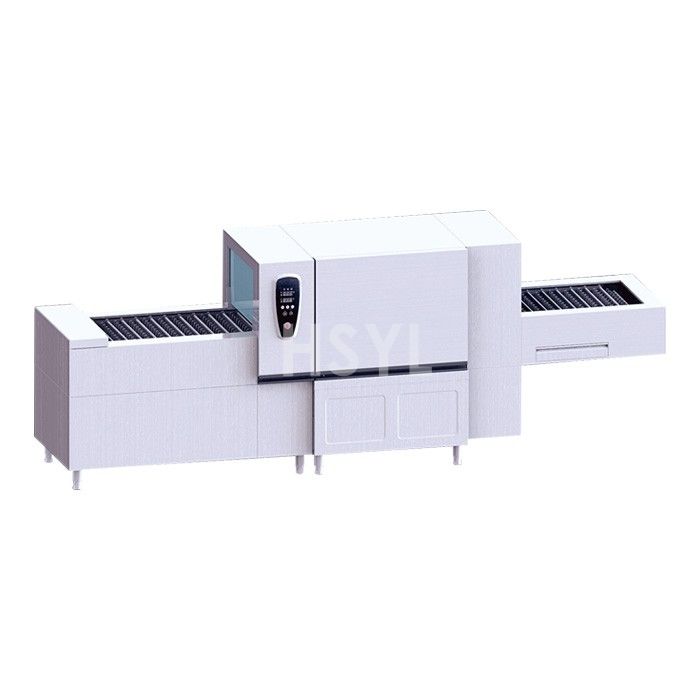
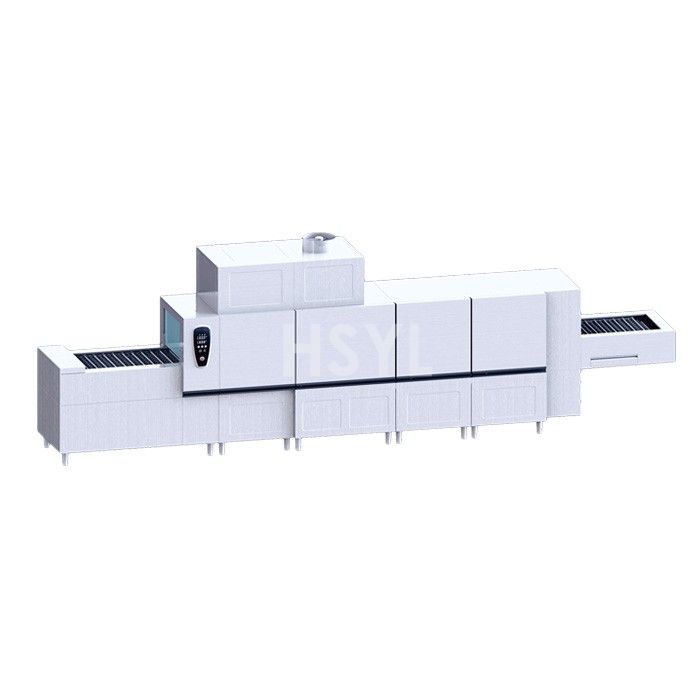
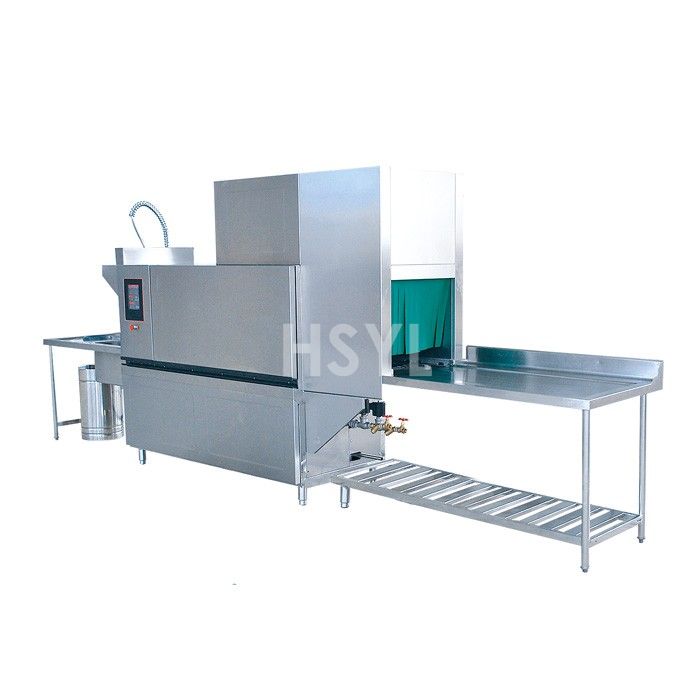
Both versions of the HDW260 — and the rest of the dishwasher range — sanitize with heat. The electric-heated model makes its own 82 °C rinse with 45 kW of elements; the steam-heated model reaches the same rinse by feeding the machine 70 kg/h of site steam against a 10 kW electrical load. Neither is a chemical-sanitizing machine. If your operation is set up for high-temperature washing — which covers most full-service restaurants, canteens and hotels — the two HSYL variants simply give you two ways to pay for the heat. If a low-temperature chemical machine is what the site genuinely needs, that is a configuration to raise with HSYL at quotation rather than assumed from the catalog, because the documented line does not currently list one.
Four Questions That Pick the Method
- Can the site reach 82 °C? High-temp needs either enough electrical capacity for a booster (the 45 kW electric model) or a steam boiler on site (the 10 kW plus 70 kg/h steam model). If neither is available, the chemical route is the fallback.
- What does the energy cost locally? Where electricity or steam is cheap, the hot rinse is cheap. Where energy is expensive and a disciplined chemical program is already in place, low-temp's lower draw can win on running cost.
- What are you washing? Heavy grease loads wash better hot; delicate glassware can etch under repeated 82 °C rinses, which is one reason bars sometimes prefer the cooler chemical path for stemware.
- How disciplined is the crew? High-temp is verified with a thermometer or thermal strip — hard to fake. Low-temp is verified with a chemical test strip at the right concentration — easy to let drift. Pick the method whose verification your team will actually keep up.
High-Temp and Low-Temp Side by Side
| Factor | High-Temperature | Low-Temperature (Chemical) |
|---|---|---|
| Sanitizing method | Heat, final rinse 82–90 °C | Chemical sanitizer, rinse 49–60 °C |
| Booster heater | Required (internal or via steam) | Not required |
| Operating cost driver | Energy for the hot rinse | Ongoing chemical sanitizer |
| Drying | Flash-dries hot | Wetter, needs air-drying |
| Verification | Thermometer / thermal test strip | Chemical concentration test strip |
| HSYL line | HDW260-EL-R (45 kW) or HDW260-SL-R (10 kW + 70 kg/h steam) | Not currently listed — confirm at quotation |
Whichever method you run, the sanitizing step only counts if it is verified. For the high-temp route that means checking the final-rinse temperature reaches the target and recording it in the hygiene paperwork — the sanitizing rinse temperature HACCP guide covers the temperature requirements and how to hold them. The full dishwashing lineup sits under commercial dishwashing equipment.
Related Equipment & Systems
Sanitizing temperature is only as reliable as the water that carries it. The commercial dishwasher water quality guide covers hardness and filtration, which decide whether the hot rinse stays clean and the machine stays scale-free. If you have not yet picked the machine form, the hood vs undercounter vs conveyor guide sorts the type by racks per hour first — sanitizing method comes after the form.