Best Undercounter Commercial Dishwasher
Choosing the best undercounter commercial dishwasher means checking rack size, temperature or chemical sanitizing, utility hookups and space limits. Use this checklist for bars, cafes and small restaurants.
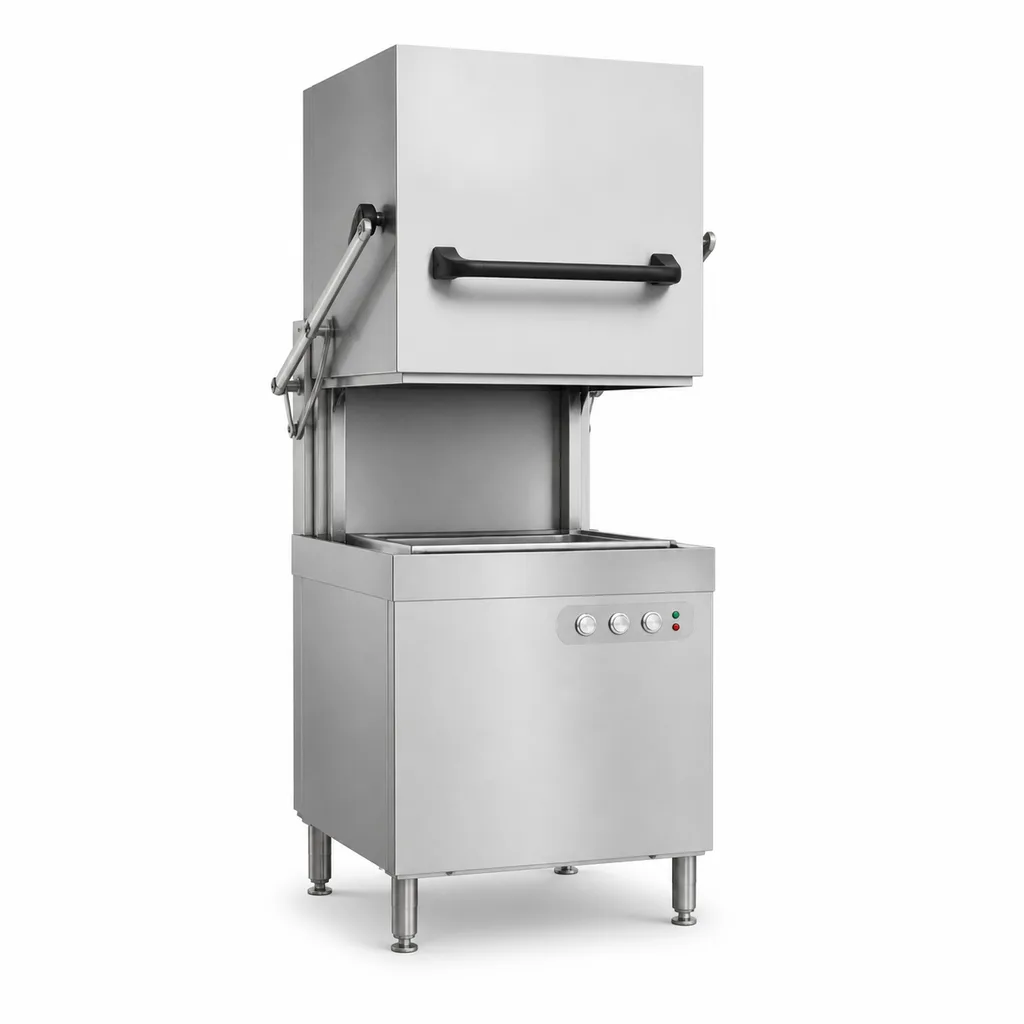
What an undercounter dishwasher must handle
Undercounter dishwashers sit in the sweet spot between a low-rise bar washer and a full flight-type conveyor. For cafes, small bistros, hotel pantries, and catering prep rooms, the machine has to clear 500 mm or 600 mm door height, fit between existing counters, and still deliver NSF/ANSI 3-A or equivalent sanitation performance. Buyers who treat these as "small" dishwashers often overlook the real constraint: hourly rack throughput, not tank volume.
Temperature vs chemical sanitizing
High-temp machines final-rinse at 180°F to 190°F (82°C–88°C) and rely on heat for sanitization. They need a booster heater or a reliable gas supply to recover quickly between cycles. Low-temp chemical machines use a chlorine or acid-based sanitizer and run final rinse at 120°F to 140°F (49°C–60°C). The trade-off is energy versus chemistry control: low-temp machines use less electricity but require stricter detergent monitoring and water-hardness management.
Utility hookups and clearances
Most undercounter dishwashers need a 1.5 kW to 3 kW electrical supply, 1.25-inch drain hose, and 3/8-inch water line. Water pressure should sit between 15 and 60 psi. Confirm that the location has a floor drain within 1 m of the installation point, and that the countertop can support 150 kg to 200 kg when the machine is full. Ventilation requirements vary: high-temp machines exhaust more ambient heat, which matters in small, unventilated prep rooms.
Rack throughput and cycle time
A standard undercounter dishwasher handles 20 to 40 racks per hour. The cycle time is usually 50 to 90 seconds, but recovery time between racks depends on heating system size and whether the machine uses a tankless design. Tankless heat-recovery models keep standby energy low but draw 6 kW to 9 kW during operation; make sure the circuit can handle that surge. For operations that run two lunch services and one dinner service, 30 racks per hour is usually sufficient. For high-turnover bars, look for machines with a 45-second wash and a built-in water softener.
Space planning for tight kitchens
Measure the rough-in opening, not just the nominal counter cutout. Many undercounter dishwashers need 600 mm of width, 600 mm of depth, and 850 mm to 900 mm of height under the counter. Allow a 50 mm air gap behind the unit for utility lines and a 100 mm clearance at the top for ventilation. If the kitchen runs a garbage-disposal drain, install a solids interceptor upstream; dishwasher pumps clog easily on coffee grounds and food waste.
| Operation | Minimum racks/hour | Recommended sanitizing | Key feature |
|---|---|---|---|
| Coffee shop | 20–30 | Low-temp chemical | Water softener |
| Small bistro | 30–40 | High-temp or low-temp | Booster heater |
| Hotel pantry | 30–40 | High-temp preferred | Tankless heat recovery |
| Bar / club | 40+ | Low-temp chemical | 45-second cycle |
Key takeaway: Choose the sanitizing method based on your utility infrastructure and detergent discipline. High-temp machines simplify chemistry but need power and ventilation; low-temp machines fit tight electrical specs but demand strict water-hardness control.
Maintenance and operational costs
Descaling frequency depends on local water hardness. In hard-water regions, a weekly acid rinse extends heating element life by six to twelve months. Filters, rinse arms, and door gaskets should be inspected daily; a torn gasket drops final-rinse temperature by 10°F or more and can cause health-code violations. Annual maintenance contracts usually include pump inspection, heating element testing, and calibration of chemical-dosing pumps.
Noise, ergonomics, and lease options
Undercounter dishwashers generate 60 to 75 dB during the wash cycle. In open-plan kitchens or basement locations, that noise level disrupts front-of-house communication and increases staff fatigue. Look for models with insulated tanks and pump isolators; the noise penalty for a quiet machine is usually $200 to $400, which is cheaper than noise-cancelling headphones for every shift. Ergonomics matter too: a door that opens against a wall blocks access, and a control panel at knee height forces operators to bend. Leasing undercounter dishwashers makes sense for pop-ups, temporary venues, or multi-site operators who want to standardize equipment without tying up capital; monthly lease rates typically run $80 to $180 depending on size and service package.
Compare full dishwasher ranges at /dishwashing-equipment/ or review hygiene standards at /hygiene-haccp/.
Frequently Asked Questions
What is the difference between high-temp and low-temp undercounter dishwashers?
High-temp machines sanitize with heat at 180°F to 190°F final rinse and need a booster heater or gas supply. Low-temp machines use chemical sanitizers at 120°F to 140°F final rinse and require tighter control of detergent concentration and water hardness.
How many racks per hour do I need?
Most small restaurants need 30 to 40 racks per hour. High-turnover bars should look for 45-second cycles and 40+ racks per hour. Match capacity to your busiest service window, not your average load.
Can an undercounter dishwasher fit in a 600 mm cabinet opening?
Yes, most units are designed for 600 mm width, 600 mm depth, and roughly 850 mm to 900 mm height. Always confirm the rough-in drawing and leave space for utility connections behind the unit.
Do I need a water softener?
In hard-water regions, a built-in or external water softener is essential. Scale buildup on heating elements and spray arms cuts efficiency and shortens machine life by 30% to 50%.
What should a daily inspection cover?
Check spray arm movement, door gasket condition, filter cleanliness, and final-rinse temperature. A torn gasket or blocked spray arm can drop sanitization performance below health-code thresholds.
Plan the Equipment Around Your Kitchen.
Share your menu, peak service demand, available space and site utilities. Tell us which equipment you are considering so we can review the requirements with you.