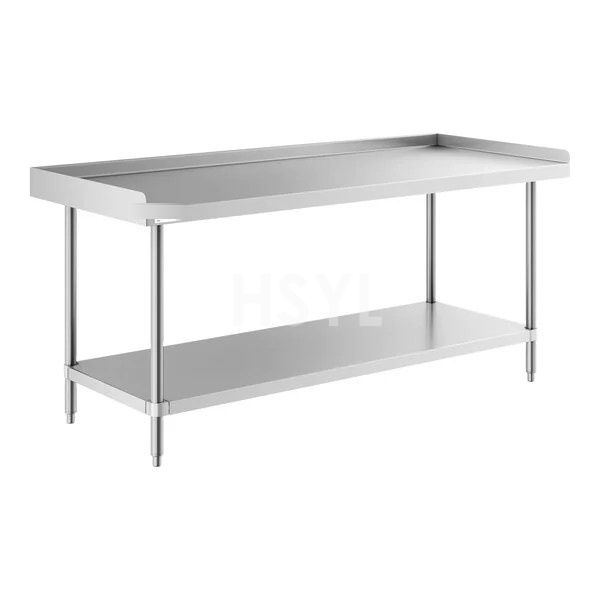
A salad table fridge is two pieces of equipment on one frame: a refrigerated cabinet below, and a pan rail on top where the cold prep happens in open pans. The selection turns on two things — how the cabinet cools (static or fan), and whether the spec details fit a real prep station. On the HSYL line those are the ECUR fan-cooling salad table and the XSDUF static-cooling salad table, and the documented details below are what separate a salad table that works through a lunch rush from one that just looks the part.
Static or Fan Cooling for a Salad Table
The cooling choice matters more here than on a plain workbench, because the top pan rail is open to the room. Fan cooling pushes chilled air through the cabinet and up toward the pans, holding a tighter, more even temperature across the rail — the trade is that moving air can dry out the exposed tops of cut ingredients over a long service. Static cooling is gentler and quieter, holding moisture better on uncovered produce, but it builds frost and runs a wider temperature spread from the cooling wall to the far end of the rail.
The practical rule: a high-volume salad bar or self-serve line that turns pans over fast benefits from fan cooling's evenness, where a slower prep station that keeps ingredients exposed for hours benefits from static cooling's gentler moisture hold. Both reach the 2 to 8 °C zone the produce needs; the difference is how they trade evenness against drying.
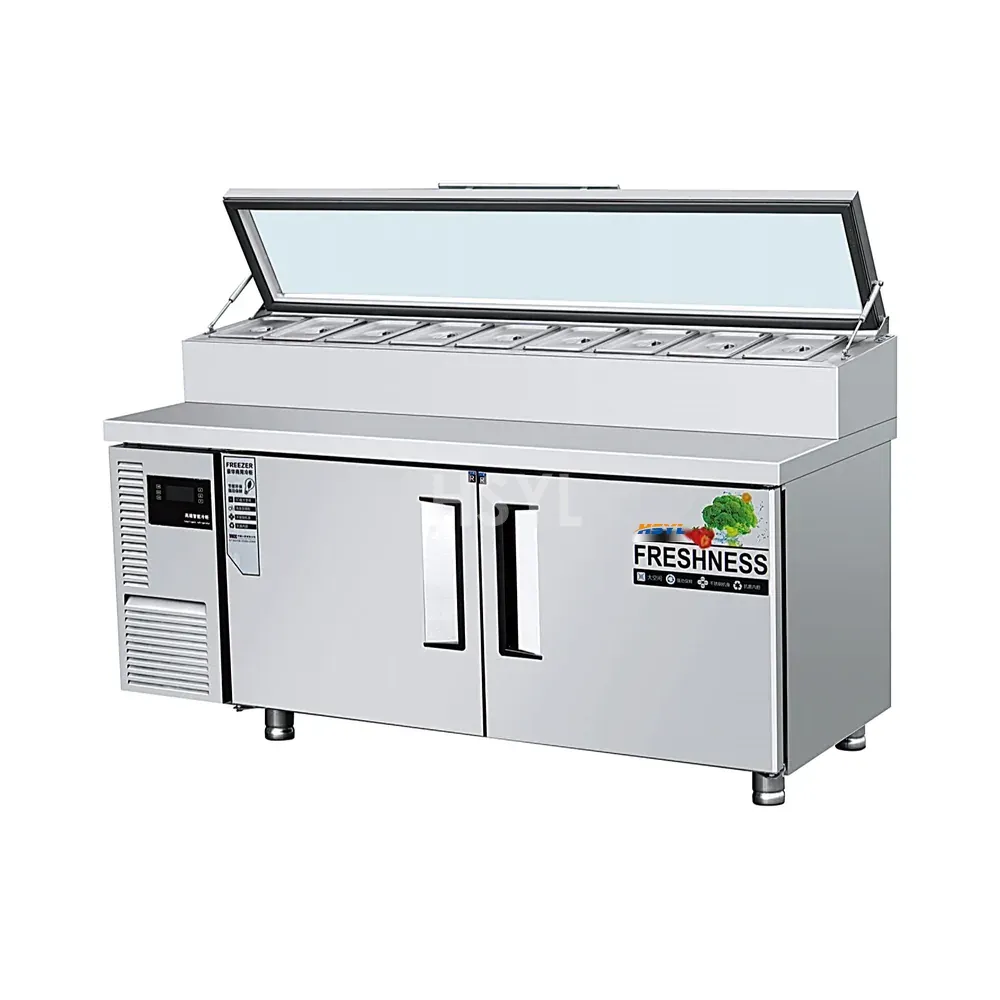
The Spec Details That Separate a Working Salad Table
Four documented fields on the ECUR fan-cooling range are worth reading before comparing prices, because they are where a salad table either fits a prep station or does not:
- Pan depth, 6 cm. The pan rail holds shallow food pans, and the documented 6 cm depth sets how much each pan holds and how many fit the rail. Too shallow a rail limits portion size; too deep wastes cooling.
- Casters, 10 cm. A salad table on casters rolls out for cleaning and back for service. The documented 10 cm casters matter if the unit has to clear a threshold or roll under a pass.
- Deck, SUS201 stainless. The worktop around the pans is the cutting and plating surface, so the documented SUS201 stainless deck is what stands up to daily knife and sanitizer contact.
- Compressor, Wanbao. The documented Wanbao compressor and its single-unit count on the 1.8 m frame tell you the cooling plant is a named, serviceable component rather than an unbranded box — relevant when the unit is the only thing holding a salad line cold.
Those are the details a spec-sheet comparison skips and a prep cook notices on day one. The E-series workbench range carries the same cabinet refrigeration under a closed worktop for stations that prep in covered containers instead of open pans.
ECUR and XSDUF Side by Side
| Factor | ECUR Fan-Cooling | XSDUF Static-Cooling |
|---|---|---|
| Cooling method | Fan cooling | Static cooling |
| Capacity (1.8 m frame) | 445 L | Confirmed on spec sheet |
| Temperature | 2–8 °C | 2–8 °C |
| Strength | Even rail temperature | Gentler moisture hold |
| Best for | High-volume, fast-turning pans | Slow prep, long exposure |
The full salad and workbench lineup sits under commercial refrigeration equipment, and the direct vs fan cooling guide covers the underlying cooling-method trade in full.
Related Equipment & Systems
A salad table only holds its value if the zone stays honest — the temperature zones and storage map guide covers the 2 to 8 °C discipline for exposed cold prep, and the refrigeration preventive maintenance guide keeps the cabinet there.